

Diving in the Galapagos Islands

The Galápagos Islands are perhaps the ultimate diving destination. For many divers, a trip to this extraordinary archipelago is high on their bucket list. But why, exactly? What makes diving in the Galápagos so special, and why do divers travel halfway around the world for a chance to encounter a hammerhead shark, whale shark, or sea lion?

In this blog, we’ll explain what makes the Galápagos so special, what you might encounter underwater, and what to expect on a diving trip to these remote islands.

The Galápagos Islands

The Galápagos Islands are located in the Pacific Ocean, about 1,000 kilometers off the coast of Ecuador. The archipelago consists of 13 larger islands and dozens of smaller islands and rock formations. The islands are of volcanic origin and are scattered across a vast area of the ocean.

The Galápagos belong to Ecuador, but their remote location makes them feel like a completely different world. The islands are best known for their extraordinary wildlife. Charles Darwin visited the archipelago in 1835, and the unique animals he encountered there played an important role in the development of his theory of evolution.

Even today, nature remains the centerpiece of the Galapagos. Many animals are found nowhere else in the world—such as the giant tortoises, marine iguanas, and Galapagos penguins. Both above and below the water, you’ll find an enormous diversity of marine life.

How do you get to the Galapagos?

The Galápagos Islands are accessible only by plane. Most international flights arrive first in Quito or Guayaquil. From there, you’ll fly on to the Galápagos.

There are two major airports on the archipelago: Baltra Airport (GPS) on the island of Santa Cruz and San Cristóbal Airport (SCY) on San Cristóbal. Which airport you use depends on your itinerary and the route you’re taking.

For a liveaboard trip, you’ll usually travel via Baltra or San Cristóbal to the boat’s port of departure. It’s important to allow enough time in Ecuador for your domestic flight and any transfers. A direct connection to your international flight isn’t always possible.

Information about the Galápagos Islands

The Galápagos Islands are located in the Pacific Ocean, about 1,000 kilometers off the coast of Ecuador. The archipelago consists of 13 larger islands and dozens of smaller islands and rock formations. The islands are of volcanic origin and are scattered across a vast area of the ocean.

The Galápagos belong to Ecuador, but due to their remote location, they feel like a completely different world. The islands are best known for their unique wildlife. Charles Darwin visited the archipelago in 1835, and the unique species he encountered there played a key role in the development of his theory of evolution.

Even today, nature takes center stage in the Galápagos. Many animals are found nowhere else in the world, such as the giant tortoises, marine iguanas, and Galápagos penguins. Both above and below the water, you’ll find an enormous diversity of marine life.

Why is diving in the Galapagos so special?

There are so many amazing things to see in the Galapagos. Various ocean currents converge around the islands. These currents bring nutrient-rich water to the archipelago, attracting large numbers of marine life.

So you don’t just dive here for colorful coral reefs, but especially for large and unique marine life. Hammerhead sharks, whale sharks, manta rays, stingrays, Galapagos sharks, sea lions, sea turtles, and marine iguanas are all among the creatures you might encounter.

At the same time, the conditions are more challenging than at many tropical diving destinations. Currents, colder water, and variable visibility are all part of diving in the Galapagos. But it is precisely these conditions that make this one of the most spectacular places in the world for divers seeking large marine life.

What can you see while diving?

One of the Galapagos’ biggest attractions is the abundance of marine life. Exactly which animals you’ll encounter depends on the dive site, the season, and, of course, the conditions on that particular day.

Hammerhead Sharks

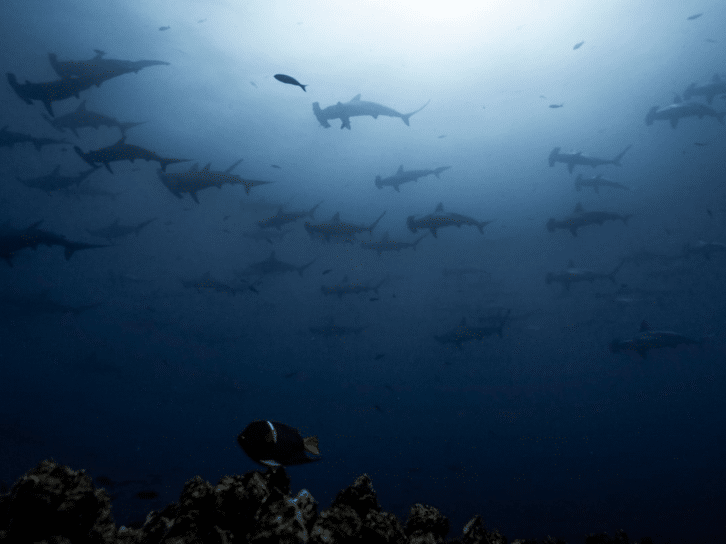
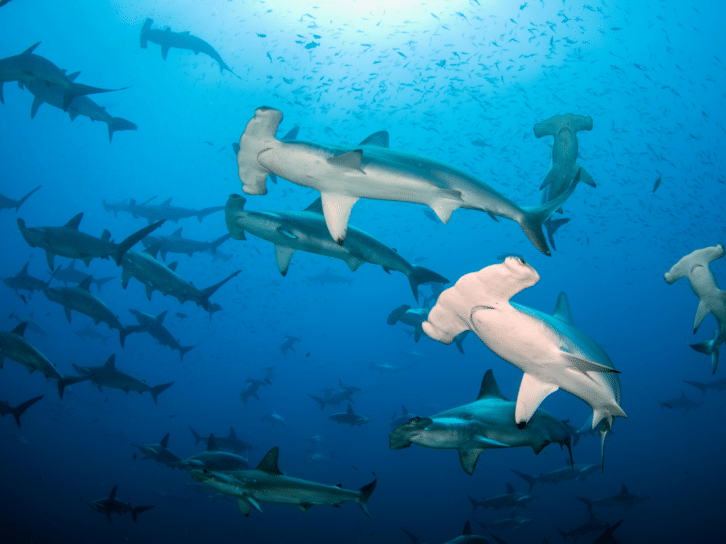
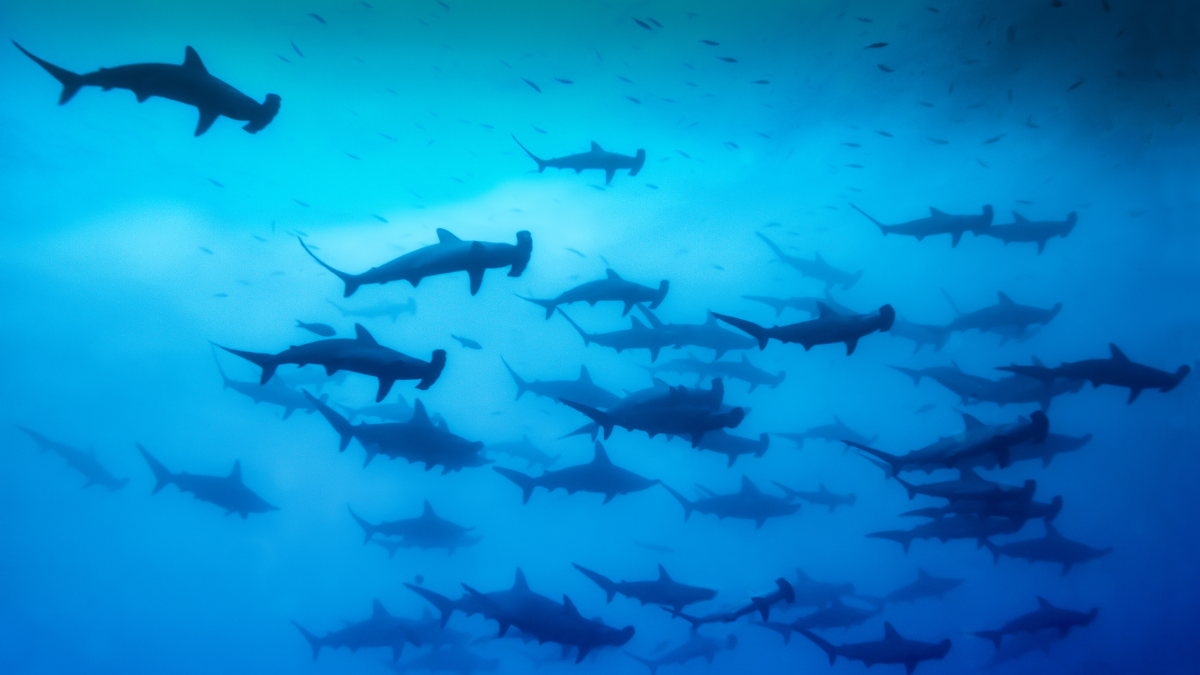
Hammerhead sharks are perhaps the animals for which the Galápagos are best known. Large schools of hammerhead sharks are regularly spotted, especially around Wolf and Darwin Islands. Sometimes they swim by at a distance, but under the right conditions, they can come surprisingly close.

For many divers, seeing dozens or even hundreds of hammerhead sharks during a single dive is one of the absolute highlights of a Galapagos liveaboard.

Whale Sharks

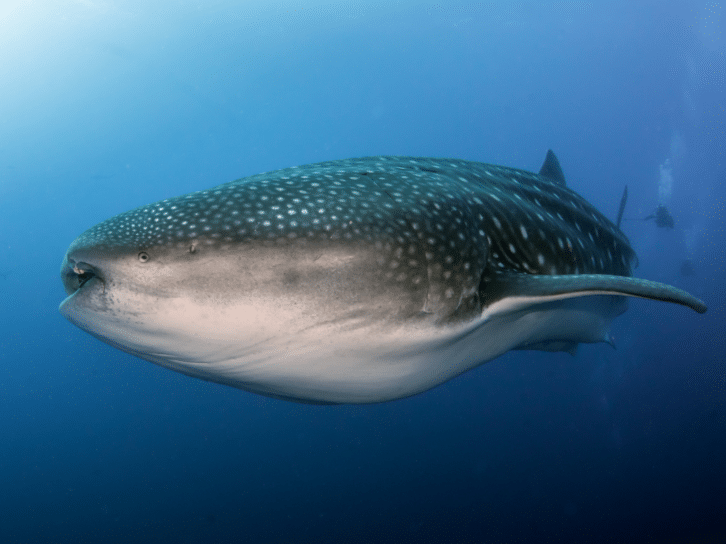
The whale shark is also high on many divers’ bucket lists. The chances of an encounter around Darwin Island are particularly good between June and November.

The animals spotted here are often large, adult specimens. An encounter with a whale shark is never guaranteed, but the Galápagos are among the best places in the world to seek out these impressive sharks.

Dolphins

Dolphins are among the pelagic marine life you may encounter during a trip to the Galápagos. Sometimes they’re spotted during a boat tour, but with a little luck, you might also encounter them underwater.

A group of dolphins swimming curiously around you is an encounter you won’t soon forget. Because dolphins move freely through the ocean, an encounter can never be predicted or guaranteed. It is precisely this element of surprise that makes such an encounter all the more special.

Sea Lions

You’ll encounter sea lions in various places around the Galápagos. They’re especially fun to watch underwater because they can be curious and playful.

Young sea lions, in particular, may suddenly appear among divers during a dive and swim around you. As a result, an encounter with a sea lion can turn out completely differently than you might have expected.

Marine Iguanas

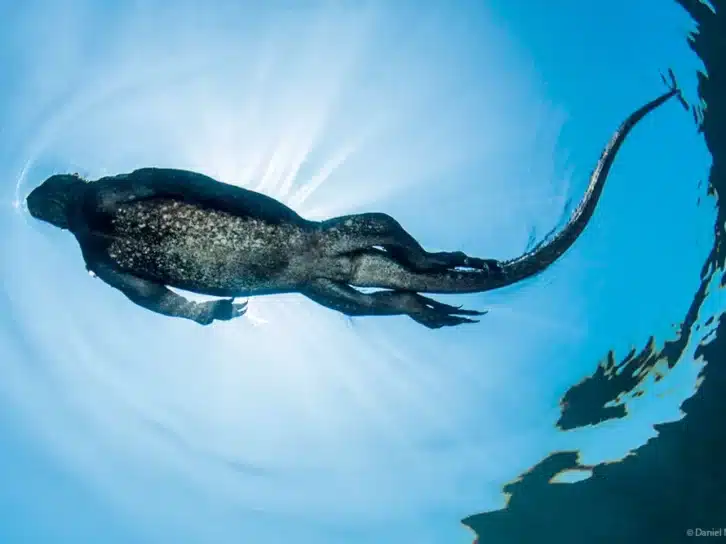
The marine iguana is one of the most remarkable animals in the Galápagos. These animals are found only in the Galápagos and have adapted to life in the sea.

They swim down to the seafloor to eat algae from the rocks. Seeing a marine iguana foraging underwater is therefore a truly special experience.

Galapagos Penguins

The Galapagos penguin is one of the smallest penguin species in the world and also one of the few penguins that lives north of the equator.

The species depends on the cold, nutrient-rich waters surrounding the islands. Especially around the western islands, there’s a good chance of spotting these fast swimmers while diving.

Mantas

Mantas and mobulas are among the large pelagic animals you may encounter around the Galápagos. An encounter can be particularly impressive when large groups gather in the nutrient-rich waters. In addition to manta rays, various species of mobula rays live around the islands. Sometimes you’ll see them swimming by during a dive, while at other times you’ll see large groups moving above or below you. You’re also sure to encounter other rays here, such as eagle rays.

Turtles

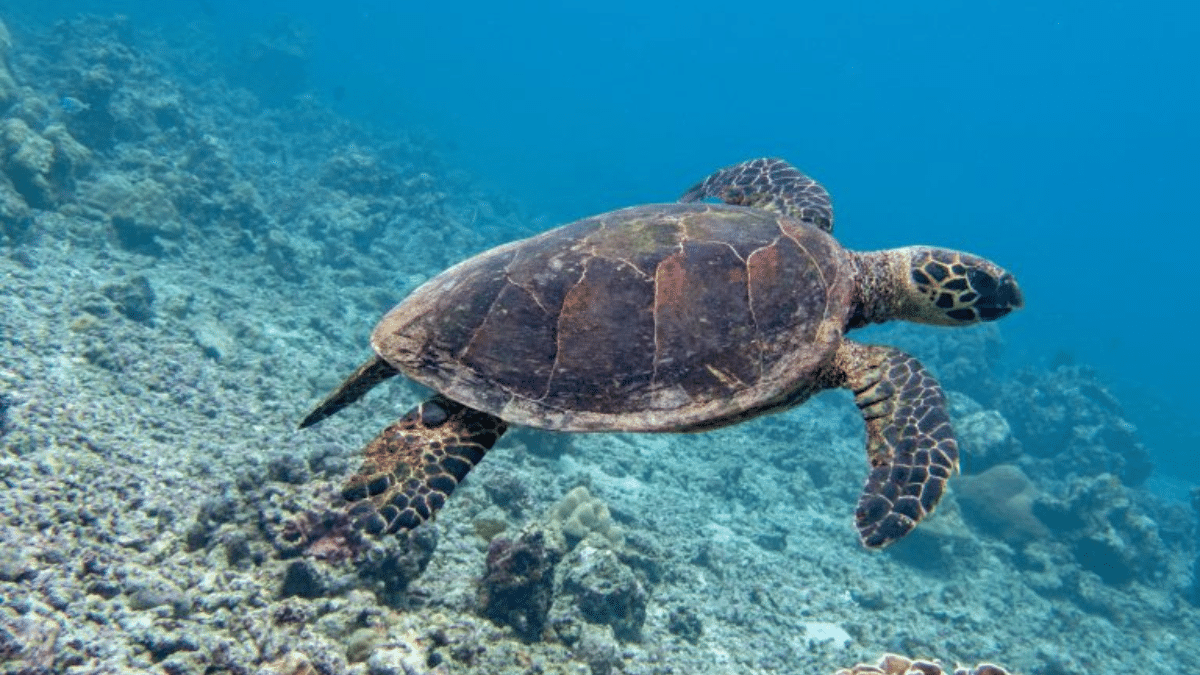
Turtles are another common sight underwater. Green sea turtles, in particular, are found around the Galápagos. You may come across them as they swim calmly along the seafloor or search for food among the rocks. Because the islands offer a variety of habitats, you’ll have the chance to encounter these animals at multiple locations during your diving trip.

Darwin Island and Wolf Island

For many divers, Darwin Island and Wolf Island are the absolute highlight of a trip to the Galapagos. These two remote islands are located in the northern part of the archipelago and are known for their abundant pelagic marine life.

At Wolf Island, you have the chance to see, among other things, large schools of hammerhead sharks, rays, sea turtles, and other large fish. Darwin Island is best known for its large number of sharks and the chance to spot whale sharks.

The remote location is a key factor here. You can’t simply take a day trip to Darwin or Wolf from a hotel on Santa Cruz. To visit these dive sites, you’ll need to travel on a liveaboard. That’s exactly why many divers choose a liveaboard instead of day trips from one of the islands.

Diving from the Islands

Not every diving trip to the Galápagos has to be entirely focused on a liveaboard. Day trips are also organized from various inhabited islands.

For example, you can visit various dive sites from Santa Cruz or San Cristobal. This is a great option if you want to combine diving with exploring the islands and the above-water nature.

However, the dive sites you’ll visit from the islands are different from the remote areas in the north. If you specifically want to go to Darwin and Wolf Island and see as much of the famous large marine life as possible, then a liveaboard is the best choice.

The great thing about this approach is that you get to see much more of the islands themselves. There are countless sights to see, and after diving, you’ll have plenty of time to visit them. We’ve put together a separate trip for this purpose. You’ll stay on different islands and get a variety of impressions of the archipelago, both underwater and above water.

Diving in the Galapagos: What Can You Expect?

Diving in the Galapagos is nothing like a relaxing diving vacation in the tropics. Conditions can be challenging and require sufficient diving experience. You may encounter strong currents, drift dives, thermoclines, and sometimes limited visibility. Water temperatures can also vary significantly by location and season. They can even vary greatly from day to day or from dive to dive. That’s why it’s quite difficult to give good advice on which wetsuit is most suitable. On some dives, you’ll really need a 7mm wetsuit to be comfortable, while on other dives, a 3mm wetsuit would be perfectly fine. Be sure to bring a cap so your head can retain heat.

The underwater world consists mainly of volcanic rock formations. You’ll dive along rock walls, pinnacles, and slopes, often positioning yourself strategically at certain spots to observe the passing marine life.

Good control of your buoyancy and experience with currents are therefore important. The Galapagos are best suited for experienced and confident divers.

Many liveaboards also require a minimum number of logged dives. The exact requirements vary by boat and route, but use approximately 50 logged dives as a guideline.

Water Temperature and Visibility

The water temperature around the Galápagos is strongly influenced by various ocean currents. As a result, the water can be quite cold in some areas.

Depending on the season and location, the temperature ranges from about 15 to 25 °C. Adequate thermal protection is especially important during the cooler season.

Visibility also varies. The nutrient-rich waters that support so much marine life do not automatically mean you can always see dozens of meters ahead. Visibility can sometimes be limited.

That might not sound ideal, but when it comes to diving in the Galápagos, clear water isn’t the most important thing. After all, you’re here for what’s actually in that water.

Frequently asked questions about diving on the Galapagos

Is diving in the Galápagos suitable for beginners?

The Galápagos are generally not a destination for beginner divers. Currents, thermoclines, colder water, and sometimes rough conditions make some dives challenging. Experience with current diving is therefore important.

This varies by liveaboard. Many boats require about 50 logged dives and experience with currents. The exact requirements may vary by boat and route. But since you’ll be diving in currents, it’s helpful to have some experience with them. This will really enhance your diving experience and allow you to enjoy everything you encounter underwater even more.

The period from June through November is a good time to see whale sharks, especially around Darwin Island. Of course, seeing a whale shark is always a matter of luck and can never be guaranteed.

Yes. Day trips are organized from Santa Cruz and San Cristobal, among other places. However, if you want to go to Darwin and Wolf Island, you’ll need a liveaboard. These locations are too far from the islands to visit on a day trip.

Not always, but that can be the case during the cooler season. The temperature varies by location and season and can be around 15 °C. A well-fitting wetsuit and adequate thermal protection are therefore important.

Yes. Hammerhead sharks are among the most famous animals in the Galápagos. Large schools are frequently spotted, especially around Wolf and Darwin Islands.

Yes. Marine iguanas are endemic to the Galápagos and regularly enter the water to eat algae off the rocks. An underwater encounter with a marine iguana is one of the most extraordinary experiences while diving on the islands.

If diving is the main purpose of your trip, we recommend a liveaboard. This will allow you to reach remote dive sites such as Darwin and Wolf Island and dive at these locations for several days.

If you’d like to combine diving with exploring the islands and the natural world above water, an island-hopping trip that includes diving is a great alternative.

Are you an experienced diver who dreams of seeing large schools of hammerhead sharks, whale sharks, sea lions, and other large marine life? Then the Galápagos is definitely a destination to add to your list.

The diving conditions aren’t always easy, but it’s precisely that nutrient-rich, sometimes rugged underwater landscape that makes for encounters you’ll experience in few other places in the world.

Want to go diving in the Galápagos Islands, too?

You might also be interested in

Japan Hammerheads Sharks

Travelogue: Japan • Diving with Mikomoto Hammers

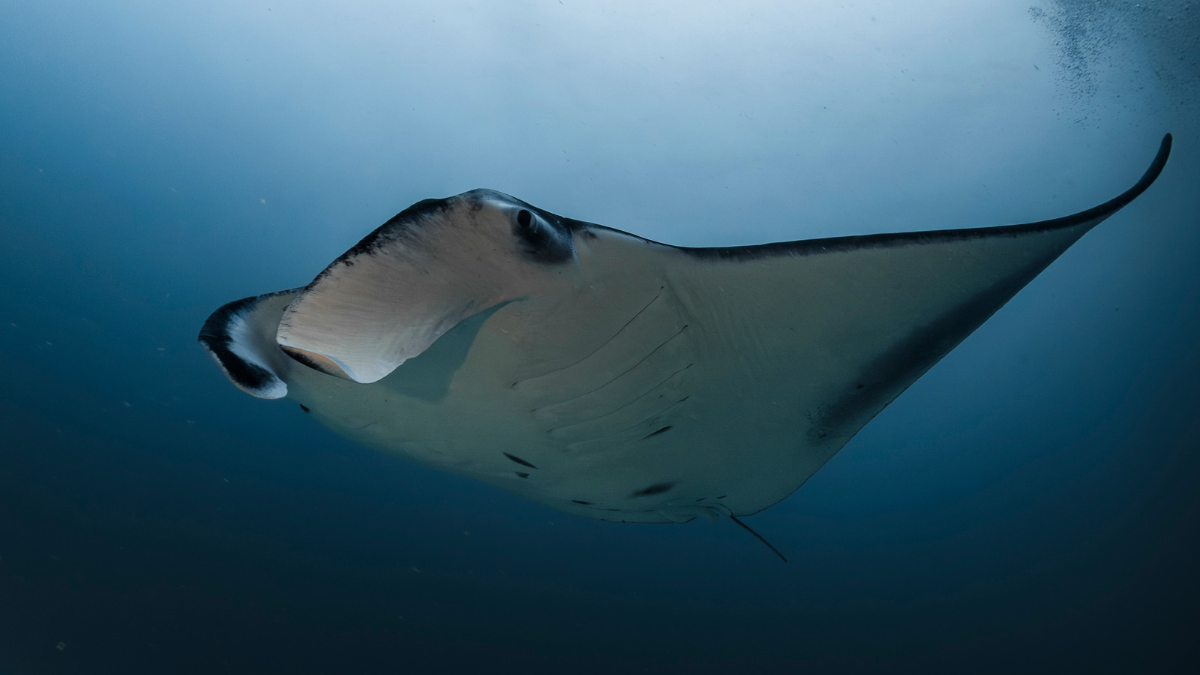
Read the travelogue about diving at Mikomoto in Japan. Discover our experiences with the currents, the hammerhead sharks, and the dive shop.
Read more
Bali Mantas Resort Round trip

Travel Report • Diving at Manta Point on Nusa Penida

Join Margriet for a dive at Manta Point on Nusa Penida. Read her travel report about mantas, the Crystal Bay dive site, and diving around Bali.

Read more
Komodo Indonesia Mantas

Where can you see manta rays in Indonesia?

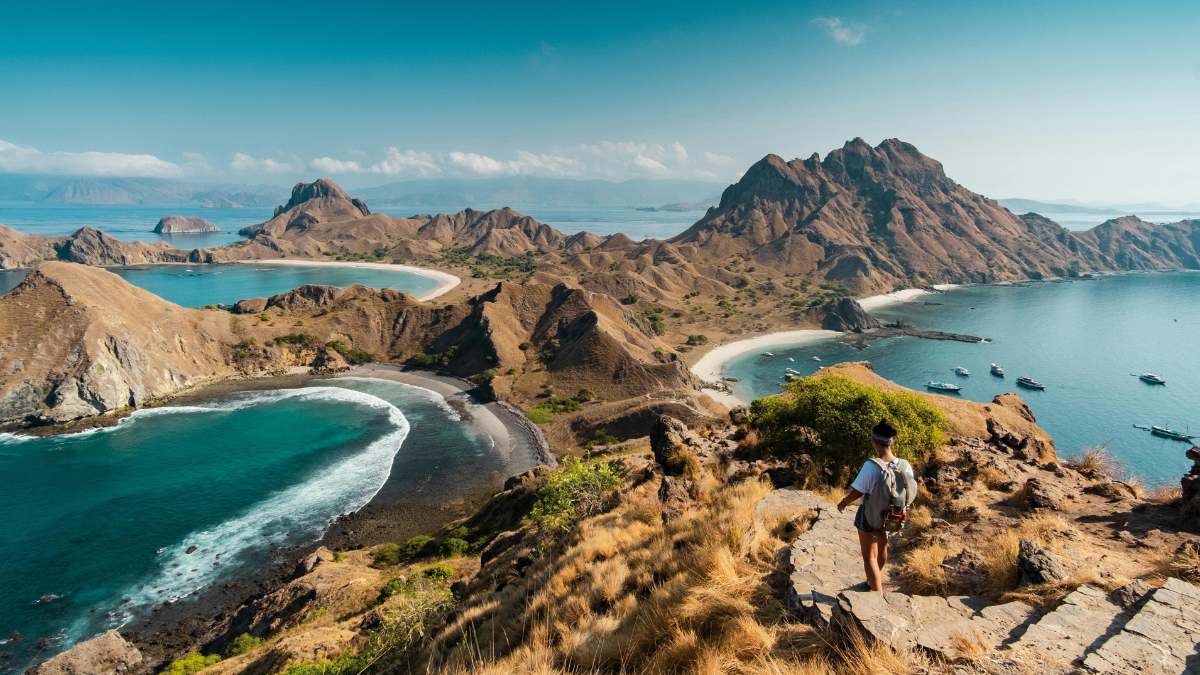
Indonesia is one of the best destinations in the world for seeing manta rays. Komodo, Raja Ampat, and Nusa Penida each offer a unique manta ray experience.
Read more
Komodo Indonesia Mantas

Diving in the Komodo Islands in Indonesia

Komodo is a spectacular diving destination for those looking for manta rays, abundant marine life, and challenging currents. Discover the best time to visit, diving options, accommodations, and itineraries with EWDR.
Read more
South Africa Combination Trip

Travel Report South Africa • Diving in Sodwana Bay

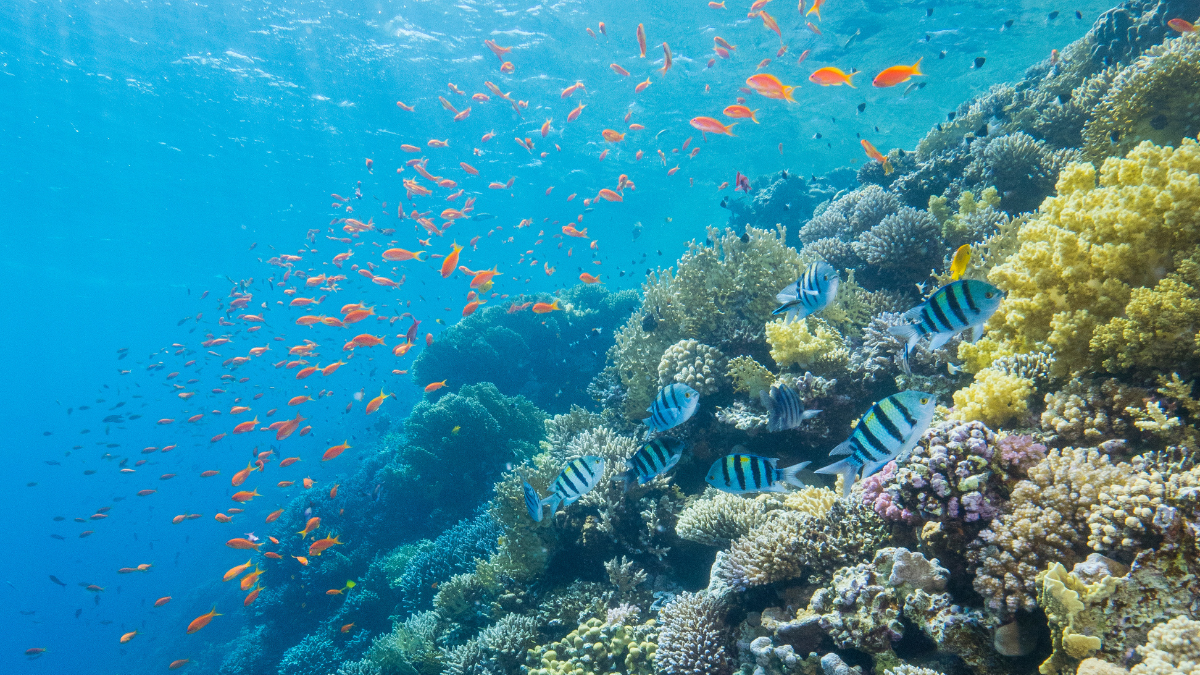
Read the travel report about diving in Sodwana Bay and a safari in South Africa. Discover the underwater world and the animals you encounter during the safari.
Read more
Underwater Photography

Tips from Underwater Photographer Thomas Van Puymbroeck

Discover the best tips for underwater photography from photographer Thomas Van Puymbroeck and learn more about our annual photography trips.

Read more
Visayas Philippines Round trip

Philippines Travelogue • Looking Back on a Diving Trip in the Visayas

A special travelogue by Sebastiaan and Robbert, who went on an unforgettable diving trip together sixteen years ago. Old photos and memories bring those special underwater encounters back to life.
Read more
Sumatra Coral reefs

Diving in Sumatra: a complete guide

Diving in Sumatra combines colorful coral reefs with impressive natural scenery above water. Discover Pulau Weh, the Mentawai Islands, and the most beautiful spots for a complete diving trip.

Read more
Boat Dives

10 Unique encounters every diver wants to experience at least once

The underwater world is full of extraordinary encounters. Discover which underwater encounters you shouldn’t miss and where you’re most likely to experience them for yourself.
Read more
Boat Dives

Diving destinations where you’ll feel like you’re the only person in the world

At some diving destinations, you’ll practically have the reef all to yourself. Discover six remote destinations where peace and quiet are still the norm.
Read more
Moluccas Coral reefs

Diving in Morotai & Metita: a complete guide

Wondering what makes Morotai and Metita so special? In this blog, you’ll discover everything about this unspoiled diving destination in North Maluku.

Read more
Papua New Guinea Coral reefs

Diving in Papua New Guinea: a complete guide

Diving in Papua New Guinea is a unique experience in the heart of the Coral Triangle. Discover colorful reefs, extraordinary marine life, historic shipwrecks, and pristine dive sites.
Read more
Boat Dives Hammerheads

Diving with hammerhead sharks: What are the best destinations?

Discover the best destinations in the world for diving with hammerhead sharks. Find out where you’re most likely to encounter them, when the best time to travel is, and what diving certification is required.
Read more
Indonesia Liveaboard

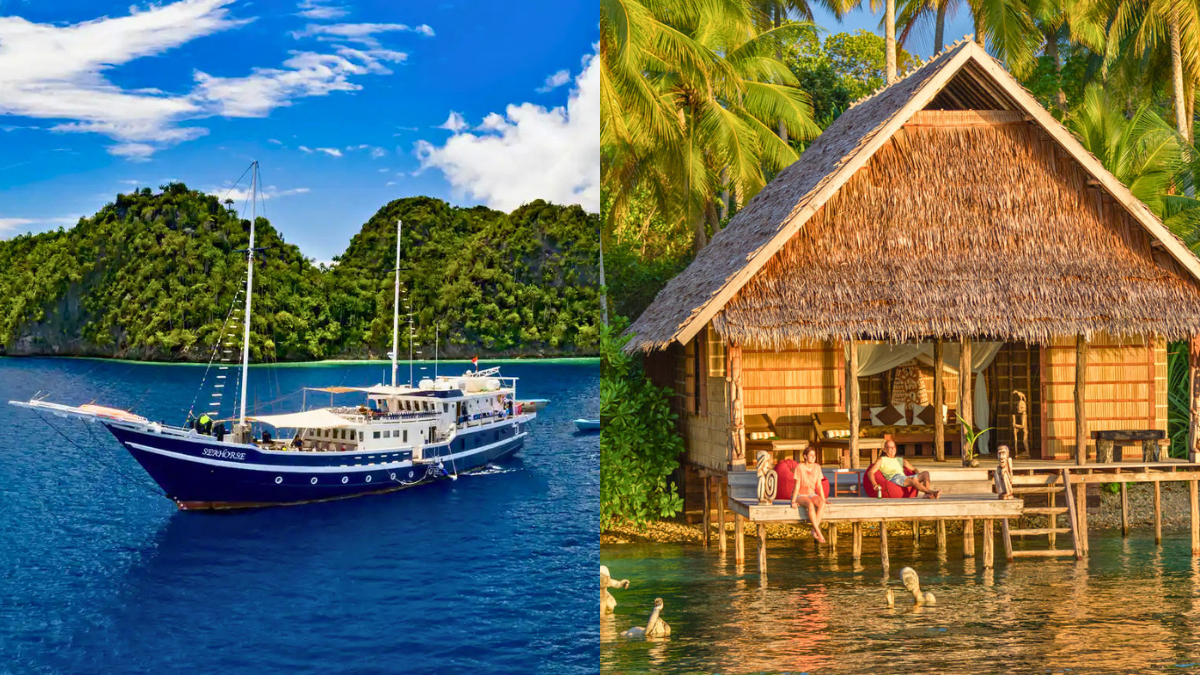
Diving Trip to Raja Ampat: Resort or Liveaboard?

Are you trying to decide between a liveaboard and a dive resort in Raja Ampat? In this blog, we’ll explain the differences and help you determine which type of trip best suits your needs.
Read more
Mauritius Drive & Dive Round trip

Diving in Mauritius: A Complete Guide

Mauritius offers colorful coral reefs, impressive shipwrecks, and a surprisingly diverse array of marine life. In this guide, you’ll find everything you need to know for a diving vacation in Mauritius.

Read more
Iceland Drive & Dive Round trip

Diving in Iceland: a complete guide

Diving in Iceland is all about the unique combination of the Silfra Gorge and rugged sea diving along volcanic shores. On a round-trip tour, you will not only discover the underwater world, but also one...

Read more
Mozambique Vilanculos Whales Unique Encounters

Whales, sharks, and manta rays: Key insights from the BCSS Impact Report 2025

The BCSS Impact Report 2025 highlights the rich marine life around the Bazaruto Archipelago in Mozambique. From humpback whales and manta rays to endangered sharks, the study confirms why this area is one of Africa’s...

Read more
Combination Trip

Diving vacation with a non-diving partner? These destinations are perfect for both of you

Not every diving vacation has to revolve entirely around diving. These destinations offer plenty of above-water activities so divers and non-divers alike can have a great trip.

Read more
Boat Dives Dolphins

Diving with wild dolphins: where do you have the best chance?

Encounters with wild dolphins are among the most beautiful experiences you can have as a diver. Find out where worldwide you have the greatest chance of encountering these intelligent marine mammals in their natural habitat.

Read more
Bahamas Tiger Sharks Sharks Liveaboard

Diving with (tiger) sharks: how to prepare?

Diving with tiger sharks is less scary than many people think, provided you enter the water well prepared. With the right experience, calm demeanor and respect for the animals, these encounters often become unforgettable dives.
Read more
Caribbean region

Our favorite diving destinations in the Caribbean

Not every Caribbean destination is known as a true diving hotspot. In this blog you’ll discover which islands are best suited for diving, where exactly you should be for big animals, wrecks or macro, and...

Read more
Caribbean region

Diving destinations in the Caribbean

The Caribbean offers much more variety than just tropical reefs and clear water. In this blog you will discover which destination best suits your needs: from pelagic life and unique dives to adventure above water...

Read more
Liveaboard Resort Unique Encounters

Why some dive destinations fill up years in advance

Some dive destinations and liveaboards fill up quickly due to limited capacity, short peak seasons and high international demand. Especially popular itineraries and high-end liveaboards in destinations such as Raja Ampat, Galápagos, Socorro and Egypt...

Read more
Socorro Liveaboard Unique Encounters

Discounted admission to Socorro: this is what you need to know about the new park fees

As of Jan. 1, 2025, park fees for Socorro doubled, but thanks to new exceptions and discounts, many travelers can save big. And that’s good news, because Socorro, with its manta rays, sharks and spectacular...

Read more