Philippines 2010: Island hopping, diving, and lots of wonderful memories in the Visayas
Right now, we at EWDR are working with Margriet to organize a new group trip to the Visayas in the Philippines for 2027. While putting together this trip, I found myself thinking back to the first time I visited this region myself: in 2010! So it’s a great time to look through my old photos and videos again, and the memories just come flooding back. What a fantastic trip that was!
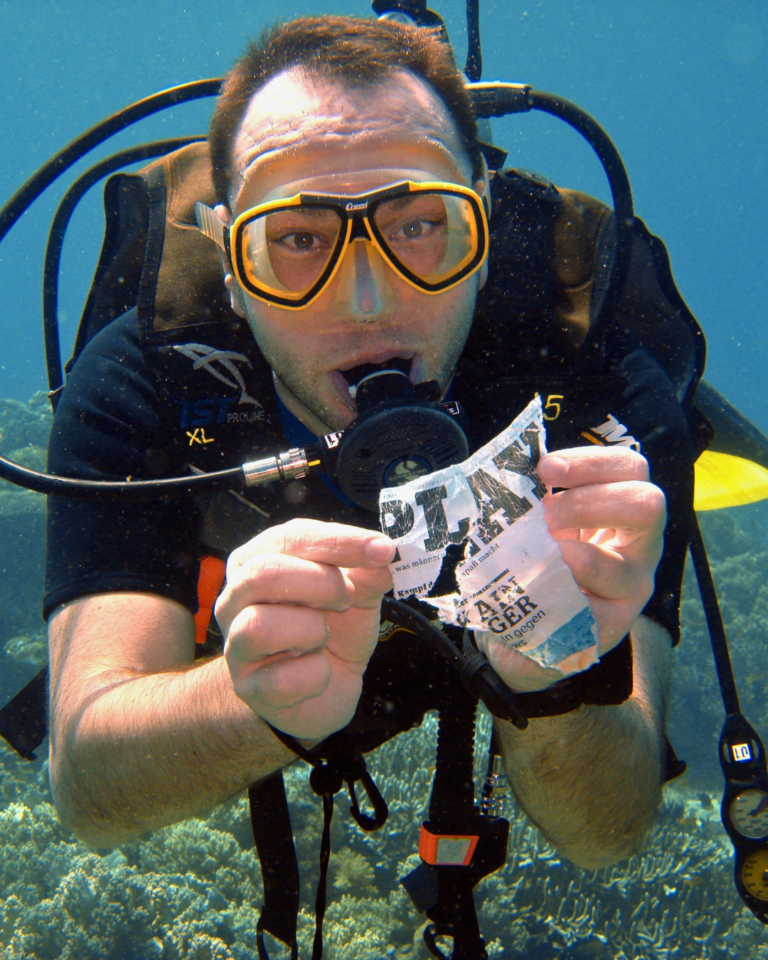
 Sebastiaan is a co-owner of EWDR; he creates travel itineraries and leads two group tours each year. In addition—perhaps unsurprisingly—he is an avid diver and traveler. He has dived in many extraordinary places, but this trip to the Philippines, which he took in 2010 with his brother Robbert and friend Kees, has always stayed with him. In this blog, he explains why.
Our Trip to the Philippines
In 2010, I traveled to the Philippines with my brother Robbert and our friend Kees. We flew via Singapore to Cebu and then took a wonderful trip through the Visayas, visiting places like Bohol, Malapascua, and Dauin. We stayed about a week at each location, and we traveled part of the way by boat.
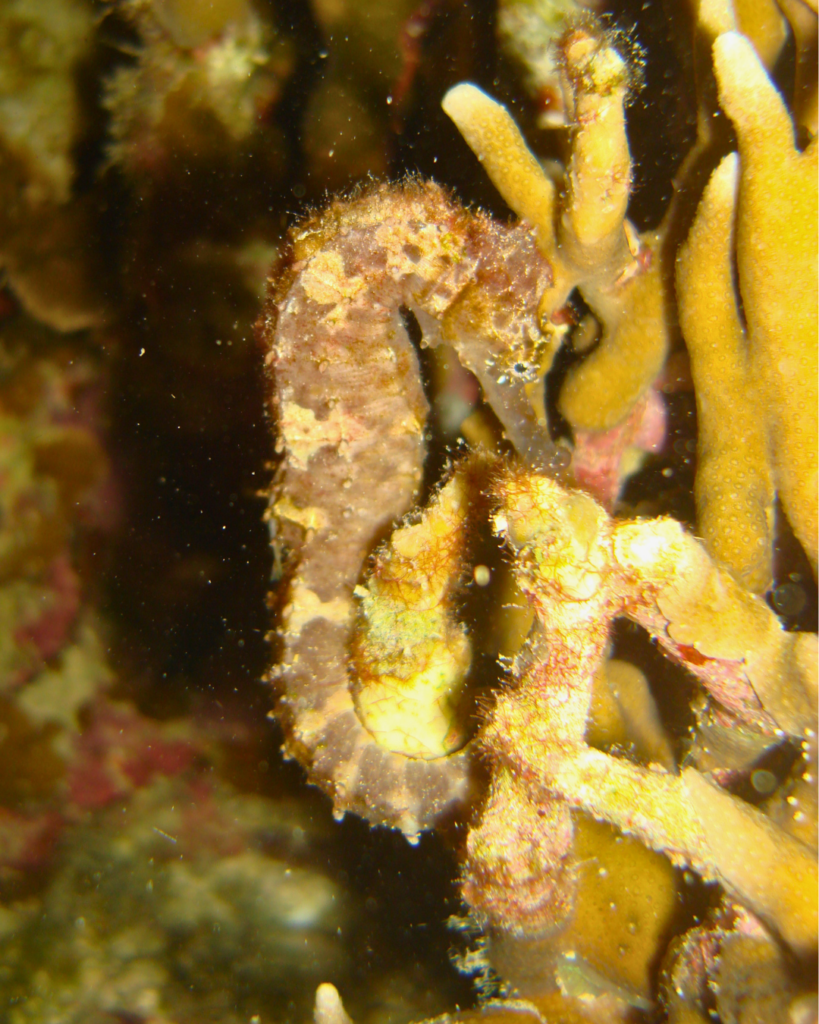
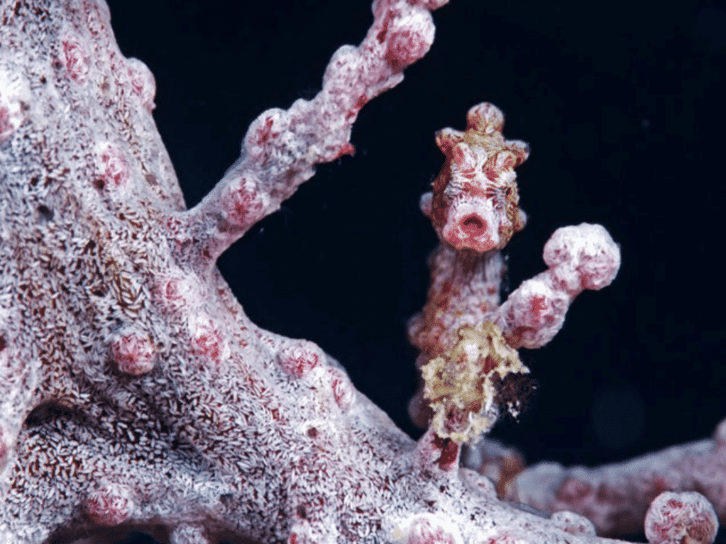
Back then, we weren’t very experienced divers at all; I think we had about fifty dives under our belts. But maybe that’s what made it all even more impressive, because on almost every dive we saw something that made us think, “What on earth is that?” Afterward, our guide would tell us we’d seen a ghost pipefish (see photo), which actually just looked like a broken-off piece of seagrass. Or a starfish sprinting underwater. You really have no idea that a starfish can move that fast!
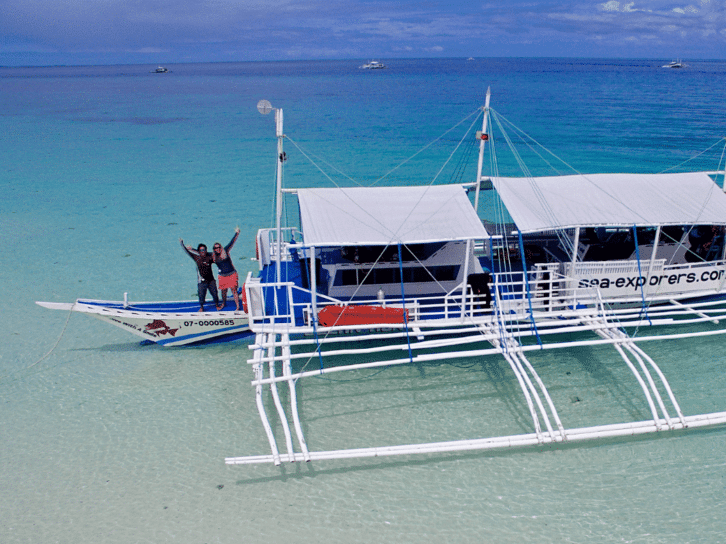
The diving during our trip was organized by Sea Explorers, which has been a highly reliable partner of EWDR for many years now. Sea Explorers has been operating in the Philippines since 1989 and truly knows the Visayas inside and out.
It is precisely the combination of different islands, resorts, and diving areas that is one of this region’s strengths. And that was exactly what made our trip so special.
It wasn’t just the destinations that were part of the adventure. The travel between them was also part of the vacation. We took several boat trips, with our luggage and diving gear right on board. We went diving along the way, and sometimes we ended up on a small, virtually uninhabited island for lunch. You’re not just making a transfer from A to B—the transfer is simply part of the diving trip.


Bohol: Plenty to Do Above Water, Too
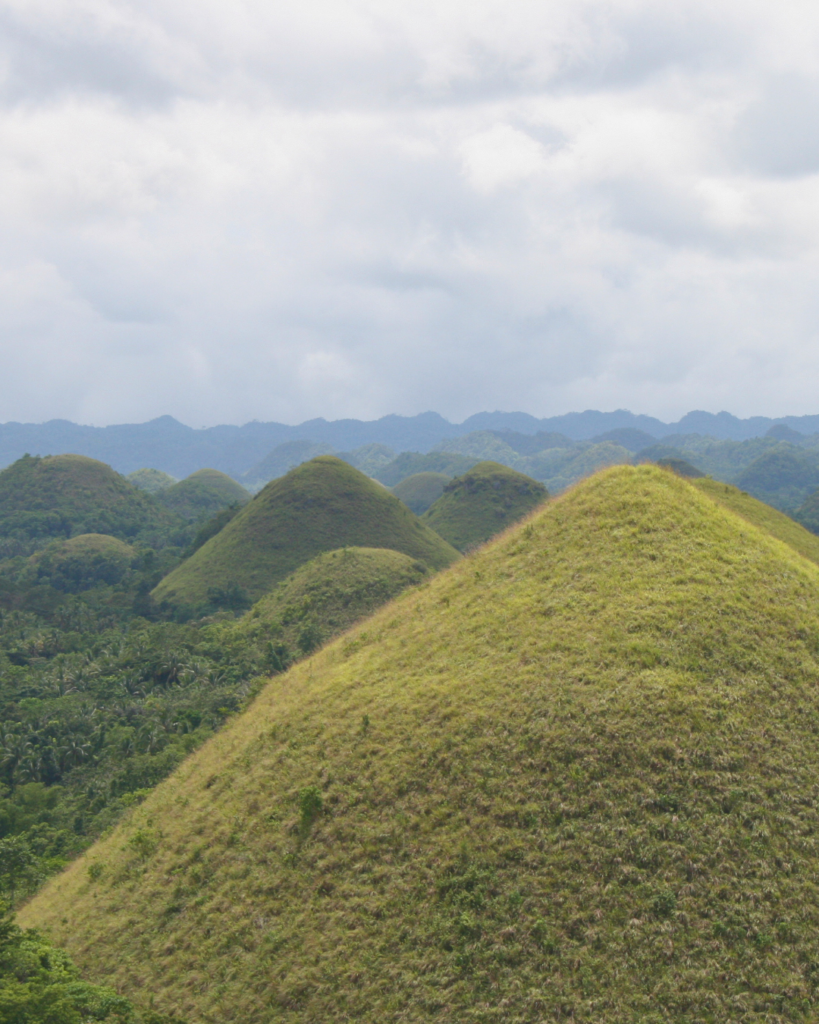
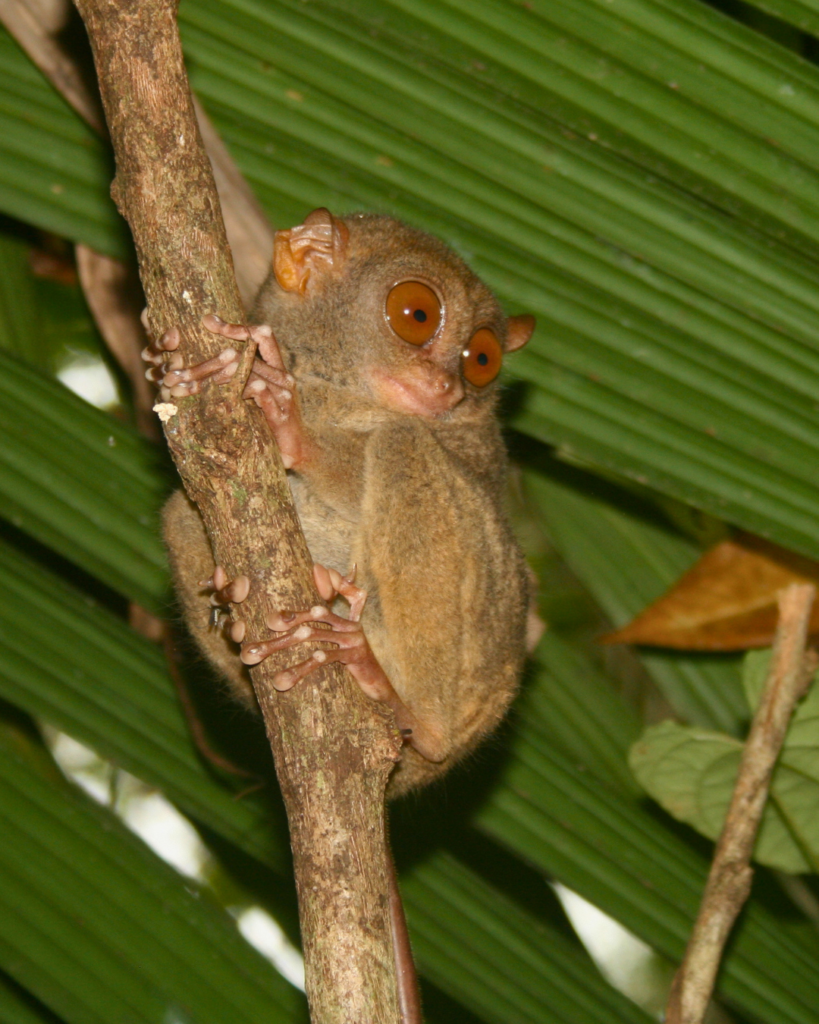
We started our diving vacation on Bohol. In addition to diving, we also made time to go on a few trips and excursions around the island itself. Bohol is home to the famous Chocolate Hills, which we really wanted to visit. They are green, cone-shaped hills and perhaps the island’s most famous attraction. The island is very green anyway, especially inland. There you’ll find several waterfalls and also the unique tarsiers. These are tiny primates with enormous eyes. Very special and cute animals!
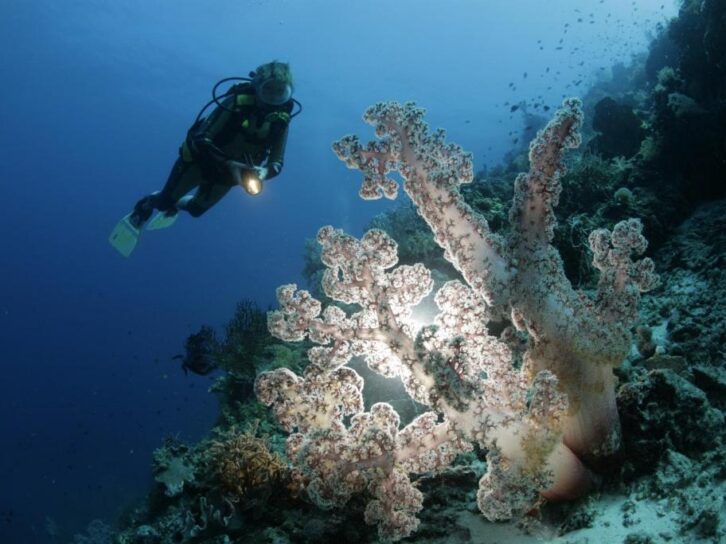
But in the end, of course, we came to Bohol to dive. The best part of this trip was that the underwater landscape was constantly changing, and we saw something new on every dive. Colorful corals, huge schools of fish, and then the tiniest creatures that you’d probably swim right past without a good guide.
Malapascua: our first thresher shark!
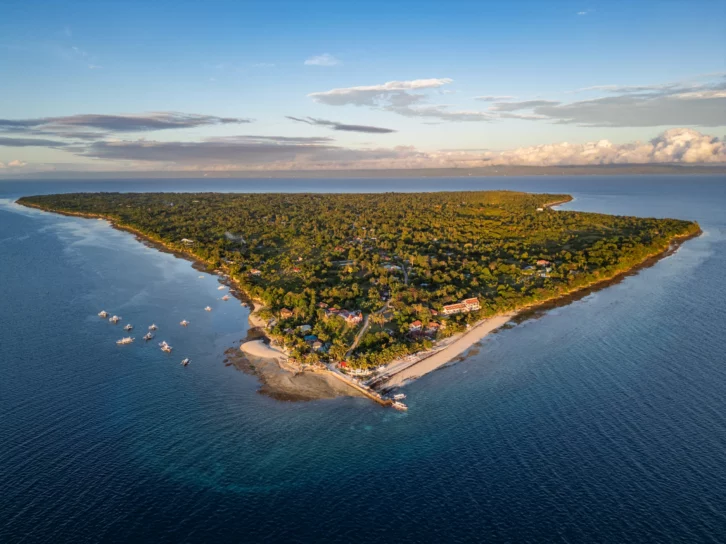
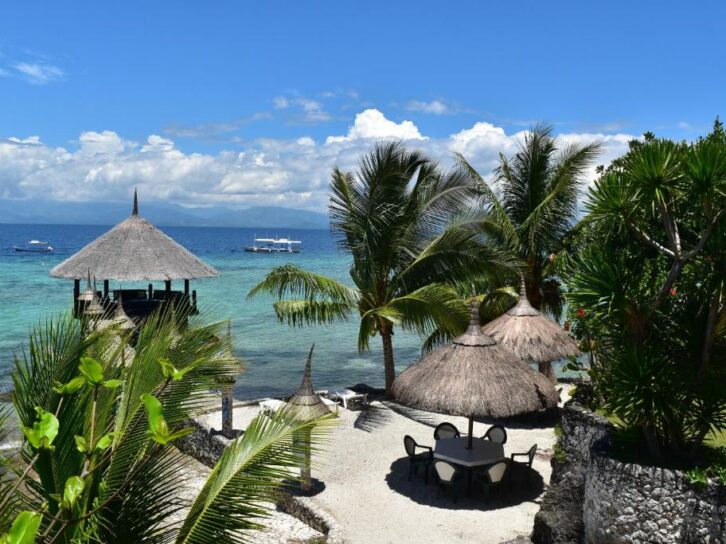
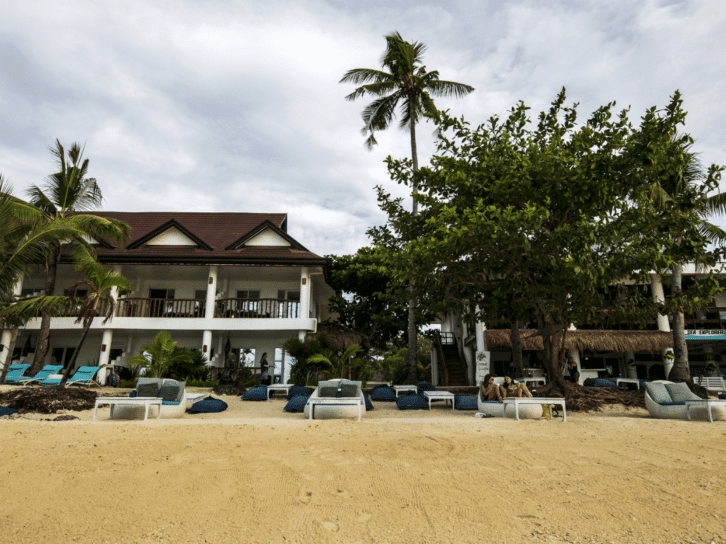
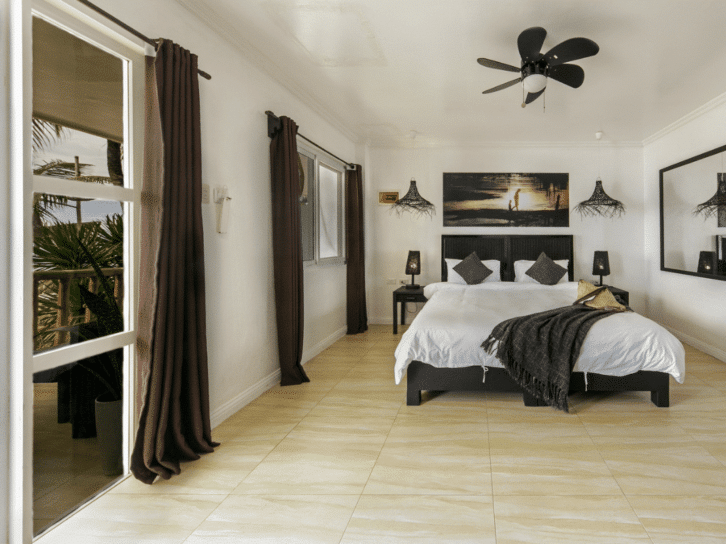
One of the absolute highlights came on Malapascua, where we stayed at Ocean Vida Beach & Dive Resort. A delightful, small-scale resort right on the beach. Exactly the kind of dive resort I love to see in the Philippines: relaxed, cozy, and with diving always close by. We still offer this resort, and it’s where we’ll be staying during the group tour in May 2027!
When I look at our old photos, I also see the Sea Explorers briefing cards again. Names like Monad Shoal, Kimud Shoal, Lighthouse, Lapus-Lapus, Deep Rock, Deep Slope, Gato Island, Kalanggaman, and the Doña Marilyn wreck come to mind. And I actually remember these names pretty well, because we always got a detailed briefing before each dive. We had high expectations for this island—it’s the place to see thresher sharks while diving. And that was pretty high on our wish list.
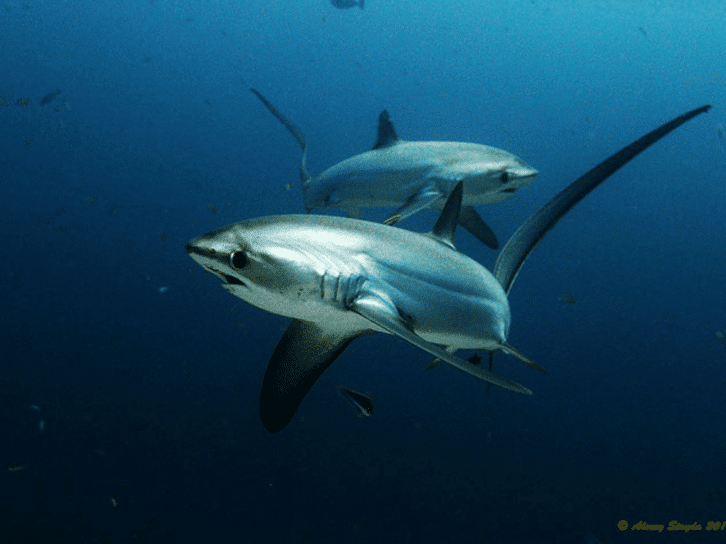
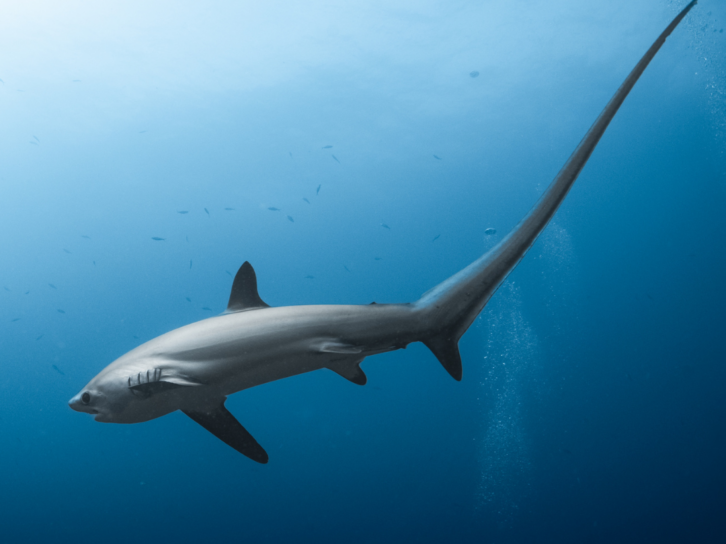
In 2010, Monad Shoal was the most famous spot near Malapascua to see these remarkable sharks. And we were lucky—we spotted our first thresher shark on our very first dive! As with many sharks, an encounter like this makes a huge impression. The thresher shark has a slender body, large eyes that seem to look at you with a hint of surprise, and an incredibly long tail. It’s perhaps one of the most elegant and recognizable sharks you’ll ever encounter. And you’ll never forget that first encounter, even years later.
Malapascua turned out to have much more to offer than just the thresher sharks. At Gato Island, we dived among rock formations, caves, and tunnels and encountered sea snakes, among other things. At Lighthouse, we searched for mandarin fish, and at sites like Deep Rock, Deep Slope, and Lapus-Lapus, each dive offered a different experience.
That’s definitely something that stuck with me from the Visayas. One moment you’re looking at a shark, and on the next dive you’re practically right on top of the reef, peering at a nudibranch just a few centimeters long. It’s a nice change of pace!
Luckily, we had brought a camera!
We knew beforehand that this would be a special trip, and we really wanted to capture some of all that underwater beauty. Since we didn’t yet have a good underwater camera of our own, we rented an Olympus camera with an underwater housing from Onderwaterhuis.nl for this trip.
In hindsight, that turned out to be an excellent choice. When I look back at the photos now, sixteen years later, I’m actually pleasantly surprised by their quality. Using Dive+, we were able to freshen up the old images a bit, bringing out the colors and contrast a little better. And it’s precisely those photos that are incredibly valuable. Sometimes a single image is enough to instantly transport you back to a particular dive and remind you of everything you encountered there.
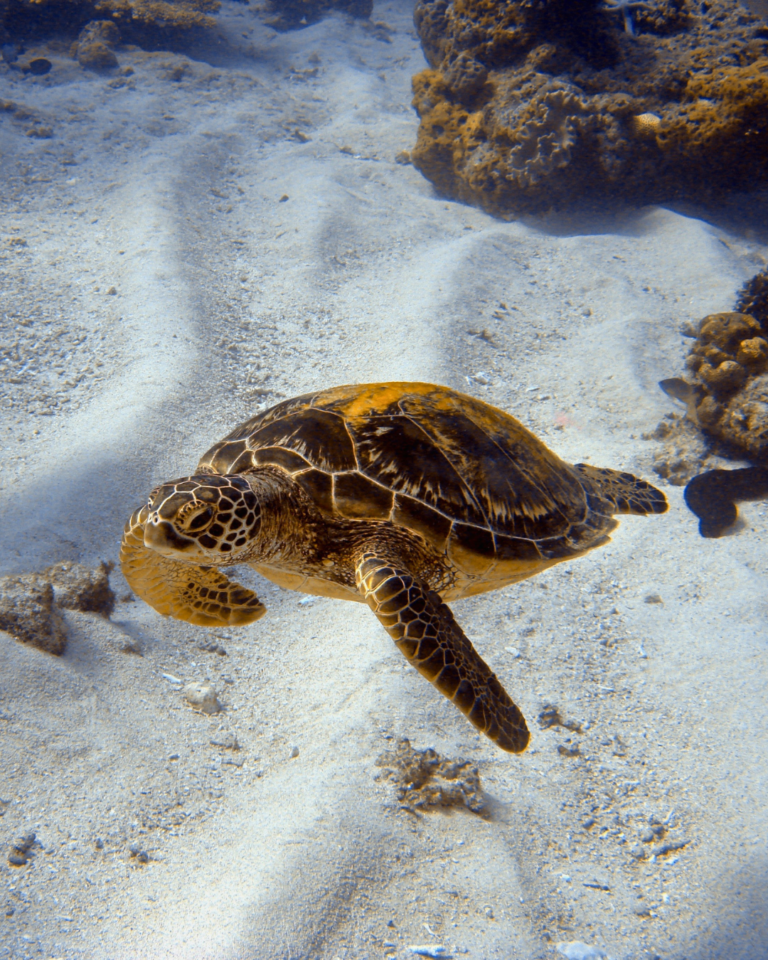
We photographed colorful nudibranchs, a beautiful yellow-green leaf scorpionfish, and pipefish. We also came across schools of shrimpfish or razorfish, remarkable fish that move through the water almost vertically, head down. And of course, there were the sea snakes and our thresher shark. Incidentally, the photos of the thresher shark at the top of this report are the only two that weren’t taken by us; all the other photos in this report were taken by us during the trip.
Renting first isn’t a bad idea at all
I still recommend renting an underwater camera if you’re curious about underwater photography. You don’t have to go out and buy a camera, housing, and accessories right away. Try renting a complete set for a vacation and see if you enjoy taking photos while you’re diving.
Personally, I ended up going in a different direction and these days I mainly use a GoPro. But when I look back at the photos from 2010, I’m still incredibly glad we rented that Olympus back then.
And once you really get into underwater photography, EWDR also offers special photography trips led by underwater photographer Thomas Van Puymbroeck. This way, you can combine beautiful dives with the opportunity to further develop your photography skills.
By boat between the islands
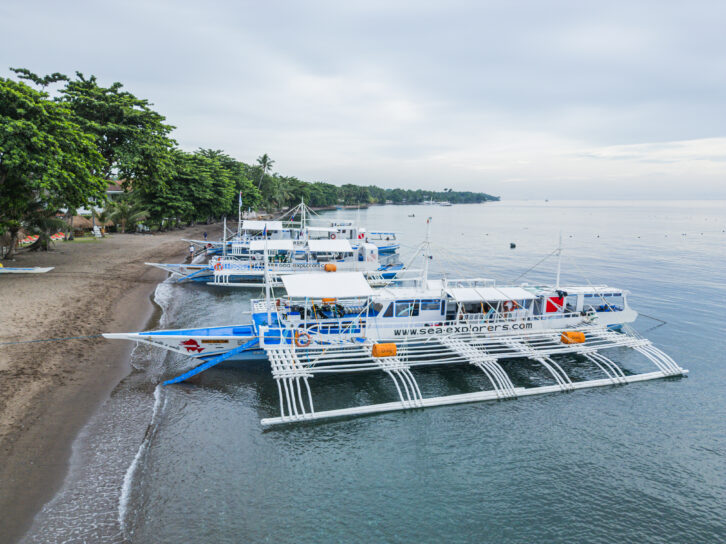
During this trip, we visited several islands, and the trip to each new island was also very well organized. We “simply” traveled by boat from island to island. Fortunately, I still have photos of that, too. You board the boat with your luggage and diving gear, and then the adventure begins. Tropical islands on the horizon, blue water all around you, and you just go diving along the way.
Somewhere among the islands, the boat slowed to a stop, the tanks were set up, and not long after, you were back in the water. Then back on board, a quick bite to eat, and on to the next destination. Sometimes we’d stop at a small or virtually uninhabited island to grab a bite to eat. And that brings us straight to the answer to a question we’re asked surprisingly often at EWDR when we talk about these kinds of boat trips:
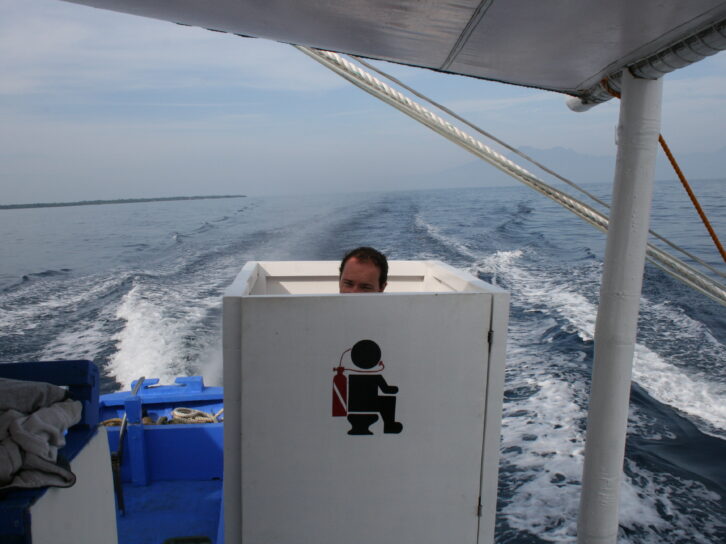
“Is there even a restroom on board?”
Absolutely! At least, that was the case on our boat in 2010. For tall Dutch people, it was all a bit cramped, and you occasionally had to maneuver yourself into a somewhat creative position, but there was definitely a toilet. I can’t say for sure whether Sea Explorers still sails with exactly the same boats these days. It’s been sixteen years since then, and I wouldn’t be surprised if some things have been updated in the meantime. But even back in 2010, the facilities for this kind of crossing were perfectly fine. And to be honest, you’re happy to put up with that little bit of discomfort when you’re back outside afterward with nothing but the sea and islands around you. And of course, not everyone is nearly 2 meters tall…

Dauin: with your nose just above the black sand
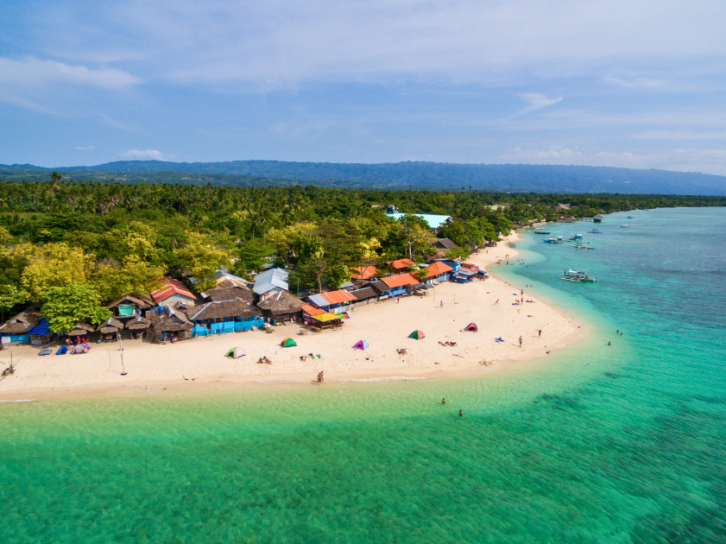
One of the places I came across again on our old dive charts is Kalanggaman Island. A beautiful tropical island with white sand, clear blue water, and stunning underwater drop-offs. Just the trip there was a delight in itself.
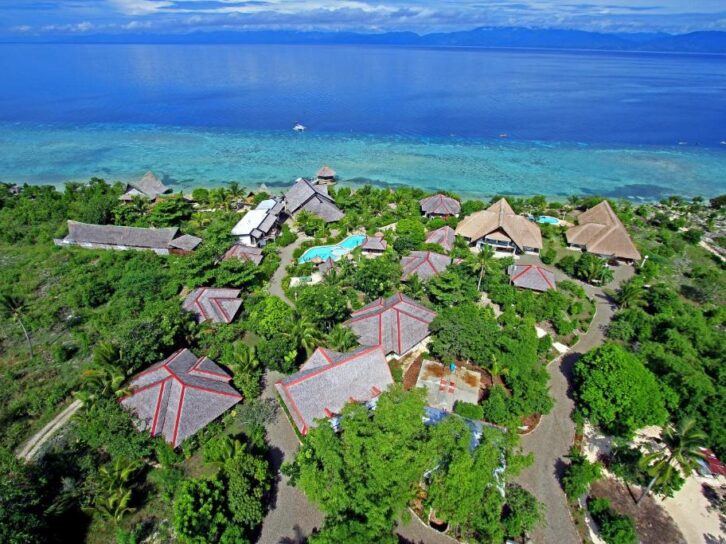
And that’s exactly what I loved so much about island hopping. You gradually see the landscape change as you sail further through the Visayas. Diving along the way, grabbing lunch somewhere, and then continuing on. Eventually, we reached Negros, and not only did the landscape above water change, but underwater, too, we suddenly found ourselves in a completely different world. We stayed in the town of Dauin at the Pura Vida Beach & Dive Resort, where the diving was also organized by Sea Explorers. Pura Vida is a true divers’ resort: tropical, lush, and relaxed, with everything geared toward enjoying diving to the fullest. We still offer this dive resort as well!
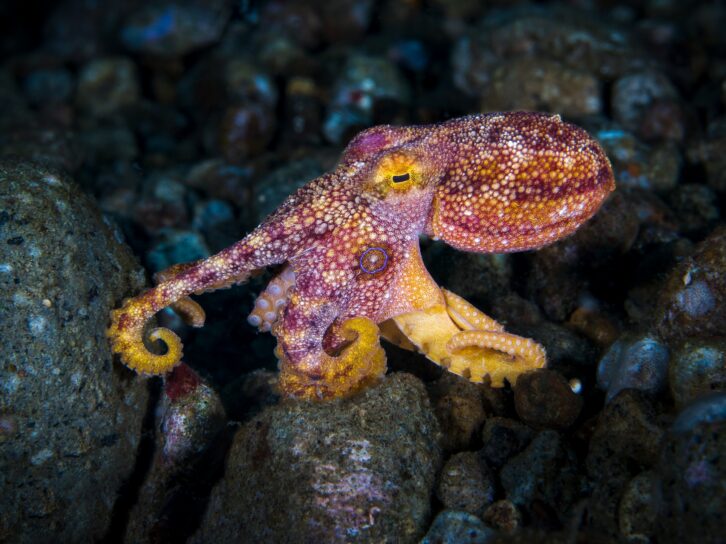
Dauin then introduced us to a completely different kind of diving. Here you’ll find dark, volcanic sandy bottoms. At first glance, it might seem less spectacular than a colorful coral reef, but as soon as you take a closer look, you realize there’s something everywhere. This is the famous muck diving. Nudibranchs, pipefish, camouflaged fish, and all kinds of bizarre little creatures. Sometimes you’d find yourself with your nose practically pressed against the dark sand because the guide was enthusiastically pointing out something you couldn’t spot at all at first.
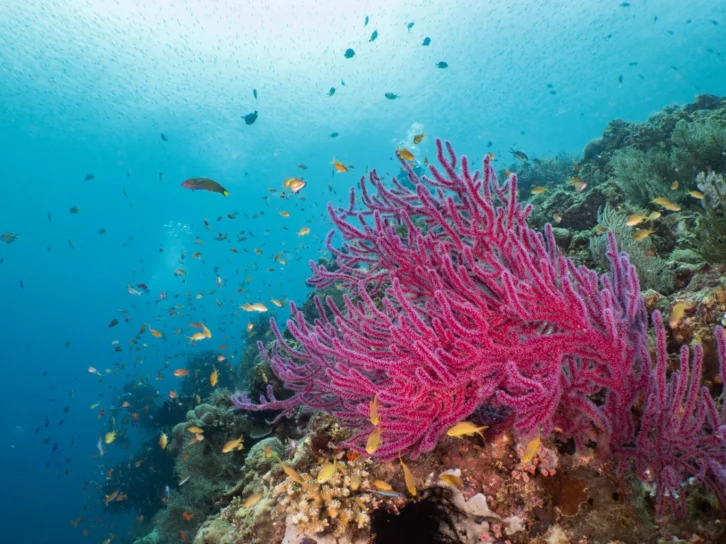
And then, a day later, you board the boat to Apo Island, and the underwater world changes completely once again. Gone is the dark sand. Suddenly, you’re swimming past beautiful coral reefs, walls, and vast schools of reef fish in crystal-clear tropical waters. To me, that really sums up the Visayas perfectly: the variety is immense.
“Hello, sir” and the handsome boys from Holland
When I look back at the photos now, I’m not just reminiscing about fantastic dives. What has stuck with me just as much is the friendliness of the Filipino people. Everywhere we went, we were greeted with “Hello, sir!”. At first, I thought that was rather formal. Why is everyone here calling me “sir”? Later, we realized it wasn’t meant to be formal at all. It’s mainly a friendly and respectful way of greeting someone.
Robbert and I also attracted quite a bit of attention. We’re twins, and with our height, we really stood out among the Filipinos. It didn’t take long before we were dubbed the “handsome boys from Holland” somewhere . Of course , we were perfectly fine with that. We were also approached incredibly often by people asking if they could take a picture with us. It was a little awkward at first, but we mostly just laughed it off.
One evening, a few local waitresses invited us to come play a game of cards. Naturally, that seemed like an excellent idea to us. And it was—though it turned out to be mostly an excellent opportunity to make complete fools of ourselves. We clearly knew far less about the local rules and tactics than the ladies across from us. But above all, there was a lot of laughter, and that’s really what matters most on a night like that. Before you know it, you’re sitting with people you barely know, playing cards, cracking jokes, and having an incredibly fun evening together. For me, that’s also what the Philippines is all about.
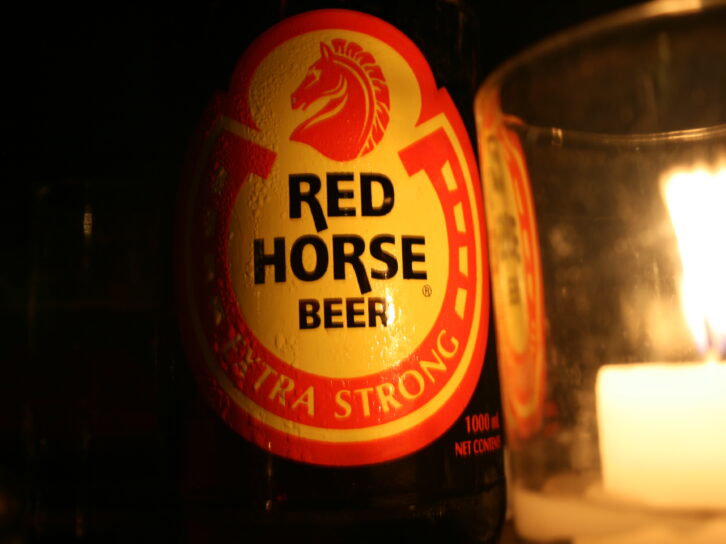
The evenings were wonderfully simple anyway. After a day of two or three dives, we’d start by taking a shower, then order a cold beer, and finally see what fresh fish was available that day. Pick out the fish, have it prepared, and then enjoy a delicious meal on the beach. That was really all we needed. There you are with your brother and a good friend, tired and content after a day of diving, with a beer in front of you and the sea just a few meters away. Meanwhile, you’re already discussing everything you saw that day and what’s on the agenda for the next morning. A diving vacation doesn’t get much better than that.

Just a few more days in Singapore
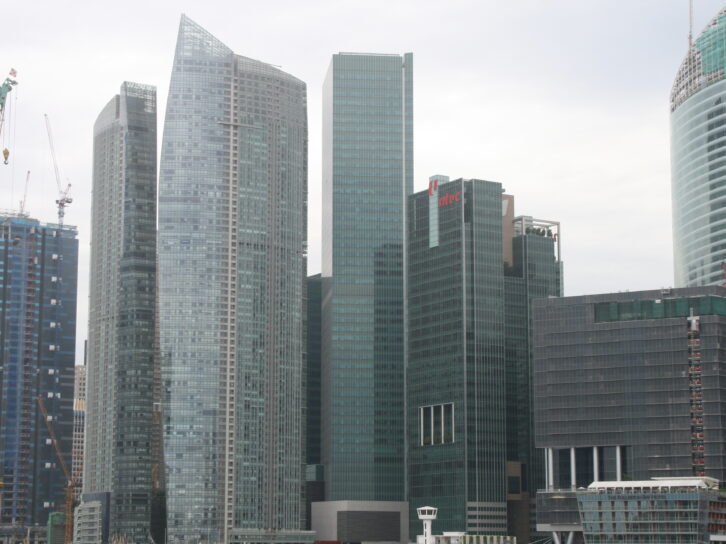
On the way back, we extended our trip just a little bit with a stopover of a few days in Singapore. The contrast couldn’t have been greater: after weeks of small islands, dive boats, sandy beaches, and the laid-back Filipino way of life, we suddenly found ourselves in the middle of an ultra-modern metropolis. Skyscrapers, shops, restaurants, and all the luxuries of the modern world were once again within reach.
It was a fantastic way to wrap things up. We spent a few more days exploring, eating well, and enjoying the city before we finally flew back to the Netherlands.

Sixteen years later, there’s really only one thing we want…
So, sixteen years have passed since then. Of course, our photos from 2010 are no longer comparable, technically speaking, to what we can take today. We’ve also logged quite a few more than the fifty dives we had when we first embarked on this adventure.
Still, it’s always fun to look back at the old photos and videos. I only have to look at a few of them, and it all comes flooding back. The first thresher shark, the sea snakes, the bizarre little creatures of Dauin, Apo Island, the reefs, sailing between the islands, having lunch on a tiny beach, the fresh fish, the cold beer, playing cards with the local ladies, and of course the ever-present “Hello, sir!”
It was just a fantastic trip. And one thing I know for sure: we’re definitely going back to the Visayas.
Would you like to experience a trip like this yourself? In 2027, we’re organizing a group trip to the Visayas in collaboration with Margriet. It’s a wonderful opportunity to visit several islands and experience firsthand the incredible diversity this region has to offer, both above and below the water.
Of course, you can also book a similar trip on your own through EWDR. We can also combine the various islands, resorts, and dive sites for an individual trip. True island hopping—where you sail by boat from one destination to another and dive along the way—does depend on the number of participants and the options available at that time. But whether you choose a group tour or an individual trip, the Visayas are a destination that every diver really should visit at least once.
We were there in 2010. Sixteen years later, all I have to do is look at a few old photos and I already want to go back. That pretty much says it all.
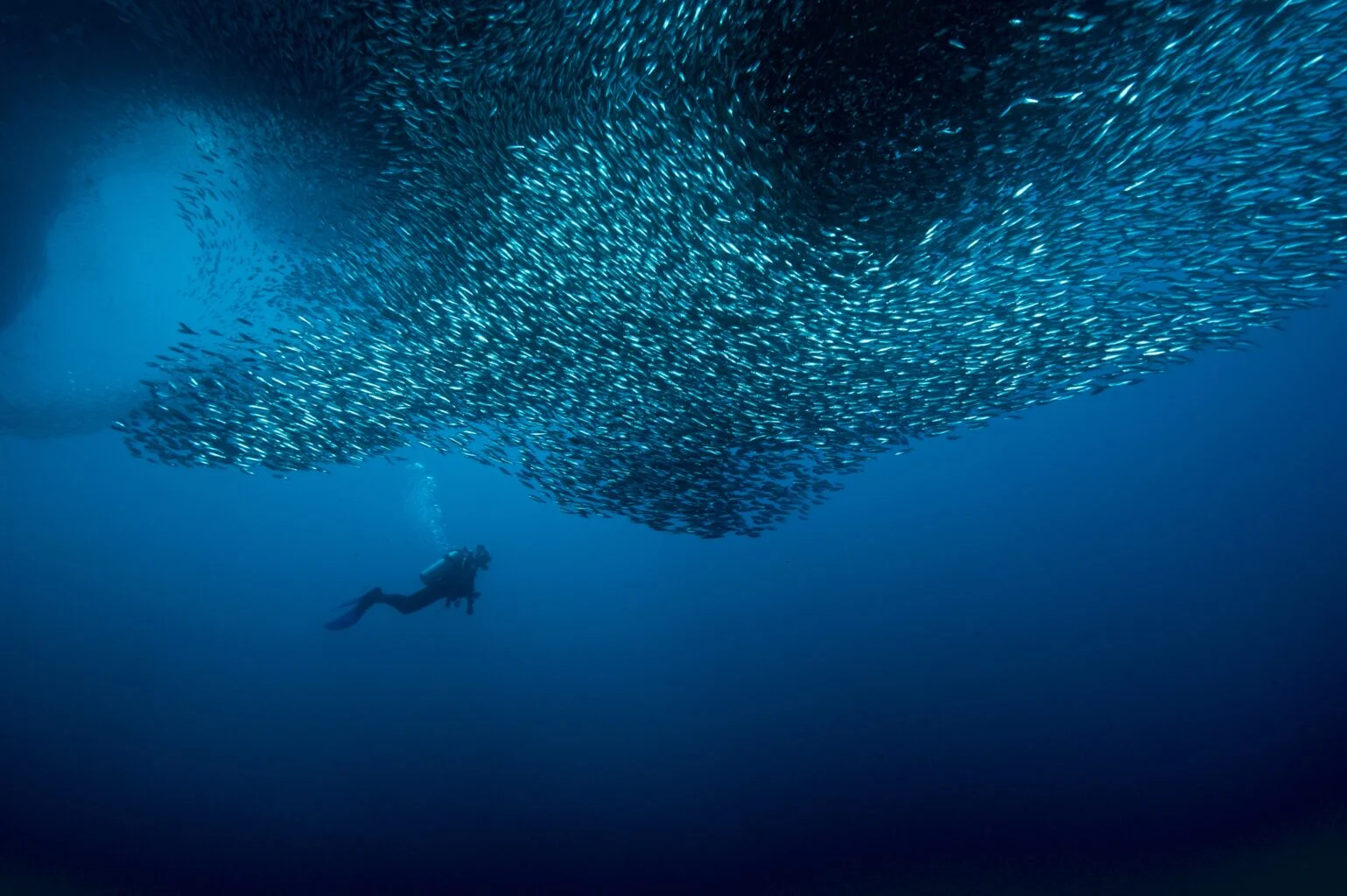

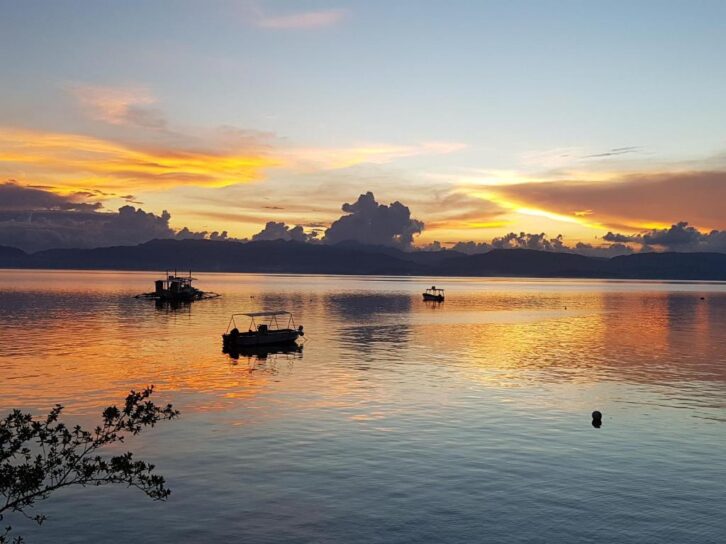
Group trip in the Philippines • Island Hopping: Moalboal, Dauin, and Cabilao
Discover three of the most beautiful diving destinations in the Philippines on a unique group trip. Dive among millions of...
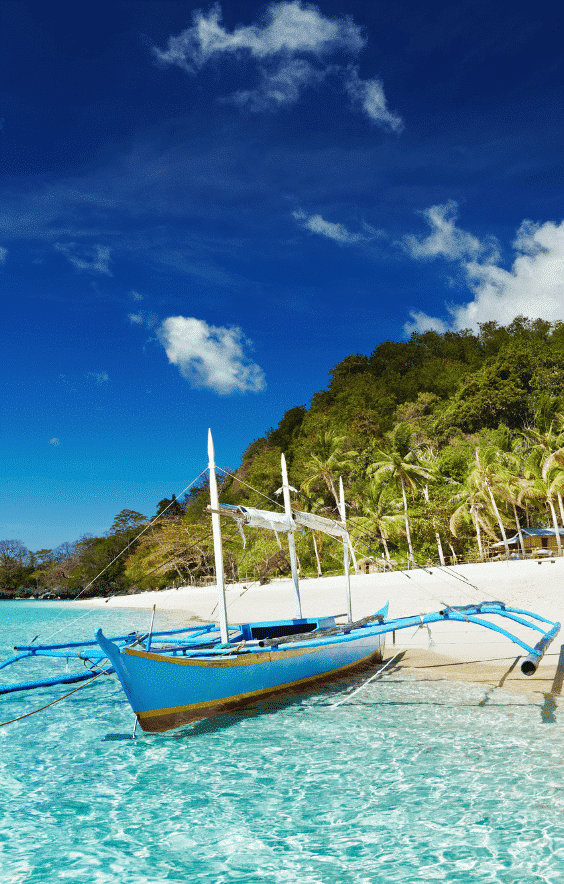
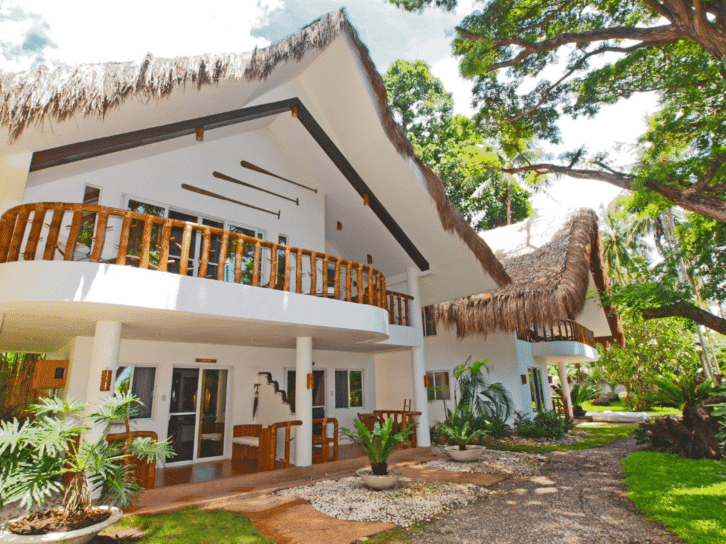
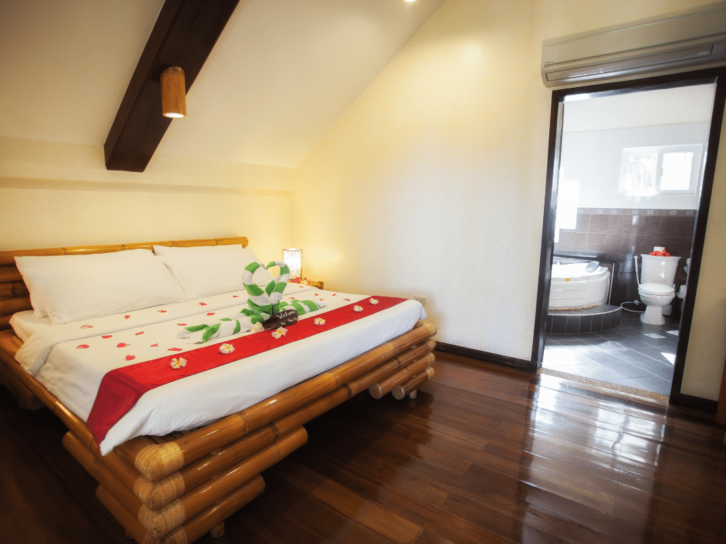
Island hopping in the Philippines (Visayas)
An unforgettable diving vacation: Dauin’s beautiful underwater world combined with the thresher sharks of Malapascua.