Diving in Morotai & Metita: a complete guide
When you think of a diving vacation in Indonesia, destinations like Raja Ampat, Komodo, and Bali are probably the first to come to mind. These are fantastic destinations, but there’s so much more to discover. In the far north of the Moluccas lie two islands that have barely been explored by international divers: Morotai and the small, tropical Metita Island.
Together, they form the gateway to an unspoiled diving area in Indonesia. Here you’ll find colorful coral reefs, impressive walls, historic World War II wrecks, and a surprisingly rich biodiversity. At the same time, above water, you’ll experience a side of Indonesia that is slowly disappearing in many other places: quiet beaches, lush rainforests, small fishing villages, and a laid-back island lifestyle.
Precisely because Morotai and Metita are so remote, the reefs remain exceptionally well-preserved, and you rarely encounter other groups while diving. It feels like you’re discovering a destination that hasn’t yet appeared on the radar of mass tourism.
In this blog, we’ll tell you all about these islands, how to get there, and why it’s worth traveling to the Moluccas.
Table of contents
General information about Morotai & Metita
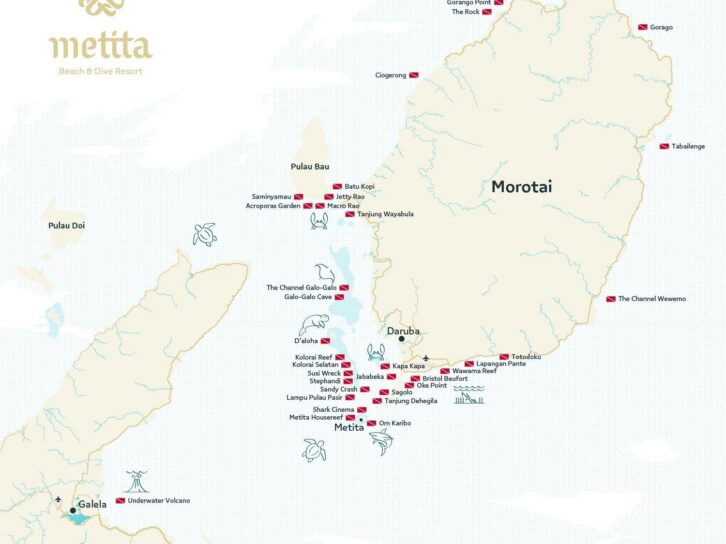
Morotai is the northernmost island of the Moluccas and is surrounded by the waters of the Pacific Ocean and the Halmahera Sea. With an area of over 2,300 square kilometers, it is a surprisingly large island, featuring a varied landscape of tropical rainforest, mangroves, white-sand beaches, and small coastal villages where daily life is still shaped by the sea.
Off the west coast of Morotai lies Metita, a small tropical island surrounded by crystal-clear waters and vast coral reefs. Thanks to its peaceful location and the short boat rides to the surrounding reefs, Metita is an ideal base from which to explore Morotai’s underwater world.
The waters surrounding both islands are part of the Coral Triangle, the area with the greatest marine biodiversity in the world. The combination of nutrient-rich currents and healthy coral reefs supports an impressive variety of marine life. Precisely because Morotai and Metita are still relatively unknown, many reefs are in excellent condition and many dive sites are virtually untouched.
Morotai also has a rich history. During World War II, the island played an important role in the Pacific War. In 1944, the Allies established a large military base here, traces of which are still visible today. Not only on the island itself, but also underwater, there are several historic shipwrecks that serve as reminders of this period.
Despite all their natural and historical riches, Morotai and Metita still attract only a limited number of visitors. That is precisely what makes this destination so special. Here, there are no crowded beaches or packed dive boats, but rather a relaxed island atmosphere where nature, culture, and adventure come together.


How do you get to Morotai or Metita?
It takes a while to get to this part of Indonesia. From the Netherlands, you’ll usually fly to Manado, with a layover in Singapore. There are no daily flights to Morotai; currently, flights operate only once a week. That means you’ll need to plan carefully when you’re going and how long you want to stay.
Metita is an even smaller island located off the coast of Morotai. First, you’ll take a land transfer from the airport, followed by a boat ride. This is often arranged by the hotel where you’re staying. That’s nice, because then everything is already taken care of for you and you don’t have to make any arrangements once you arrive. This is definitely an advantage, especially after a long trip like this.
What makes Morotai and Metita so special?
In a country with thousands of islands, it’s remarkable that a destination like Morotai remains so little-known. You notice this immediately upon arrival. There are no crowded boulevards, no long rows of hotels, and even underwater you rarely come across other diving groups. It feels as if you’re discovering a part of Indonesia that has remained largely hidden.
Its location in the Coral Triangle ensures an exceptionally rich underwater world, while its remote setting has kept the reefs in excellent condition. Many dive sites are visited only sporadically, which keeps the coral healthy and allows marine life to thrive undisturbed.
The destination also has plenty of charm above water. Morotai features green hills, tropical rainforest, mangrove forests, and quiet coastal villages where the local population lives primarily off fishing and agriculture. At Metita, it’s all about nature and relaxation. The island is small enough to explore on foot and is surrounded by clear blue water and white-sand beaches.
Morotai also stands out for its history. During World War II, the island served as an important base for the Allies. Remnants from that period are still visible, both on the island and underwater. It is precisely this combination of unspoiled nature, a rich history, and exceptional diving opportunities that makes Morotai and Metita a destination unlike any other in Indonesia.
Why dive in Morotai & Metita?
Morotai isn’t a destination you visit just to check off one specific dive site. It’s actually the incredible variety that makes the area so special. Around Morotai and the small island of Metita, there are dozens of dive sites, each with its own unique character. One moment you’re gliding past a steep wall covered in colorful soft corals and enormous fans; the next dive, you’re exploring a vast coral garden or a historic World War II wreck. Because the dive sites are relatively close together, virtually every dive is different.
The waters around Morotai are part of the Coral Triangle, the area with the greatest marine biodiversity in the world. You can see that immediately as soon as you go underwater. The reefs are in excellent condition and are covered with an impressive variety of hard and soft corals. Large table corals alternate with colorful sponges, gorgonians, and vast fields teeming with reef fish. In many places, it seems as though nature is still completely free to take its course here.
During a dive, there’s a good chance you’ll be surrounded by schools of fusiliers, snappers, and jacks constantly swimming across the reef. Barracudas, tuna, or reef sharks regularly appear out of the blue, while sea turtles swim peacefully along the reef. Bumphead parrotfish and napoleon fish are also frequently spotted here. It is precisely this combination of large marine life and healthy reefs that makes every dive unique.
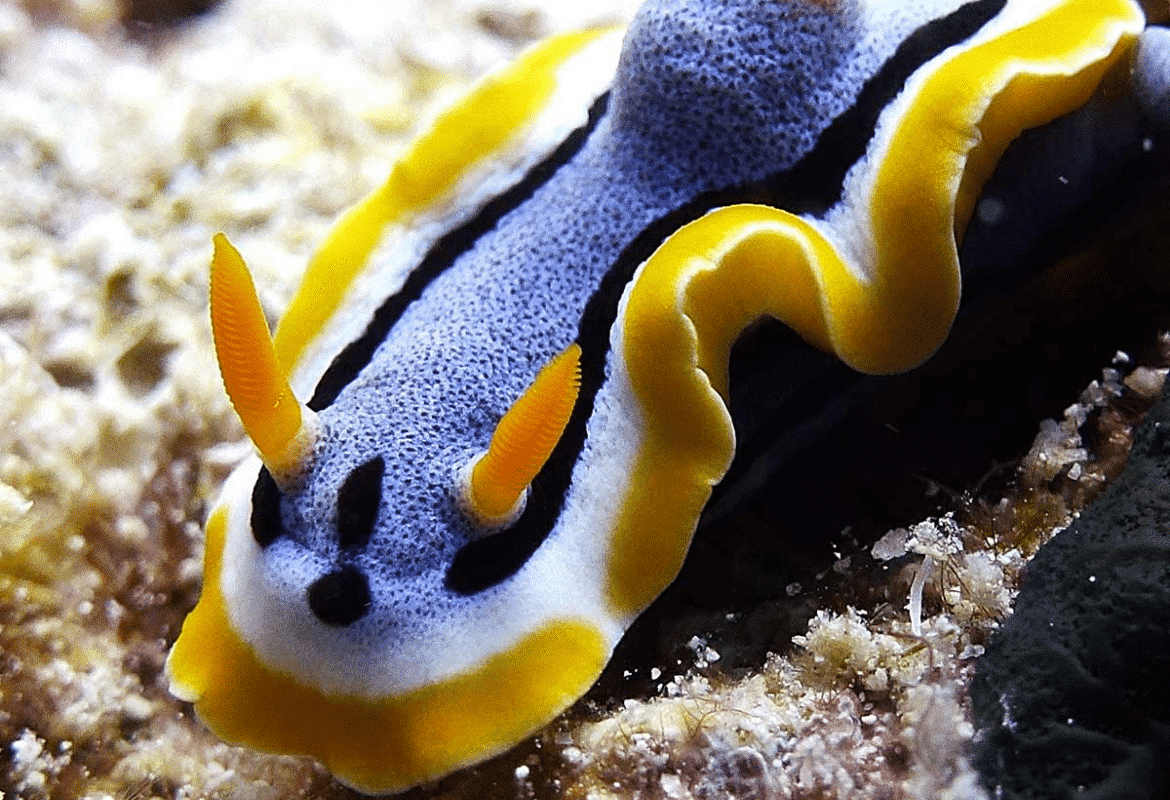
At the same time, Morotai is also an excellent destination for macro life enthusiasts. If you take a leisurely look around the reef, you’ll discover more and more hidden inhabitants. Colorful nudibranchs, ghost pipefish, various species of shrimp, moray eels, scorpionfish, and sometimes even a pygmy seahorse hide among the coral. As a result, the destination appeals not only to divers who enjoy seeing large marine life but also to underwater photographers who are specifically looking for the smallest details.
What also sets Morotai apart from many other Indonesian destinations is its history, which lies hidden beneath the water. During World War II, the island served as an important Allied military base. Aircraft, landing craft, and other military equipment still lie on the seabed in various locations. Over the years, these wrecks have become completely overgrown with corals and sponges, creating a unique convergence of history and nature.
Perhaps the biggest difference compared to better-known diving areas is the tranquility. Morotai is still visited by only a limited number of divers. It’s therefore not uncommon to go an entire day of diving without encountering another dive boat. That gives every dive the feeling of a true voyage of discovery. It is precisely this combination of pristine reefs, immense biodiversity, historic wrecks, and the silence underwater that makes Morotai and Metita two of Indonesia’s most extraordinary diving destinations.
Where can I stay in Morotai and/or Metita?
Although Morotai is still a relatively undiscovered destination, there are several options for lodging. Most accommodations are located on the main island of Morotai, where you can choose from simple hotels and small-scale resorts. These accommodations are often located in or near the capital, Daruba, or along the coast, and serve as a good base from which to explore the island and experience the local culture.
However, if you’re looking for a vacation where the underwater world takes center stage, then Metita Beach & Dive Resort is a unique choice. The resort is located on the small island of Metita, off the west coast of Morotai, and is surrounded by white-sand beaches, palm trees, and clear blue water. Its peaceful setting allows you to fully immerse yourself in nature, while many dive sites are just a short boat ride away.
Metita Beach & Dive Resort features comfortable bungalows scattered across the island, each offering direct views of the sea or the tropical greenery. The resort has its own restaurant serving both Indonesian and international cuisine, as well as a professional dive center that organizes daily dives to the reefs and shipwrecks around Morotai. Thanks to its small-scale layout, the atmosphere is relaxed and guests receive plenty of personal attention.
The type of accommodation that best suits you depends on the purpose of your trip. If your main goal is to explore the island, visit historical sites, and get to know the locals, then staying on Morotai is a logical choice. If you’re coming primarily for the underwater world and are looking for peace and quiet, nature, and direct access to the most beautiful dive sites, then Metita offers a unique experience.
Best time to visit Morotai & Metita
Morotai and Metita can be visited year-round. Thanks to the tropical climate, temperatures range between 27 and 31 °C year-round, while the water temperature remains fairly constant at around 28 to 30 °C. A 3-mm wetsuit is therefore sufficient for most divers.
The best conditions for diving are generally found between October and May. During this period, the sea is often calm, visibility is at its best, and weather conditions are generally stable. Underwater visibility usually ranges from 20 to 40 meters, depending on the dive site, the current, and weather conditions.
Just like at many other destinations in Indonesia, currents play an important role. At some dive sites, there is hardly any current, making them ideal for a relaxed reef dive or searching for macro life. Other sites, on the other hand, have slightly stronger currents, which bring in nutrient-rich water and increase the chances of encountering schools of fish, reef sharks, and other large marine life. Thanks to this wide variety, there’s almost always a suitable dive site to be found, regardless of the conditions on any given day.
Between June and September, there is generally a bit more rainfall, and the sea can be rougher on some days. However, diving is still very much possible during this period. You can simply head to sheltered dive sites, allowing you to continue enjoying colorful reefs and an impressive underwater world.
Since Morotai and Metita are still relatively unknown, it’s quiet there all year round. You don’t have to worry about large numbers of divers or crowded dive boats here, which means every dive remains a relaxed and exclusive experience.
Underwater life in Metita: what can you expect during a dive?
The waters around Morotai and Metita are part of the Coral Triangle, the area with the greatest marine biodiversity in the world. Thanks to the healthy reefs and the variety of coral gardens, steep walls, sandy bottoms, and shipwrecks, you’ll encounter different species on virtually every dive. From colorful reef fish to unique macro species and impressive pelagic fish, the underwater world is surprisingly diverse.
Although every dive is different and encounters with larger animals are never predictable, you can expect to see the species listed below on a regular basis.
Reef fish
- Doctor fish
- Emperor fish
- Butterflyfish
- Parrotfish
- Trolling
- Wrasse
- Soldierfish
- Cardinalfish
- Coral groupers
- Fusiliers
- Snappers
Bigger marine life
- Blacktip reef shark
- White tip reef shark
- Grey reef shark
- Green sea turtle
- Hawksbill turtle
- Barracudas
- Giant trevally
- Tuna
- Napoleon fish
- Bumphead parrotfish
Macro
- Pygmy seahorses
- Slugs
- Ghost whistle fish
- Leaf Scorpionfish
- Frogfish
- Shrimp
- Boxer crabs
- Porcelain crabs
- Gobies
- Blennies
- Pipefish
Invertebrates
- Octopus
- Coral lobsters
- Walls and
- Sea cucumbers
- Sea urchins
- Giant Mussels
- Different types of sponges
- Spring stars
Corals and reef structures
- Table choral pieces
- Staghorn corals
- Brain corals
- Soft corals
- Gorgons
- Sea fans
- Barrel-shaped sponges
- Coral gardens
- Steep reef walls
Wrecks full of life
- World War II aircraft wrecks
- Landing craft
- Military equipment
- Shipwrecks completely covered in corals and sponges
- Reef fish and macroorganisms that use the wrecks as shelter
Who is Metita a good destination for?
Morotai and Metita are not the right destinations for those looking for bustling beach resorts or a vibrant nightlife. It is precisely the tranquility, small scale, and unspoiled nature that make these islands so special. It is a destination for travelers who like to venture off the beaten path and want to experience the real Indonesia.
Morotai and Metita are, among other things, an excellent choice for:
- Divers who are looking for pristine reefs and enjoy diving at sites where they’re unlikely to encounter many other divers.
- Biodiversity enthusiasts, drawn to a combination of colorful coral reefs, macro life, and larger marine life.
- Wreck divers, thanks to the unique World War II wrecks scattered around Morotai.
- Underwater photographers who can take both wide-angle shots of healthy reefs and macro photos of small reef inhabitants.
- Those seeking peace and quiet who want to enjoy white-sand beaches, tropical nature, and a relaxed island atmosphere.
- Travelers who want to look beyond the well-known Indonesian destinations and enjoy discovering new places.
Although many dive sites are suitable for certified divers of various skill levels, some sites may require more experience due to the currents present. As a result, Morotai is an especially attractive destination for divers who feel comfortable in varying conditions and enjoy doing different types of dives.
Even non-diving partners will have a wonderful time here. The tropical setting, the peaceful beaches, the local culture, and the historic sights make Morotai and Metita a versatile destination with plenty to do both above and below the water.
Nature and culture in Metita
Of course, you come to Metita to dive, but there’s also plenty to discover above water. The landscape is characterized by tropical rainforest, white-sand beaches, mangrove forests, and an azure-blue sea. There’s also very little tourism, so you’ll often find empty beaches and can truly experience a sense of peace and quiet.
During your stay, you can, among other things:
- Relax on the peaceful beaches of Morotai and Metita.
- Visit traditional villages and get to know the hospitable locals.
- Explore historic sites from World War II, including former landing sites, monuments, and military ruins.
- Go island hopping to small nearby islands such as Dodola Island, known for its snow-white sandbar that becomes visible at low tide.
- Kayaking or stand-up paddleboarding on the calm, clear waters around Metita.
- Enjoy spectacular sunsets from the beach.
- Hike through the tropical wilderness and spot various species of birds and butterflies along the way.
Diving in Metita with EWDR
A trip to Morotai and Metita requires careful planning. Due to the various international and domestic flights, boat transfers, and the remote location, no two trips are exactly the same. At EWDR, we take care of all the arrangements for you, so all you have to do is look forward to your diving vacation.
Our travel specialists know Indonesia like no one else and are happy to help you plan the best itinerary. Whether you want to travel exclusively to Morotai and Metita or combine your stay with another destination in Indonesia, we’ll tailor the trip entirely to your preferences.
Are you curious to find out if Morotai and Metita are a good fit for you? Feel free to contact us. We’d be happy to tell you more about this unique destination and help you plan a diving trip that perfectly matches your experience level, travel group, and diving preferences.


Morotai & Metita Diving Trip • Metita Beach & Dive Resort
This trip takes you to Metita Beach & Dive Resort, a small-scale resort on a remote island off the coast...