More than 5,000 animals registered: these are the key insights from the BCSS Impact Report 2025
Every year, the Bazaruto Center for Scientific Studies (BCSS) publishes an impact report sharing the most important research findings from the past year. This is of interest to divers, as it offers a unique glimpse into what is happening beneath the surface of the Bazaruto Archipelago in Mozambique.
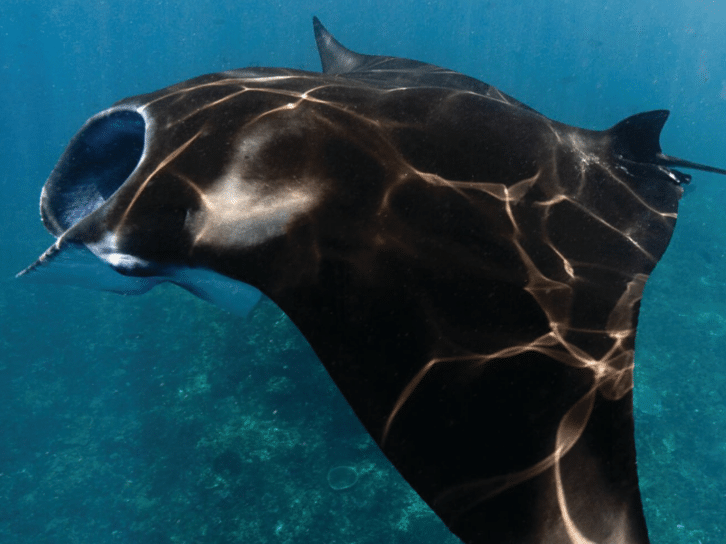
The Impact Report 2025 once again highlights just how extraordinary this area is. From humpback whales and manta rays to sharks, dolphins, and sea turtles: researchers collected a wealth of data on marine life in one of the most biodiverse regions of the western Indian Ocean. We’ve summarized the report’s key findings below.

More than 5,000 animals registered
In 2025, the BCSS team conducted 72 research cruises and 94 scientific dives. During these surveys, 353 marine life observations were recorded, representing more than 5,000 individual animals across 23 different species.
It is striking that no fewer than 11 globally threatened species are found among these species. This underscores the importance of the Bazaruto Archipelago as a habitat for large marine life in the Indian Ocean.
Growing Understanding of Humpback Whales
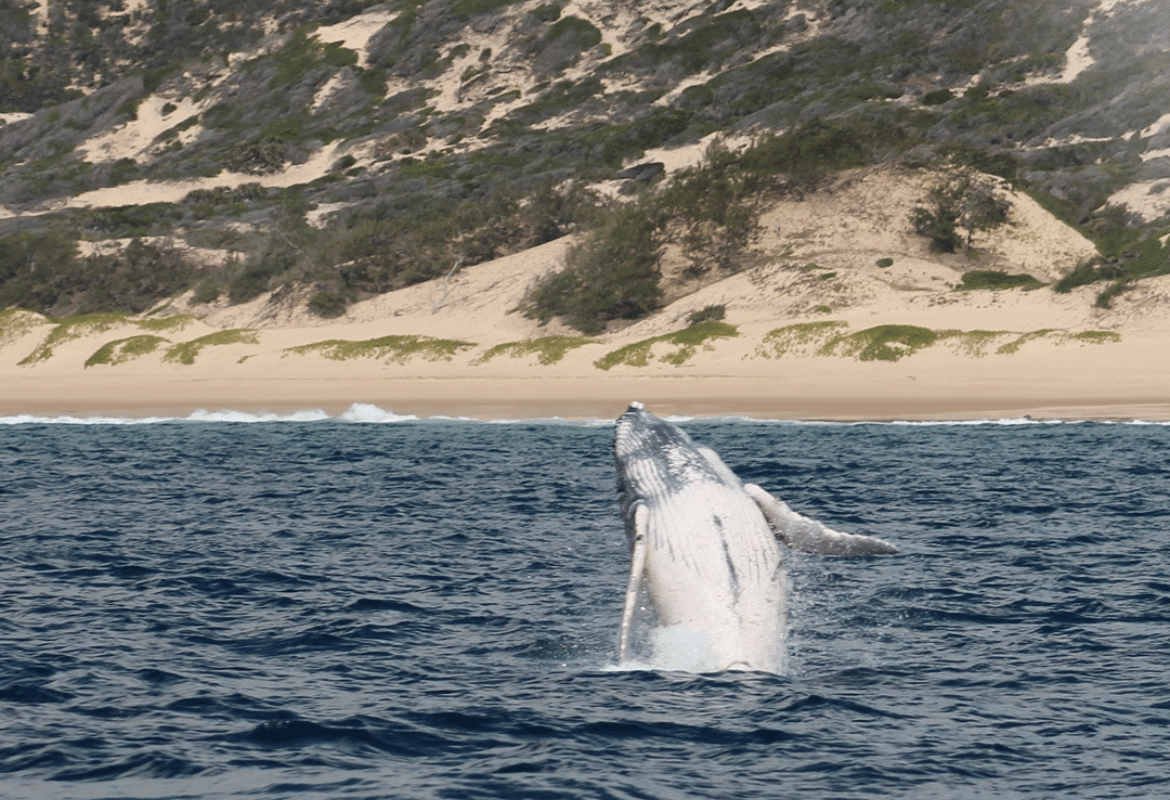
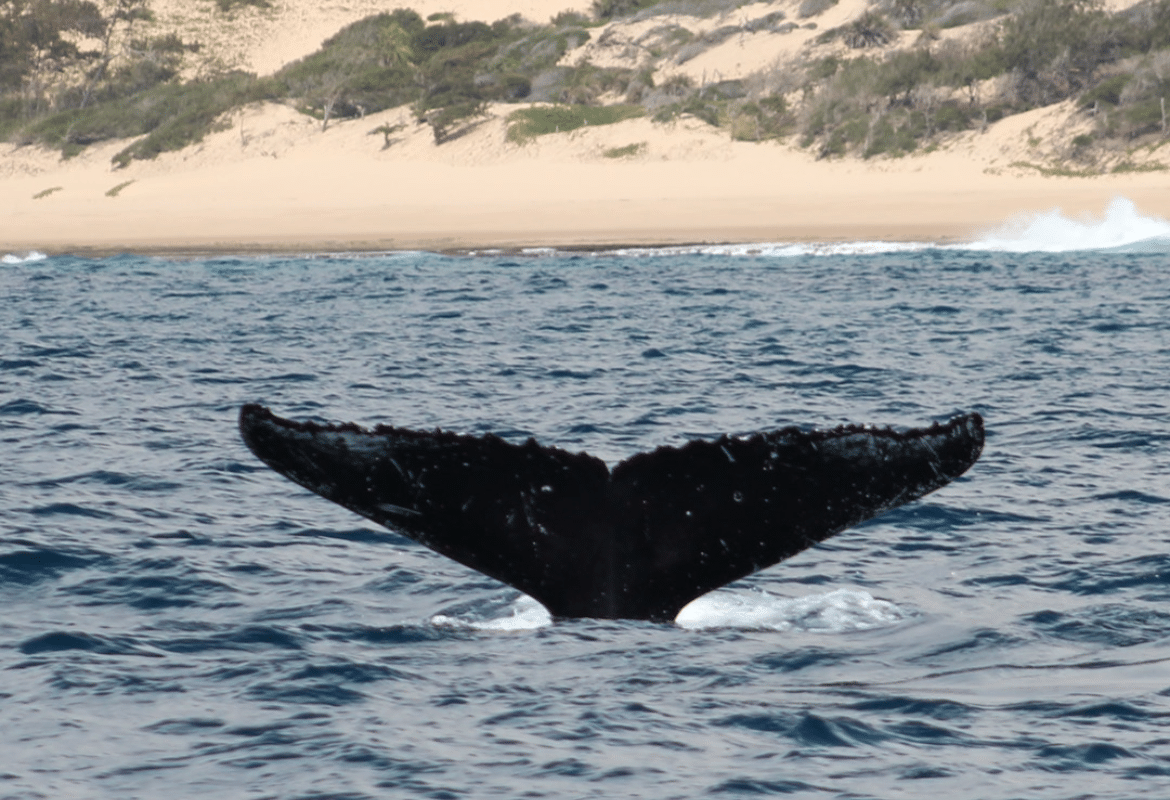
One of the highlights of the report is the further expansion of the photo-identification program for humpback whales. By identifying whales based on the unique patterns on their tail fins, researchers can track individual animals and learn more about their migration patterns.
The BCSS database now contains 78 identified humpback whales. With each new sighting, our understanding of the routes these impressive animals take through the Indian Ocean grows.
Research on Endangered Sharks
Shark research was also expanded further. In 2025, scalloped hammerhead sharks were fitted with satellite transmitters to better track their movements. In addition, BCSS achieved a remarkable first by attaching the first miniPAT satellite transmitter to a zebra shark.
Studies like these help scientists better understand how these animals move through the region and which areas are essential for their conservation.
The ocean is monitored day and night
BCSS’s research is not limited to the animals that are visible during a dive. The Ocean Observatory continuously collects data on the state of the ocean.
In 2025, more than 90,000 data points were collected on, among other things, water temperature, currents, ocean productivity, and other environmental factors. In addition, underwater microphones, satellite data, and long-term monitoring stations are used to closely track changes in the ecosystem.
A growing wealth of knowledge
Since the launch of the Ocean Observatory, BCSS has conducted more than 1,000 surveys, amounting to thousands of hours of research at sea. As a result, the Bazaruto Archipelago is becoming one of the most thoroughly studied marine areas in the western Indian Ocean.
The data collected not only contributes to scientific research, but also serves as an important foundation for nature conservation and the sustainable management of the area.
What does this mean for divers?
For divers, the report primarily confirms what visitors to the Bazaruto Archipelago often experience as soon as they enter the water: this is an exceptionally rich ecosystem. The large number of sightings of whales, dolphins, manta rays, sharks, and other marine animals demonstrates just how special this region still is.
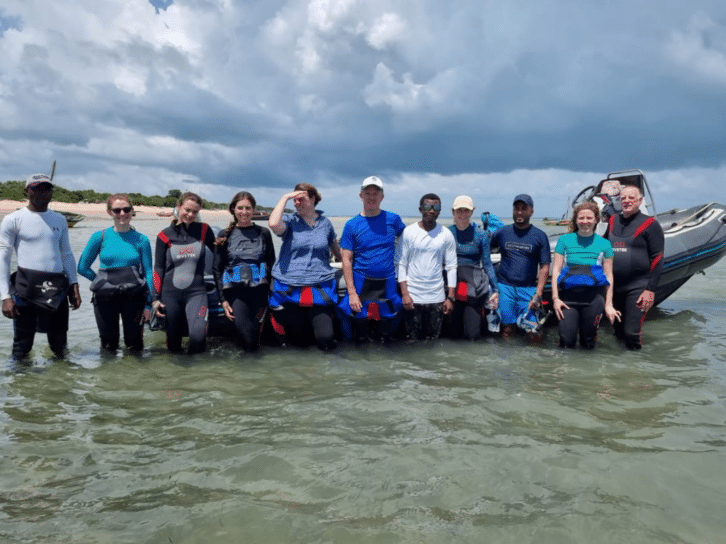
What makes a visit to BCSS extra special is that you not only get to dive in an area teeming with impressive marine life, but you also get to learn about the research conducted here every day. You’ll see up close how scientists are working to better understand the ocean and protect endangered species.


Discover the Bazaruto Archipelago – Mozambique
Stay at a research center while exploring the Bazaruto Archipelago. Chance of humpback whales, whale sharks, manta rays, dugongs and...