Diving in Mauritius: A Complete Guide
Mauritius is known for its snow-white beaches, luxury resorts, and crystal-clear blue lagoons. Yet the island is much more than just a tropical beach destination. Surrounding the volcanic island is a vast coral reef with colorful dive sites, impressive shipwrecks, caves, and steep walls. Thanks to the warm water, excellent visibility, and the wide variety of marine life, Mauritius is an attractive destination for both novice and experienced divers.
Whether you want to go on your first reef dives, are looking for spectacular drop-offs, or would like to see sea turtles, reef sharks, and eagle rays, Mauritius has something for just about every diver to discover. What’s more, a diving vacation can be perfectly combined with relaxing on the beach, hiking through national parks, and exploring Mauritian culture.
In this guide, you’ll find everything you need to know about diving in Mauritius—from the most beautiful dive sites and marine life to the best time to visit and other things to do besides diving.
Table of contents
General Information About Mauritius
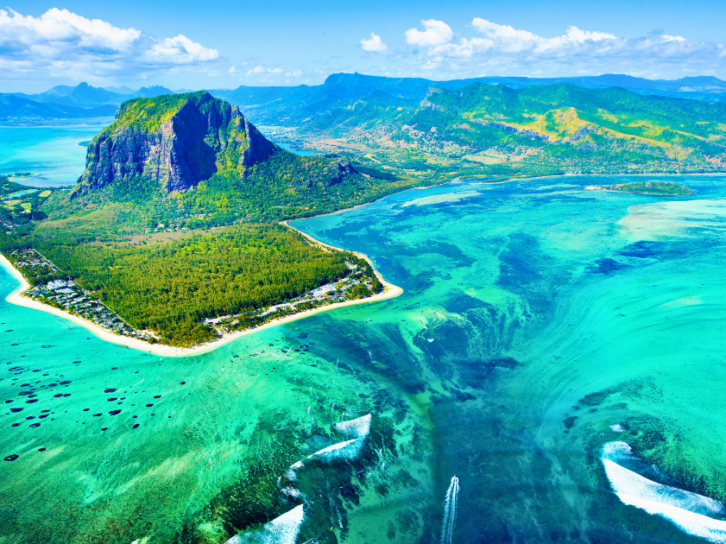
Mauritius is an island nation in the Indian Ocean, about 900 kilometers east of Madagascar. Together with Réunion and Rodrigues, it forms the Mascarene Islands. Due to its isolated location in the middle of the ocean, Mauritius has a unique ecosystem, both above and below the water.
The island is about 65 kilometers long and 45 kilometers wide and is almost entirely surrounded by a coral reef. This creates sheltered lagoons with calm waters, while on the outer side of the reef there are steep walls, caves, and deep dive sites.
The capital of Mauritius is Port Louis, located on the northwest coast. Here you’ll find a charming harbor, markets, museums, and a variety of restaurants. Virtually all international flights arrive at Sir Seewoosagur Ramgoolam International Airport (MRU). This airport is located in the southeast of the island, about an hour’s drive from the most popular beach resorts and diving centers on the west and north coasts.
Mauritius has a tropical climate with pleasant temperatures year-round. The seawater also remains warm almost all the time, allowing you to dive comfortably in any season.


Why go diving in Mauritius?
Although Mauritius is less well-known as a diving destination than, for example, the Maldives or Indonesia, the island has a lot to offer. The combination of colorful reefs, shipwrecks, caves, and rich biodiversity makes every dive unique.
Sheltered reefs and clear water
The coral reef that surrounds virtually the entire island protects the coast from high waves. As a result, many dive sites are relatively calm, with little current and excellent conditions for relaxed reef diving. Visibility usually ranges from 20 to 40 meters, making the underwater landscape clearly visible.
A variety of dive sites
Mauritius offers a wide variety of diving sites. You’ll find shallow coral gardens teeming with tropical fish, as well as steep walls, volcanic rock formations, tunnels, caves, and several artificial wrecks that are now completely overgrown with coral.
This makes the island ideal for divers who like to combine different types of dives during a single vacation.
Rich Underwater World
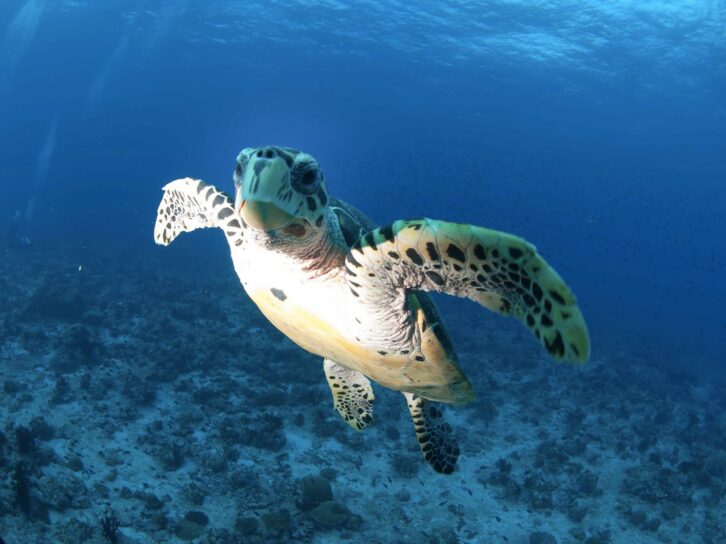
The waters around Mauritius are home to hundreds of fish species. While diving, you may encounter sea turtles, moray eels, barracudas, schools of fusiliers, parrotfish, angelfish, and colorful nudibranchs. Reef sharks, eagle rays, and large trevallies are also frequently spotted. Macro photographers can search for shrimp, gobies, and small nudibranchs, while wide-angle enthusiasts will enjoy the impressive rock formations, schools of fish, and shipwrecks.
Wreck diving
For wreck diving enthusiasts, Mauritius offers several interesting dive sites. Some wrecks were deliberately sunk to create artificial reefs, while other ships ended up on the seabed due to storms or accidents. They have since been completely taken over by corals, sponges, and schools of reef fish.
For beginners and experienced divers alike
Because most of the reefs are well protected, many dive sites are suitable for beginner divers and students. At the same time, there are also deeper sites with currents, tunnels, and caves that are particularly appealing to advanced divers. This makes Mauritius a destination where both couples and travel groups with varying levels of experience can enjoy diving.
Pairs perfectly with a beach vacation
One of the biggest advantages of Mauritius is that you can easily combine diving with other activities. After a morning dive, you can relax on the beach, hike through a national park, or visit one of the charming villages. This makes Mauritius an excellent choice even if not everyone in your travel group dives.
Where to go diving in Mauritius?
There are dozens of dive sites scattered along the coast around Mauritius. Each region has its own unique character. The west coast is known for its spectacular walls, caves, and shipwrecks, while the north coast offers many colorful reefs and sheltered dive sites. On the east and south coasts, you’ll find less-visited locations with healthy coral reefs and a wide variety of fish species.
Thanks to the relatively short distances on the island, most dive sites are within a 10- to 30-minute boat ride from the local dive centers.
Northwest Mauritius
The northwest coast is one of the most popular diving areas in Mauritius. Around Grand Baie, Trou aux Biches, and Pointe aux Piments, you’ll find a wide variety of reefs, shipwrecks, and steep walls. The water here is often calm and visibility is excellent, making this area suitable for both beginner and experienced divers.
The reefs consist of hard and soft corals and attract large schools of reef fish. In addition, sea turtles, moray eels, barracudas, and reef sharks are regularly spotted here.
Cathedral
Cathedral is without a doubt the most famous dive site in Mauritius. The name refers to the enormous volcanic cave whose ceiling resembles a cathedral. Sunlight streams in through openings, creating an impressive spectacle of beams of light.
The dive begins along a steep wall, after which you slowly swim into the cave. Despite its size, there is still plenty of open space, making the cave accessible to many recreational divers.
Depth: approximately 18 to 30 meters
Level: Advanced Open Water or experienced Open Water divers, depending on the circumstances.
Among other things, you might come across the following here:
- murenes
- soldierfish
- glassfish
- coral devils
- reef sharks
- turtles
Stella Maru
The Stella Maru is a Japanese fishing vessel that was deliberately sunk to serve as an artificial reef. The wreck is now completely covered in corals and sponges and is home to countless species of fish.
Because of its relatively shallow depth, this is a popular first wreck dive in Mauritius.
Depth: approximately 20 to 26 meters
Highlights:
- schools of snappers
- batfish
- murenes
- coral devils
- slugs
Whale Rock
Whale Rock consists of a large volcanic rock formation that slopes from a depth of about 14 meters to over 35 meters. The steep walls are richly covered with corals and attract many larger fish species.
During the dive, you’ll regularly see schools of barracuda, large trevally, and tuna hunting along the wall.
This dive site is especially popular with experienced divers.
Western Mauritius
The west coast around Flic en Flac is one of the island’s most beautiful diving areas. It is home to some of Mauritius’s best-known dive sites, and conditions are often excellent. The water is usually calm, and visibility can exceed 30 meters.
Serpent Rampart
Rempart Serpent is considered by many local divers to be one of the most beautiful reef dives in Mauritius.
The name refers to the winding reef structure that resembles a snake. During the dive, you’ll follow a long reef wall teeming with colorful corals, sponges, and small overhangs.
You’ll often come across the following along the way:
- turtles
- reef sharks
- murenes
- parrotfish
- train fusiliers
- angelfish
The combination of healthy coral and an abundance of fish makes this an excellent location for underwater photography.
Snake Reef
Despite its name, there are virtually no snakes here. Snake Reef gets its name from the reef’s winding shape.
This is a colorful reef dive featuring impressive coral formations and a wide variety of marine life.
Here you can see, among other things:
- clownfish
- coral devils
- octopuses
- murenes
- eagle rays
- barracudas
Tug II
The Tug II is a tugboat that was deliberately sunk to create an artificial reef. The wreck lies upright on the sandy seabed and is now completely overgrown.
Large schools of glassfish, batfish, and snappers often swim around the wreck.
Due to its shallow depth, this is a suitable wreck dive for recreational divers.
Wreck Diving in Mauritius
Mauritius has several interesting shipwrecks that have become artificial reefs over the years.
The best-known ones are Stella Maru, Tug II, Djabeda Wreck, and Silver Star.
Almost all of the wrecks are now completely covered with hard and soft corals. As a result, they provide a habitat for moray eels, schools of glassfish, batfish, snappers, and various species of nudibranchs.
Underwater Life in Mauritius: What Can You Expect During Your Dive?
It is bursting with life underwater and you can expect a good mix of macro life and large pelagic species. Below is an overview of some species, but it is not a complete list: there is much more to discover.
Large pelagic species
- Barracuda
- Tuna
- Mahi mahi (dorado)
- Marlin
- Sailfish
- Wahoo
Sharks & rays
- Reef Shark (Gray Reef Shark)
- White tip reef shark
- Blacktip Reef Shark
- Hammerhead shark (occasional)
- Eagle Ray
- Speartail stingray
- Mobula ray (occasional)
Turtles
- Green sea turtle
- Hawksbill turtle
- Spurious hawksbill turtle
Reef Fish
- Parrotfish
- Surgeonfish
- Emperor Fish
- Clownfish
- Snappers
- Groupers
Macro and Micro Life
- Slugs
- Shrimp
- Tubeworms
- Blennies
- Little lobsters
- Pygmy seahorses
Marine mammals
- Bottlenose dolphin
- Spinner dolphin
- Striped Dolphin
- Risso’s dolphin
- Sperm whale (year-round)
- Humpback whale (seasonal migration)
- Minke whale (occasional)
Whale Watching in Mauritius
Depending on the season, it is possible to spot up to three species of whales in Mauritius. Along the coast of Mauritius, you can mainly spot sperm whales and humpback whales, and occasionally pygmy sperm whales as well.
- Sperm whales: These impressive animals live permanently in deep waters and can be seen year-round, especially off the island’s west coast.
- Humpback whales: These whales migrate and are mainly seen during the winter season, from July through October.
There are excursions where people go out on the water to observe sperm whales. However, we do not recommend this.
Sperm whales are wild animals that need peace and quiet to communicate, rest, and care for their young. Swimmers and boats can disrupt this natural behavior. Furthermore, sperm whales are enormous animals that can react unpredictably. That is why more and more travelers are opting for responsible boat tours where the animals are observed from a safe distance.
For humpback whales, too, observing them from a boat is the most responsible choice.
Best time to visit Mauritius for a diving vacation
You can dive in Mauritius all year round. The water temperature ranges from about 23°C in the winter to 29°C in the summer, so a 3 mm wetsuit is sufficient for most of the year.
Underwater visibility is usually between 20 and 40 meters. Because Mauritius is largely protected by a coral reef, currents are limited at many dive sites. Only at a few deeper dive sites can the currents be somewhat stronger.
The best time to dive is from April through June and from October through December. During these months, weather conditions are often stable, visibility is excellent, and water temperatures are pleasant.
From June through October, you also have the best chance of seeing humpback whales during their annual migration past Mauritius.
Please note that the cyclone season runs from November through April. The likelihood of tropical storms is highest in January, February, and March. Diving is still possible during this period, but boat dives may be temporarily canceled in case of bad weather.
Frequently Asked Questions About Diving in Mauritius
Which certification is Mauritius suitable for?
Mauritius is suitable for divers of virtually any skill level.
Open Water divers can explore the many sheltered reef dive sites with little current.
Advanced Open Water divers and experienced divers can choose to explore deeper wrecks, steep walls, caves, and dive sites with stronger currents.
Is Mauritius a good place for beginner divers?
Yes. Many dive sites are sheltered behind the coral reef and have little current. This makes Mauritius an excellent destination for beginner divers and for taking a diving course.
When is the best time to go diving in Mauritius?
You can dive year-round. The best conditions are usually from April through June and from October through December, when visibility is often excellent and the weather is stable.
How warm is the water?
The water temperature ranges from about 23°C to 29°C, depending on the season.
What kind of wetsuit do I need for diving?
Thanks to the pleasant water temperatures, a 3 mm wetsuit is sufficient for most divers.
During the Mauritian winter, some divers opt for a 5-mm wetsuit when they make multiple dives a day.
Can you see sharks in Mauritius?
Yes. White-tip reef sharks and black-tip reef sharks are regularly spotted at various dive sites. These sharks are shy and normally pose no danger to divers.
Can you see whales in Mauritius?
Yes. Sperm whales live in the waters around Mauritius year-round. Humpback whales are usually present from June through October during their annual migration.
Can you swim with sperm whales?
Although some tour operators offer these excursions, we recommend observing whales responsibly from a boat. This way, you’ll disturb the animals’ natural behavior as little as possible and contribute to sustainable wildlife tourism.
Can I see dolphins while diving?
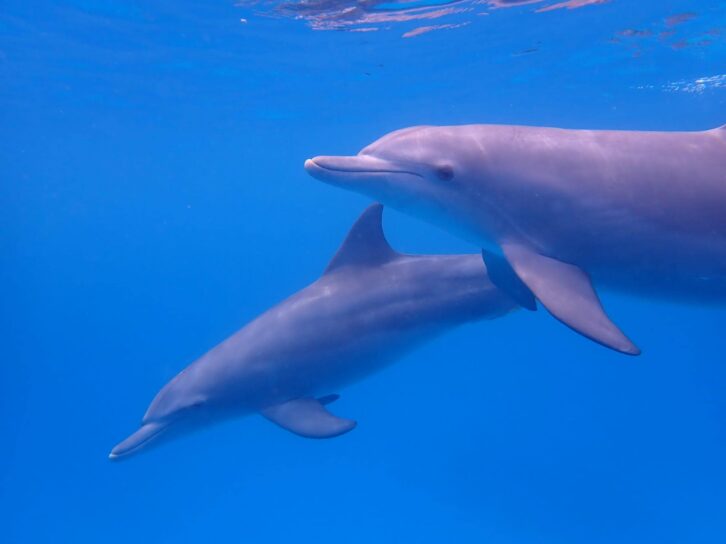
Yes, that’s possible, but it’s certainly not guaranteed. Groups of spinner dolphins and bottlenose dolphins live along the west coast of Mauritius. They are most often seen during early-morning boat tours, when they swim close to the coast.
You might also come across them during a dive, for example when a group swims curiously past the dive site. However, this happens only occasionally, so you can’t plan a dive around it. If you want to increase your chances of encountering dolphins, a special boat excursion is your best bet. Preferably, choose a tour operator that treats the animals with respect and follows the guidelines for responsible wildlife tourism.
What else is there to do in Mauritius?
A diving vacation in Mauritius is, of course, all about exploring the underwater world, but there’s plenty to do above water as well. Thanks to its combination of tropical beaches, stunning natural scenery, and rich culture, Mauritius is a destination where you can have a great time even on days when you’re not diving.
Sun and sea lovers can relax on the white-sand beaches of Flic en Flac, Trou aux Biches, or Belle Mare, while snorkelers can discover colorful reef fish and corals right from the beach in the sheltered lagoons.
Do you enjoy being active? Then put on your hiking boots and explore Black River Gorges National Park, the largest national park in Mauritius. Here, you can hike through tropical rainforest past waterfalls and enjoy breathtaking views. We also highly recommend climbing Le Morne Brabant, a mountain listed as a UNESCO World Heritage Site. From the summit, you’ll have a panoramic view of the turquoise lagoons and the coral reef.
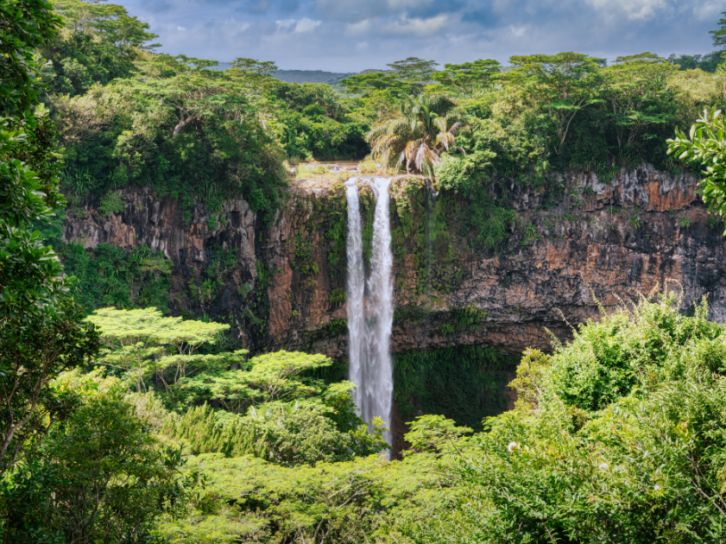
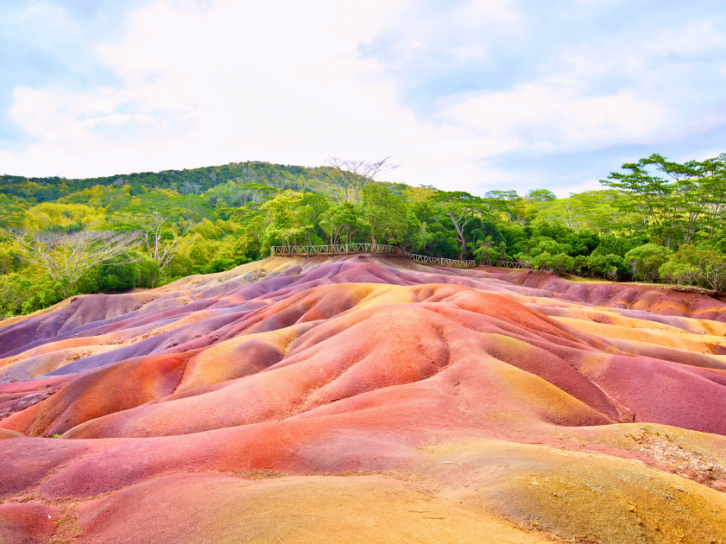
A visit to Chamarel is a must. Here you’ll find the famous Seven Colored Earths—colorful sand dunes formed by volcanic activity—and the impressive Chamarel Waterfall. You can also visit a local rum distillery in the area.
Would you like to learn more about Mauritian culture? Then visit the capital, Port Louis. Stroll through the lively market, sample local specialties, and discover the blend of African, Indian, Chinese, and French influences that makes the island so unique.
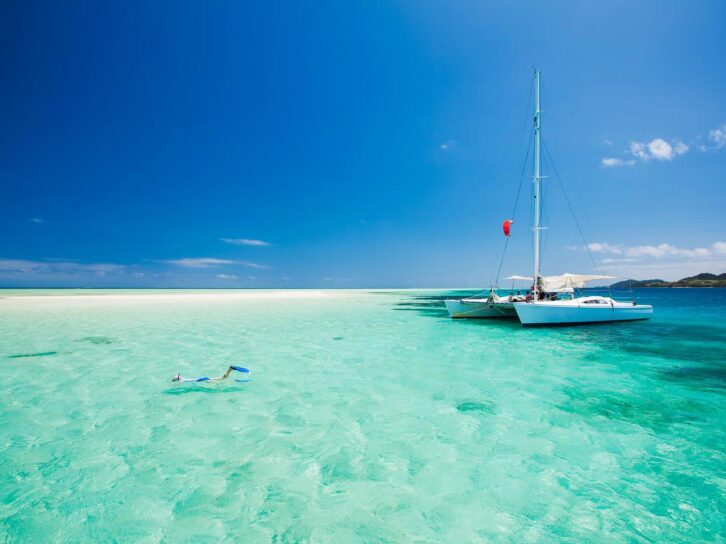
In addition, there are plenty of opportunities for other water sports, such as kayaking, stand-up paddleboarding, kitesurfing, and catamaran cruises to small islands off the coast. This way, you can easily combine a diving vacation in Mauritius with relaxation, nature, and adventure.
Frequently Asked Questions About Traveling to Mauritius
How long is the flight to Mauritius?
From the Netherlands and Belgium, you’ll usually fly to Mauritius with one layover. The total travel time averages 13 to 16 hours, depending on the airline you choose and the layover time.
What language is spoken there?
Mauritius has several official and widely spoken languages. Among others, you’ll hear English, French, and Mauritian Creole. In hotels and diving schools, English is almost always spoken well.
What is the currency of Mauritius?
The currency in Mauritius is the Mauritian rupee (MUR). Credit cards are accepted at most tourist locations, and ATMs are widely available.
Do you need a visa?
Dutch and Belgian travelers generally do not need a visa in advance for a tourist visit. Upon arrival, provided you meet the requirements, you will be granted permission to enter the country.
Always check the current entry requirements before departure.
Diving in Mauritius with EWDR
Mauritius is a destination where tropical beaches and impressive diving opportunities come together perfectly. All around the island, you’ll discover colorful coral reefs, volcanic rock formations, shipwrecks, and a surprisingly diverse array of marine life. Thanks to the warm water and calm conditions, Mauritius is ideal for both beginner and experienced divers.
We believe that a diving trip to Mauritius is best when you combine diving with exploring the island. Between dive days, you can relax on the white-sand beaches, hike through Black River Gorges National Park, visit the colorful Seven Colored Earths of Chamarel, or enjoy the local cuisine and culture.
During your trip, you’ll discover the diversity of diving in Mauritius. From colorful reef dives and impressive wall dives to wrecks and famous dive sites such as Cathedral and Rempart Serpent. With a little luck, you might spot sea turtles, reef sharks, eagle rays, or even dolphins along the way.
Interested in our diving trips to Mauritius? Check out our offerings here and discover why Mauritius is one of the most beautiful diving destinations in the Indian Ocean.

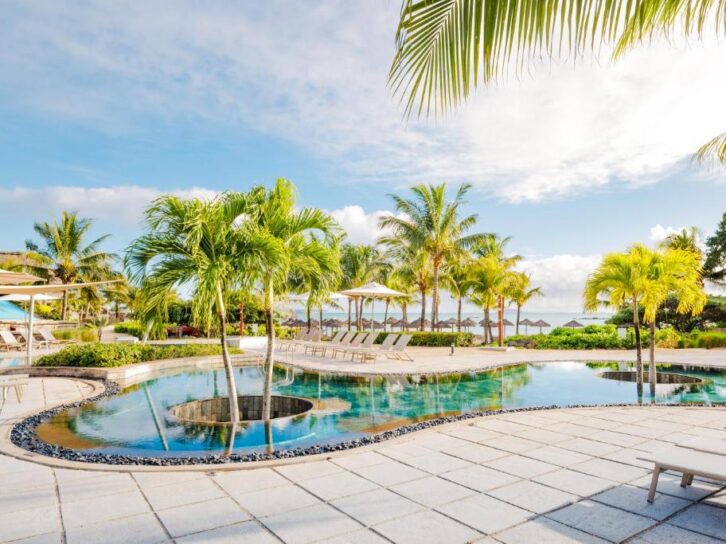
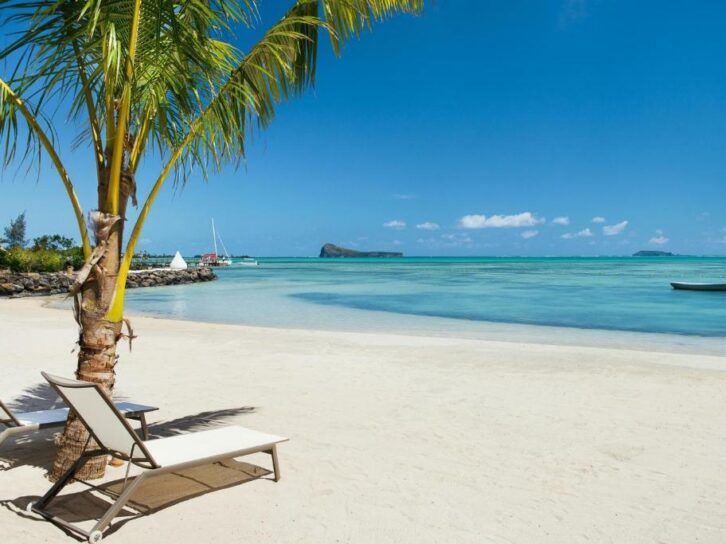
Diving Trip to Mauritius • Colorful reefs, culture, and tropical beaches
Explore the colorful underwater world of Mauritius on 8 wonderful dives. You’ll also discover the island’s most beautiful natural landscapes,...