Diving on Bonaire: A Complete Guide

If you are looking for an ideal destination for a diving vacation, Bonaire is definitely on your shortlist. This beautiful location in the Caribbean not only has pristine coral reefs, but also offers pleasant conditions above water, with its friendly atmosphere, warm climate and vibrant culture. Moreover, diving around Bonaire remains relatively affordable. Daily flights from europe bring you to this tropical island within eight hours.

Table of contents

General Information About Bonaire

Bonaire is one of the three ABC Islands and is located in the southern part of the Caribbean, just off the coast of Venezuela. The island is part of the Caribbean Netherlands and is known for its peaceful atmosphere, unspoiled nature, and laid-back lifestyle. With an area of approximately 288 square kilometers, it is relatively small but rich in variety. The capital, Kralendijk, is a colorful little town full of colonial buildings, cozy restaurants, and local markets. The interior is characterized by cacti, salt pans, and flamingos, while the coastline consists of rugged cliffs, mangroves, and white-sand beaches. Bonaire has a dry, sunny climate and remains pleasantly warm year-round. This makes it an ideal destination for anyone who loves nature, tranquility, and the outdoors. The combination of friendly locals, well-preserved culture, and impressive landscapes gives Bonaire a character all its own.

Why Dive on Bonaire?

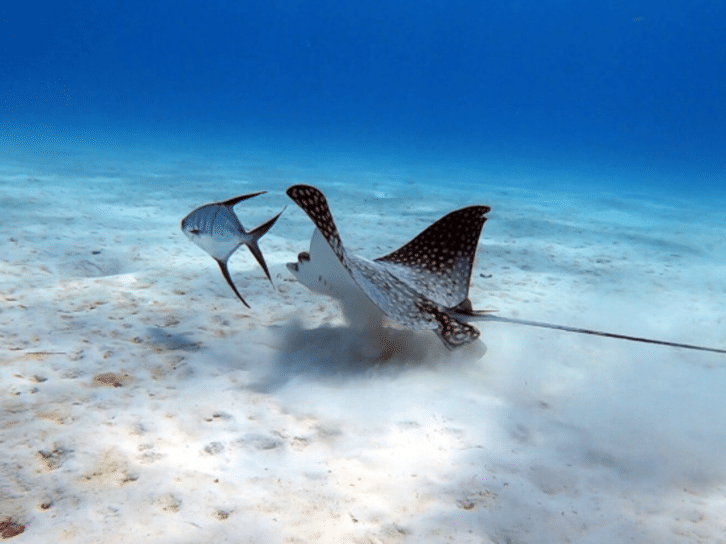
Bonaire is known worldwide as one of the best diving destinations, and for good reason. Surrounding the island is the Bonaire National Marine Park, a protected area that has kept the underwater ecosystem in excellent condition since 1979. Here you’ll find crystal-clear water, colorful coral reefs, and hundreds of fish species—from groupers to sea turtles and lionfish. What makes Bonaire truly special is the unparalleled accessibility of its dive sites. More than 60 sites are accessible directly from the shore. With a pickup truck and a full tank, you can dive whenever you want, without a boat or a guide. This freedom appeals to both beginner divers and experienced enthusiasts. Whether you enjoy shallow reef dives, night dives, or exploring wrecks, Bonaire has it all. Add to that the fact that you have perfect diving conditions virtually all year round, and it’s clear why diving in Bonaire is so popular.

Best Time to Dive on Bonaire

You can dive on Bonaire all year round, making the island an ideal destination for those who want to travel flexibly. Thanks to the stable tropical climate, conditions are almost always good, both above and below the water. Still, there are slight seasonal variations that you can take into account when planning your trip. The most popular time for diving is from February through June. During these months, it’s often a bit drier, the sea is exceptionally calm, and underwater visibility is optimal.

Visibility

Visibility around Bonaire is generally excellent and usually ranges between 20 and 30 meters, sometimes even more. Visibility is often at its best during the dry season (especially from March through June). However, visibility remains surprisingly good even during the rainy season, partly due to the absence of large rivers that carry sediment into the sea.

Water temperature

The water temperature on Bonaire ranges between 26°C and 29°C year-round, with the warmest months being August through November. As a result, a 3mm wetsuit or shorty is usually sufficient, although some divers are comfortable diving year-round in just a lycra suit or swimsuit.

Current

Most dive sites on Bonaire are located on the west coast, where the sea is generally calm and free of currents. This makes the conditions ideal for shore dives, beginner divers, and photography. There are currents on the east side of the island, so keep this in mind when planning your dives and ask the dive shop where you pick up your tanks for advice.

PeriodDiving conditionsWetsuit AdviceDetails
February–JuneBest visibility (20–30 m), calm seas, warm water3 mm or shortyDry season, ideal for shore diving and underwater photography
July–OctoberVariable visibility, chance of rain, sea usually calm3 mm wetsuit or shortyStart of the rainy season, fewer crowds, good availability of accommodations
November–JanuaryGood visibility, slightly cooler water, mostly calm conditions3 mm full wetsuitEnd of the rainy season, sometimes windier, but still excellent diving weather

Drive & Dive Concept

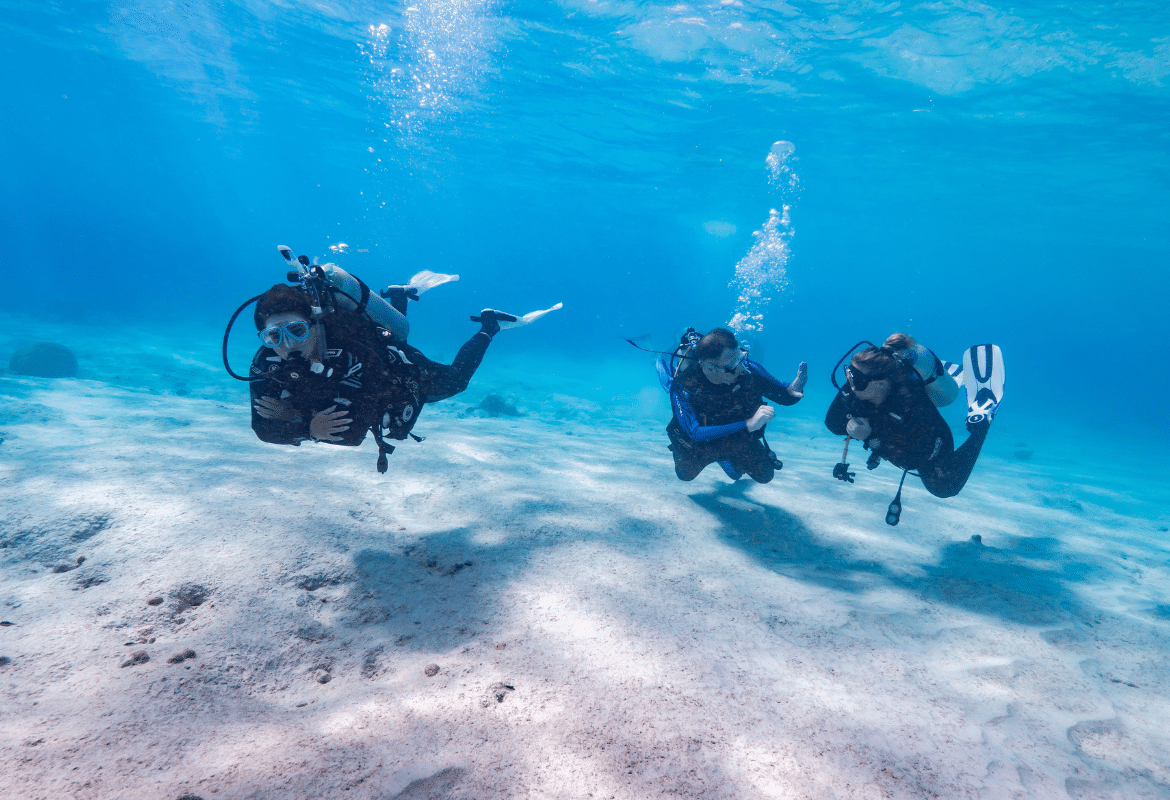
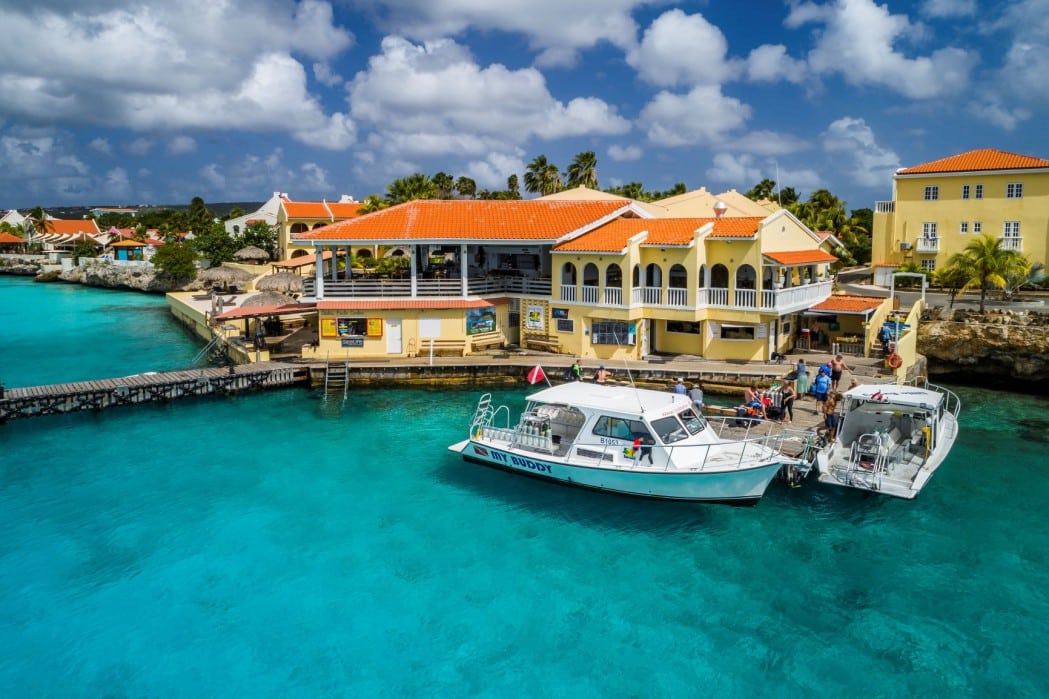
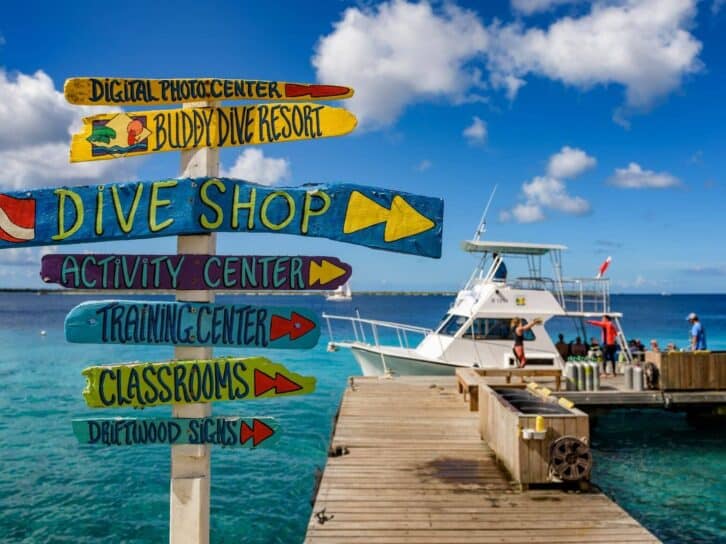
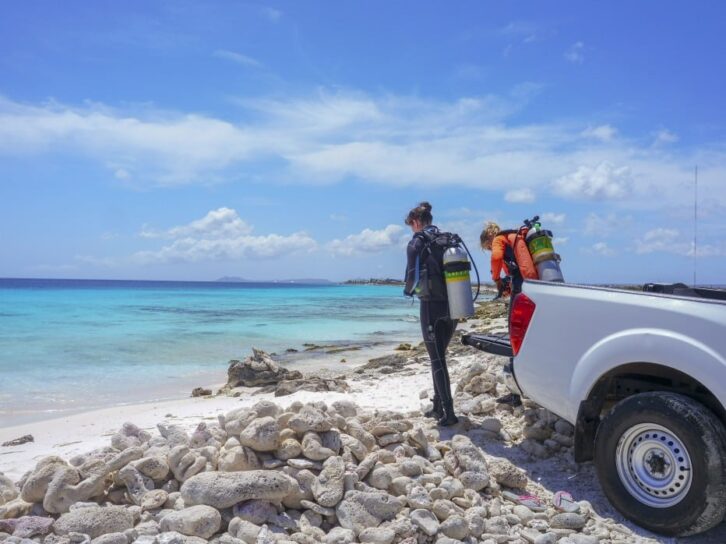
One of the most unique aspects of diving on Bonaire is the so-called “Drive and Dive” concept. This means that, as a diver, you have complete freedom to dive at your own pace and without a guide at dozens of shore dive sites scattered across the island. Upon arrival, you simply rent a pickup truck and arrange for tanks at the dive shop. You pick up the tanks every day and return the empty ones. Then you drive yourself from dive site to dive site and walk straight into the water from the shore. The dive sites are marked by yellow stones along the road.

This concept is what makes Bonaire unique: nowhere else in the world are there so many dive sites that are so accessible and so well organized for independent diving. There are more than 60 shore dive sites around the island, all with clear water, healthy reefs, and, in many places, hardly any current. No set schedules, no boat needed, no guide. And that’s unique!

Best Dive Sites on Bonaire

It’s hard to pick the best dive sites on Bonaire, because there are so many of them, and they all have something unique to offer. We’ve selected 6 dive sites that you definitely shouldn’t miss while you’re on Bonaire!

1,000 steps

Depth: 5–30 meters
Season: year-round
Underwater life: colorful coral reefs, schools of tropical fish, parrotfish, trumpetfish
Level: suitable for all levels, including beginners

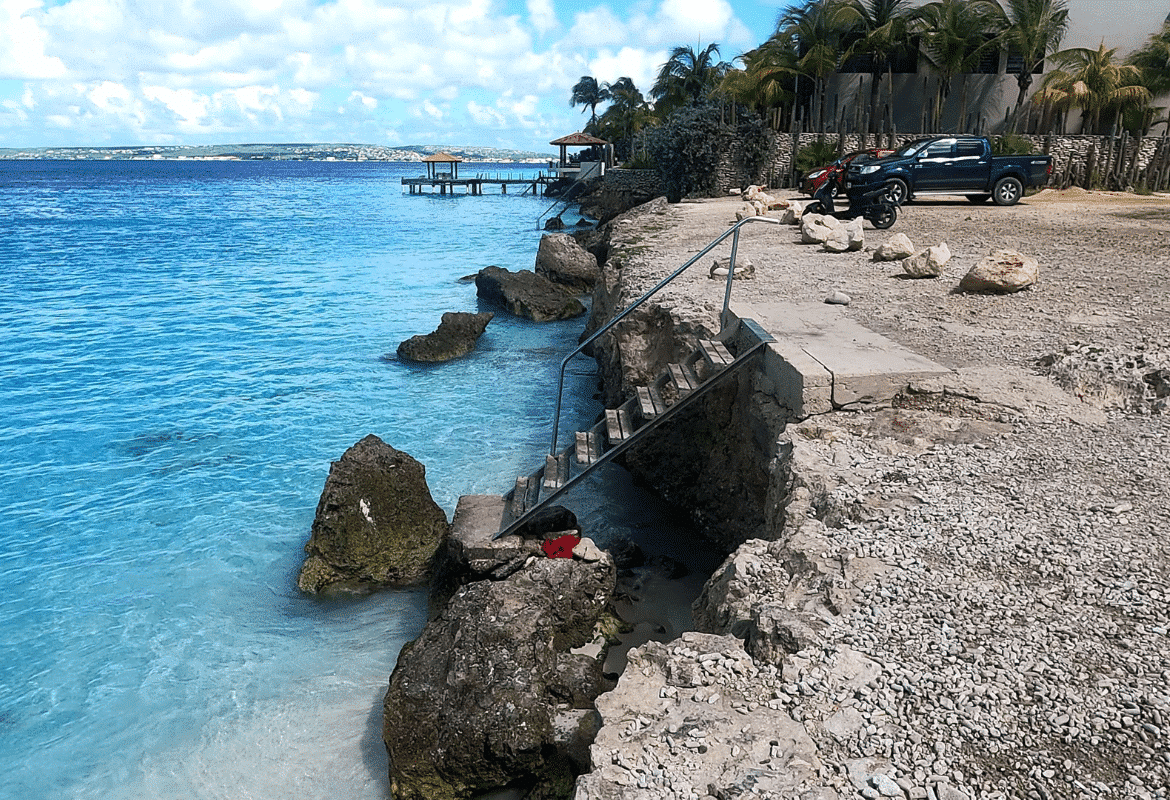
1000 Steps is a popular dive site known for its clear water and beautiful coral reefs. Despite its name, there are actually about 67 steps to reach the water, making it accessible to virtually everyone. The dive begins with a sloping wall teeming with vibrant corals and a variety of fish species. The reef slopes gently down to about 30 meters, where you’ll often see schools of tropical fish and colorful parrotfish. Thanks to its sheltered location, the water is usually calm and visibility is excellent, making this spot perfect for both beginner and experienced divers.

Slagbaai National Park

Depth: 5–35 meters
Season: year-round
Marine life: rays, nurse sharks, reef fish, barracudas
Level: suitable for all levels

Slagbaai National Park is a tranquil dive site on the northwest side of Bonaire. The reefs there are still pristine and offer a diverse underwater world with many large fish, such as eagle rays and nurse sharks. The reef is rugged, with many caves and overhanging structures where various fish species take shelter. Thanks to the often calm waters, this is a great spot for divers who want to avoid the crowds and enjoy nature in its purest form.

Hilma Hooker

Depth: 18–30 meters
Season: year-round
Marine life: nurse sharks, barracudas, reef fish, sponges, and corals
Level: suitable for advanced divers

The Hilma Hooker is a famous wreck diving site and an absolute must for wreck diving enthusiasts. The former cargo ship lies at a depth of approximately 18 to 30 meters near Klein Bonaire. The wreck is covered in colorful corals and sponges and is home to many reef fish, nurse sharks, and barracudas. Due to the wreck’s open structure and depth, it is best suited for experienced divers. A dive here feels like an expedition full of color and life.

Little Bonaire

Depth: 5–30 meters
Season: year-round
Marine life: schools of tropical fish, reef sharks, sea turtles, colorful corals
Level: suitable for all levels

Klein Bonaire is a small, uninhabited island just off the coast of Bonaire and is known for the beautiful, pristine reefs that surround it. It is a favorite spot among both snorkelers and divers because of its crystal-clear water and abundance of fish. While diving around Klein Bonaire, you can spot large schools of fish, reef sharks, and sometimes sea turtles. The coral reefs here are healthy and colorful, making this one of the most beautiful spots on the island. You can only reach it by boat.

Red Slave

Depth: 5–30 meters
Season: year-round
Marine life: reef fish, parrotfish, nurse sharks, colorful corals
Level: suitable for all levels

Red Slave is a peaceful dive site on the west coast of Bonaire, known for its expansive coral reefs and calm waters. The reef is teeming with tropical fish such as parrotfish, snappers, and schools of jacks. Nurse sharks are also frequently spotted, resting peacefully on the sand. Thanks to the gentle currents and good visibility, it’s an ideal spot for both beginner and experienced divers who enjoy a relaxed dive.

Salt Pier

Depth: 5–25 meters
Season: year-round
Marine life: large schools of reef fish, groupers, lobsters, sponges, and anemones
Level: suitable for all levels

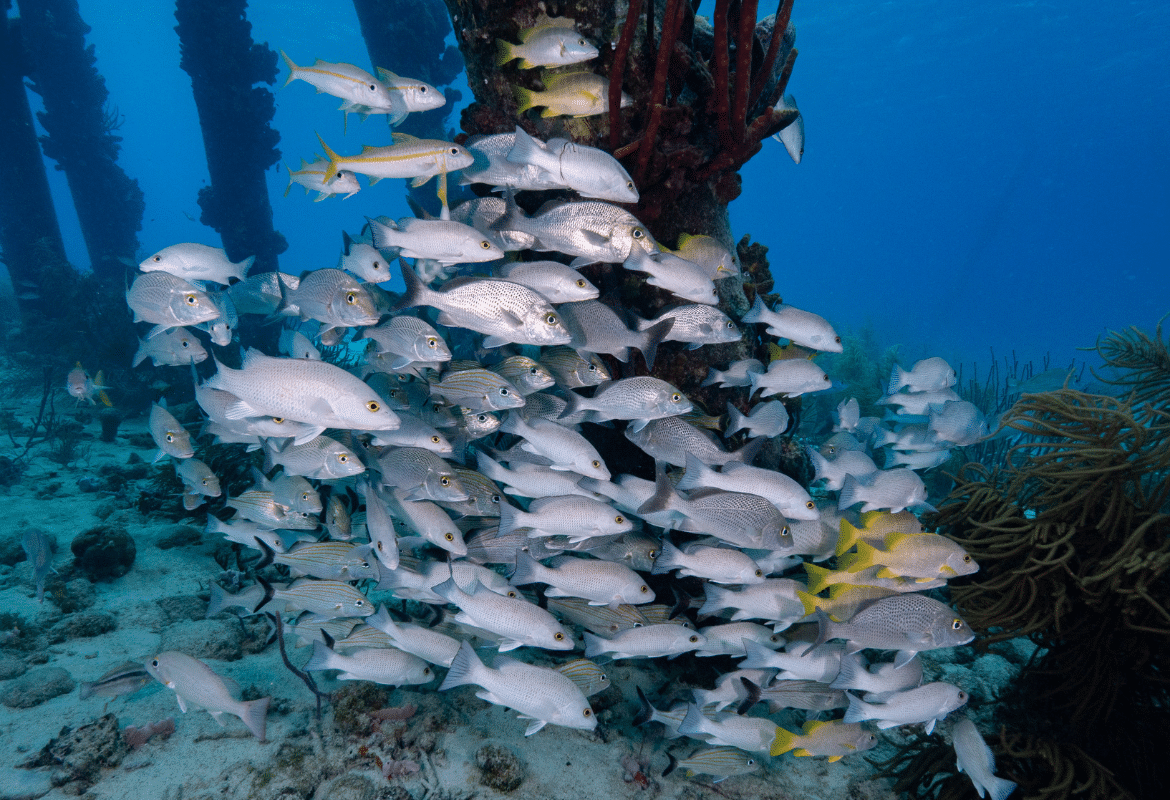
Salt Pier is an iconic dive site near Kralendijk, known for its gigantic pier pilings covered in sponges and corals. These pilings attract a huge number of fish, including schools of reef fish and large groupers. Lobsters, crabs, and various smaller creatures are also easy to spot here. The water is usually calm and clear, making it an accessible spot for both snorkelers and divers of all skill levels.

Underwater Life on Bonaire: What Can You Expect During Your Dive?

The underwater life around Bonaire is surprisingly rich and diverse. Thanks to the protected reef and ideal diving conditions, you’ll have plenty of opportunities to see countless marine creatures up close.

Sharks & Rays

  • Nurse Shark
  • Eagle Ray
  • Southern stingray
  • (Rare) Blacktip Reef Shark

Reef fish & schools

  • Gray snapper
  • Yellowtail snapper
  • Horse-eye jackets
  • Barracudas
  • Parrotfish
  • Trumpfish
  • Angelfish
  • Butterflyfish
  • Lionfish (invasive species)

Sea Turtles

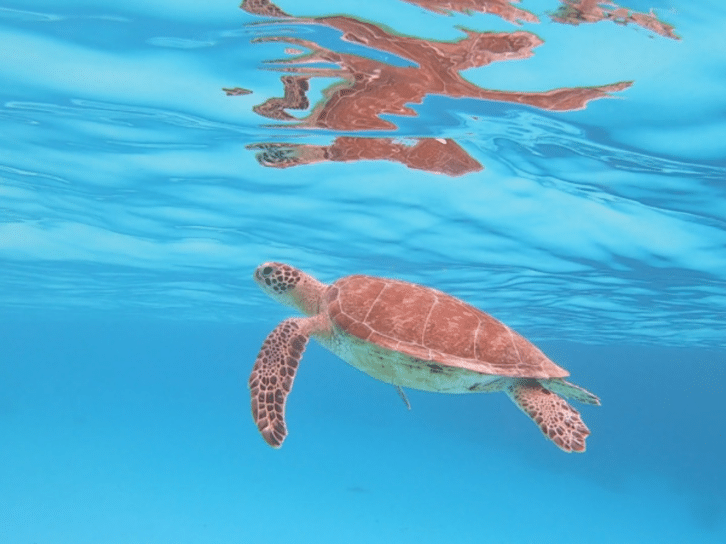
  • Green sea turtle
  • Spurious hawksbill turtle
  • Hawksbill turtle (hawksbill turtle)

Reef and Seabed Life

  • Cobras (green and spotted species)
  • Octopus and squid
  • Lobsters and crabs
  • Sea cucumbers
  • Starfish
  • Snails and slugs
  • Sponges and anemones

Small and special

  • Seahorses (especially in seagrass beds)
  • Shrimp and hermit crabs
  • Flamingo tongues
  • Drumfish and gobies

Wrecks

  • Hilma Hooker
  • Mairi Bhan
  • Baka de Laman


There are other shipwrecks, but the most famous of them all is the Hilma Hooker.

Diving with ostracods

Ostracods are microscopic crustaceans, often no larger than 1 mm. They live in both fresh and saltwater and are found worldwide, but in some places—such as Bonaire—they exhibit a remarkable phenomenon: bioluminescence. This means they glow in the dark, much like fireflies.

A few days after the full moon, about 30 to 45 minutes after sunset, male ostracods begin a luminous mating dance. They swim upward from the reef, leaving behind short flashes of light in the water. These are small trails of light that they use to attract females.

For divers, this is a magical experience: it’s like watching shooting stars underwater. The phenomenon lasts only a few minutes, so timing is crucial. It’s best observed in dark areas, without artificial light or moonlight, and when there’s little current. These dives are conducted only under the supervision of a guide.

It’s truly a magical experience that’s hard to capture on camera. But maybe that’s what makes it even more magical. The video below gives you an idea, but trust us: it’s even more beautiful in person.

What diving gear do you need on Bonaire?

Bonaire is a wonderful destination with warm water and often warm air temperatures as well. So you don’t need to bring a wetsuit that’s too thick, for example. Read our tips for diving gear on Bonaire here.

Basic equipment

  • Wetsuit: In the warm waters of Bonaire, a 3-mm shorty or full-body wetsuit is usually sufficient.
  • Mask & Snorkel: A well-fitting mask of your own is highly recommended for optimal visibility and comfort. The snorkel is especially useful because you sometimes have to swim a bit on the surface before diving.
  • Fins: It’s recommended to choose open-heel fins with booties. You’ll really benefit from this during shore dives. At some dive sites, you actually have to walk quite a distance. The sand or the road can be hot on your feet, and you’re naturally better protected with boots than with bare feet.
  • Dive Computer: Highly recommended for a safe dive and to properly track your dive profile, especially on deeper dives such as in the Blue Hole.
  • BCD & regulator: You can often rent fine at local dive centers, but own equipment always gives comfort.

Additional accessories

  • Underwater camera: Bonaire has stunning marine life and coral reefs, so a camera or action cam is a great way to capture your memories.
  • Weights: You don’t need to bring this, of course, but it’s good to know. Because of the warm water, you often need less lead than in colder waters.
  • Dry bag: You can also choose to go on boat dives to Klein Bonaire, for example. In that case, it’s a good idea to bring a dry bag for your valuables. A dry bag is specially designed to keep your belongings dry during boat trips. They’re often made of sturdy, waterproof material with a roll-top closure at the top to keep water out.
  • Key locker: a small lockbox where you can put your car key and attach it to the car. You can also look for a waterproof case to carry the key with you while diving.

Also going to Bonaire?

Also perhaps interesting

Komodo Indonesia Mantas

Where can you see manta rays in Indonesia?

Indonesia is one of the best destinations in the world for seeing manta rays. Komodo, Raja Ampat, and Nusa Penida each offer a unique manta ray experience.
Read more
Komodo Indonesia Mantas

Diving in the Komodo Islands in Indonesia

Komodo is a spectacular diving destination for those looking for manta rays, abundant marine life, and challenging currents. Discover the best time to visit, diving options, accommodations, and itineraries with EWDR.
Read more
Underwater Photography

Tips from Underwater Photographer Thomas Van Puymbroeck

Discover the best tips for underwater photography from photographer Thomas Van Puymbroeck and learn more about our annual photography trips.

Read more
Visayas Philippines Round trip

Philippines trip report • Looking back on a diving trip in the Visayas

A special travelogue by Sebastiaan and Robbert, who went on an unforgettable diving trip together sixteen years ago. Old photos and memories bring those special underwater encounters back to life.
Read more
Sumatra Coral reefs

Diving in Sumatra: a complete guide

Diving in Sumatra combines colorful coral reefs with impressive natural scenery above water. Discover Pulau Weh, the Mentawai Islands, and the most beautiful spots for a complete diving trip.

Read more
Boat Dives

10 Unique encounters every diver wants to experience at least once

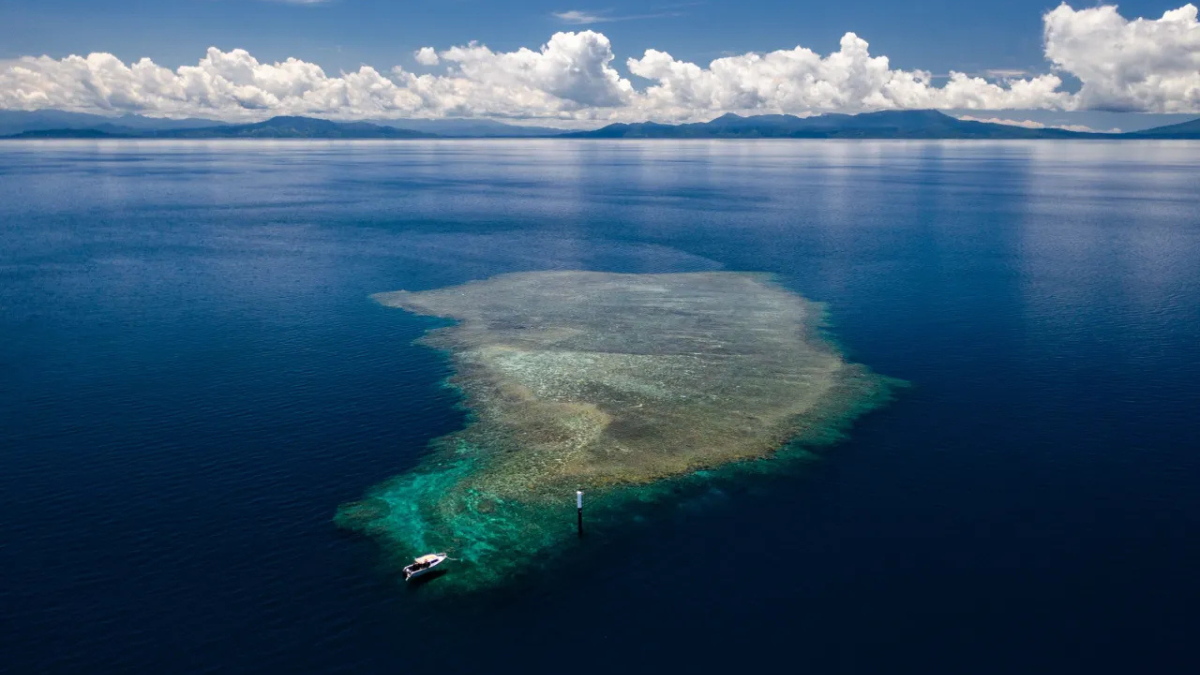
The underwater world is full of extraordinary encounters. Discover which underwater encounters you shouldn’t miss and where you’re most likely to experience them for yourself.
Read more
Boat Dives

Diving destinations where you’ll feel like you’re the only person in the world

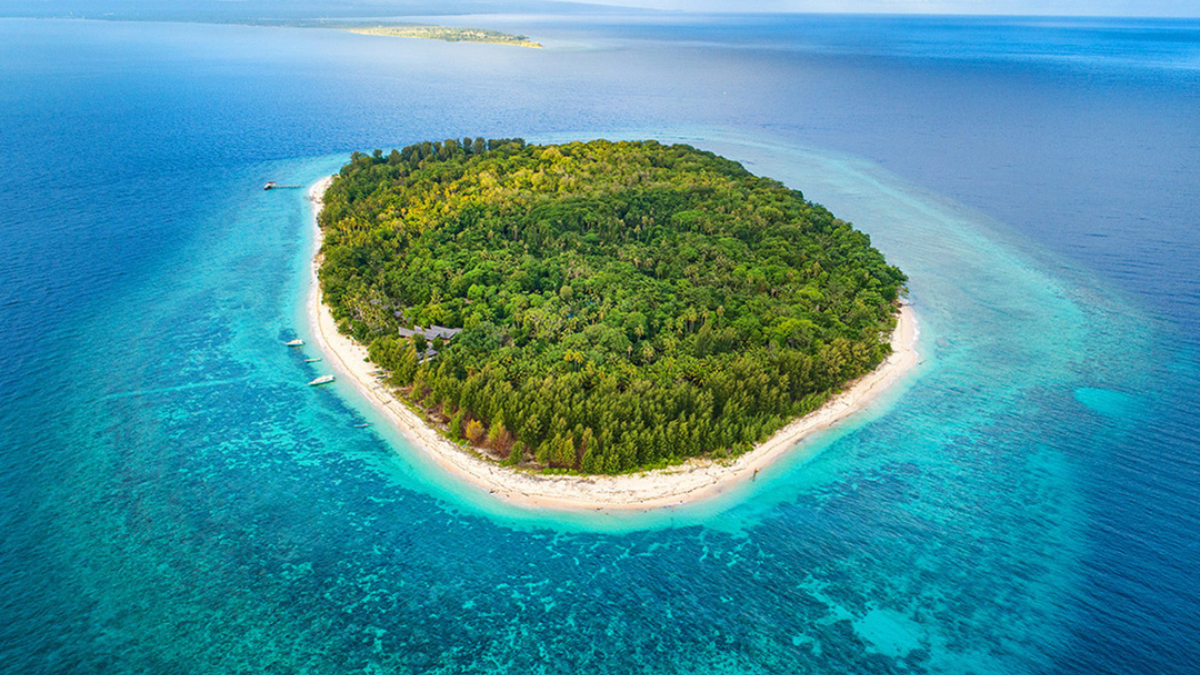
At some diving destinations, you’ll practically have the reef all to yourself. Discover six remote destinations where peace and quiet are still the norm.
Read more
Moluccas Coral reefs

Diving in Morotai & Metita: a complete guide

Wondering what makes Morotai and Metita so special? In this blog, you’ll discover everything about this unspoiled diving destination in North Maluku.

Read more
Papua New Guinea Coral reefs

Diving in Papua New Guinea: a complete guide

Diving in Papua New Guinea is a unique experience in the heart of the Coral Triangle. Discover colorful reefs, extraordinary marine life, historic shipwrecks, and pristine dive sites.
Read more
Boat Dives Hammerheads

Diving with hammerhead sharks: What are the best destinations?

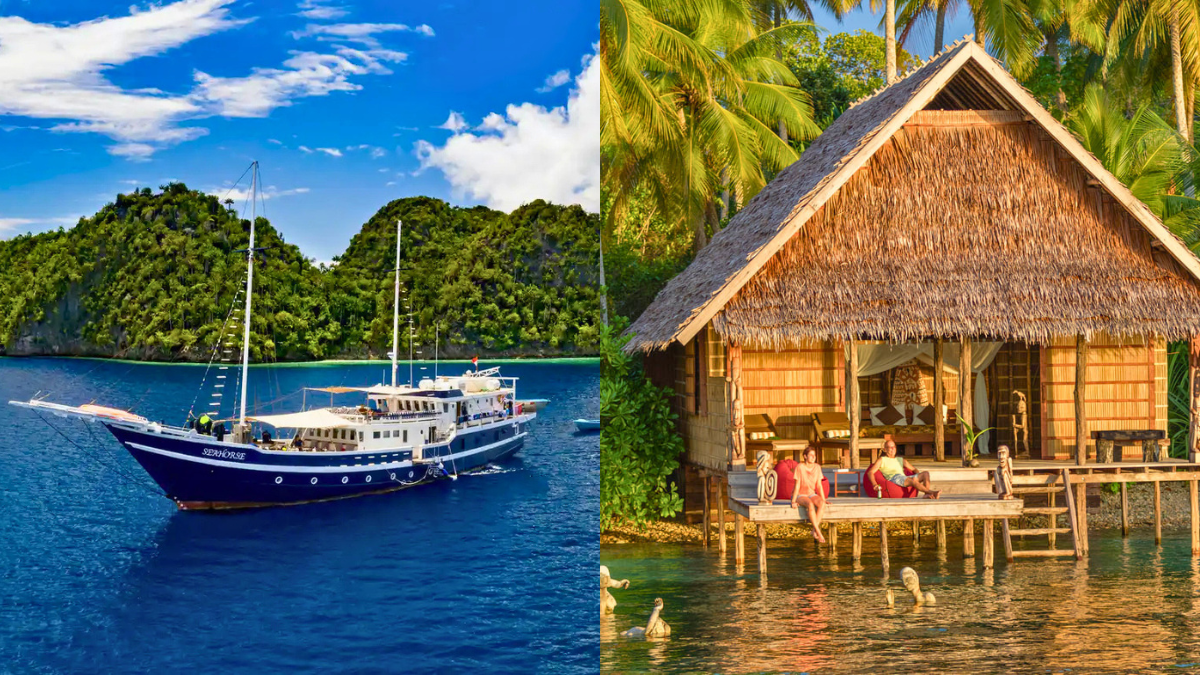
Discover the best destinations in the world for diving with hammerhead sharks. Find out where you’re most likely to encounter them, when the best time to travel is, and what diving certification is required.
Read more
Indonesia Liveaboard

Diving Trip to Raja Ampat: Resort or Liveaboard?

Are you trying to decide between a liveaboard and a dive resort in Raja Ampat? In this blog, we’ll explain the differences and help you determine which type of trip best suits your needs.
Read more
Mauritius Drive & Dive Round trip

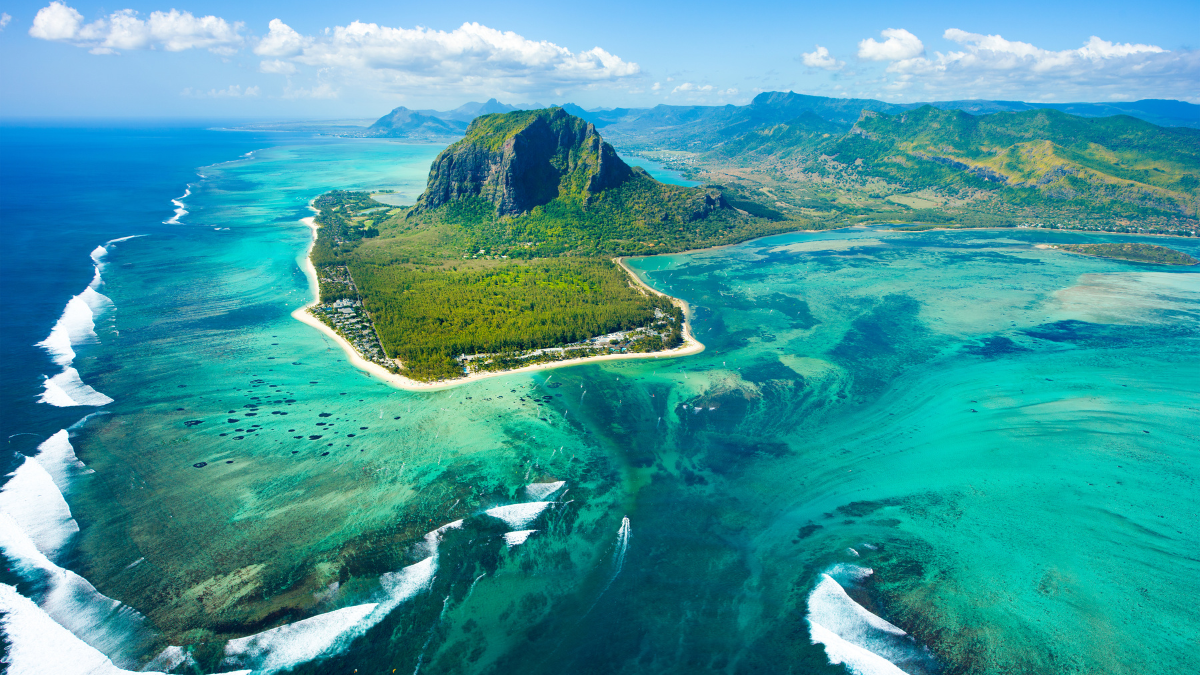
Diving in Mauritius: A Complete Guide

Mauritius offers colorful coral reefs, impressive shipwrecks, and a surprisingly diverse array of marine life. In this guide, you’ll find everything you need to know for a diving vacation in Mauritius.

Read more
Iceland Drive & Dive Round trip

Diving in Iceland: a complete guide

Diving in Iceland is all about the unique combination of the Silfra Gorge and rugged sea diving along volcanic shores. On a round-trip tour, you will not only discover the underwater world, but also one...

Read more
Mozambique Vilanculos Whales Unique Encounters

Whales, sharks, and manta rays: Key insights from the BCSS Impact Report 2025

The BCSS Impact Report 2025 highlights the rich marine life around the Bazaruto Archipelago in Mozambique. From humpback whales and manta rays to endangered sharks, the study confirms why this area is one of Africa’s...

Read more
Combination Trip

Diving vacation with a non-diving partner? These destinations are perfect for both of you

Not every diving vacation has to revolve entirely around diving. These destinations offer plenty of above-water activities so divers and non-divers alike can have a great trip.

Read more
Boat Dives Dolphins

Diving with wild dolphins: where do you have the best chance?

Encounters with wild dolphins are among the most beautiful experiences you can have as a diver. Find out where worldwide you have the greatest chance of encountering these intelligent marine mammals in their natural habitat.

Read more
Bahamas Tiger Sharks Sharks Liveaboard

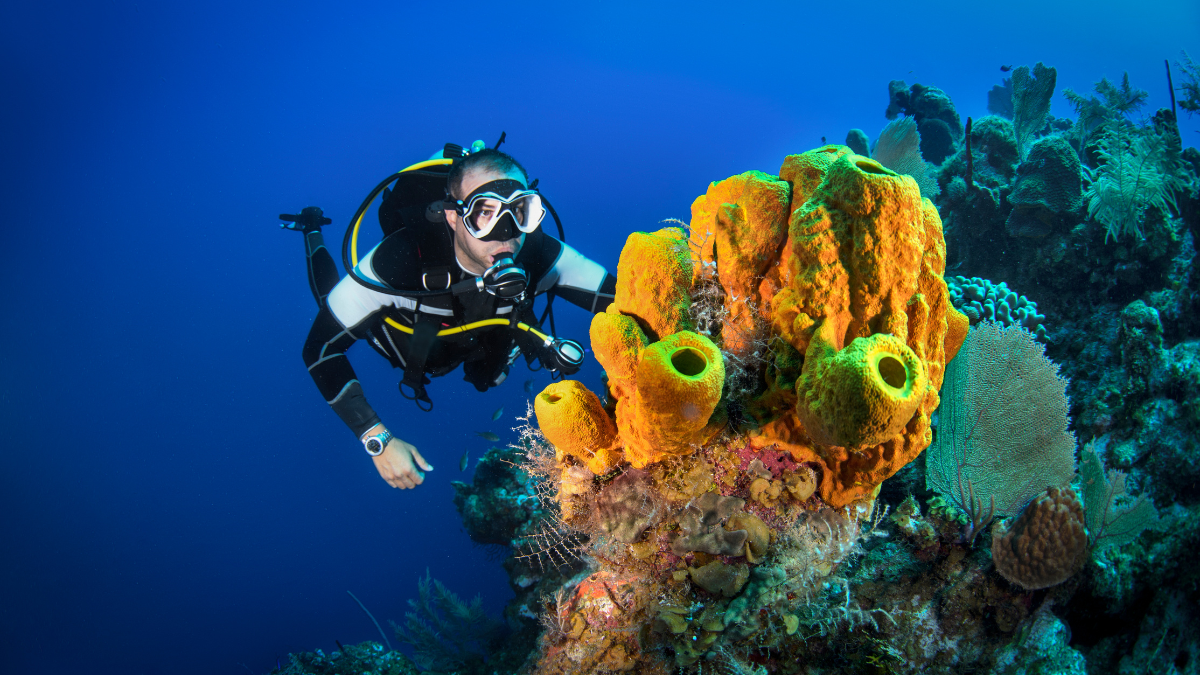
Diving with (tiger) sharks: how to prepare?

Diving with tiger sharks is less scary than many people think, provided you enter the water well prepared. With the right experience, calm demeanor and respect for the animals, these encounters often become unforgettable dives.
Read more
Caribbean region

Our favorite diving destinations in the Caribbean

Not every Caribbean destination is known as a true diving hotspot. In this blog you’ll discover which islands are best suited for diving, where exactly you should be for big animals, wrecks or macro, and...

Read more
Caribbean region

Diving destinations in the Caribbean

The Caribbean offers much more variety than just tropical reefs and clear water. In this blog you will discover which destination best suits your needs: from pelagic life and unique dives to adventure above water...

Read more
Liveaboard Resort Unique Encounters

Why some dive destinations fill up years in advance

Some dive destinations and liveaboards fill up quickly due to limited capacity, short peak seasons and high international demand. Especially popular itineraries and high-end liveaboards in destinations such as Raja Ampat, Galápagos, Socorro and Egypt...

Read more
Socorro Liveaboard Unique Encounters

Discounted admission to Socorro: this is what you need to know about the new park fees

As of Jan. 1, 2025, park fees for Socorro doubled, but thanks to new exceptions and discounts, many travelers can save big. And that’s good news, because Socorro, with its manta rays, sharks and spectacular...

Read more
Europe North and South America

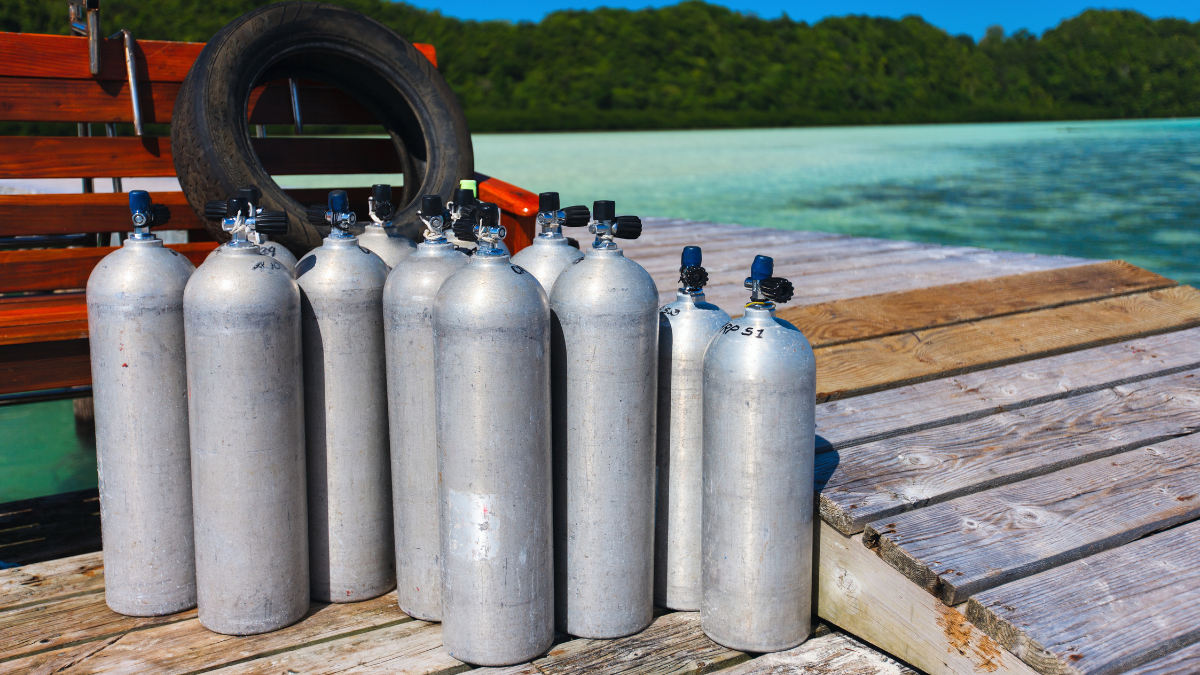
Metric vs imperial system in diving: what are the differences?

In Europe we usually dive with the metric system (BAR, meters and liters), while many American and Caribbean dive destinations work with the imperial system (PSI, feet and cubic feet). Especially in Florida, Mexico and...

Read more
Japan Izu Hammerheads

Diving with hammerhead sharks in Mikomoto, Japan

Mikomoto Island in Japan is known for spectacular encounters with large schools of hammerhead sharks. In this blog you will read what to expect underwater, when you have the best chance and why this dive...

Read more
Japan Asia Hammerheads Coral reefs

Diving in Japan: the different regions

Japan is a surprisingly diverse diving destination with huge differences between its regions. From hammerhead sharks and manta rays to ice diving and unique underwater landscapes, each region has its own character.

Read more