Diving in Costa-Rica
Costa Rica is undoubtedly a diver’s paradise. Nestled between Nicaragua and Panama and bordered by the Caribbean Sea and Pacific Ocean, this Central American country is known for its rich and diverse underwater world. From hammerhead sharks, tiger sharks, whale sharks, bull sharks, manta rays and humpback whales to volcanic rock formations where hundreds of eagle rays circle, Costa Rica has it all. In this blog, we tell you everything you need to know!
Table of contents
General information about Costa Rica
Costa Rica is a small country in Central America, but big on everything it has to offer. With the Pacific Ocean on one side and the Caribbean Sea on the other, surrounded by mountains, volcanoes and rainforests, it feels like you’ve landed in the middle of a nature documentary. The country is incredibly green, literally and figuratively: nearly a third of the territory is protected nature reserve, and sustainability is the norm rather than the exception.
What immediately stands out is the relaxed atmosphere. The inhabitants, who call themselves Ticos, live by the motto Pura Vida – pure life. You hear this everywhere, and it is not an empty slogan. It stands for enjoying the moment, being friendly and taking life as it comes. As a traveler, this makes you feel welcome.
The climate is tropical: hot and humid, with a dry season from December to April and a rainy season from May to November. Yet there is plenty to experience year-round. From misty cloud forests in Monteverde to sunny beaches in Guanacaste to the pristine rainforest of the Osa Peninsula, the variety is enormous.
Traveling through Costa Rica is relatively easy. Whether you opt for a rental car, shuttle bus or domestic flight, the distances are manageable. And although Spanish is the official language, English will get you by just fine in tourist areas. Driving yourself is also really no problem here. The roads are good and it’s safe.
Where to dive in Costa Rica?
There are several places to dive in Costa Rica, and the country even has access to two completely different coasts: on the Caribbean Sea and on the Pacific Ocean. The marine life in both places is also really different. The Caribbean side is tropical and colorful, with lots of soft coral, sponges and reef fish such as parrotfish, angelfish and barracuda. The Pacific side is more robust and rugged, with larger species such as white-tip reef sharks, eagle rays, turtles and schools of jacks or snappers. Currents and visibility are also different on each coast.
Where can you dive in the Caribbean Sea?
The most famous place on the Caribbean side is Cahuita (with the national park) or Manzanillo in the south.
Where can you dive in the Pacific Ocean?
The Pacific coast offers the most and most diverse dive sites. Among others, we offer dives at Playa Hermosa (Northwestern Costa Rica) and at the Osa Peninsula, near Corcovado National Park. Both areas have access to beautiful dive spots where you have a chance of meeting rays, sharks and sometimes even dolphins or whales.
And Cocos Island?
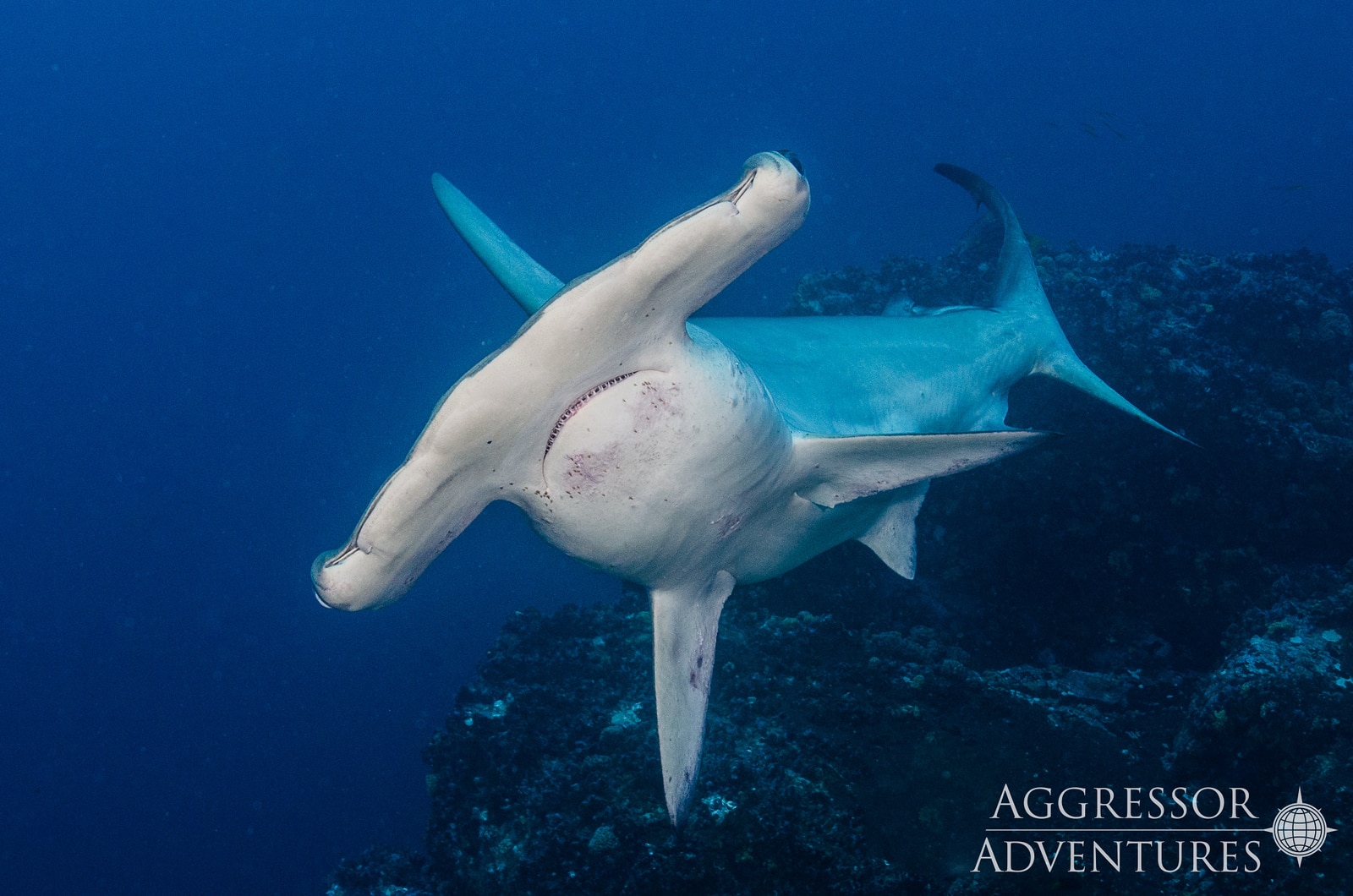
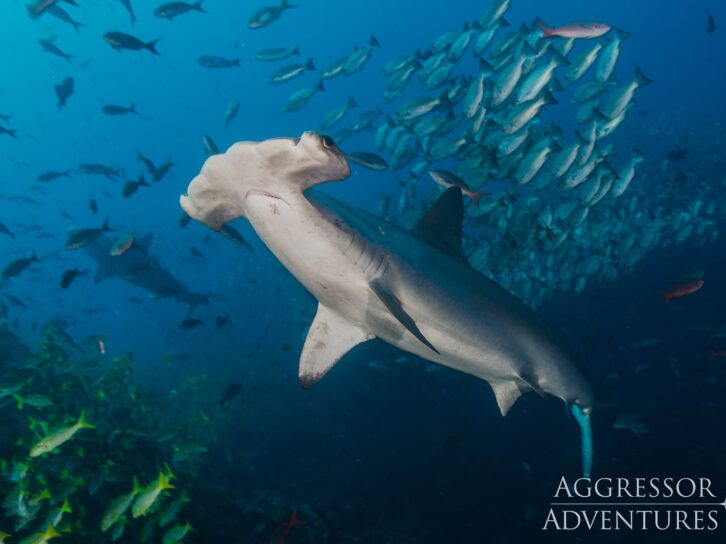
Isla del Coco (Cocos Island) is far out to sea and can only be reached by liveaboard (usually 10+ days). It is an absolute dream destination for experienced divers, known for its large schools of hammerhead sharks, manta rays and other big stuff.
Best travel time for diving
Diving on Costa Rica’s Pacific coast offers spectacular encounters with sharks, rays, turtles, whales and large schools of fish. The best-known regions for diving are the northwest coast (around Playa Hermosa and the Catalina Islands), the Osa Peninsula (near Corcovado and Caño Island), and – for the experienced diver – the legendary Cocos Island far out in the open sea.
Although you can dive year-round in Costa Rica, conditions are not always the same. Some months the sea is calmer, visibility better, or marine life just more active. Weather also plays a role, with dry and rainy seasons affecting the underwater experience.
Diving seasons in Costa Rica
December through May is the dry season: the sea is generally calm, visibility is good (often 20-30 meters) and water temperatures are pleasant. This is the most popular period for diving, with excellent conditions at both the coast and at Caño Island.
During the rainy season (June through November), visibility can be a bit less, especially closer to shore, but the marine life is impressive. July through October, for example, is the season for whales at Uvita, when humpback whales visit the coast to mate and calve.
Cocos Island, accessible only by liveaboard, is impressive year-round, but the best time for large schools of hammerhead sharks, manta rays and other pelagic species is from June to October, when the plankton-rich waters attract more life – though the sea is rougher then.
Visibility
Visibility varies greatly by location and season. On the Pacific coast, visibility in the dry season is usually 20-30 meters. In the rainy season, visibility can drop to 10-15 meters, especially close to the coast or river outlets. At Cocos Island, visibility often remains steady around 20-30 meters, even in the rainy season.
Water temperature
Water temperatures fluctuate between 24°C and 29°C, depending on the month and region. During the months of December to March, thermoclines can occur, when the temperature suddenly drops to about 22°C. A 5 mm wetsuit is then recommended. In warmer months, a 3 mm wetsuit or shorty is usually sufficient.
Current
On the coast, the current is usually mild to moderate. Around islands such as Caño and Catalina, it can be stronger. At Cocos Island you have to expect strong currents, especially at the pinnacles where the big life is – but that is exactly why it is so spectacular.
| Period | Diving conditions | Wetsuit Advice | Details |
|---|---|---|---|
| Dec – March | Good visibility (20-30 m), calm sea, chance of thermoclines | 5 mm full wetsuit | Dry season. Best visibility. Active marine life. |
| April – May | Pleasantly warm water (26-28°C), good visibility | 3-5 mm wetsuit | Transitional period, calm weather, suitable for all diving levels. |
| June – October | Plankton-rich, visibility variable (10-25 m), rough seas | 3-5 mm wetsuit | Season for whales (Jul-Oct), lots of pelagic life. Best time for Cocos. |
| November | Visibility improves, sea calms down | 3-5 mm wetsuit | Beginning of dry season. Less crowded. |
Also diving in Costa-Rica?
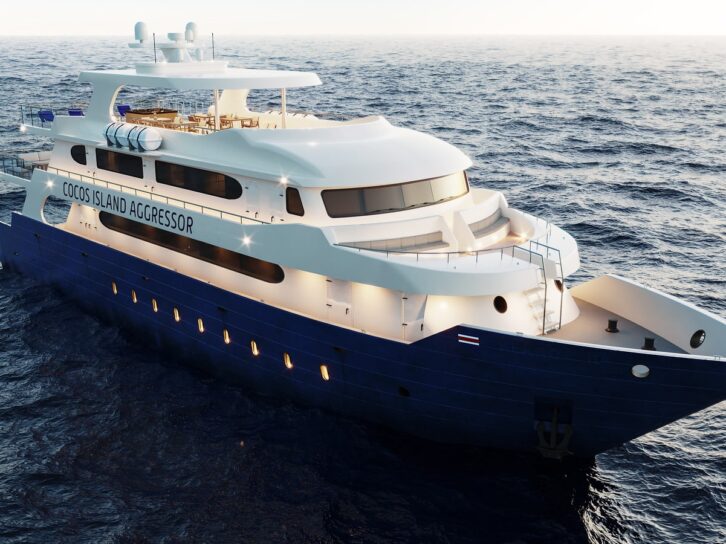
Cocos Island Aggressor – Liveaboard Cocos Island
Board the luxury new liveaboard ship of the Aggressor and dive with large schools of hammerhead sharks,….