Diving in a blue hole: 5 places to put on your bucket list
You can already see it in the photo above: already from a distance you can see where the dive site is. Not thanks to a buoy or a striking rock formation, but by the water itself. Among the lighter blues and greens of the sea, one spot immediately stands out: an intense deep blue circle. This is a blue hole. The name may sound mysterious, but simply refers to the striking color that makes these special dive sites so recognizable. Blue holes represent a totally different underwater world from the surrounding reef and make for a unique diving experience. In this article, we tell you more about these blue holes and where you have the opportunity to dive in them.
Table of contents
A blue hole is basically an underwater sinkhole whose opening is below sea level. They are similar to sinkholes on land and bear many similarities to the well-known cenotes in Mexico. These formations were created by erosion and karst processes, in which limestone slowly dissolves through chemical reactions. During periods when sea levels were lower than today, these openings were still above water. Only later were they inundated by the rising sea.
Some blue holes have developed over very long periods of time. Research on the famous Blue Hole in Belize shows that this process began more than 150,000 years ago. Sea level fluctuations caused the sinkhole to dry up and flood again several times. Those different phases are still visible today in the walls and structures of the blue hole.
No two blue holes are the same. What they do often have in common is their depth: many go beyond the limits of recreational diving. In addition, they are frequently part of extensive cave systems and contain areas classified as cavern diving. Yet many blue holes are also accessible to recreational divers, provided the dive profile is carefully chosen. All over the world these impressive dive sites can be found – and we will show you some of them in this blog.


1. The Great Blue Hole, Belize
Probably one of the most recognizable dive sites in the world. Belize’s Great Blue Hole invariably pops up on lists of the world’s best dive sites. This iconic blue hole is located off the coast of Belize, just off the Belize Barrier Reef, on the Lighthouse Reef Atoll. Its perfect round shape and intense deep blue color immediately betray that this is no average dive site.
At about 300 meters in diameter, the Great Blue Hole is the largest in the world. In terms of depth, however, at about 124 meters, it is not the deepest. Yet that does not diminish its impressive nature. Worldwide fame gained momentum after Jacques Cousteau introduced the blue hole in his television series in 1971. He labeled the spot as one of the 10 best dive sites on earth and was also the first scientist to extensively investigate this natural phenomenon. Especially the spectacular aerial view contributed to its popularity.
The Great Blue Hole offers opportunities for divers of different experience levels. The shallow end starts around 10 meters and gradually slopes down to about 15 meters, which also makes it attractive to novice divers (and even snorkelers). After that, the bottom abruptly disappears into the depths. Experienced divers stay close to the wall here to avoid disorientation. For deeper profiles, this dive is especially suitable for experienced deep divers and technical divers. Around 30 meters depth you come to an overhang, a remnant of an old cave system.
Those who descend further reach the entrance to a cave with impressive stalactites and stalagmites up to six meters high. These formations show that this area was once completely dry. Some columns are also at a distinct angle, indicating that earthquakes in the past shifted parts of the cave.
A diving trip to the Great Blue Hole is finest with a liveaboard trip. This way you will be at the dive site before the day boats get here.
2. The Blue Hole, Dahab, Egypt
A few kilometers along the coast near Dahab, Egypt, lies one of the most famous shore dives in the world: the Easy Entry Blue Hole. The dive site is clearly marked with a sign and is known for its impressive deep blue waters and unique underwater scenery.
The highlight of this blue hole is the famous arch – a large tunnel that connects the Blue Hole to the open sea. The top of the arch is about 52 meters deep, while the bottom of the tunnel goes even deeper. The light entering the Blue Hole through the tunnel creates a stunning effect and provides an impressive view of the surroundings. Thus, this spot is only accessible to trained technical divers. But even without seeing this spot, a dive in the Blue Hole is more than worthwhile.
The Easy Entry Blue Hole is suitable for divers of different levels. The shallower section offers a calm and safe diving experience, ideal for novice divers and snorkelers, while the arch and deeper zones are more challenging for experienced divers.
The Blue Hole’s popularity also extends beyond the diving world. On Netflix, for example, there is the impressive documentary “The Deepest Breath,” which follows freediver Alessia Zecchini and safety diver Stephen Keenan as they prepare for a deep freedive in Dahab’s Blue Hole. The film shows how beautiful and intriguing this place is, even for non-divers. The film ends tragically due to misplanning during the dive, but this does not mean that the dive site is dangerous in itself. As always, stay within your own limits, follow the guide and stick strictly to your dive planning.
3. Blue Holes, Palau
The Blue Holes in Palau are considered the second most popular dive site in the country, after the famous Blue Corners. The name is often used in the plural, as there are four different openings in the reef that lead into the cavern.
The entrances are located on the shallow reef at a depth of only 1 to 2 meters, while the cavern itself slopes down to about 40 meters. This also makes the dive site suitable for novice divers on a guided cavern dive.
The cavern has multiple exits: a smaller one at 14 meters and a larger one at 27 meters. When using these side exits, the currents can be quite strong. For experienced divers, the most popular route is through the deeper window: you turn left for about 45 meters and then join the current toward Blue Corners.
The combination of shallow water, a spacious cavern and impressive currents makes the Blue Holes a unique and versatile diving experience for beginners and experienced divers alike.
4. Dean’s Blue Hole, Bahamas
Located on Long Island in the Bahamas, Dean’s Blue Hole is known as one of the deepest blue holes in the world. Recently, an even deeper blue hole was discovered in the Western Philippine Sea, making Dean’s Blue Hole now officially the second deepest. The dive site reaches an impressive depth of 202 meters and is considered the largest underwater cave in the world, with a width of 73 meters, length of 107 meters and a height of 184 meters.
Although Long Island is relatively isolated and off the usual tourist routes, this blue hole attracts divers of all levels and freedivers. Snorkelers and novice divers enjoy the crystal clear waters and calm conditions, while experienced divers can go deeper and admire the diverse marine life at different depths.
Dean’s Blue Hole is also a shore dive, making it easily accessible from the beach and ideal for both a short exploratory dive and longer adventure dives.
Our trips to the Bahamas focus primarily on seeing the sharks, but should you wish to take a combination trip where you both dive with sharks and go to Dean’s Blue Hole we can absolutely arrange that.
5. Gozo’s Blue Hole, Malta
Gozo’s Blue Hole is considered Malta’s most popular shore dive. Surrounding the dive site are impressive rock formations, which recently even appeared in the television series Game of Thrones.
The underwater portion of this limestone structure is reminiscent of Dahab’s Blue Hole, with a 15-meter-deep underwater arch that opens out into the open sea. This passage provides access to picturesque reefs, ideal for a relaxing swim after the blue hole.
Malta’s Blue Hole attracts divers for its unusual rock shapes and atmospheric underwater light. The surrounding rocks give this sinkhole a strikingly different character from tropical blue holes. With a depth of about 15 meters, it is also one of the smallest and shallowest blue holes, perfect for novice divers and snorkelers.
The site is accessible by both land and sea, with multiple entrances and exits depending on your preference. Underwater you will find schools of barracudas, octopus and colorful sponges, which also makes it an excellent spot for underwater photography. The nearby collapsed Azure Window adds an extra dimension to the dive, with breathtaking geological structures to explore.
Most diving schools dive at this location from land. You then drive from your diving school to the dive site. By the way, from land it is quite a walk, and you do this with all your equipment. Keep in mind that especially in summer it can be quite an effort. You walk (and climb a bit) for about 10 minutes! Margriet made a video about this, you will see the whole route accelerated. A good diving school lets you walk down first without equipment, so you can judge for yourself whether you can do it with your diving equipment.
@divewithmar That walk was brutal but so worth it #malta #gozo #diving #scubadiving @🌞 Ritual Dive 🤿 ♬ original sound - GG
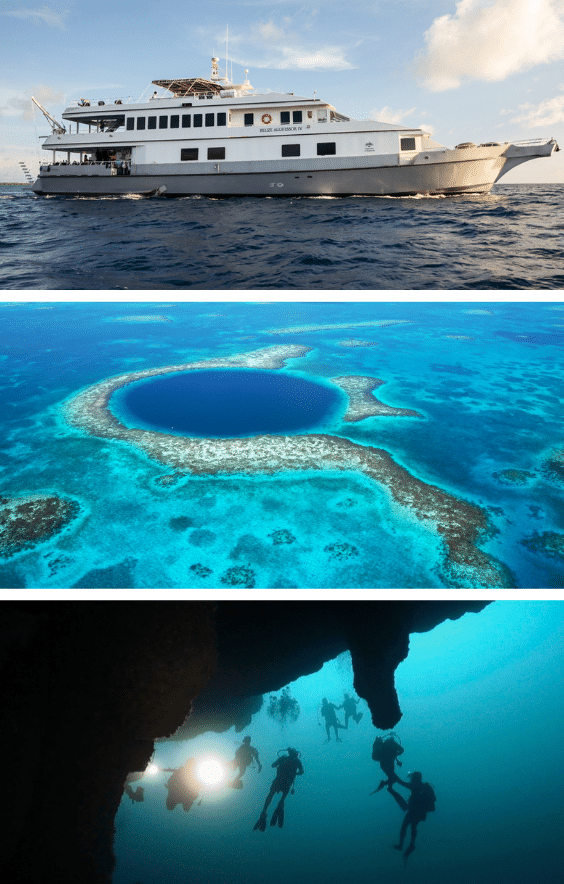


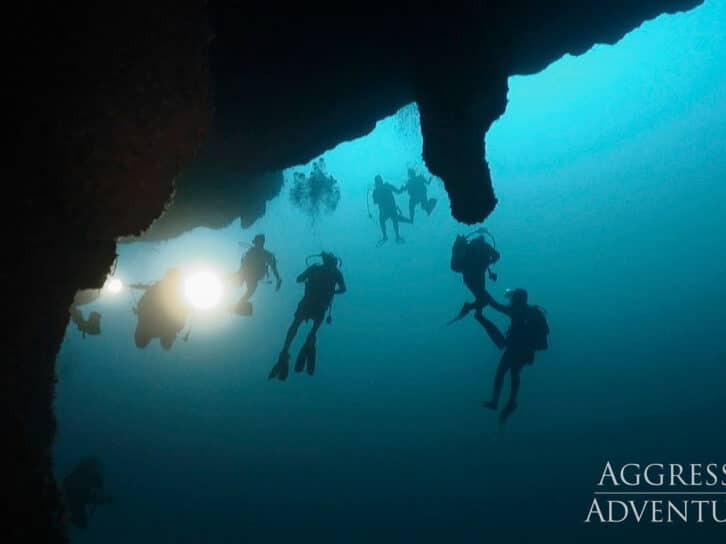

Liveboard Belize Aggressor – Diving the barrier reef & the Blue Hole
Experience an unforgettable liveaboard diving trip in Belize aboard the luxurious Belize Aggressor IV. Cruise past the country’s most beautiful...
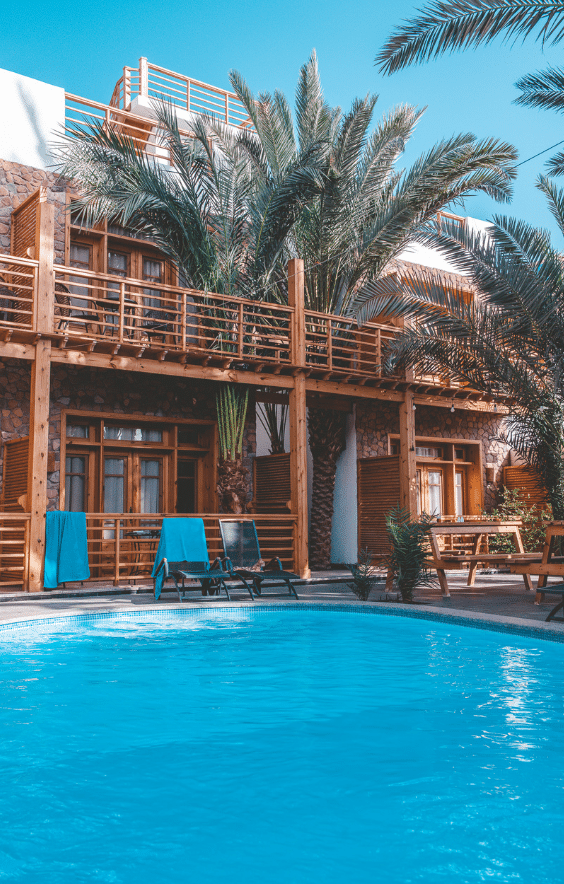


The Bridge Dahab – Diving at the Blue Hole & Thistlegorm
Stay at the Bridge Hotel in Dahab and enjoy diving around Dahab’s popular dive sites, including the Blue Hole and...