The 15 best places in the world to dive and snorkel with whale sharks
The whale shark is a dream species for many divers and snorkelers: immense in size, peaceful and impressive to swim alongside. Fortunately, there are several places worldwide where you can encounter these giants in the wild: from the pristine reefs of Mozambique to the lagoons of Mexico to Australia’s iconic Ningaloo Reef.
In this overview, you’ll find 15 top destinations with a chance to see whale sharks, including the best season, how encounters take place and conservation focus. Whether you’re looking for ethical tours, adventurous liveaboards or accessible snorkeling trips – here’s where and when to be for an encounter with the world’s largest fish.
We have also made an overview for you where you have the greatest chance of seeing a whale shark per month. You can find this overview here.
Table of contents
Tofo, Mozambique
Tofo is known worldwide as one of the best places to see whale sharks, especially between October and March. They descend here on the rich plankton in the warm coastal waters. Snorkeling and diving trips leave daily from the beach and the chances of an encounter here are particularly high. The water is sometimes murky because of the plankton – exactly what the whale sharks love. Besides whale sharks, you can also spot manta rays, devil rays and sometimes even humpback whales. The atmosphere in Tofo is relaxed, with small dive centers and vast beaches filled with palm trees. A pearl for those who love adventure.
Mafia Island, Tanzania
Mafia Island, off the coast of Tanzania, is a relatively unknown island but a fantastic place to snorkel with whale sharks. Between October and February, whale sharks come to the island. Encounters take place along the west coast, near Kilindoni, where the whale sharks often swim just below the surface. Tours leave on traditional wooden boats and you usually have the water almost to yourself. The coral around Mafia is pristine, the atmosphere friendly and the island itself feels like a step back in time. No mass tourism, but pure nature. A special place for peace seekers with a passion for great diving.
Galapagos Islands, Ecuador
The Galapagos are without a doubt one of the most spectacular destinations in the world. You have the greatest chance of seeing whale sharks between July and November. In addition, there is much more to see. Around the islands of Darwin and Wolf, you can dive among huge schools of hammerhead sharks, sometimes hundreds at a time. You also have a chance of encounters with silky sharks, Galapagos sharks and even orcas or mola mola. Conditions can sometimes be challenging due to strong currents, deep dives and sometimes limited visibility (depending on the month you go), but the rewards are unmatched. Only suitable for advanced divers, but definitely a once-in-a-lifetime experience.
Maldives
There are several places in the Maldives where you have the chance to see whale sharks. The most famous place is South Ari Atoll, because this is the place where you have a chance to see whale sharks all year round. This is quite unique, as whale sharks migrate to find food. The greatest chance of seeing whale sharks here is between November and April (high season in the Maldives), when visibility is also optimal.
Most encounters occur while diving from liveaboards or day boats, although sharks are often spotted just below the surface, ideal for snorkelers. The whale sharks are not fed here and follow their natural migration along the south side of the atoll. The reef is beautiful, the chance of manta rays is present, and the calm currents make it suitable for all levels of diving. Keep in mind that if a whale shark is spotted, you will soon be joined by other boats.
Socorro Islands, Mexico
The Socorro Islands, also called the “little Galapagos of Mexico,” are a remote archipelago in the Pacific Ocean where you can come face to face with whale sharks, hammerheads, silky sharks and basking mantas. The mantas here are especially approachable and curious, a magical experience. The season runs from November to June, with the best chance of whale sharks in the spring. The islands are 400 km offshore and can only be reached by liveaboard, making it extra exclusive. Because of the deep dives, open ocean and currents, this is a destination for advanced divers ready for pelagic excellence.
Philippines
There are several places in the Philippines where whale sharks are found, but it is important to know that these are not always ethical tours. In some locations, such as Oslob on Cebu, the animals are fed to offer tourists a guaranteed encounter. This disrupts their natural behavior and is something that is best not supported.
Fortunately, there are also responsible alternatives, such as Donsol on Luzon and Leyte in the Visayas. At Donsol, between December and May, you can snorkel with whale sharks that gather naturally in the bay, attracted by plankton. The tours are strictly regulated: no feeding, no diving, and always accompanied by a guide. In Leyte, especially around Pintuyan and Sogod Bay, whale sharks are regularly spotted during small-group snorkeling trips between November and April. Diving is also possible here, with a chance of a spontaneous underwater encounter.
Similan islands, Thailand
One of Thailand’s top diving locations, the Similan Islands offer a small chance of encounters with whale sharks between February and May. Especially at Koh Bon and Richelieu Rock, they are spotted, often above the steep reef walls. The dives take place from liveaboards that offer multi-day trips from Khao Lak. Currents can be strong at times, but visibility is often excellent. Between schools of barracudas, reef sharks and manta rays, an encounter with a whale shark here feels extra special. In addition, you also have a chance of whale sharks at Koh Tao.
Roatán and Utila, Honduras
Roatán and Utila, two islands off the Caribbean coast of Honduras, are affordable diving destinations with a surprisingly high chance of seeing whale sharks. Utila in particular is known for it: between March and April and then again around September/October, they are often spotted just off the reef. Dive centers organize “whale shark safaris,” mostly snorkeling trips where you follow the animals from the boat. The atmosphere is laid-back, the prices low, and the reef is part of the second-largest barrier reef in the world. For divers on a smaller budget, a fantastic opportunity.
Nosy Be, Madagascar
Off Madagascar’s northwest coast, around Nosy Be and the Mitsio archipelago, you can snorkel with whale sharks between September and December. They descend here on plankton-rich waters, often along with manta rays and humpback whales that migrate during the same period. The sea is calm and visibility good, ideal for relaxed snorkeling. Nosy Be is an emerging ecotourism destination and local organizations are working with researchers to map whale shark behavior. A unique combination of biodiversity and small-scale adventure.
Oman
Oman’s coast, especially around the Hallaniyat Islands and Muscat, offers surprisingly good chances for whale sharks – especially between May and September. During the southwest monsoon, plankton-rich water flows in, attracting these giants. Encounters happen both while diving and snorkeling, often spontaneously between wreck diving and reef exploration. Oman combines rugged desert landscapes with calm, warm seas and rich biodiversity. Not yet overrun by tourists, and therefore extra attractive to adventurous divers.
La Paz, Mexico
La Paz Bay is a place where nature is at its best. Between October and April it is bursting with plankton here, and that attracts big visitors: whale sharks. These gentle giants – sometimes up to 12 meters long – come here just off the coast to eat peacefully. You can snorkel among the whale sharks here during these months. In addition, it is also a great location for diving. There are sea lions swimming curiously around you and in an overlapping period with the whale sharks, there is also the spectacular sardine run.
Egypt
Although Egypt is not known as a classic whale shark destination, they are regularly spotted in the Red Sea, especially during the summer months. They are also being spotted with increasing frequency. Dive sites such as Elphinstone Reef, Daedalus Reef and the reefs around Brothers Islands offer the best chance of an encounter, usually during a liveaboard trip.
Summer (May to July) is the peak season, when the water gets warmer and the plankton increases. Snorkelers also sometimes see them around islands like Giftun or near Marsa Alam, but for the real chance, go into the deep end, far from shore.
Indonesia
There are several places in Indonesia where you can encounter whale sharks, but not all encounters are equally natural. The best-known location is Cenderawasih Bay in West Papua, where whale sharks often linger around fishing platforms. Although visibility there is good and encounters can be spectacular, the animals here are partly lured with fish waste – something that raises questions about their natural behavior.
A more natural alternative is found around Maratua Atoll and Talisayan (East Kalimantan), where whale sharks occasionally visit without human influence. Here you dive in clear waters with rich biodiversity and chances of a spontaneous encounter.
Whale sharks are also occasionally reported at Raja Ampat, Halmahera and Flores, but that remains pure luck. If you choose Indonesia, go for locations where the welfare of the animals is paramount and be well informed about how the tours are organized.
Turks & Caicos
The Turks and Caicos Islands are best known for their clear blue waters, laid-back atmosphere and impressive reef systems, but did you know that you can also encounter whale sharks here? They are occasionally spotted, especially around the deeper drop-offs of West Caicos and French Cay, usually in the winter months (December through February), when the plankton in the water increases.
Ningaloo Reef, Australia
Ningaloo Reef, on Australia’s west coast, is one of the best places in the world to snorkel with whale sharks. Every year, between March and July, these impressive animals migrate to the shallow reef to feed on plankton released during the annual coral spawning. What makes this place so special is its accessibility: you simply hop on a boat from the beach and within an hour you’re in the open water next to a whale shark. Tours are strictly regulated: one group per shark, no touching, no feeding. In addition to whale sharks, you regularly see manta rays, humpback whales (later in the season) and dolphins here.
Other places to see whale sharks
There are other places where you can encounter whale sharks while diving or snorkeling. Keep in mind that whale sharks migrate, so they are not in the same place all year round. Also, these spots are less likely to be there, but that certainly doesn’t make the destinations any less worthwhile!
- Komodo, Indonesia
- Belize
- Sipidan, Malaysia
- Mexico, Isla Mujeres and Holbox
- Djibouti
Overview by month
Whale sharks migrate, always heading to where there is the most food at the time. That is why it varies per month where you have the greatest chance of encountering a whale shark underwater. We have made a handy overview of where you have the greatest chance of encountering a whale shark each month. You can read this overview here:
Seeing whale sharks with EWDR
Ready to hit the water? Check out our trips to the above destinations here or request a trip proposal.
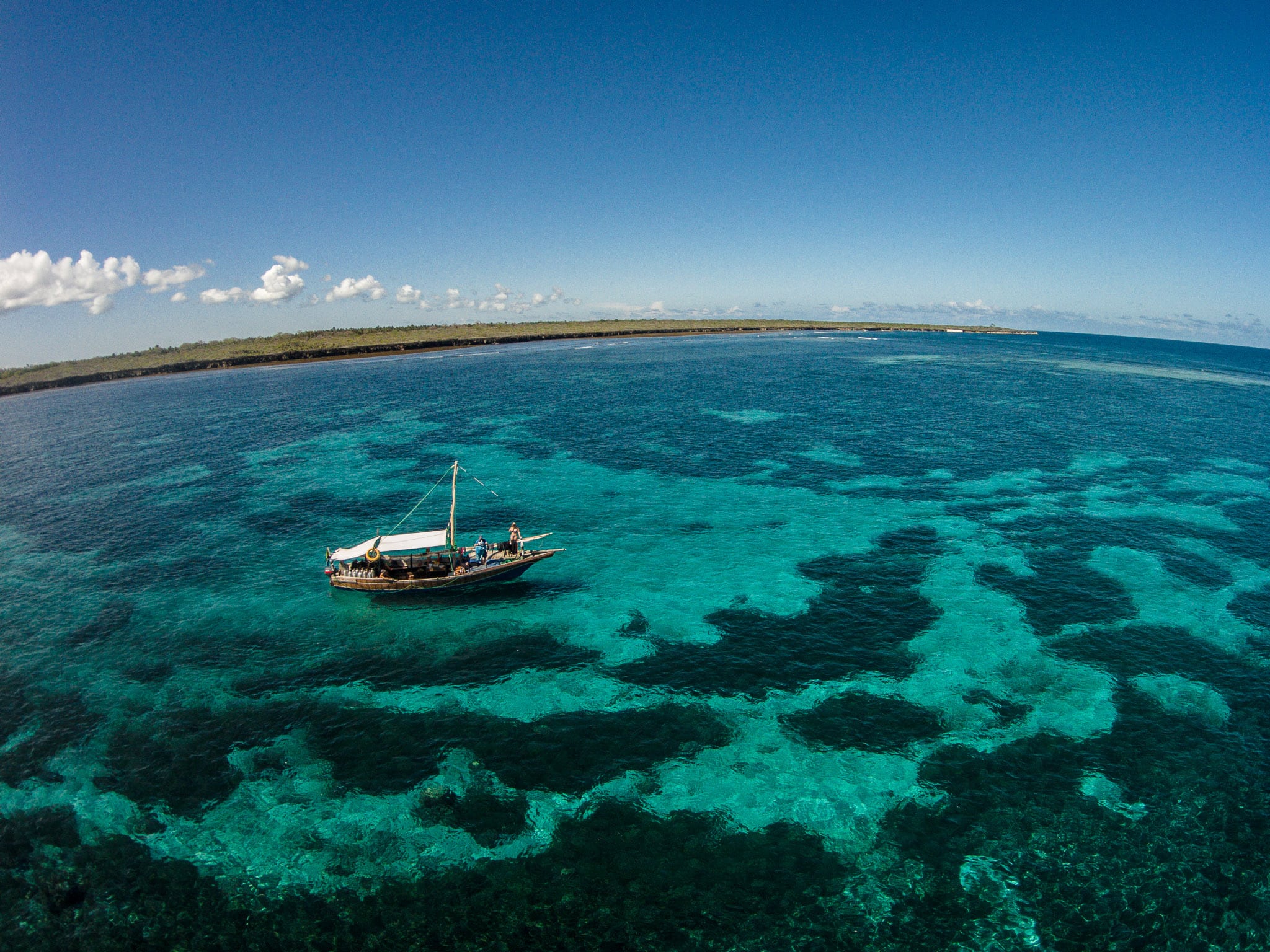


Diving & safari in Tanzania – Discover Mafia Island and the Big Five
This 14-day Tanzania trip combines the colorful underwater world of Mafia Island with a safari along the highlights of the...