Trip report - Group trip to research station BCSS in Mozambique

Sebastiaan is co-owner of EWDR and often the first contact for the Netherlands and Belgium. He is also a fanatic diver. He has been diving for many years and has also visited several places. In September 2025 he traveled with a group to Mozambique to stay and dive for a week at research station BCSS. In this blog he tells you all about the trip: from the spontaneous mini-safari to everything they encountered underwater and what the stay on the special and quite remote island was like.


Our group trip to Mozambique began for everyone at a different place in Europe: some left from Amsterdam, others from Brussels. One of the participants had left a bit earlier and combined this trip with a week in Tofo, in the south of Mozambique. She later joined the group in Vilanculos, where we all eventually met to start this trip together.
I myself flew with a friend and two others from Brussels. On the way out, we had a nice luxurious car ride, but on the way back we opted for the train – which turned out to be surprisingly doable. From Zaventem we took the direct train to Rotterdam, where we changed trains for Utrecht. That went smoothly, although we had to run at the end to catch the connection, otherwise we would have had to wait a bit longer….
Most of the group met in Johannesburg, where we had an overnight stopover. We stayed at the Tambo O.R. Lodge, near the airport – a fine hotel with spacious rooms, friendly staff and a good restaurant. In the evening we ate together, had a beer and got to know each other better.
Since most of us arrived early in the morning and we didn’t fly through until the next day, we decided to do an impromptu mini-safari. Taking an Uber (surprisingly cheap and easy to arrange), we drove about 1.5 to 2 hours outside the city, where there are several small wildlife parks. There we saw lions, zebras, antelopes and even jaguars. Actually the entire Big Five, except for the elephants. A special start to the trip, and ideal for getting into the African atmosphere beforehand. There was also the possibility of doing a cultural tour in Johannesburg, but with the heat, hardly anyone really felt like doing that. The safari was a perfect choice: short, adventurous and a nice way to spend the first day together.
By the way, the flights with Qatar Airways were excellent. Both on the way there and on the way back, we had short transfers in Doha, a modern airport with all the facilities you could wish for. Comfortable, efficient and exactly what you want on a long trip.
Flight from Johannesburg to Vilanculos
The next morning we flew on with SA Airlink, the South African airline, to Vilanculos – the gateway to the Bazaruto Archipelago, where the BCSS research station is. The flight took about 1.5 hours and arrived punctually.
The views along the way were stunning. We flew over parts of the Kruger Park, and as we approached toward the coast of Mozambique, we saw below us the first outlines of the archipelago. The turquoise lagoons, sandbanks and small islands came into view beautifully. Even from the plane you could see Benguerra Island – the moment when the vacation feeling really began for everyone.
Upon arrival, a small van was already waiting to pick us up. The drive from the airport to the beach took about 20 minutes, partly on paved stretches and partly on dirt roads, past colorful houses and small stores – a first glimpse of Vilanculos village life.
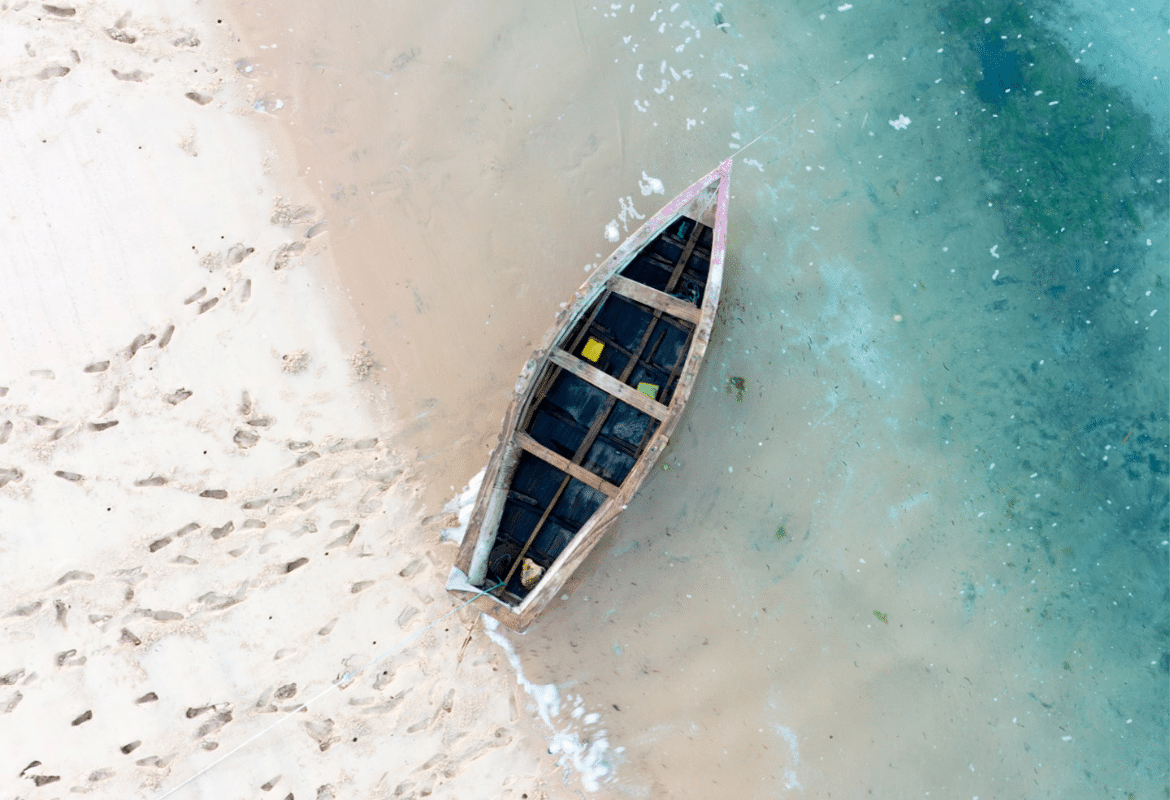
Then we had a short boat crossing. On the beach there were already several people ready to help with the luggage. The boat was just on the shore, so we walked a short distance through the shallow water to get into the zodiac. The bags were neatly helped aboard and within three quarters of an hour we were on Benguerra Island.
The crossing was magnificent: the water is crystal clear and beautifully blue, especially when the sun is on it. Because the archipelago is protected between the islands and the mainland, the water is mostly flat and calm. Everywhere you see sailboats and fishing boats in the background – a relaxing ride overlooking one of Africa’s most beautiful stretches of coastline.
On the way out we saw nothing special, but on the way back we were lucky enough to spot dugongs – a rare experience. With a little luck, dolphins also swim with the boat.
Arrival at Benguerra Island and stay at BCSS
Upon arrival from Benguerra, we received a warm welcome and completed the last part of the trip: a less than 10-minute ride in an open jeep through the dunes, a wooded stretch and sandy trails. That ride alone was an experience – holding onto the side, sand on your shoes and stunning views all around you.
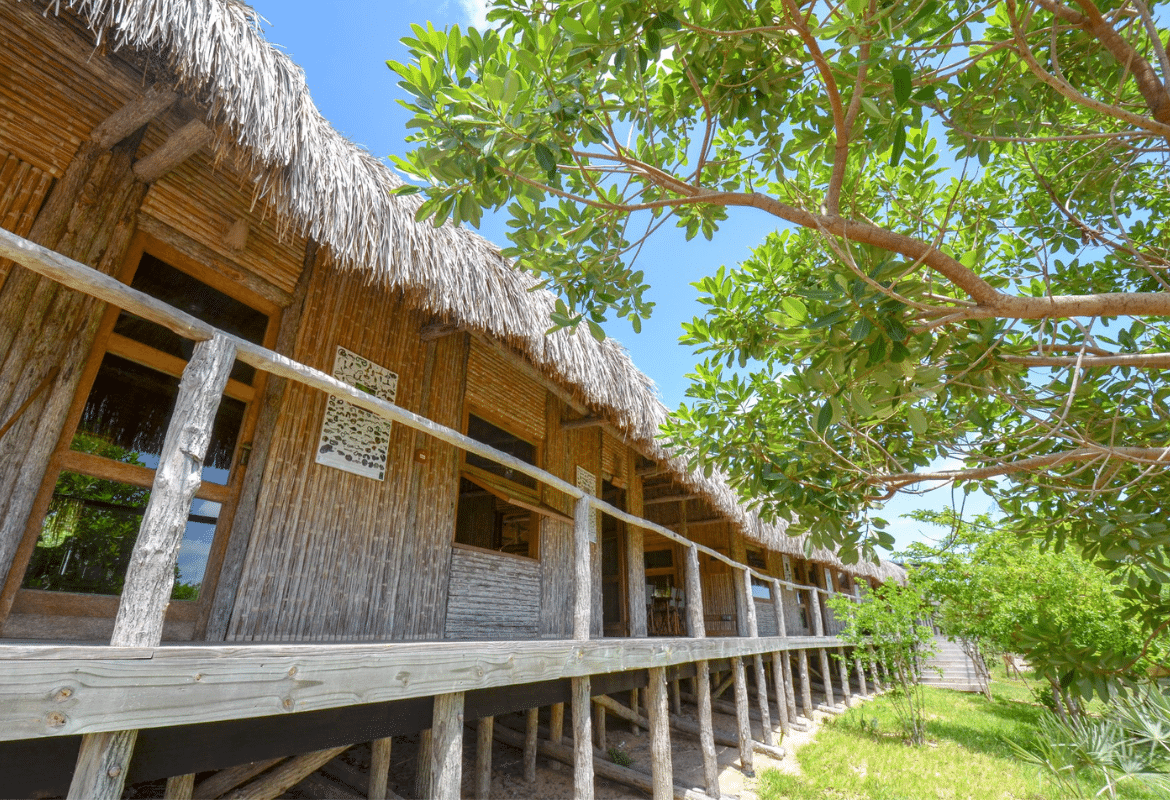
We are staying at Bazaruto Center for Scientific Studies (BCSS) which is not a traditional hotel, but a research station where universities, students and researchers can go to conduct studies in the marine reserve. Ongoing studies ranging from sharks to coral restoration are conducted here. When we were there, there was no active research project running, which meant the team had more time and attention for us as a group – a big advantage.
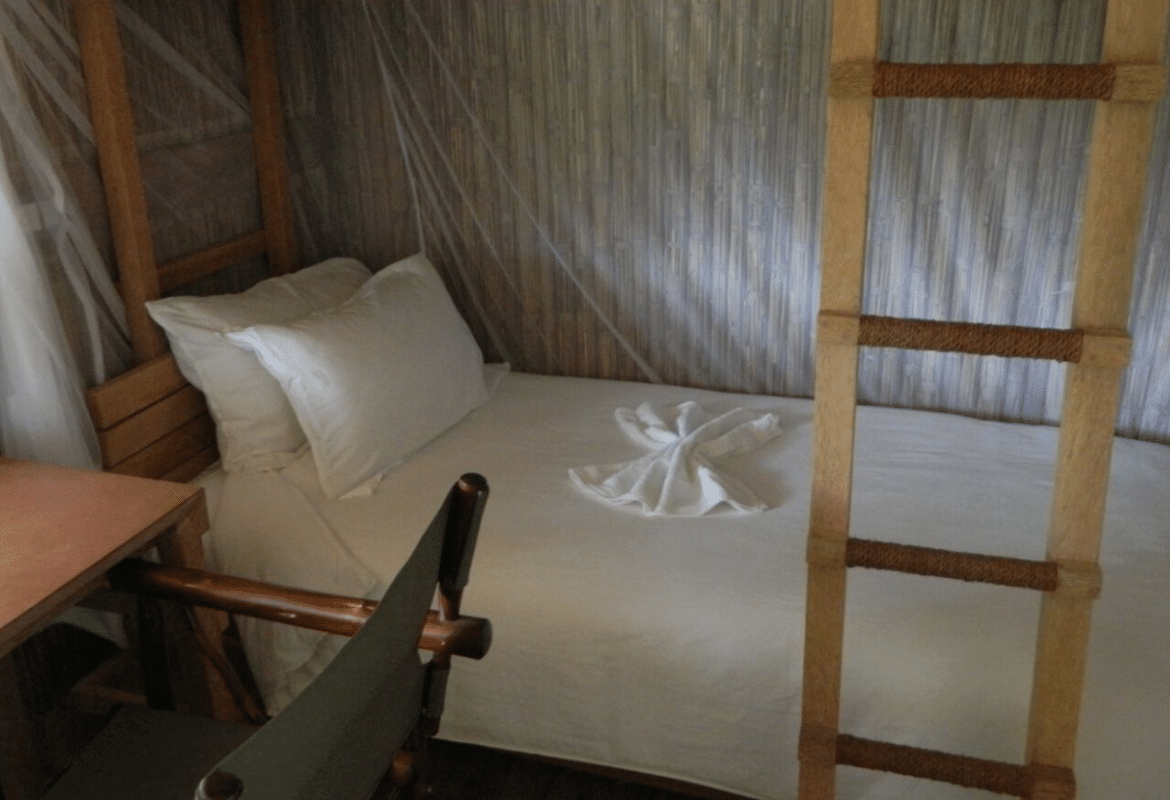
The accommodation is basic but comfortable. You are in the middle of nature, far away from tourist crowds. A big plus is that the tap water is drinkable – sourced from a natural spring on the island and purified on site. The staff is super friendly and helpful. Not everyone is fluent in English, but with some smiles, patience and help from colleagues, you always get by.
No alcohol is served at BCSS. For those who want it, there is a local baracca near the beach where cold beers are for sale. The crew will gladly take you there by pickup to get supplies. A good tip is to buy some snacks and drinks for the fridge in Vilanculos. But in terms of food, you are in good shape at BCSS: 3 fresh meals a day, no one got sick. Everything is prepared well!
And a little tip: keep your room doors closed, because the cats on the island are curious and like to crawl on the bed when they get the chance.
The island itself is a paradise for nature lovers. Everything here is on dirt roads and you can walk for hours without meeting anyone. There are dunes, lagoons, small lakes (with crocodiles!) and numerous bird species, including flamingos and colorful birds reminiscent of toucans. A couple of our group members turned out to be true bird watchers and were able to explain exactly what we were seeing. You also see a lot of dikdiks walking everywhere. Small antelope that are all over the island.
A lunar eclipse also took place during our stay – because there is no artificial light, it was an unforgettable sight under a full starry sky.
The island is also home to several species of snakes, including cobras, pythons and tree snakes. We only saw the smaller species, but the larger pythons are mostly found on the other side of the island. At night it is not recommended to walk around after dark – not because of safety, but simply because visibility is limited.
Malaria is virtually non-existent here. Although most of us took malarone as a precaution, in retrospect it proved unnecessary.
Diving in the Bazaruto Archipelago
We stayed at BCSS for a total of 9 days, including 7 diving days. Although the program normally consists of 2 dives per day, we were able to make 3 dives on most days – simply because the conditions were so good that no one got tired of the water.
What makes diving here special is the relaxed way of boarding. You walk in shallow water to the boat, sit quietly and the crew pushes the boat a little further out to sea before the engine turns on. Then you calmly sail across the sheltered lagoons of the archipelago toward the open ocean. Unlike in Tofo – where you are often literally launched – this is a relaxing, comfortable ride. Once you get outside the shelter of the islands, the waves can get a little higher, but generally it remains manageable.
All dives at BCSS are negative entries: roll backwards and descend immediately. That doesn’t mean you are left behind – there is always an instructor at the back to help if anyone has trouble descending. Diving is always done via a line, which provides extra hold.
It is good to know, however, that this is not a destination for beginners. You need to be comfortable with currents and open sea. An Advanced Open Water license and at least 50 dives of experience are really recommended.
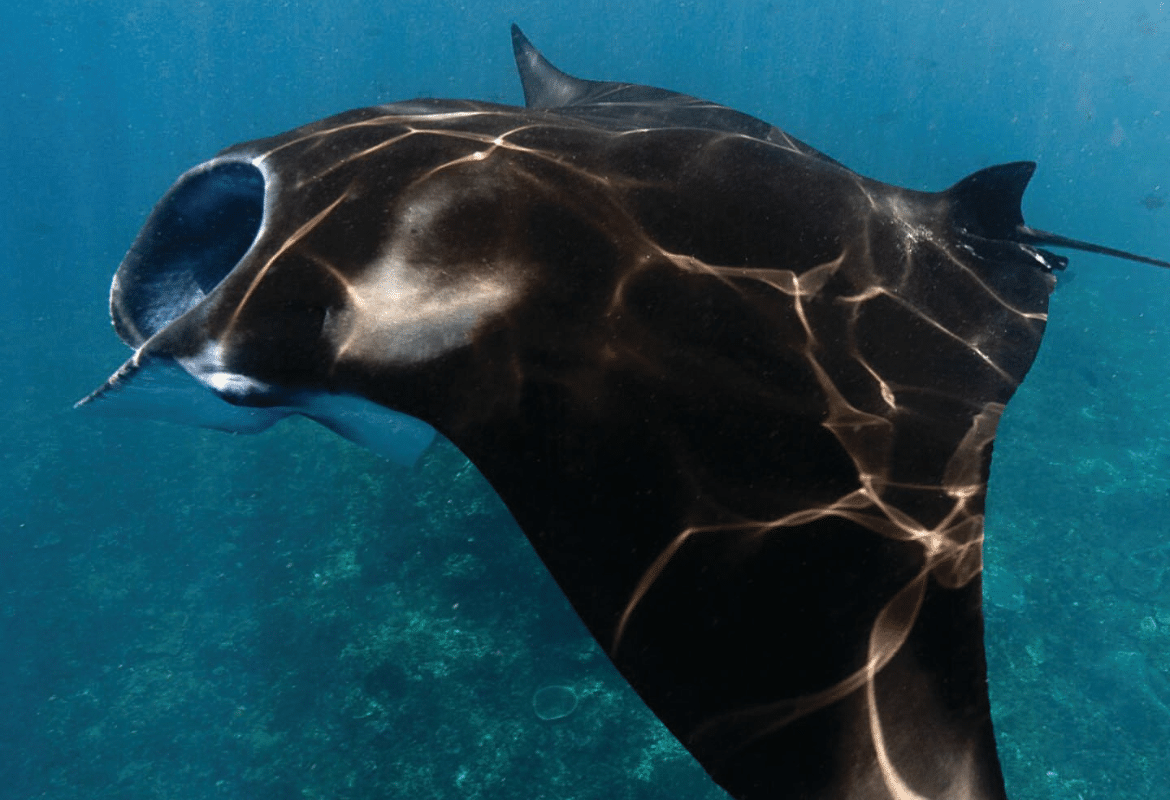
We dived at sites including Turtle Cove, Atlantis, Candy Shop, The Gap (Two Mile Reef), Rollercoaster, Marlin Pinnacles, Area 51, Amphitheater, Forrest Gump, Free Trees, Nine Mile Shallow and Kingfish Alley. Dives ranged from shallow, colorful reefs to deeper 30-meter dives with cleaning stations for manta rays. My personal favorite was 3 Trees – further offshore, but phenomenally beautiful. BCSS is the only organization that dives that far out. Most dive centers in Vilanculos or at the lodges stay closer. As a result, you often feel like you are alone at sea here.
Our guides Nelson and Cinda were our regular dive instructors. Both are experienced, passionate divers with a keen eye for what to see underwater. Cinda was particularly enthusiastic and showed us bull sharks, several species of sharks, manta rays and several species of stingrays, among others. The operation was led by Mauro, who is responsible for safety on board and daily coordination of the dives.
All three were extremely helpful, professional and enthusiastic – the kind of team that makes the difference between a great and unforgettable diving trip.
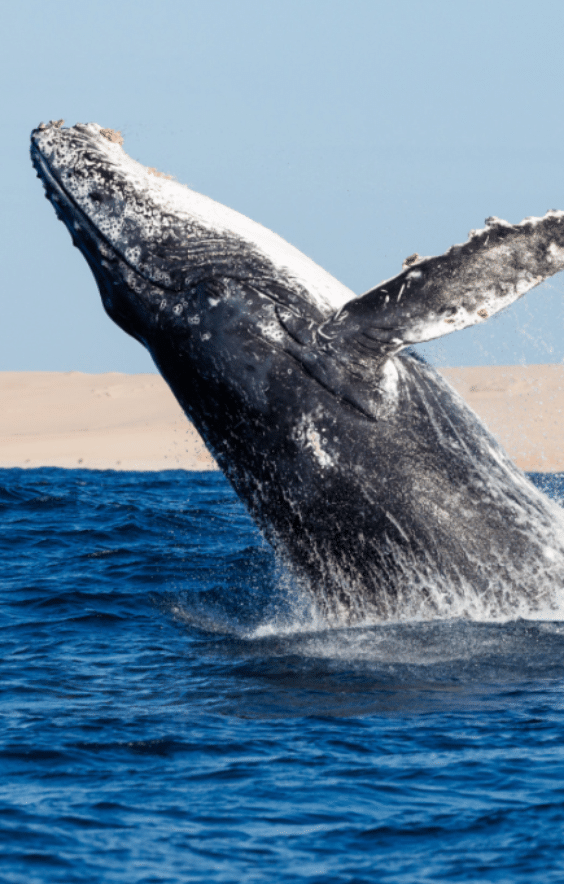
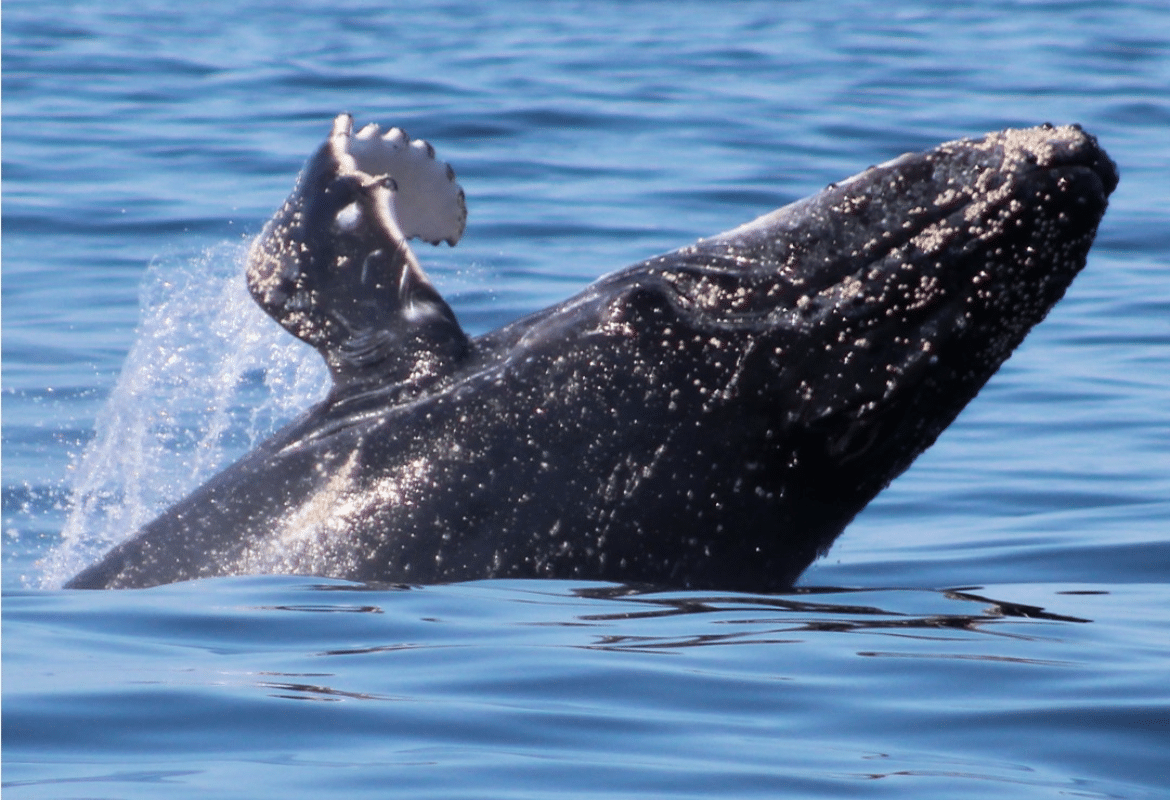
We were there in September, high season for whales. And we saw plenty of them – almost every day by the boat, and underwater you could hear their singing through the dives. Some of us were even able to snorkel with a group of whales with calf, without disturbing them. In addition, we saw manta rays, turtles, schools of jackfish, and snorkeled with dolphins – including an albino dolphin, a moment no one will ever forget.
The dugongs live mainly at the passage between Bazaruto and the open Indian Ocean. Here is still the largest population in the world, about a few hundred animals. They are well protected; diving or snorkeling with dugongs is not allowed, but with some luck you can see them from the boat.
After diving, there was time to relax and explore the island. You can go for beautiful walks, bird watching or simply enjoy the peace and quiet. The evenings were cozy: often we sat outside together with a drink, under a sky full of stars and enjoyed the silence around us and the stories of the day.
After 9 days in paradise, it was time to return. We flew to Johannesburg and continued our journey back to Europe via Doha. The return flight went just as smoothly as the outward journey – offering enough time to let all the impressions sink in.
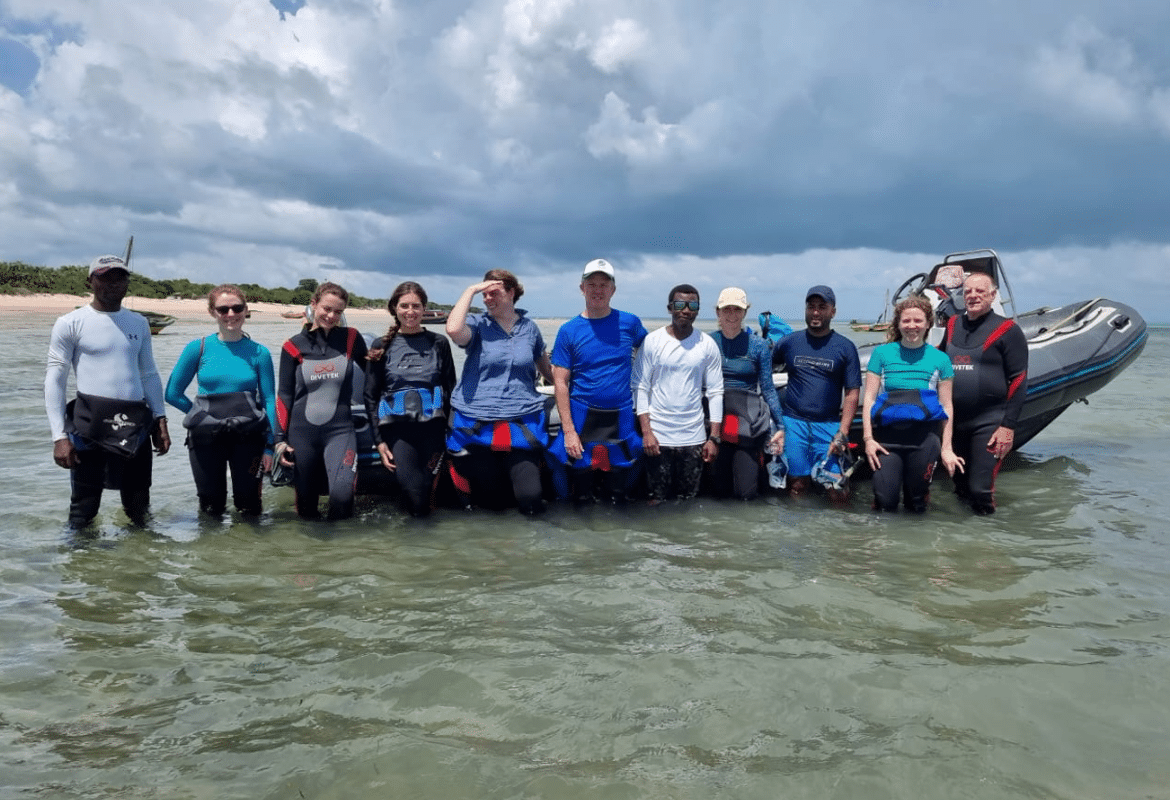
Everyone agreed: Mozambique surprised us. The combination of adventure, nature, hospitality and world-class diving makes this a destination that gets under your skin. What made this trip so special was not only the beautiful underwater world, but also the composition of the group. A mix of experienced divers and curious travelers, all with the same goal: to enjoy the ocean, discover new places and share a special experience together.
The Bazaruto Archipelago made an impression. And for many, this will not be the last time we return here.
Also experience this diving trip?

Discover the Bazaruto Archipelago – Mozambique
Stay at a research center while exploring the Bazaruto Archipelago. Chance of humpback whales, whale sharks, manta rays, dugongs and...