Polar diving: all about diving in Antarctica
It may not be the most obvious destination, but it is certainly possible to dive in Antarctica. In fact, it is incredibly beautiful to dive here. It takes some preparation, but it is more than worth it. We explain here what to expect from diving in this region!
Table of contents
How do you get to Antarctica?
When it is summer in Antarctica, it is possible to take an expedition cruise to this unique continent. The ships depart from the southernmost place in Argentina: Ushuaia. This city is also called the end of the world because it is the southernmost city in the world. The ships depart from here and arrive in Antarctica after about 2 days of sailing.
There are different routes the ships take and different activities done on the boat or on land.
When can you dive in Antarctica?
When it is summer in Antarctica, it is possible to take an expedition cruise to this unique continent. The ships depart from the southernmost place in Argentina: Ushuaia. This city is also called the end of the world because it is the southernmost city in the world. The ships depart from here and arrive in Antarctica after about 2 days of sailing.
There are different routes the ships take and different activities done on the boat or on land.
What can you expect from polar diving?
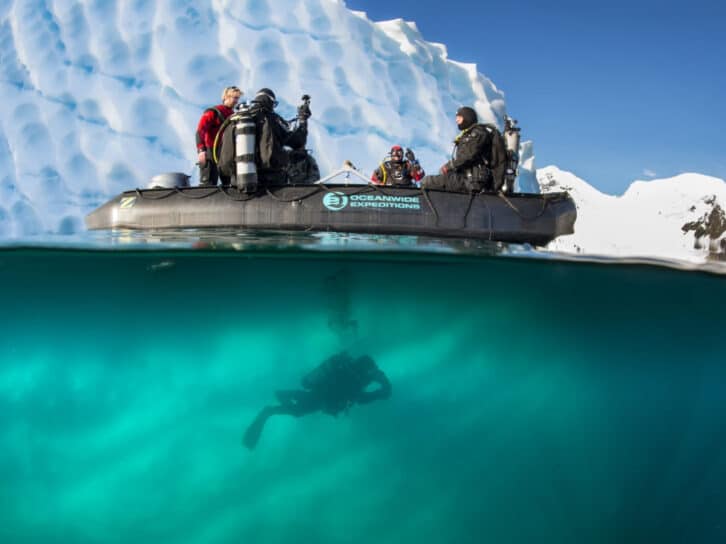
The water temperature is always around freezing, so it is important that you already have some experience with cold water diving and are comfortable in cold water as well as a dry suit. Diving in Antarctica is always done with a zodiac that takes you to the dive site. It is not the case that you jump into the water from the ship itself.
- Visibility: Lots of pack ice often means flat water with clear visibility. Little sea ice can mean plankton blooms because there is more daylight and a chance of swell. But ice and weather conditions are different every year, so there is no way to predict them.
- Water temperature: the water temperature is always around freezing.
- Current: Normally there is little to no current, but of course, storminess can be present anywhere at any time. The dive guides will choose a dive site that is safe.
- Depth: Most dives done in Antarctica have a maximum depth of 20 meters. However, many of the dive sites have slopes or walls that are deeper than the 20-meter maximum limit for dives.
- Pack ice: Pack ice is a contiguous layer of ice, consisting of loose ice pieces frozen together, floating on the surface of the ocean. It forms when seawater freezes and the resulting ice shelves or floes drift together and freeze together. Too much pack ice while diving is a real danger. If pack ice approaches while divers are underwater, it can be difficult to see divers if they surface in the middle of the pack ice. Therefore, it is important to dive only near icebergs that are hard on the bottom or floating in water free of rocks or pack ice.
The check dive
Every diving adventure in Antarctica starts (just like a liveaboard trip in Egypt) with a check dive. During this dive it is especially important to check all equipment, determine how much weight you need and whether you are comfortable in the cold water.
The dive briefing
It is often the case that the dive guides do not go with you in the water, but keep an eye on where the divers are from the boat. So buddy teams are made in advance, and it is important that you keep a close eye on yourself and the other person, including limits such as NDL and maximum depth of the dive. Prior to the dive, you will receive a comprehensive briefing on the dive site, weather and ice conditions, and dive procedure.
What can be seen underwater during polar diving?
There is plenty to see underwater and a surprising amount of life. What is especially beautiful is the light and the mountains of ice underwater. You explore ice walls, ice arches and sometimes shipwrecks at shallow depths (about 20 meters). Often the dive sites are deeper, but it is important to stay well within your limits.
You can see sea lobsters, lobsters, spider crabs, soft corals, anemones, peacock worms, dogfish, sea snails, crabs, sea butterflies, shrubby horsetails, jellyfish, sea urchins, kelp walls and various species of starfish, among others. In Antarctica itself, in addition, you will sometimes encounter Weddell seals, leopard seals and penguins swimming by curiously. You can also find colorful sponges and cold-water algae that contrast brightly against the blue of the ice. Visibility can reach up to 30-40 meters, making the surreal shapes and hues of the ice even more impressive.
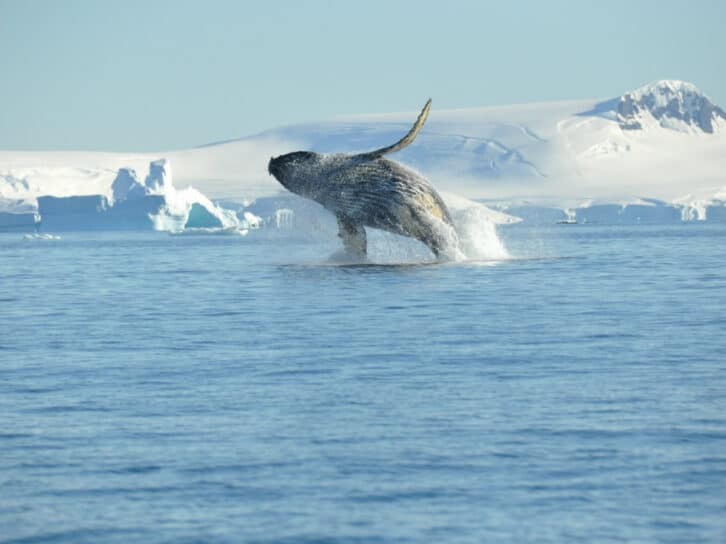
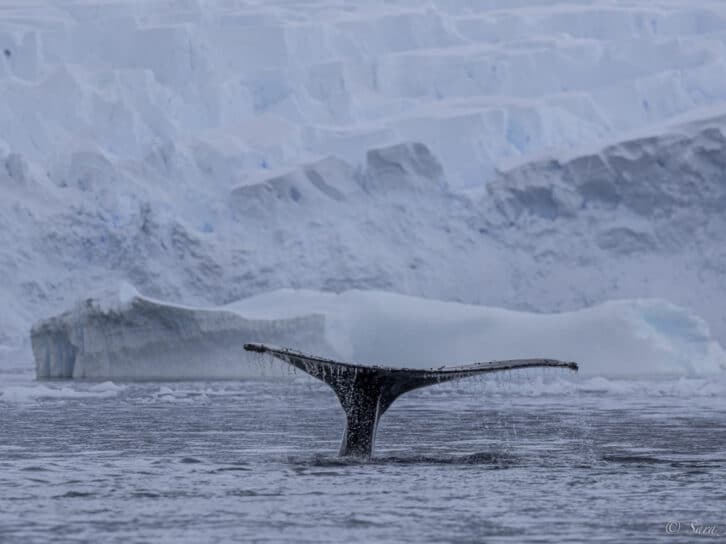
Above water – and sometimes audibly underwater – you can also spot whales and orcas. Species found in the region include humpback whales, minke whales and orcas. These encounters make the trip even more spectacular, even if they don’t occur during a dive.
What diving equipment do you need?
Diving in Antarctica requires some preparation and adjustment in your equipment. It is important that you are prepared for the cold and also that your regulator does not freeze and go into freeflow. Diving with a dry suit is therefore necessary, and it is good to bring the necessary spares as well. You are in a remote area and there is no equipment rental on the ships.
Necessary diving equipment for polar diving:
- Dry suit with hood
- 2 sets of warm underwater clothing
- Dry gloves or wet gloves/mittens suitable in water below freezing point
- 2 frost-protected regulators. (You dive with special bottles with two separate outlets).
- Stabilization vest or BC with quick-release capability and sufficient carrying capacity
- Manometer
- Compass watch
- Knife and flashlight
- Mask and snorkel
- Dry Suit Fins
Respirator
Normal breathers won’t work in this cold water because both the first and second stages can freeze. Therefore, you should bring 2 sets of regulators (first and second stages) that are suitable for cold water.
You will need the two sets of breathers described below:
- First set, including frost-resistant first stage and second stage (including hose), hose for BCD and submersible pressure gauge (SPG)
- Second set, including frost-free first stage and second stage (including hose) and hose for dry suit
Frequently asked questions about diving equipment for polar diving
Do I need a snorkel?
Yes, the snorkel is a vital part of your safety gear and will often be used while snorkeling with seals and other wildlife.
Should I dive with a full face mask?
If you have experience with this type of mask, you certainly can. However, you can also dive with a standard mask. It is not necessary to use a full-face mask.
What tips are there for using a regulator in cold water?
Tips for using breathers in cold areas:
- Some breathers can be supplied with a sealant, while others are supplied with a sealant by the manufacturer.
- To prevent regulator failure, regulators must be properly maintained before, during and after diving.
- Do not breathe out of the regulator before the dive except to make sure for a moment that it is working properly. Exhale after you remove the regulator from your mouth to prevent the second stage from freezing due to moisture from your breath.
- If your primary regulator freezes and causes free-flow, switch to your reserve regulator and turn off the valve to the primary regulator.
Can I rinse my regulator after each dive?
To minimize the risk of freezing, breathers are not flushed with fresh water between dives. We rinse all equipment at the end of the trip.
Is a neoprene dry suit or trilaminate dry suit better?
The type of dry suit you use is not important, as long as it fits you, is waterproof and you feel comfortable in it.
Neoprene dry suits have the advantage of good stretch and extra insulation. Trilaminate suits offer no extra insulation, but are lighter and dry faster. They only serve to keep you dry and require additional layers of clothing under the suit. If possible, bring a small dry suit repair kit.
What undergarments should I bring?
The colder the water, the more (and thicker) layers of undergarments you need. We recommend wearing two or three layers, depending on your suit.
As a first layer, you should wear a set of polypropylene undergarments. This material helps absorb moisture from the body. As a second layer, wear thick insulating material such as fleece, synthetic pile, Thinsulate or something similar. As a final outer layer, we recommend a windproof shell.
The one-piece jumpsuit is the most common and comfortable configuration of diving apparel. It is available in different thicknesses depending on your dry suit and water temperature.
Does my camera need a different housing?
This really depends on the type of camera you are using. For example, a GoPro can be used in water around or below freezing. It’s best to check your camera’s instruction manual to see if and how best to use it in cold water.
Should I bring weights?
Weights are almost always provided on the ships. You can bring your own weight belt if necessary. Ankle weights are not common. So be sure to bring heavy fins.
What clothing is recommended after diving on the boat?
It is important to bring a warm hat and warm waterproof gloves before and especially after diving. A warm hat will protect your ears.
Our diving trip to Antarctica
Are you up for an extraordinary voyage of discovery to one of the most remote and fascinating areas on Earth? An expedition to Antarctica offers a unique opportunity to explore the rugged and impressive landscape of this continent aboard a comfortable ship.
Several itineraries are possible and you can plan the activities as you like. Of course, the trip is also possible if you do not want to dive and prefer to discover the continent from the boat and land excursions. Feel free to ask us about all the possibilities, our tips and experiences.
We have 1 sample trip on the website. Check it out here, or request a proposal directly.






Discovering Antarctica: expedition cruise with polar diving, whale watching and land excursions
This expedition to Antarctica takes you to the impressive polar region where you can spot whales, penguins and fur seals....