The best places to dive with mobulas, manta rays, eagle rays and other rays
Rays are fascinating animals, and there is quite a lot to tell about them. This is partly because there are many different species and they are found in many different places around the world. In this blog, we explain all about the ray: what different species there are, where you have the best chance of spotting a particular ray and more facts about these special animals.
Table of contents
About the ray
There are more than 600 recognized species of rays worldwide. They fall within the class of cartilaginous fishes (chondrichthyes), just like sharks and sawfishes. And did you know that rays and sharks are closely related biologically? There are some important similarities: they both have a skeleton made of cartilage (not bone), no swim bladders, they breathe through spiracles (openings behind the eyes) and the skin is covered with skin teeth (denticles).
So rays are evolutionarily “flat cousins” of sharks. But where sharks usually swim actively, many rays often lie on the bottom (except manta rays and mobula rays).
Are rays an endangered species?
Although you have the chance to encounter rays in many different places around the world, it is good to realize that we are dealing with endangered species.
Many species of rays are endangered and in some cases severely so. Like sharks, rays face serious pressures from overfishing, bycatch and habitat loss. According to the IUCN Red List:
- 1 in 3 ray and shark species are threatened with extinction.
- Within the family Mobulidae (mantas and mobulas) , all species are listed on the IUCN as vulnerable, threatened or critically endangered.
- Many stingrays and guitar rays are also among the world’s most endangered cartilaginous fish.
The main groups of rays
- Eagle rays (eagle rays): Eagle ray, spotted eagle ray, mobulas, mantas
- Devil rays (mobula rays): Mobula rays (sometimes called small manta rays).
- Giant mantas: Oceanic and reef manta rays
- Stingrays (stingrays): Southern stingray, blue spotted stringray
- Thornback rays: Often in colder moorings
- Guitar rays (guitarshark): in appearance between a ray and shark
- Electrorogs: can deliver electric shocks
You may notice that some species of rays are listed in 2 categories. This is because the classification of rays is still changing and some groups overlap or are revised based on genetic research. New species are still regularly discovered or genetically split, especially in mobula and manta rays. We explain the different groups below.
Eagle rays
Eagle rays are immediately noticeable for their graceful, undulating swimming style and distinctive “spotted” back. They have a narrow, pointed head and a remarkably long whip tail, clearly distinguishing them from stingrays, for example. They can reach a wingspan of up to 3 meters, but usually behave a lot more reserved than mantas or mobulas.
They often live around reefs, sandy bottoms and drop-offs and can be found alone or in small groups. Eagle rays are usually shy and keep their distance from divers, although with a bit of luck you may see a group float by (often just out of reach of your camera). They feed mainly on shellfish and crustaceans, which they dig out of the sand with their flat teeth.
Where and when do you see eagle rays?
Eagle rays are less seasonal than mobulas, but bound to region. You find them mostly on reefs with extensive sand flats or along reef walls where there is a current. There are actually quite a few places where you have the chance to spot eagle rays, we highlight a selection for you:
| Location | Period | Special |
|---|---|---|
| Curaçao & Bonaire | All year | Often solo or in pairs above the reef plateau or at drop-offs |
| Maldives (channel diving) | Dec – May (dry season) | Eagle rays often float in formation through the current |
| Belize (Turneffe Atoll) | All year | Good visibility and chance of small groups over the sand |
| Cayman Islands | All year | Especially near sandy bottoms, sometimes surprisingly close |
| Hawaii (Maui & Big Island) | All year | Regular sightings, sometimes with manta rays nearby |
| Philippines (Apo Island, Moalboal) | All year | Often along drop-offs, especially during currents |
| Mozambique (Tofo) | May – October | Large eagle rays in open water, often combined with manta rays |
Mobulas
Mobulas belong to the same family as mantas and they are very similar. The main difference is size. Mobulas are a lot smaller, the wingspan is usually 1-3 meters, in mantas it is often at least 4 meters. In addition, mobulas live more pelagic (in open water) and are less often found close to cleaning stations. You probably know these places: a specific spot on the reef where large marine animals come to be “cleaned” by smaller fish.
And did you know that mobulas sometimes jump meters out of the water? They probably do this to shake off parasites, as a social signal or during mating season. Either way: it looks spectacular!
Where and when do you see mobulas?
Mobula are often seen seasonally in certain locations. Often this is when plankton-rich water meets specific currents. Mobulas actually follow their food (plankton), which is why they are not in the same place for long periods of time.
| Location | Period | Special |
|---|---|---|
| Baja California, Mexico | May – July | Tens of thousands of mobulas at once! Often jumping |
| Sri Lanka (south coast) | February – April | Often snorkelable during calm seas |
| Azores (Portugal) | June – September | Open ocean diving, sometimes with manta rays |
| Philippines (Tubbataha) | March – June | Seasonal dives on remote reef |
| Galápagos | June – December | Mobula and manta rays may overlap |
Mantas
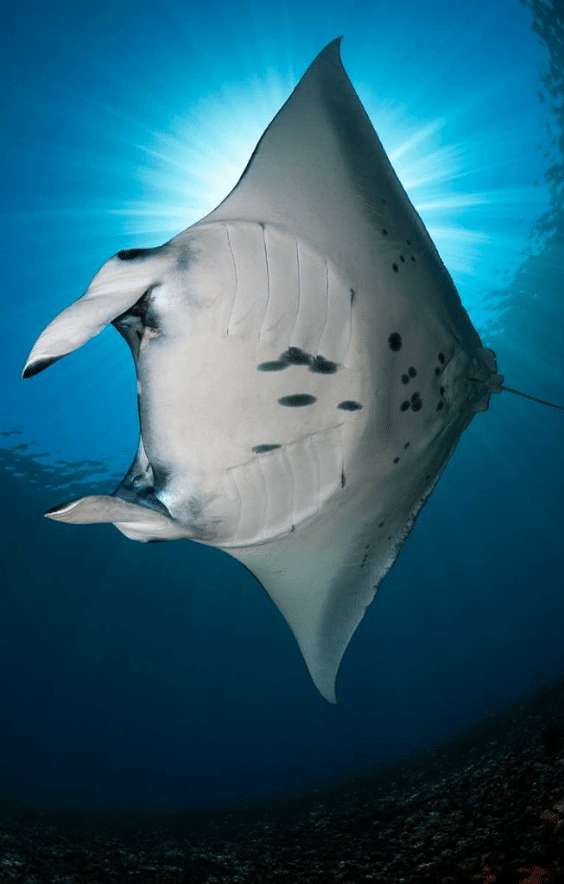
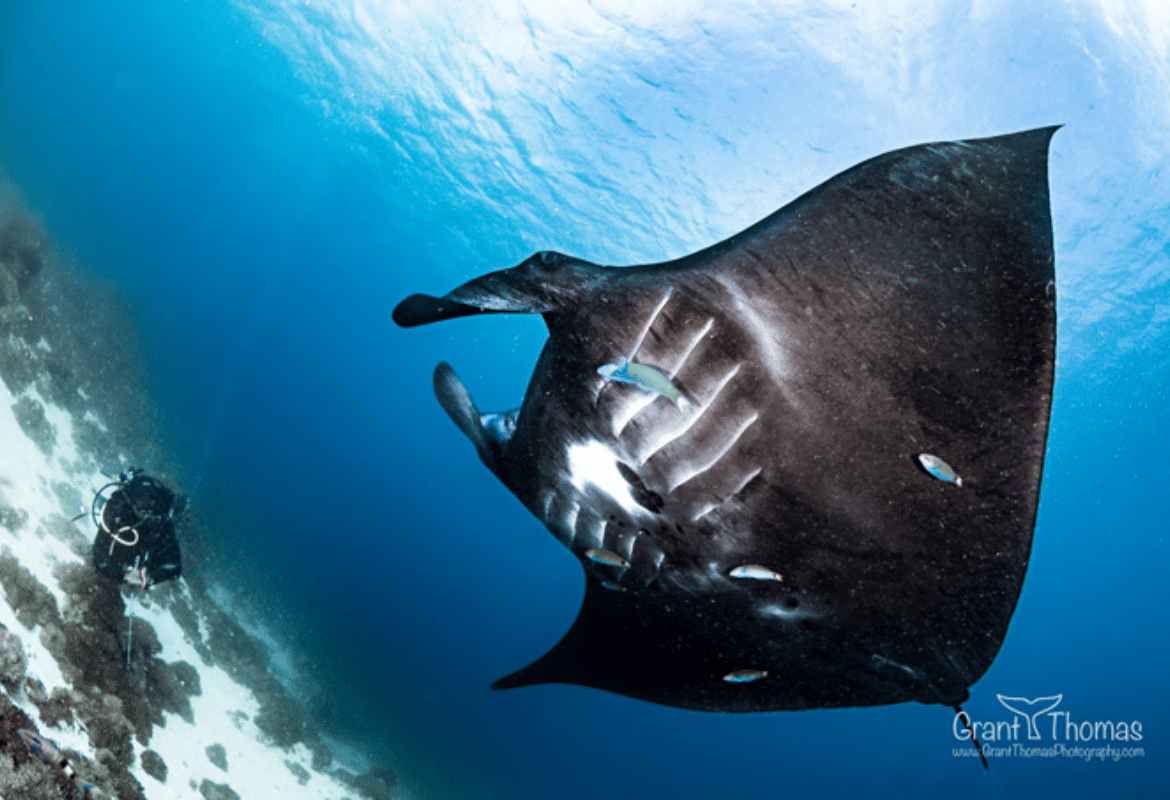
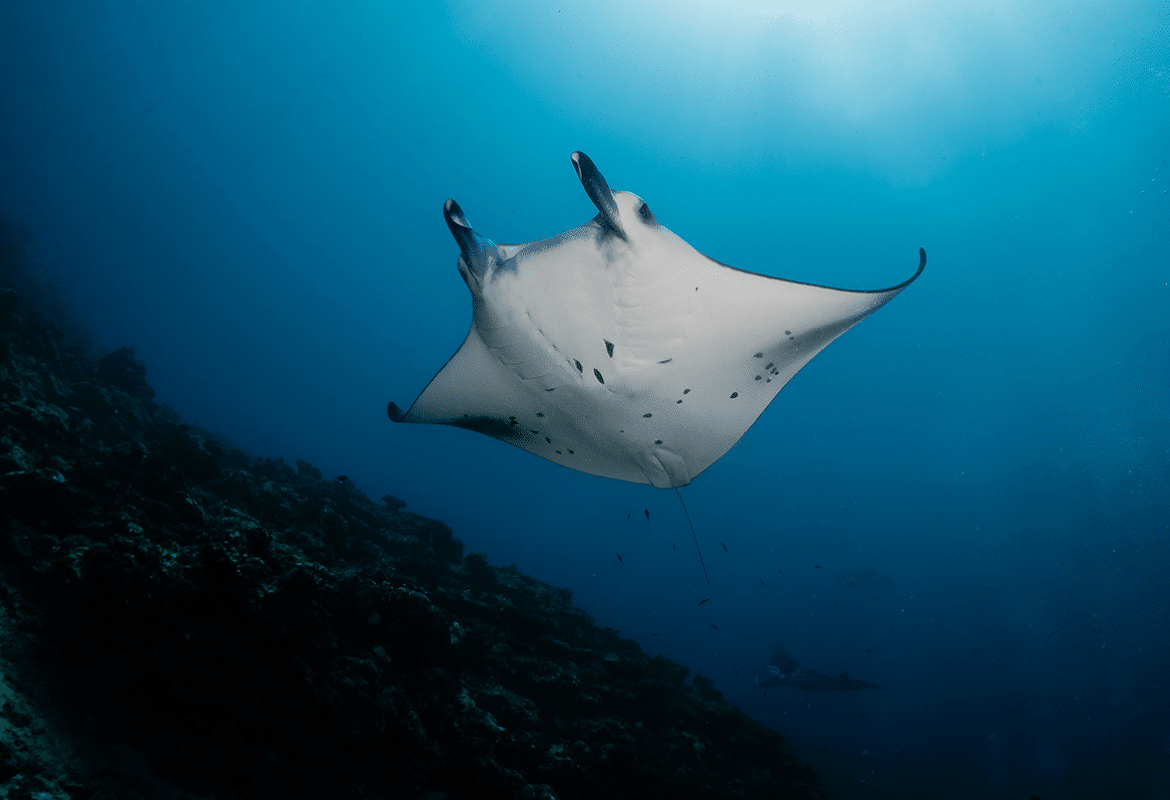
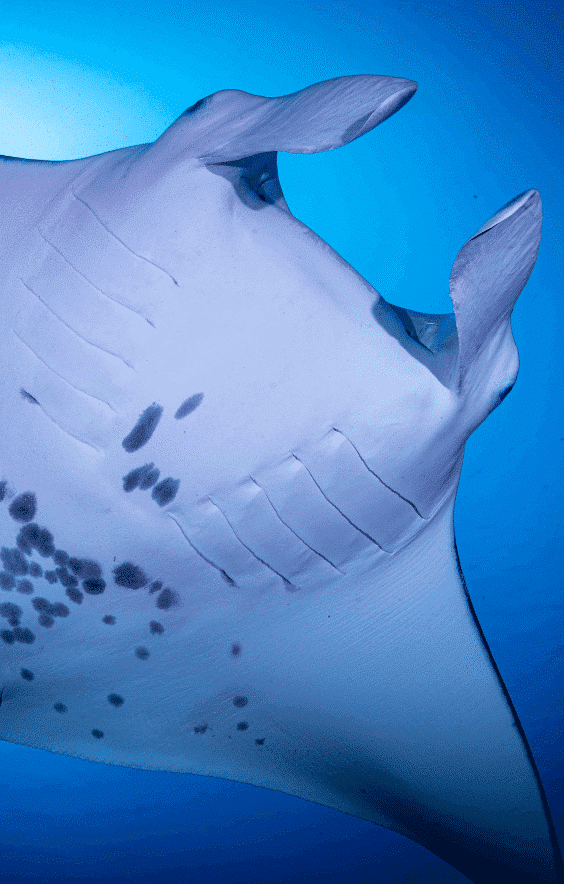
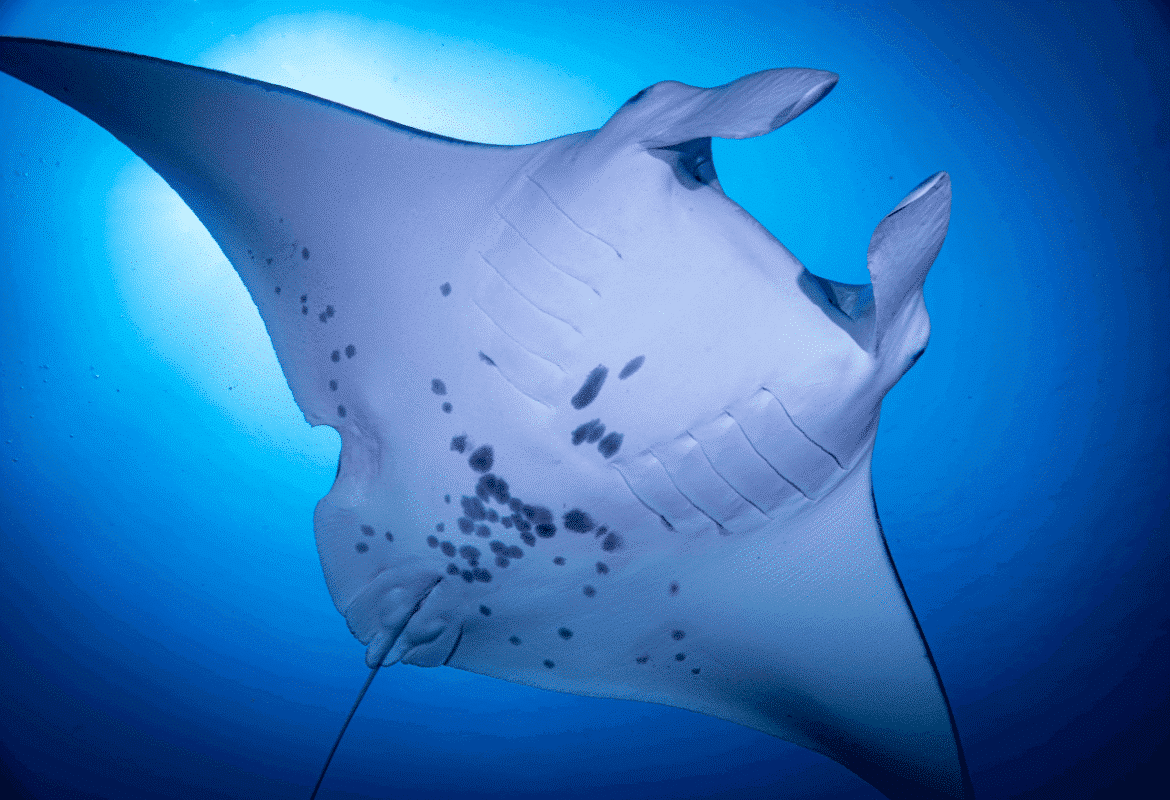
Mantas are the larger cousins of the mobulas. With a wingspan of 4 to as much as 7 meters, they are true giants of the ocean. Unlike mobulas, mantas live more often around reefs and can regularly be found at cleaning stations. Here mantas sometimes ‘hang’ still in the water for minutes at a time, which makes these places extra special to dive at.
There are two species of manta rays: the reef manta ray(Mobula alfredi), which lives mostly in shallower water, and the oceanic manta ray(Mobula birostris), which is found mostly in the open sea. Both are filter feeders and often migrate to places rich in plankton, as do mobulas.
Where and when do you see mantas?
Manta rays are often seen in fixed locations, and are less “itinerant” than mobulas. They regularly return to the same cleaning stations or feeding spots. Known hotspots include Raja Ampat, Komodo, the Maldives and Socorro (Mexico). The season varies by location.
| Location | Period | Special |
|---|---|---|
| Nusa Penida (Bali, Indonesia) | Year-round (best visibility: May-November) | Cleaning stations at Manta Point, often reef manta rays, sometimes several at a time |
| Raja Ampat (Indonesia). | Oct-Apr (west), May-Sept (south) | High chance of manta rays at Manta Sandy & Manta Ridge, few other divers |
| Komodo (Indonesia) | April – November | Oceanic manta rays at Manta Alley, sometimes dozens at a time |
| Maldives (Hanifaru Bay, Baa Atoll) | June – November | Giant concentrations during plankton bloom, often snorkeling instead of diving |
| Socorro (Mexico) | Nov – June | Highly approachable oceanic manta rays, often interacting with divers |
| Yap (Micronesia) | All year, peak: Dec-Apr | Mantas are site-faithful; cleaning stations close to resort dives |
| Hawaii (Kona) | All Year | Night dive with mantas at lighted cleaning stations – unique worldwide |
| Galápagos (Ecuador) | June – Nov | Large oceanic manta rays at Isabela & Darwin, often current dives |
Stingrays
Stingrays are perhaps the best-known rays among divers and snorkelers. You can recognize them by their flat, round to diamond-shaped bodies and long, often venom-stick-containing tails. Unlike mantas and eagle rays, they usually lie still on the sandy bottom (often partially buried), where they search for small crustaceans, fish and worms.
Although most species are quite calm, you should always keep enough distance: the spike on their tail is a defense mechanism and can be dangerous on unexpected contact. Fortunately, stingrays are not aggressive and usually just swim away if you get too close. However, this is the type of ray that has the death of Steve Irwin on its conscience, and therefore some people are still afraid of these stingrays. You will hear this mostly from non-divers. There is no need to be afraid, because as always you should keep your distance and leave each animal alone and respect it.
Where and when do you see stingrays?
Stingrays are widespread and seen year-round in tropical and subtropical waters. Most species are bottom dwellers, so you find them mostly on sandy flats, in lagoons or around coral plateaus. Sometimes it is a good search, because because because they burrow in they are well vested.
| Location | Period | Special |
|---|---|---|
| Cayman Islands (Stingray City) | All Year | Iconic, interactive spot with dozens of southern stingrays |
| Bahamas (Compass Cay & Bimini) | All year | Stingrays in clear shallow water, often snorkelable |
| Moorea (French Polynesia) | All year | Snorkeling with stingrays in lagoon, often with blacktip sharks |
| Great Barrier Reef (Australia) | All year. | Various species, including blue-spotted stingray |
| Maldives (sand flats around resorts) | Dec – May | Often during night dives or around dusk |
| Egypt (Red Sea) | All year | Blue-spotted stingray is common at dive sites |
| Bonaire & Curaçao | All year | Regularly seen on sandy bottoms along the reef |
Thornback ray
Thornback rays are found mostly in temperate and cold seas, such as the North Sea and Atlantic Ocean. They have a diamond-shaped body, a fairly short tail and live mostly on or just above the sea floor. Unlike mantas or eagle rays, for example, they rarely swim in open water. Thornback rays are shy, well camouflaged and are often not seen until they swim away. For divers in European waters, an encounter with a thornback ray is a special moment, especially since some species, such as the common thornback ray, are vulnerable due to bycatch and slow reproduction. To prevent extinction, in some countries (such as the Netherlands) they are bred and released from the sea.
Where and when do you see thornback rays?
Thornback rays are found mainly in the temperate and cold coastal waters of Europe, and are present throughout the year. Because they are well camouflaged on the bottom, you often don’t see them until they swim away. They prefer sand or mud bottoms and are most often observed while diving on wrecks, in estuaries or on flat bottoms with little current. You can encounter thornback rays at specific sites in the Netherlands, France and the UK.
Guitarsharks
Guitarsharks are a distinctive group within the cartilaginous fishes; with their elongated, shark-like snout and aplate body, they resemble a cross between a shark and a ray. They belong to a separate order(Rhinobatiformes), but share characteristics with both groups. Guitarsharks live primarily on or just above sandy bottoms, where they feed on crustaceans, mollusks and small fish. Guitarsharks are highly endangered: some species are listed on the IUCN as critically endangered, mainly due to bycatch and overfishing.
Many species are rarely seen by recreational divers because they often live at greater depths or in areas with little tourist diving activity. Still, there are regions where the chances of an encounter are real, especially in tropical and subtropical waters.
Where and when do you see guitarsharks?
Guitarsharks are found worldwide, but it is mostly tropical coastal waters where divers occasionally encounter them. They often lie still on sand or mud bottoms and can be well camouflaged. The best chance is during quiet dives near sandy plateaus or near mangroves, estuaries and reef edges.
| Location | Period | Special |
|---|---|---|
| Mozambique (Tofo & Vilanculos) | May – October | Regular sightings of large guitarsharks on sand flats |
| Red Sea (Egypt, southern reefs) | Whole year | Guitar rays are sometimes seen at Daedalus, Fury Shoals and St. Louis. Johns |
| Philippines (Apo Island, Tubbataha) | March – June | Rare, but chance at sandy drop-offs and reefs |
| Bahamas | All year | Chance of guitar rays in lagoons, often on calm shallow dives |
| Australia (Shark Bay & Ningaloo) | April – October | Various species, including giant shovelnose ray (family related to guitar rays) |

The best places to dive with different species of rays
When we look at the number of species, probability of sightings, and diversity within the ray family, a few areas really stand out. Here is our top 3…
🥇 Raja Ampat, Indonesia
Raja Ampat is one of the most biodiverse marine areas in the world, and therefore also for rays. Besides rays, the area is also rich in sharks, colorful coral, and tropical marine life, making every dive here a unique experience. The best time to visit is from October to April (western sites) and May to September (southern Misool).
- Reef mantas at cleaning stations (Manta Sandy, Manta Ridge)
- Oceanic manta rays in open water or at deep drop-offs
- Blue-spotted stingrays on the sandy bottom
- Marble rays, often buried
- Eagle rays around reefs with current
🥈 Maldives
Known for its cleaning stations where various rays congregate. The best time to travel is from June to November (for Hanifaru) and December to May for clear visibility and drift diving.
- Rifmantas (Hanifaru Bay, cleaning stations at resorts)
- Eagle rays
- Stingrays on sand flats near resorts and reefs
- Occasional guitar ray or rarer species on night dives
🥉 Baja California, Mexico
Fewer species, but spectacular aggregations of thousands of animals and seasonal diversity. Best travel time is from May – July (mobula aggregations); October – December (for larger species)
- Mobula rays in huge schools (usually 1 species dominant, but sometimes several)
- Occasional eagle rays in Baja Sur
- Stingrays in lagoons (La Paz, Cabo Pulmo)
- Possible oceanic manta ra ys in open water
🎖️ Honorable Mentions:
- Komodo (Indonesia) – for mantas, stingrays and eagle rays in current
- Great Barrier Reef (Australia) – many species of stingrays + chance of eagle rays and manta rays
- Galápagos – large mantas, mobula, eagle rays (but fewer bottom dwellers)
Seeing mantas, mobulas & rays with EWDR
Ready to hit the water? Check out some of our trips to the above destinations here. Specific needs? Feel free to contact us for a trip proposal.

Diving among sea lions in the Sea of Cortez – Mexico
Explore the spectacular underwater world of La Paz, Mexico. Dive among playful sea lions, snorkel with majestic whale sharks and...
Liveaboard Mermaid II – Bali – Komodo – Bali
Board the boat in Bali and sail east to Komodo. Dive with manta rays & meet Komodoans on Rinca. A...
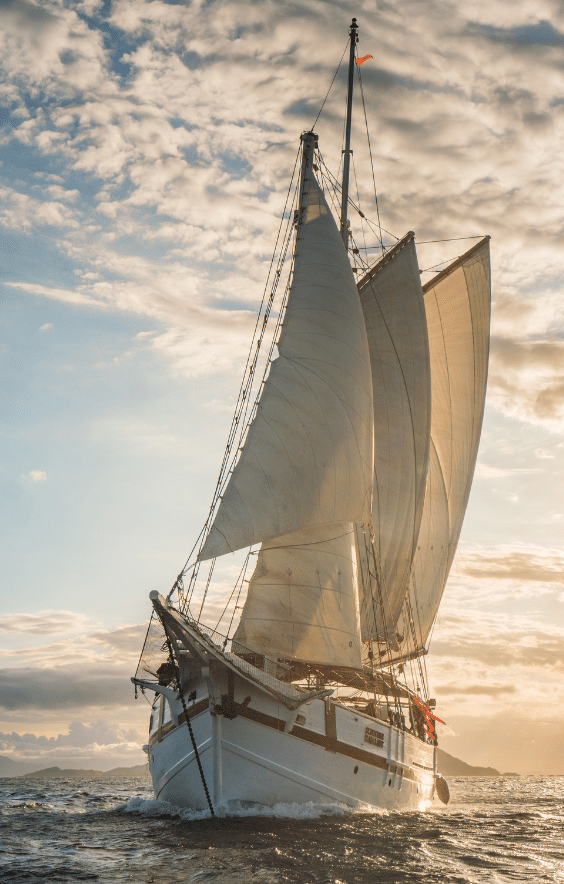
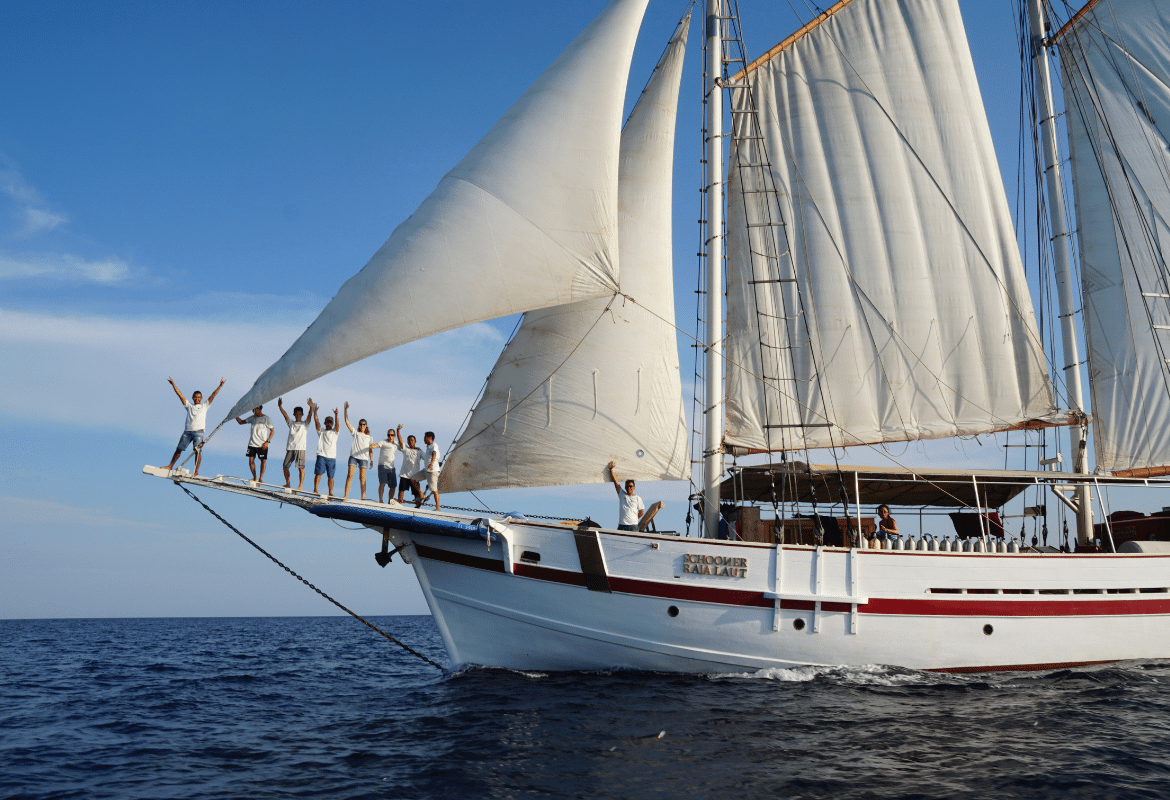


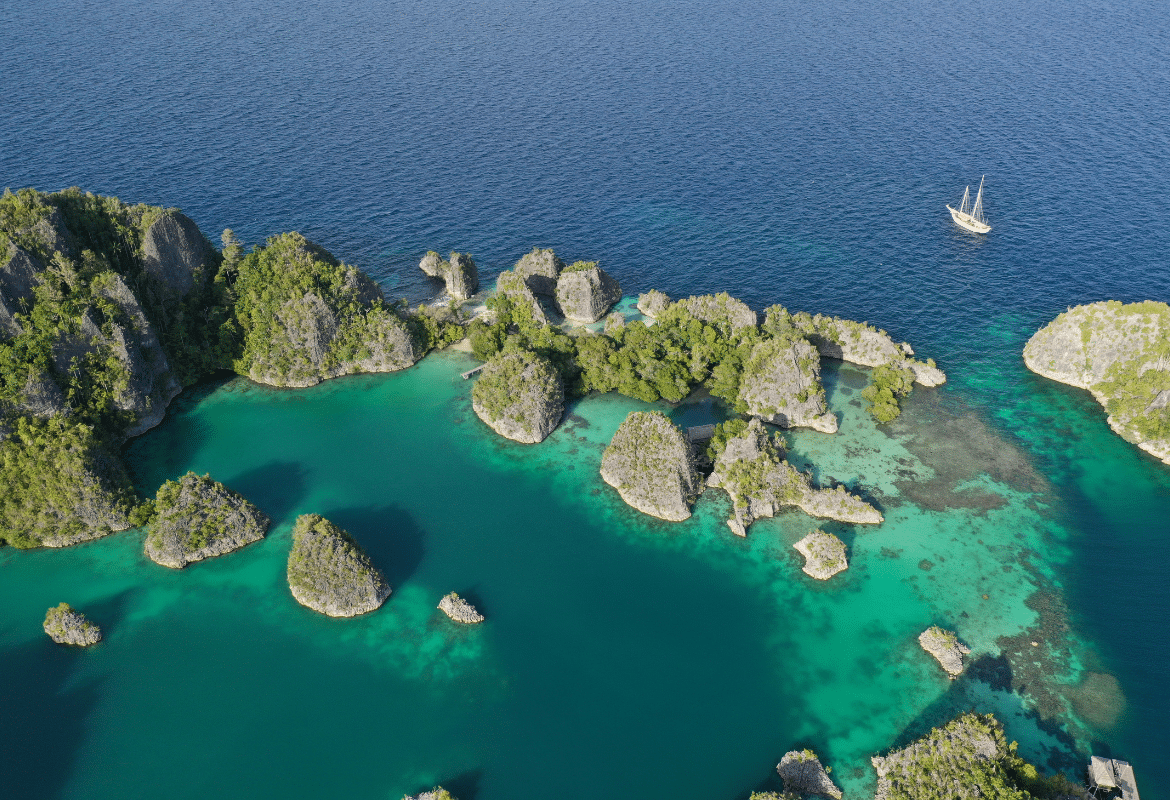
Emperor Raja Laut – Discover Raja Ampat on a Sailing Ship!
Board the Raja Laut, a sailing vessel with room for only 12 divers. Enjoy unspoiled Raja Ampat in a small...



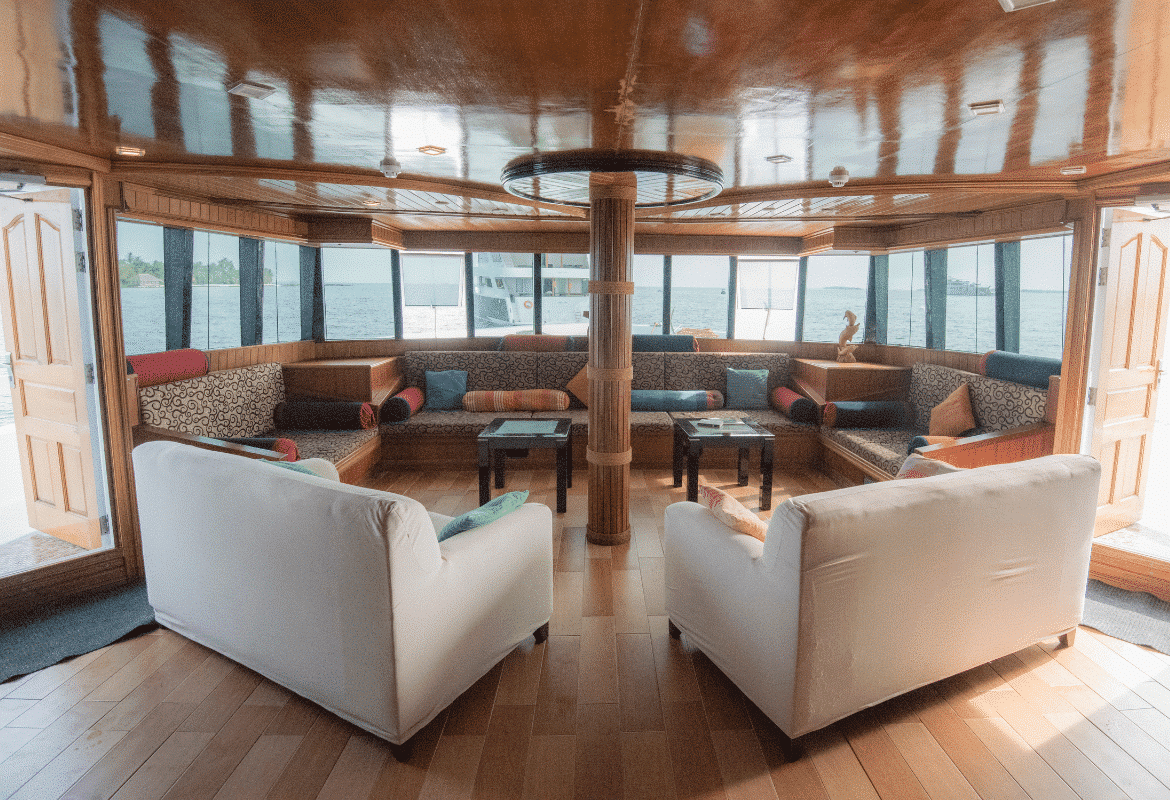
Dhonkamana’s Palace – Inexpensive liveaboard in the Maldives
Discover the Maldives inexpensively by liveaboard: dive with whale sharks, meet manta rays and sleep in traditional four-poster beds.