Diving with Hammerhead Sharks in Mikomoto: A Complete Guide
Mikomoto is a world-famous dive site for spotting schools of hammerhead sharks. The small island lies off the coast of the Izu Peninsula, south of Tokyo, and is known for its drift dives, where, with a little luck, you can encounter large groups of hammerhead sharks.
Diving at Mikomoto isn’t for everyone. The currents and conditions require sufficient diving experience and thorough preparation. In this guide, you’ll learn where Mikomoto is located, what you might encounter underwater, the best time of year to dive there, and what to keep in mind when planning a diving trip.
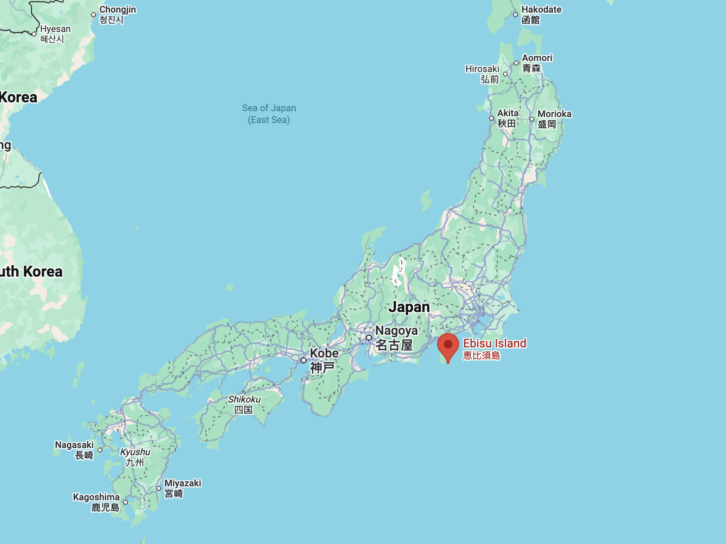
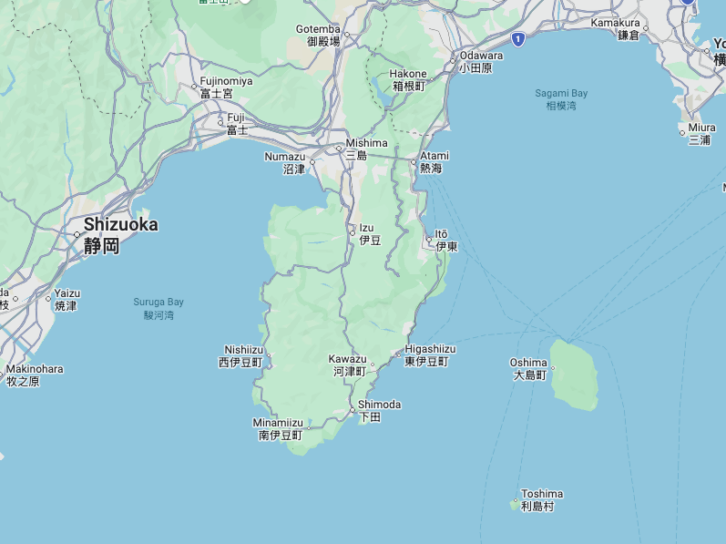
Where is Mikomoto located in Japan, and how do you get there?
Mikomoto is a small, uninhabited island off the coast of Japan, south of the Izu Peninsula. From the coast, it takes about 15 to 20 minutes by boat to reach the dive sites around the island.
The nearest major town is Shimoda. From Tokyo, it takes about 2.5 to 3 hours to get there by train. Some dive shops offer a pickup service from the station. This is convenient, since the dive shops aren’t always easy to reach by public transportation. A rental car is also a great way to explore the area.
You can’t just go to Mikomoto to dive there. The dives are organized by specialized dive schools that take boats to the dive sites around the island. So you book a dive trip with a local dive school, which also determines whether conditions are suitable for setting out and diving.
Why is Mikomoto such a special place to dive?
Mikomoto is best known for the large schools of scalloped hammerhead sharks that are regularly spotted here. The sharks swim in groups through the blue water, sometimes in numbers running into the tens or even hundreds at a time. That’s what makes this dive site so special, even for divers who have dived in many places around the world.
Conditions play an important role when diving around Mikomoto. The currents carry nutrient-rich water past the island, attracting a variety of marine life. During the dives, you’ll usually be swimming in open water, without a reef to navigate along. Keep a close eye on your surroundings and follow the guide’s instructions.
It is primarily the combination of the chance to see large schools of hammerhead sharks, the open water, and the current that makes Mikomoto such a special destination.
 In September, Margriet took a tour of Japan, the highlight of which was, of course, diving at Mikomoto. In her travelogue about diving in Mikomoto , you can read all about the diving, how the day unfolded, and her experiences at this special dive site.
What kinds of sharks and other marine animals can you see at Mikomoto?
The most famous inhabitants of the waters around Mikomoto are the scalloped hammerhead sharks. Schools of these sharks are regularly spotted here, especially during the warmer months. Sometimes large groups swim close together through the blue water; other times, you might see hammerhead sharks swimming by on their own.
In addition to hammerhead sharks, you may also encounter other pelagic fish species in the waters around Mikomoto. The animals you see vary from dive to dive and depend on factors such as the season, the current, and sea conditions.
Don’t expect a dive site here where you swim slowly along a colorful reef in search of small marine life. At Mikomoto, the focus is primarily on observing animals in open water. That’s exactly what makes the dives here different from those at many other destinations.
However, seeing hammerhead sharks is never guaranteed. Even during the best season, their numbers can vary greatly, and it’s possible that you won’t encounter any hammerhead sharks during a dive.
When is the best time to go diving at Mikomoto?
The best time to dive with hammerhead sharks at Mikomoto is generally from June through October. During these months, schools of scalloped hammerhead sharks are frequently spotted. The numbers vary by day and by season, so even during this period, it’s still a matter of luck.
Please keep in mind that Japan can experience typhoons in the summer and fall. September typically falls during the peak of typhoon season. Strong winds and high waves can make conditions at sea too rough to go out on a boat. As a result, dives may be canceled for a day or even several days. Even after a typhoon has passed, underwater visibility may be temporarily reduced.
If you’re planning a diving trip to Mikomoto, keep these weather conditions in mind and try to build in enough flexibility into your itinerary. This will prevent your diving opportunities from being entirely dependent on just a few scheduled days. Furthermore, seeing hammerhead sharks is never guaranteed, not even during the best season.
Diving in Mikomoto
- Visibility: 5–25 meters (depending on currents and seasonal conditions)
- Water temperature: 18-27°C (cooler in winter, warmer in summer)
- Best period: June through October (peak hammerhead sharks)
- For whom: advanced divers with experience in drift diving and deeper dives; adventure divers and underwater photographers
What’s diving like at Mikomoto?
Diving at Mikomoto is challenging and requires sufficient experience. You must be at least Advanced Open Water certified and have logged at least 50 dives. Your last dive must have taken place within the past twelve months. If it has been longer than that, you must first complete a regular dive. The dive school will check your logbook, so be sure to bring it with you. There is also an age limit: you must be at least 18 and no older than 70. If you’re older than that, you’ll need a doctor’s note.
Current, depth, and visibility
Hammerhead sharks are often seen in areas with strong currents. During your dives, you may therefore encounter various types of currents, including upcurrents and downcurrents. Sometimes you’ll swim against the current, while at other times you’ll go with the flow. You may need to hold onto rocks to stay in place. Always follow the guide’s instructions.
Dives typically last about 30 minutes and often take place at a depth of 20 to 30 meters. Visibility varies greatly: sometimes it’s only about 5 meters, while under favorable conditions it can reach 15 meters or more.
You dive as one team
At Mikomoto, you dive as a single group under the guidance of a guide, rather than in separate buddy teams. If one diver reaches the agreed-upon reserve air supply, the entire group returns to the surface. It is therefore important that you keep a close eye on your air consumption and follow the briefing carefully.
The boat doesn’t drop anchor, but is flexible enough to pick up the divers at the surface. After the dive, you wait at the surface for the boat, which sails toward the group. You then board a lift that takes you up to the boat’s level. After that, you’ll walk to the spot where you set up your gear. You’ll need to be fit enough to walk independently with your diving gear and move around on board.
Curious about what a dive at Mikomoto is really like? In our travelogue about diving with hammerhead sharks at Mikomoto, we share our own experiences with the current, the underwater conditions, and our encounters with hammerhead sharks.
Where can you stay if you’re going diving at Mikomoto?
In the Mikomoto area, you’ll find a variety of accommodations, ranging from simple guesthouses to comfortable hotels. Keep in mind that Japanese accommodations often feature traditional Japanese sleeping arrangements. For example, you might sleep on a futon laid out on a traditional tatami mat instead of on a Western-style bed. Since Shimoda primarily attracts Japanese visitors, not all accommodations are specifically geared toward international travelers.
Shimoda as a base
Shimoda is a great base for a diving trip to Mikomoto. It’s a quiet seaside town with several restaurants and convenience stores where you can pick up food and daily necessities. The train station is also located here, making Shimoda a convenient choice if you’re traveling from Tokyo by public transportation.
Mikomoto Hammers offers transfers from Izukyu Shimoda Station at scheduled times. Depending on where you’re staying, you can also arrange transportation to and from the dive shop. It’s important to make these arrangements in advance.
You can also rent a car and stay somewhere else on the Izu Peninsula. That gives you more freedom to explore the area, but keep in mind the distance to the dive shop and the early departure times for some dive trips.
Staying at the dive shop or in a simpler guesthouse
Mikomoto Hammers has its own clubhouse where you can easily stay overnight. You’ll share the accommodations with other divers and use shared bathrooms and restrooms. This is a practical option if you’re coming primarily to dive and don’t have many requirements for your stay. There are also several guesthouses and other affordable accommodations in the area.
Our Top Pick: Shimoda Tokyu Hotel
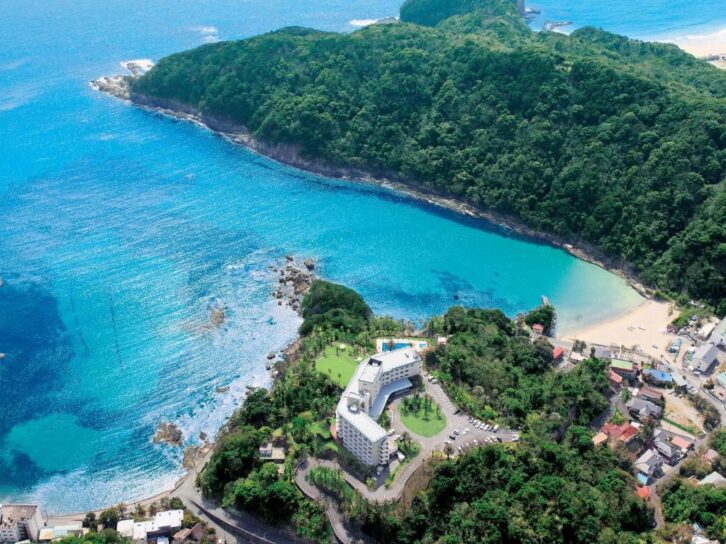
The Shimoda Tokyu Hotel is a great choice if you want a comfortable place to stay after diving. The hotel is located on a hillside by the sea and overlooks the coast. You can relax in the onsen, a traditional Japanese hot spring, and enjoy the outdoor pool through the end of September.
Breakfast is another highlight, featuring both Japanese and Western dishes, with many items prepared fresh for you. The hotel is a short drive from Izukyu Shimoda Station, and the diving school provides transportation for guests staying at the hotel. This makes it a convenient base without the need for your own car.
How do you plan a diving trip to Mikomoto?
Mikomoto is a great stop on a tour of Japan. The island is located off the coast of the Izu Peninsula, south of Tokyo. For example, you could spend a few days in Tokyo first and then take the train to Shimoda. From Shimoda, you can take a boat to Mikomoto with a local diving school.
It’s best to plan for several days of diving. Sea conditions determine whether the boats can set out, and sometimes dives are canceled due to the weather. By allowing for a little extra time in your schedule, you’ll have more opportunities to dive even if conditions aren’t ideal.
At EWDR, we create customized diving trips. Would you like to visit Mikomoto as part of a tour of Japan? If so, we can incorporate the diving days in Shimoda into a trip that otherwise aligns with your preferences. Consider spending a few days in Tokyo beforehand, visiting other locations on the Izu Peninsula, or exploring other parts of Japan. Diving in Okinawa can also be part of a custom trip, although the distance requires extra travel time and usually involves a domestic flight.
Together, we’ll discuss your preferred trip duration, your diving experience, and the places you’d like to visit. This way, we can create a trip where you can combine diving at Mikomoto with other experiences in Japan, without having to figure everything out on your own.




Combination trip Japan – Round trip & diving with hammerhead sharks at Mikomoto
In 2 weeks you will discover the best of Japan: from Kyoto’s ancient temples and the landscape around Mount Fuji...
Frequently Asked Questions About Mikomoto
Is there a guarantee that you'll see hammerhead sharks at Mikomoto?
No, an encounter with hammerhead sharks is never guaranteed. Mikomoto is known for the large schools of scalloped hammerhead sharks that are regularly spotted here, but the likelihood of an encounter depends, among other things, on sea conditions and the animals’ behavior. In addition, there are several groups on the boat—sometimes as many as 5 or 6. There is almost always at least one group that spots sharks, but it’s also possible that one group will see sharks while all the others do not.
How many dives do you need to dive at Mikomoto?
You must be certified at least to the Advanced Open Water level and have 50 logged dives. Experience with currents is definitely recommended.
Can I rent diving gear at Mikomoto?
Yes, that’s possible. The diving school has a few larger sizes. Please provide your measurements when you book.
Is Mikomoto suitable for beginner divers?
No, Mikomoto is not a suitable destination for beginner divers. You may encounter strong and variable currents, open water, and challenging conditions. Experience with drift diving and the ability to control your buoyancy are essential. Always follow the requirements and instructions of the local dive shop.
How do you get to Mikomoto from Tokyo?
Mikomoto is located off the coast of the Izu Peninsula and can be reached by boat from the Shimoda area. From Tokyo, you can take the train to Izukyu Shimoda Station. The trip usually takes about 2.5 to 3 hours, depending on the connection. From the station, the dive school can pick you up if you’ve arranged it in advance.
Can you combine a trip to Mikomoto with other diving destinations in Japan?
Yes, that’s possible. Mikomoto is a great destination to include in a tour that also takes you to other parts of Japan. For example, you can combine your diving days at Mikomoto with a visit to Tokyo or other destinations on the Izu Peninsula. Okinawa is also an interesting option if you want to dive somewhere else in Japan during the same trip. Keep in mind, however, that Okinawa is quite a distance away, so you’ll need extra travel time and usually a domestic flight to get there.