All about technical diving
Technical diving opens up a world beyond recreational limits: deeper wrecks, vast caves and adventurous liveaboards. In this blog, you’ll discover where to do technical diving, what courses to take and which destinations are real must-visits for tech divers.
Table of contents
What is technical diving?
Technical diving, also called tec diving, is a form of diving that goes beyond the limits of recreational diving. You probably remember that a certain certification has a certain depth limit attached to it. There are no police to check that you don’t go beyond it, but the main concern here is your own safety. After all, you are only trained to a certain depth and it is not always safe to go beyond this depth without proper training and guidance from an instructor. With a PADI Advanced Open Water certification you can dive to 30 meters, with a PADI Deep Specialty the limit is 40 meters. Other trainers also maintain these limits.
If you go beyond 40 meters, then it is no longer recreational diving but technical diving. Technical diving is an advanced form of diving that thus goes beyond the limits of recreational diving and often deeper than 40 meters. It involves diving in environments with a physical ceiling (caves and wrecks, but again you need specific training for this) or requiring mandatory decompression stops, which requires specialized equipment and extensive training.
Technical diving has the following characteristics:
- Dives beyond the 40-meter limit and longer bottom times
- Mandatory decompression stops to ascend safely
- Use of different gas mixtures during one dive for depth and accelerated decompression
- Use of double sets, multiple bottles, wings and backup equipment to minimize risk.
What is the difference between technical diving and recreational diving?
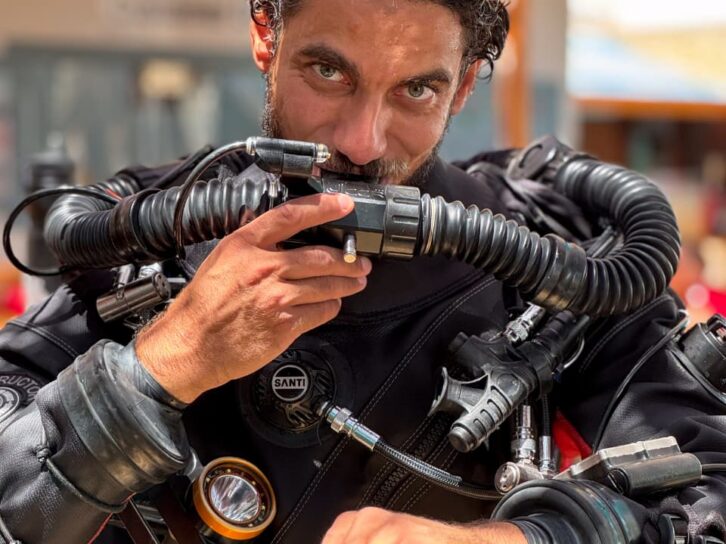
As we just mentioned, the main difference is that technical diving exceeds the limits of recreational diving. This is about the depth limit, but also about decompression stops. With technical diving you will almost certainly go into deco, something you always want to avoid precisely in recreational diving. In addition, tec divers use complex equipment, such as double sets, stages and possibly a rebreather, and use multiple gas mixes.
Recreational diving is designed for relaxation, while technical diving focuses on challenging sites and exploration.
The origins of technical diving
The origins of technical diving lie in the early 1990s, when divers were pushing the boundaries of recreational diving to explore deep wrecks and caves. These pioneers experimented with new techniques, mixing gases (such as trimix) and equipment, leading to the development of this specialized branch within diving. These new techniques opened up yet another new world: deeper and more remote places could be explored.
Essential equipment for technical diving
Technical diving requires more equipment than recreational diving because you go deeper, stay underwater longer and often work with multiple gases. Safety and redundancy are crucial here. Here you will see what equipment you need, and that this is different from the equipment with recreational diving. You will learn more about why you need this equipment and how to use it during your course.
1. Breathing gas & bottles
- Backmount: Double sets (twinsets) with manifold and isolation valve.
- Sidemount: Two independent bottles along your side; this offers flexibility in tight spaces such as caves.
- Deco bottle: Additional bottles (stages) with higher oxygen percentages (e.g. EAN50 or 100%) for accelerated decompression.
2. Respirators
- Two completely independent systems.
- Long hose (long hose, 2m+) for primary dispenser and a “necklace” backup.
3. Trim vest (BCD).
- High-lift Wing system mounted on a metal backplate with a sturdy, simple harness.
4. Dive computer
- Multigas computer that supports decompression algorithms (such as Bühlmann).
- Often supplemented by a backup computer or bottom timer.
5. Protection & extras
- Drysuit: Often needed for long dives or cold water.
- Cutting tools: at least two knives or line cutters.
- Spools & reels: For navigation and takeoff.
- SMB: Surface Marker Buoy for safe ascent.
- Lamps: strong primary lamp (with battery) plus at least one backup.
Technical diving equipment is designed for reliability and redundancy so you can dive deeper and longer with increased safety. In addition, you see technical divers also regularly use a rebreather and a DPV (scooter). This depends on the type of dive.
Who is technical diving for?
Technical diving is for experienced, disciplined divers who want to extend the limits of recreational diving. These are the main characteristics for whom technical diving is suitable:
- Experienced divers wishing to explore locations not accessible to recreational divers
- Divers who want to learn and plan more. Technical diver requires dedication to extensive theory, gas planning and rigorous risk analysis.
- Want to invest in training and equipment.
- Divers who want to improve their skills to be self-reliant and cope with higher risks.
Technical diving is definitely not for everyone. It requires a serious, technical attitude toward diving. In addition, it is certainly not about going as deep as possible. The skills you learn in technical diving courses will also make you a better recreational diver. The more you learn and practice, the better you become as a diver. Most technical divers continue to train so they don’t lose their skills, and many divers even train specifically for certain expeditions or dives so they are as prepared as possible.
What tec courses are there?
- Basic Tec courses: These courses (such as PADI Tec 40, 45, 50 or SSI Extended Range) teach basic decompression diving skills, use of multiple gases (Nitrox/oxygen) and decompression dive computers.
- Trimix courses: For deep dives (often deeper than 50-60 meters) Trimix is used to reduce nitrogen narcosis. This includes Normoxic Trimix and Hypoxic Trimix courses.
- Cave Diving (Cavern/Cave Diving): Specialization courses focused on diving in confined spaces with overhead environments (caves or mines).
- Wreck penetration: Advanced courses for penetrating wrecks, often combined with decompression.
- Gas Blender: Courses to learn to safely blend breathing gases such as Nitrox and Trimix.
Participation usually requires an advanced certification (Advanced Open Water), Rescue Diver, and a significant number of dives (sometimes 100+), as well as a medical examination. The use of double sets, bail-out cylinders, and specific trim and float techniques is the focus.
Enthusiastic about technical diving and want to take a course? On our website you will find a special “Learn Technical Diving” trip to Dahab. You will stay at The Bridge Dahab and train with the experienced instructors of Liquid Adventures Dahab. The full course takes about two to three weeks, depending on your experience and learning pace.
During this trip you will take several courses according to the standards of TDI:
- Intro to Tech – the basics of technical diving: configuration, trim, buoyancy and team procedures
- Advanced Nitrox – working with different nitrox mixtures and decompression gases
- Decompression Procedures – your first steps outside recreational diving limits
- Extended Range – technical dives up to a maximum of 55 meters
Where can you make technical dives?
Technical diving can be done in many places around the world. Unlike recreational diving, a technical dive often has a clear objective. For example, it may be to explore a cave, investigate a wreck or reach an area that is inaccessible with a normal dive. This is why you find technical divers mostly in locations with special conditions, such as deep wrecks, extensive cave systems or extremely deep reefs.
Some of the most famous places in the world for technical diving are:
- Blue Hole in Dahab: an iconic dive site where technical divers include exploring the famous arch at a depth of 54 meters.
- Yucatán Peninsula in Mexico: here are hundreds of cenotes with impressive underground cave systems that attract cave divers from all over the world. There are also quite a few cenotes accessible to recreational divers.
- Truk Lagoon in Micronesia: one of the best-known wreck diving destinations in the world, with many ships at technical depths.
- Bikini Atoll in the Marshall Islands: a legendary tech diving destination with huge warships and aircraft carriers sunk during nuclear tests.
- Malta and Gozo: a popular destination for technical wreck diving, with several deeper ship and aircraft wrecks around the islands.
- Florida, United States: known worldwide for its extensive cave diving systems and a major center for technical dive training.
- Scapa Flow in United Kingdom: famous for the World War I wrecks of the German fleet.
- Philippines: With sites such as deep wrecks and technical dives around including Coron Bay.
These destinations attract technical divers because of the combination of depth, complexity and the unique experiences you can gain. For many divers, they are locations where skills, planning and teamwork are key.
Diving trips for technical divers
For technical divers we also offer a number of special diving trips. During these trips you dive together with other technical divers, for example during a liveaboard. For example, in Egypt liveaboards that focus specifically on technical diving, where the planning, gases and dive profiles are completely tailored to technical diving.
In addition, there are destinations that are visited almost exclusively by technical divers. The depths and conditions often make these sites inaccessible to recreational divers.
Two well-known examples are:
Bikini Atoll, a legendary tech destination with huge warships, including aircraft carriers and battleships sunk during nuclear tests. Many of these wrecks lie at engineering depths.
Truk Lagoon, one of the most famous wreck dive sites in the world. Here lie dozens of World War II Japanese wrecks, many of which are at technical depths.
Both destinations are in Micronesia. For technical divers, these are destinations where diving, history and adventure come together.


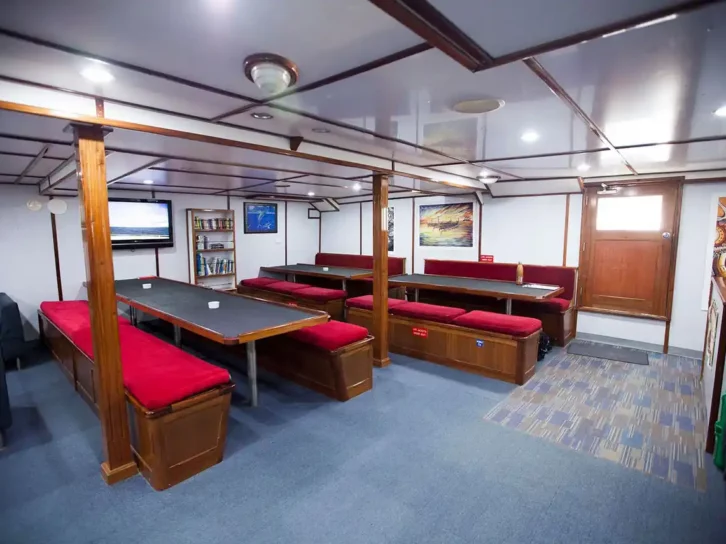


Liveaboard Pacific Master – Bikini Atoll: wreck diving in UNESCO World Heritage Site
Bikini Atoll in the Republic of the Marshall Islands is one of the world’s most iconic wreck diving destinations. Board...


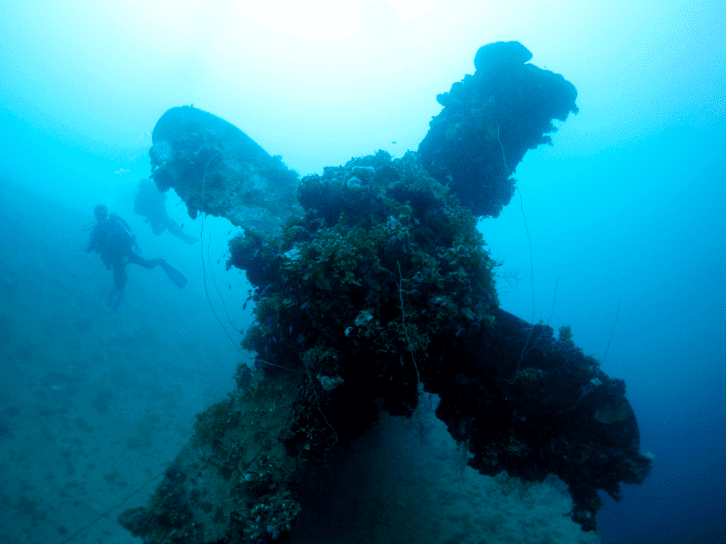
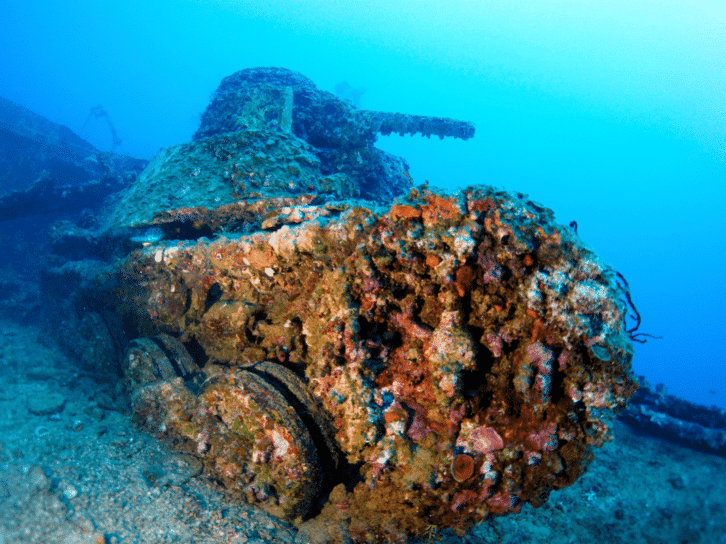
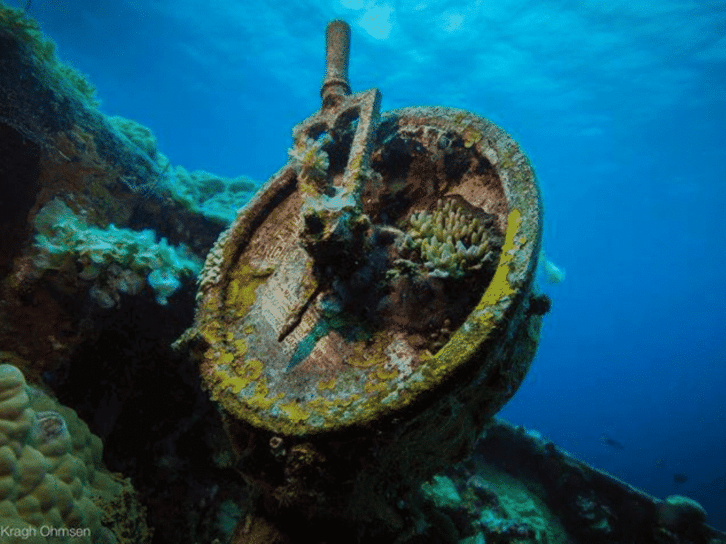
Liveaboard Odyssey – Wreck diving in Truk, Micronesia
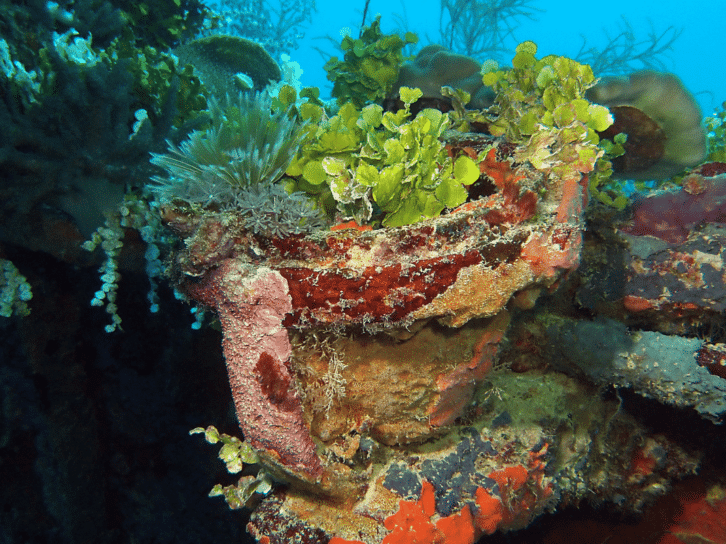
Explore the legendary Ghost Fleet of Truk Lagoon, where historic WWII wrecks and colorful coral converge. Dive into a unique...




The Bridge Dahab – TDI technical diver training courses
Do you want to transcend the limits of recreational diving? Find out how to develop your technical diving skills step...