Our 5 most remote liveaboard destinations
Want to go to a destination that feels like the end of the world? Then we have a few options for you! We’ve listed 5 liveaboard destinations where you either have to travel 3 days to reach it, or are hundreds of miles away from the coast. And being that far away certainly has its advantages. You’ll find unique marine life and often in large numbers. Think big schools of hammerhead sharks at Cocos Island and Galapagos, pods of dolphins at Socorro, a color explosion at Raja Ampat and wrecks at Truk.
Cocos Island, Costa Rica
- Distance to coast: 550 km (± 36 hours sailing)
- What makes it special: Massive schools of hammerhead sharks, eagle rays, manta rays.
- Very remote: No habitation, no other boats except liveaboards.
Cocos Island is like a lost treasure in the Pacific Ocean – a secluded UNESCO World Heritage Site that you thus reach only by liveaboard after 36 hours of sailing. Here you dive into an ocean kingdom too special to describe. Imagine hundreds of hammerhead sharks circling around you at cleaning stations, manta rays drifting in the current, whale sharks disturbed by plankton blooms … it sounds like a dream, but on Cocos it happens every day. It is definitely a destination for experienced divers, as there can be currents, thermoclines and sometimes some wild conditions. But you are truly rewarded, as the currents attract the most extraordinary animals.
The best time to dive at Cocos Island is from December to May. During this period, water temperatures are the warmest and visibility is the best. In addition, this is the dry season and the chances of good weather and calm seas are greatest. This is also when the hammerhead sharks are most active.
Socorro Islands, Mexico
- Distance to coast: ± 400 km (24+ hours sailing from Cabo San Lucas)
- What makes it special: Interaction with manta rays, dolphins, various shark species.
- Completely uninhabited, only naval base on Socorro.
The Socorro Islands, part of the Revillagigedo archipelago, lie far off the Mexican coast and are also only accessible by liveaboard, usually after a 26- to 30-hour trip from Baja California. This remoteness makes Socorro one of the most exclusive diving destinations in the world, with an incredible concentration of large pelagic life. Underwater, giant manta rays often swim close to divers, while bottlenose dolphins curiously make their rounds. Schools of hammerhead sharks, Galápagos sharks, silvertips and whitetips are regular residents, and in certain seasons whale sharks or humpback whales appear. In spring, the scenes are sometimes spectacular, with huge schools of jacks and tuna chasing around schools of fish.
The conditions are challenging: strong currents, deep drop-offs and open-ocean dives require experience. Socorro is therefore especially suitable for advanced divers, but the rewards are great here, too. Each dive offers the chance to interact with animals you rarely see this close anywhere else, from mantas to predatory fish and dolphins. The area is protected and recognized as a UNESCO World Heritage Site, keeping it a relatively pristine ecosystem where nature truly reigns supreme.
Best travel time
There is diving on Socorro between November and May. November through January is when the water is warmest and whale sharks are often spotted. From January/February, the whale sharks are exchanged for humpback whales, which you can spot both from the boat and underwater with, of course, a little luck. The water will be a bit colder!
Galápagos, Ecuador
- Distance to mainland: ± 1,000 km
- What makes it special: Darwin & Wolf Island: hammerhead sharks, sea lions, mola mola, whale sharks
- Highly regulated and limited number of boats.
The Galápagos Islands are more than 1,000 kilometers off the coast of Ecuador, and some dive sites are accessible only by liveaboard. The most famous dive sites are the remote Wolf and Darwin rock formations, known for their incredible concentration of large pelagic life. Underwater, giant manta rays, schools of hammerhead sharks and Galápagos sharks often swim close to divers, while bottlenose dolphins and sea turtles complete the scene. In certain seasons, whale sharks and large schools of tuna or jacks appear, so the drift dives can be spectacular.
The conditions at Wolf and Darwin are challenging: strong currents, open ocean and deep drop-offs require experience and preparation. Therefore, these dives are especially suitable for advanced divers. The protected marine ecosystem, part of UNESCO World Heritage, means that underwater life is relatively undisturbed, making encounters with large pelagic life intense and unforgettable. For those seeking a liveaboard adventure, Wolf and Darwin offers a unique opportunity to dive in one of the most iconic and remote diving areas in the world.
Island hopping on the Galapagos
By the way, it is also possible to stay on the islands of Galapagos itself. You will then not go to Darwin and Wolf (which is too far away for day trips), but dive at 3 different islands. The advantage of this is that you also have a lot of time to explore the Galapagos above water, something you don’t do during a liveaboard.
Best Travel Time
From January to May is the “warm” season on the Galapagos, characterized by calm oceans and favorable diving conditions, ideal for beginners and diving with manta rays. Water temperatures range from 24-28°C, with daily air temperatures of 25-28°C and variable weather. During this period, water productivity is low, making large animals such as whale sharks less common. Hammerhead sharks do tend to still be there in large numbers.
June to November is the “cold” season, influenced by the Humboldt Current, with colder waters (19-23°C) and more marine megafauna, such as whale sharks and hammerhead sharks. Daily air temperatures range from 21-24°C, with often gray skies and fog.
Truk, Micronesia
- Not extremely remote in terms of location, but difficult to reach
- What makes it special: World’s best wreck diving area (WWII Japanese fleet)
- Few annual visitors
Four days it takes, before you arrive in Truk. You can take a shorter time, but to travel comfortably, it is nice to do at least an overnight in Guam on travel day 3. This long travel time is well worth it, by the way, because you have arrived in perhaps the best area for wreck diving.
The liveaboard is 10 days and takes you to beautiful places. Truk’s war fleet and armament are surrounded by beautiful corals and colorful fish in the warm water of 27-29 degrees, with visibility ranging from 10-35 meters.
Best travel time
Truk is a popular year-round and good diving destination, with warm sunny days interspersed with brief tropical showers. Annual rainfall averages 85-95 inches, unpredictably spread throughout the year after many years of measurements. Visibility in the lagoons ranges from 10 to 32 meters, at different places and times. Visibility in the open sea outside the lagoon reefs averages 60 meters.
Raja Ampat, Indonesia
- Distance from civilization: ± 30-40 hours travel from Europe (usually 3 flights + transfer)
- What makes it special: Incredible biodiversity, colorful reefs, manta rays, wobbegongs, macro life – AND hardly any other boats at the southern or northern dive sites
- Why liveaboard: Only by liveaboard will you reach the most remote regions such as Misool, Wayag, Boo Windows, Fiabacet and Farondi, places where there are no resorts and you won’t see any other divers for days on end
Raja Ampat, in the far west of Papua in Indonesia, is known as one of the most biodiverse diving destinations in the world. While not as extremely remote as destinations like Socorro or Wolf and Darwin, it takes several days to get there: flights to Indonesia, followed by transfers and boat rides to the various islands. That effort is amply rewarded. Underwater, Raja Ampat is a spectacle of colorful coral reefs, clear lagoons and a huge variety of fish species. You can discover both macro life, such as pygmy seahorses and colorful shrimp, and encounter larger pelagics, such as manta rays and whitetip reef sharks.
The dive sites range from calm, protected reefs to more challenging sites with currents and deep drop-offs. This makes Raja Ampat suitable for both advanced and more experienced recreational divers. The area is relatively accessible, but the combination of remote islands, strong currents in some places and an abundance of marine life ensures that the adventure and spirit of discovery are fully maintained. For those willing to make the journey, Raja Ampat offers an unforgettable underwater experience, with coral-rich landscapes and some of the highest biodiversity on earth.
Best travel time
You can dive well all year round in Raja Ampat. The travel time depends mainly on which route you want to sail with the liveaboards. There are liveaboards that only go twice a year, so it is good to find out about this. On all our trips to Raja Ampat, we have described when the liveaboards leave and what route they sail when.
Want to read more?
Trip report – Group trip in Dahab, Egypt
Sebastiaan was diving with a nice group in Dahab, a fantastic diving destination in Egypt. They dived in the Blue Hole, camped in Ras Mohamed and most of all did a lot of diving, laughed...
Read moreTrip report – Group trip in the Maldives
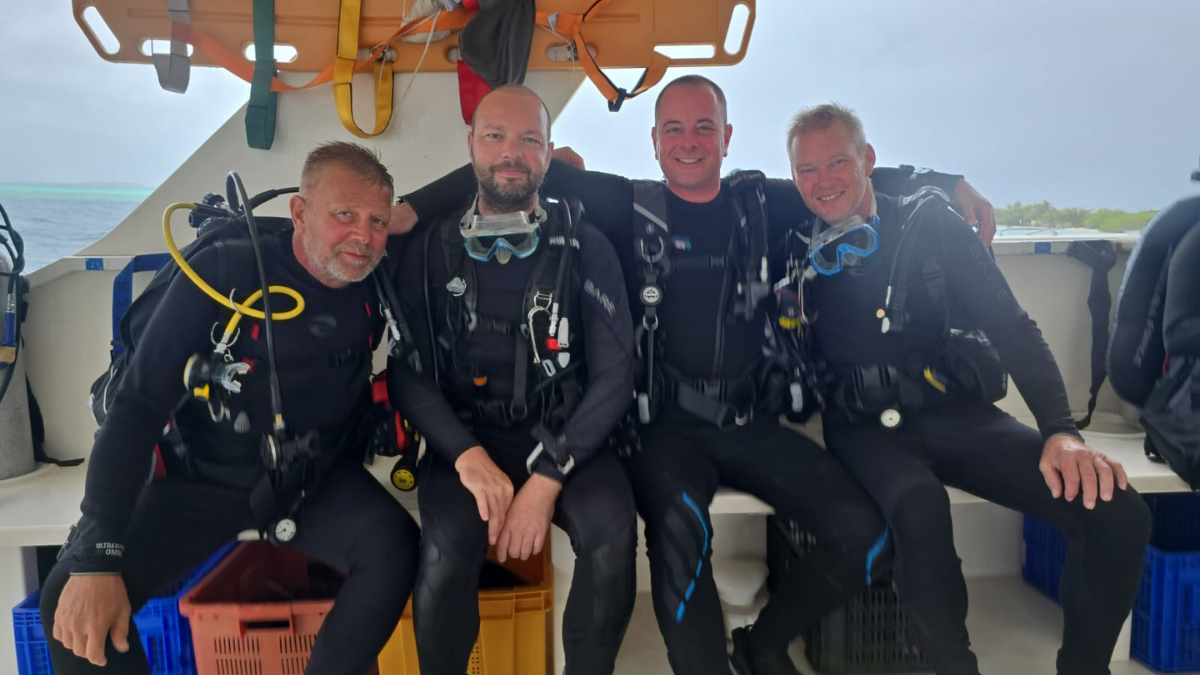
In mid-October the group trip with Robbert to the Maldives was planned: ten nights on the Nautilus II for the central itinerary. Read here how the dives were and what tips Rob has for trips...
Read moreTrip report – diving in Abu Dabbab
Sebastian was with the diving club in Abu Dabbab. Read how the diving trip was: from diving in the bay with giant turtles to swimming with dolphins!
Trip report – Round trip and diving in Bali
Margriet made a round trip through Bali: diving in different places and also seeing a lot above water. In this report you can read how the route, the trip and the highlights were.
Travel report – Group trip to BCSS Mozambique
In September Sebastiaan went with the group trip to research station BCSS in Mozambique. A fantastic trip and a long list of what they all saw. You can read the whole trip report here!
Trip report – Highlights of a liveaboard trip in Egypt
Read the highlights of Margaret’s liveaboard trip in Egypt, where she sailed the famous NDE route and had unforgettable diving experiences.
Travelogue: Diving in Saudi Arabia and traveling as a woman alone
Tessa went to Saudi Arabia on her own to dive with hammerhead sharks as well as explore Jeddah above water.