Combination trip Japan – Round trip & diving with hammerhead sharks at Mikomoto
In just over 2 weeks you will discover the best of Japan: from Kyoto’s ancient temples and the scenery around Mount Fuji to the colorful marine life at Mikomoto, where large schools of hammerhead sharks are no exception.
Travel period
Features
Starting from
Tour of Japan & diving with hammerhead sharks at Mikomoto
Japan is a country that effortlessly combines ancient traditions with modern energy, and this trip lets you explore both sides. You start in Kyoto, the cultural heart of the country. Here you walk through narrow streets lined with wooden houses, visit temples and shrines that have existed for hundreds of years, and sample local specialties in small stores and tea houses. It feels like stepping back in time as daily life goes on around you. Every corner of Kyoto has a story, from the thousands of torii gates of Fushimi Inari to the serene gardens of the Golden Temple, and it is a place where culture and history become tangible.
From Kyoto travel on to the area around Mount Fuji, with stunning views from Kawaguchiko and the surrounding lakes. Here nature is at its best: reflective lakes, small traditional villages such as Oshino Hakkai and the peaceful atmosphere of the countryside make it a beautiful counterpart to the urban bustle. Depending on the season, you can enjoy cherry blossoms, autumn colors or just the clear sky and imposing silhouette of Japan’s most famous mountain. It’s a place to catch your breath, walk along its banks or just watch the landscape slowly change as the day passes.
In addition to culture and nature, the trip also offers the chance to explore Japan’s marine life. From the Izu Peninsula you can do several dives around Mikomoto Island, which is known worldwide for its large schools of hammerhead sharks and the rich fish life brought by the Kuroshio current. The dives are mainly drift dives with the chance to see lots of pelagic life, impressive schools of fish and of course hammerhead sharks!
Best travel time for a diving vacation to Japan
The best travel time for this trip is spring (March-May) and autumn (September-November). The weather is mild then, the skies clear and nature at its best, with cherry blossoms or autumn colors. Summer can be hot and humid, with a chance of typhoons. Winter is very cold, especially for diving.
The best time to see hammerhead sharks at Mikomoto Island is from June to October, when sea temperatures are warmer and conditions are more stable. The peak is often in August and September, but they can be spotted year-round. The winter months are trickier because of strong winds.

Dynamic pricing applies in Japan, so fares can vary greatly even within the same season or month. So prices can vary greatly. In addition, it is also important to book this trip at least 10 months in advance to ensure that there is still sufficient availability at the diving school, hotels and activities.
Average Temperatures
Wetsuit advice for Izu Peninsula, Japan 
In the summer months, a 5mm is sufficient. In winter, we recommend a 7mm or semidry.
What will you experience on this diving vacation?
View itinerary here

Day 1 & 2 | Trip to Japan
Today the journey to Japan begins! You will fly to Osaka, a trip of about 13 hours with a direct flight. The time difference with Japan is 8 hours with our daylight saving time. So you arrive on day 2.
After arriving in Osaka, you will be picked up by a driver who will take you to Kyoto, the cultural heart and former capital of Japan. It is about an hour’s drive from the airport. You can take a walk through the old district of Higashiyama or along the Kamogawa River after checking into the hotel.
At the accommodation you will also receive a welcome pack immediately. In this package you will find IC cards, which allow you to pay for public transportation (and a large number of cabs) and can be used for contactless payments at vending machines and many stores (e.g., most convenience stores).
Day 3 | Discovering Kyoto
This day you will have time to explore Kyoto. You can choose to do this yourself at your own pace, or go out with a local guide.
There is an immense amount to see in Kyoto. For example, start at the Fushimi Inari Shrine and walk through the thousands of red torii gates. It’s quietest in the early morning, so it’s worth getting out of bed early. Then visit the Golden Temple of Kinkaku-ji and the bamboo forest of Arashiyama. Conclude with a boat ride on the Hozugawa River.
At the Kiyomizudera temple, you can drink water from the spring for health and wisdom. Afterwards, walk through the Ninenzaka and Sannenzaka hills: narrow streets lined with artisan stores and local delicacies, such as the famous yatsuhashi (you often get to taste them, too). With each step, you will discover a new piece of Kyoto.
Those who enjoy food and drink can sample sake at a brewery in Fushimi Inari and then have lunch at Nishiki Market, also known as “Kyoto’s Kitchen.” For something special, reserve a table at a café or restaurant along the Kamogawa River and enjoy the view from the terrace. In the hot summer months, Mount Kifune is a nice place to cool off in the forest and by the picturesque stream.
Want to experience even more Kyoto? Participate in a traditional tea ceremony, possibly while wearing a kimono. If you participate in the morning, you can keep the kimono on for the rest of the day, taking beautiful photos as you continue to explore the city.
Day 4 | Day trip from Kyoto
Today you can explore Kyoto city again or choose to take a day trip. For example, visit Nara, known for its friendly, free-roaming deer and the impressive Todaiji Temple, home to one of the world’s largest bronze Buddhas.
Then head to Uji, the birthplace of Japan’s best green tea and home to a famous whiskey distillery. You have here and fantastic view of the river and ancient temples. However, Uji is not just a historic town with lots of tea; it also has one of Japan’s newest pop culture attractions: the Nintendo Museum. Admission is by lot only, so there is no guarantee that you will actually be able to visit this.
If Nara or Uji do not appeal to you – for example, because you have already seen enough temples – you can go to Lake Biwa for some nature, or to Himeji to admire Japan’s most beautiful and best-preserved castle. End the day in Kobe, known for the famous “Kobe Beef,” for dinner on the way back to Kyoto.
For a slightly longer day trip, take the shinkansen to Hiroshima and visit the holy island of Itsukushima (Miyajima). Here the floating torii gate welcomes you as soon as you take the ferry from the mainland.
Day 5 | Shizuoka: tea port of Japan
This day you will leave Kyoto behind and travel on the high-speed train, the shinkansen, to Shizuoka Prefecture. This town lies at the foot of Mount Fuji and is known as the tea port of Japan.
The shinkansen is a fast train that gets you to your destination within 2 hours. It is a comfortable way of traveling that allows you to cover large distances in a short time.
In Shizuoka, you will spend the night on a traditional farm among the green tea fields and learn more about tea and the quiet life of the Japanese countryside. You can also choose to stay in a traditional ryokan in Atami. This is an authentic Japanese inn that has served as a place for tranquility and cultural experiences since the 17th century. They are characterized by tatami floors, sleeping on futons, communal onsen baths and elaborate kaiseki dinners. It is a total experience of hospitality, often run as a family hotel.
Day 6 | From the tea fields to the coast
After a day among the tea fields, you travel on to the coast. You will head to the Izu Peninsula and stay in Shimoda, a charming coastal town where nature, history and relaxed life by the sea come together.
After arriving, you can explore the nearby beaches or just relax at your accommodation before a week of diving begins.
Day 7 to 12 | Diving around Mikomoto: hammerhead sharks!
For the next 6 days you will dive around the Izu Peninsula. Each day you will make 2 dives at different sites. The highlight of this region is the hammerhead sharks at Mikomoto, where you can see thousands of hammerheads at once. Each site has its own character, ranging from sheltered areas to more rugged sites with a chance of seeing big game.Some of the dive sites you will go to are:
Thus, Kame-ne is a striking point dive where you are most likely to encounter large pelagic life. Schools of fish appear regularly here, with the absolute highlight being hammerhead sharks. The underwater landscapes here are dynamic, with steep structures and currents adding to the spectacle.
In the early summer season, “A” Point is the place for encounters with hammerhead sharks. What makes this site special is that you can often already see them while staying sheltered near the rock structures. Therefore, this dive site is also suitable for divers who feel less confident in open water.
Mitsu-ne consists of three rocks that are visible above the water but form one large reef below the surface. Around these rocks, impressive schools of fish such as yellowtails migrate by, and hawksbill turtles are also regularly seen here. A little further offshore is Kado-ne, a hidden rock where large schools of migrating fish often congregate.
Shira-ne is a relatively quiet and shallow dive site. Drift dives are often made here from Mitsu-ne toward Shira-ne. You will find schools of wrasse and other migrating species here, making for a lively but accessible dive.
At Zabu-ne the waves continually crash over the rocks, which immediately explains the name. This is another spot where the likelihood of seeing larger fish is high. The complex underwater structures also make it an interesting place to explore.
Finally, there is Enokuchi, a more sheltered dive site. Close to the island it is relatively shallow, but once you swim out a little further, the depth increases rapidly. Here you can encounter year-round species such as snappers, reef fish and hawksbill turtles.
Together, these dive sites offer a diverse picture of diving at Mikomoto: from calm, accessible dives to adrenaline-filled encounters with large pelagic life.
Day 13 | To Kawaguchiko: the gateway to Mt. Fuji
After some wonderful diving, it is time to leave the ocean behind and travel on to Kawaguchiko. This is the gateway to Mount Fuji, Japan’s most famous and sacred mountain. Stay in a lakeside ryokan or take a walk along the shore and enjoy the fresh, clean air. Depending on the time of day, you can take the cable car to the viewing platform for stunning views of the mountain, before returning to your ryokan for a traditional kaiseki dinner and a relaxing bath in the onsen (hot spring).
Day 14 | A day in the nature of Kawaguchiko
The day starts with breakfast and an impressive view of Mount Fuji above Lake Kawaguchi.
This morning you can take a guided kayak tour on one of the Fuji Five Lakes, visit a lookout point for a final view of the sacred mountain, or, if there is enough time, visit one of the traditional villages, such as Oshino Hakkai.
Recharge yourself with a local specialty: Houtou, thick noodles in a hearty, hot soup. In the late afternoon or early evening, travel on to Tokyo to continue your Japan adventure.
Day 15 | Discovering Tokyo
Welcome to Tokyo, the megacity where ancient traditions meet futuristic energy. Explore the city at your own pace or with a guide. Visit the peaceful Meiji Shrine, admire the historic Asakusa and Senso-ji Temple, and experience the hustle and bustle of Shibuya Crossing, the world’s most famous and busy intersection. For an overview of the city, visit a vantage point, for example the Tokyo Skytree, Tokyo Tower or the Tokyo Metropolitan Government Building in Shinjuku.
Day 16 & 17 | Return home
For your departure home – or your next destination – you can travel to the airport by airport limousine bus from central locations such as Osaka/Umeda Central Station or Namba City Air Terminal, or opt for a private chauffeur driven minibus. Take with you the memories of mountains, temples, cities and warm encounters: stories of a journey through the heart of Japan.
Highlights of this trip
What can you expect from nature and culture in Japan?
The hammerhead sharks of Mikomoto
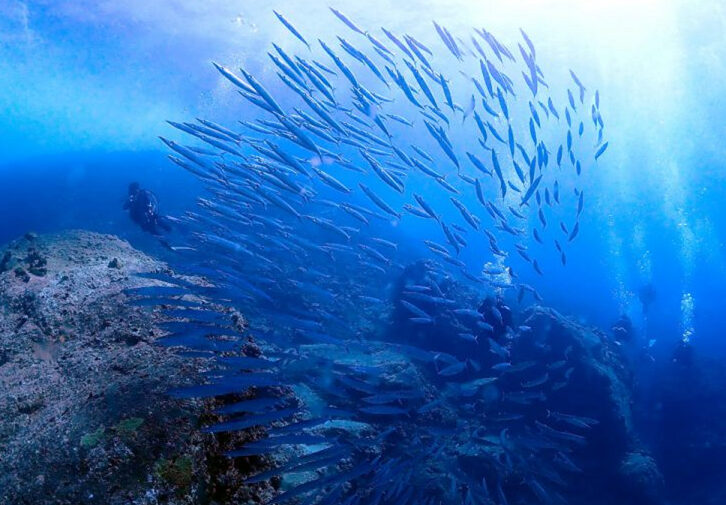
Mikomoto is known worldwide for the large schools of hammerhead sharks you can see here. It is possible to encounter them all year round, but during the summer months the numbers are the greatest. The sharks often swim in schools, so you can sometimes see hundreds at a time and the overall picture is truly impressive. For divers, this is a unique opportunity to observe and photograph these special sharks up close in their natural habitat.
Views of Mount Fuji
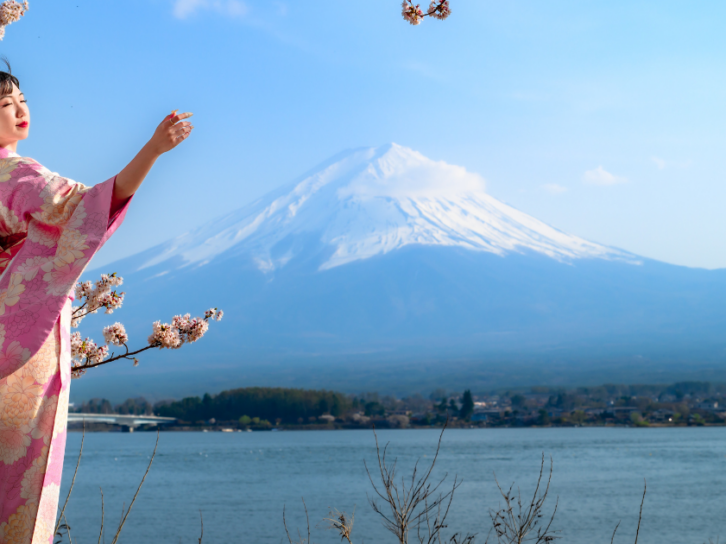
Mount Fuji is one of Japan’s most recognizable symbols and a highlight of the trip for many travelers. From Kawaguchiko, where you will be staying, on a clear day you will have beautiful views of the mountain from the lake, the shoreline trails and various vantage points. The combination of water, mountains and the snow-capped peak of Fuji creates a soothing and typically Japanese landscape that differs greatly from the hustle and bustle of the cities.
Discovering the culture of Japan
Kyoto is the cultural heart of Japan and one of the absolute highlights of the trip. With more than a thousand temples and shrines, traditional neighborhoods and ancient rituals, the city shows what Japan was once like. Here you walk past wooden houses, tea gardens and quiet shrines, while modern Japan is never far away. Kyoto offers a unique combination of history, atmosphere and everyday Japanese culture that you won’t experience as strongly anywhere else.
The accommodation
The stay and surroundings
During this roundtrip you will stay in different 3-star accommodations. Usually you stay one or two nights in one place, while in Izu you stay a little longer. You can choose between traditional accommodations, such as a ryokan, with tatami floors and futon beds – thick mattresses rolled out on the floor – or Western accommodations with regular beds. The Western option is often more comfortable and more similar to what we are used to in Europe. Keep in mind that beds in traditional accommodations are sometimes a bit shorter.
The images are of hotels where you can stay during the tour. We may provide the specific accommodations in the travel proposal; it depends on the travel period and availability. Our standard is accommodation including breakfast. If you do not want to sleep in a futon bed, please indicate this as well.
Travel costs
What is included
This diving trip to Japan is available from £ 5.336. Due to dynamic pricing in Japan, fares and availability can vary widely, even within the same season or month.
Overnight stays are in hotels with western beds in twin rooms, except for the night in Shizuoka. Here you will stay in a traditional ryokan. Don’t want this? You can also choose a Western hotel.
The trip can be extended as desired, and some components are included as standard in this travel package.
Please note that prices listed are subject to change due to currency fluctuations, price adjustments or other circumstances. Flights are always booked in the cheapest available class.
Want to know more about this trip to Japan? Contact us for a customized trip and all the details.
Included in this diving trip, from £ 5.336
- Kyoto
- Transfer from airport to hotel
- 3 nights in a twin room in 3* hotel
- Stay on a bed & breakfast basis
- Train ticket from Kyoto to Shizuoka
- Shizuoka
- 1 night in a traditional Ryokan
- Stay on a bed & breakfast basis
- Train ticket from Shizuoka to Izukyu Shimoda
- Izu (Shimoda)
- 7 nights in a twin room in 4* hotel
- Half board accommodation
- Dive package consisting of 12 dives
- Fruit, snacks and drinks during dives
- Train ticket from Izukyu Shimoda to Mishima
- Bus transfer from Mishima to Kawaguchika
- Kawaguchiko
- 1 night in a twin room in 3* hotel
- Stay on a bed & breakfast basis
- Bus transfer from Kawaguchika to Tokyo
- Tokyo
- 2 nights in a twin room in 3* hotel
- Stay on a bed & breakfast basis
- Transfer to airport
- General
- VZR & Administration fee
Excluding
- Flight to Osaka from £ 1.682 p.p.
- On-site excursions
- Using a guide
- Dive and travel insurance
✈︎ The quoted (international) flight prices are indicative prices and based on departures from Europe. However, we can arrange flights from any location worldwide. Booking your own flights is of course also possible.
Optional
- Rental car + international driver's license
- Additional excursions or extensions
- JR Pass
- Tea Ceramony, cooking class etc
- Guided tours (private or shared)
- Diving equipment (approximately £ 37 per day)
Email this diving holiday
Want to save or share the details of this diving trip with someone? You can do so by sending the trip by email.
Where may we send the email to?
Frequently asked questions about this diving holiday
Diving in Japan
According to local laws, divers must have more than 50 dives to their name before being allowed to dive at Mikomoto Island. Persons over the age of 60 and those on medication must provide a doctor’s certificate. Persons 15 years old and younger and persons 70 years old and older may not participate, even if they hold a diving license.
The best period to see hammerhead sharks is from June to October. However, it is also possible to see them at other times of the year. But whether you see them depends on the year.
Between July and September, the water temperature fluctuates between 20 and 25 degrees. From April to June and from October to December, the water temperature fluctuates between 16 and 20 degrees.
The dives will be made from the boat and will be mainly drift dives. So keep in mind that there may be a strong current during the dives. You do not have to swim against it. The dives last a maximum of 35 minutes including safety stop.
Dives are made with quite a bit of current, making it not necessarily the best or easiest destination for underwater photographers.
This depends on the dive site. Most dive sites are close by and about 15 minutes boat ride away. It is a comfortable boat with toilets and a hot shower on board.
You can make 2 dives per day. In high season (between June and October), a maximum of 4 dives per day are offered. 2 in the morning and 2 in the afternoon. You can then possibly make 4 dives. Between November and May, only 2 dives are offered.
Yes, it is only a 3-minute drive from the hotel. A free shuttle is available.
Diving equipment
Both tanks are available
No, there is no nitrox available.
You can, renting a full set costs 6,000 yen per day. This converts to about € 32 per day. A full set includes a BCD, regalator, 5mm wetsuit, mask, fins, shoes, SMB and a dive computer.
Please note that the diving school does not have rental equipment for persons taller than 2 meters or weighing more than 100 kilos. Also, there is limited equipment available, so please indicate immediately when booking if you want to use the rental equipment.
Related diving trips






Combination trip Japan – Tour & diving on tropical Okinawa
Discover Japan in three weeks full of adventure, culture and nature. Walk through bustling cities, historic villages and serene mountain...
We are EWDR