Combination trip Japan – Tour & diving on tropical Okinawa
Discover Japan in three weeks full of adventure, culture and nature. Walk through bustling cities, historic villages and serene mountain landscapes, and finish with world-class diving in tropical Okinawa.
Travel period
Features
Starting from
3 weeks in Japan: touring and diving in Okinawa
This three-week journey takes you through multi-faceted Japan. Starting in Tokyo, where modern skyscrapers and traditional temples alternate, you explore bustling markets, serene shrines and impressive viewpoints. Then travel to Kawaguchiko at the foot of Mount Fuji, surrounded by lakes, charming villages and sweeping mountain landscapes. In Matsumoto and Takayama you immerse yourself in traditional Japan: historic castles, wooden merchant houses, morning markets and peaceful countryside give an intimate picture of rural life. Via fairy-tale Shirakawa-go you reach Kanazawa, with its beautifully preserved gardens, crafts and historic districts, and then Kyoto, the cultural capital, where ancient temples, bamboo forests, tea ceremonies and historic districts take you to the heart of Japanese tradition. Optional day trips to Nara or Uji offer even more culture, nature and local specialties.
The second part of the trip leads to Okinawa, where Naha is the gateway to a tropical paradise and world-class dive sites. A breathtaking underwater world awaits here: colorful coral reefs, schools of tropical fish, sea turtles, caves and wrecks make every dive unforgettable, for novice and experienced divers alike. Above water, Okinawa offers beautiful beaches, relaxing island resorts and spectacular sunsets. This trip combines culture, nature and adventure above and below water, with unforgettable encounters, delicious cuisine and special memories of Japan’s rich diversity.
Best travel time for a diving vacation to Japan & Okinawa
The best travel time for this trip is spring (March-May) and autumn (September-November). The weather is mild then, the skies clear and nature at its best, with cherry blossoms or autumn colors. Summer can be hot and humid, with a chance of typhoons. Winter is very cold, especially for diving.
The best diving period in Okinawa is from April to July for the most pleasant temperatures and to see manta rays. December to February is perfect for hammerhead sharks at Yonaguni, but it is colder and more windy.

Dynamic pricing applies in Japan, so fares can vary greatly even within the same season or month. Thus, prices can vary greatly. In addition, it is also important to book this trip at least 10 months in advance to ensure that there is still sufficient availability at the diving schools, hotels and activities.
Average temperatures
Wetsuit advice for Okinawa 
The water in Okinawa in the summer months is warm enough for a 3mm, shorty or even rashguard. In the other months, a 5mm is more comfortable.
What will you experience on this diving vacation?
View itinerary here

Day 1 & 2 | Trip to Japan
Today marks the start of your trip to Japan! You’ll fly to Tokyo—a trip of about 17 hours, including a layover. You’ll depart on Day 1 and arrive on Day 2.
After arriving in Tokyo, you will be picked up by a driver who will take you to your first accommodation. At the accommodation you will receive a welcome package. In this package you will find the IC cards, with which you can pay for public transport and for contactless payments at vending machines and many stores. So with this you are all set for the trip!
The rest of the day you can rest or already explore the city directly. Tokyo is a vibrant city and is known for its fusion of both old traditions and new, futuristic energy. It is a mega city, where there is much to see, do and most importantly, taste.
Day 3 | Discovering Tokyo
Today is the first full day of the trip and you can explore Tokyo. When booking the trip, you can choose whether you want to go out with a guide this day or explore the city at your own pace.
Today you have plenty of time to get your first impressions of Tokyo. The city is a fascinating mix of tradition and modernity, where ancient temples and shrines alternate with futuristic neighborhoods and neon-lit streets. For example, stroll the peaceful, wooded grounds of the Meiji shrine, in the middle of the city, or explore the historic Asakusa district where the Senso-ji temple gives you a glimpse into old Tokyo.
At the same time, Tokyo also shows its modern side. In Shibuya, experience the dynamism of the city at the famous crossroads, where pedestrians from all directions cross at the same time. For a good overview, it is also nice to see the city from above, for example from the Tokyo Skytree, the Tokyo Tower or the Tokyo Metropolitan Government Building in Shinjuku. From here you can really see how vast and multifaceted Tokyo is.
Day 4 & 5 | At the foot of Mount Fuji in Kawaguchiko
In the morning you will depart for Kawaguchiko, located at the foot of Mount Fuji. Along the way, the landscape changes gradually: skyscrapers give way to lakes, small villages and mountainous vistas. It is a drive of about an hour and a half.
Kawaguchiko is a good base for exploring the Mount Fuji area. Here you can hike along the lake, enjoy the view of the mountain (in clear weather) or visit one of the surrounding villages. For lodging, you can choose a traditional ryokan, often with an onsen, or stay in one of nature’s small-scale accommodations, such as glamping. An onsen in Japan is a natural hot spring heated by volcanic activity. The water is rich in minerals and has been used for centuries to relax and restore the body.
The next day it is time to explore the area. It pays to get up early here, as there are often no clouds yet. You’ll have a fantastic view of Mount Fuji, which towers over Lake Kawaguchi. You can go out on the lake this morning on a guided kayak tour or visit one of the viewpoints in the area.
Later in the day, you will continue your journey by train toward the Japanese Alps, to the town of Matsumoto. This historic castle town is located in a mountainous setting and has a relaxed character. The most famous landmark is Matsumoto Castle, also called the “Crow Castle” because of its black appearance. In the compact center, you can still find traces of the samurai past, interspersed with small stores, cafes and galleries. Also try the local specialty soba here: buckwheat noodles, often served with fresh, locally grown wasabi.
Day 6 & 7 | Historic City of Takayama
You will depart by bus from the Japanese Alps and slowly leave the mountain passes behind as the landscape changes: steep hills, clear rivers and traditional villages. Along the way, you can enjoy the panoramic views and perhaps catch a glimpse of daily life in the Alpine region.
Arriving in Takayama, you step into a city where time seems to have stood still. The historic city center is beautifully preserved, with wooden merchant houses dating back to the Edo period, narrow streets full of artisan stores and small cafes, and serene shrines tucked among the houses. You can also visit a traditional sake brewery here, where centuries-old methods are still honored, or stroll along the local market and sample regional specialties. Takayama breathes tradition, but at the same time feels lively and welcoming.
On Day 7, start your day at one of the morning markets or in nearby Hida-Furukawa, where stalls offer local produce, handicrafts and seasonal delicacies.
Another fun way to explore the city and surrounding villages is by taking a bicycle tour. You’ll ride past vast rice fields, babbling streams and tranquil rivers, while villagers greet and sometimes wave you friendly. Along the way, you’ll encounter traditional wooden houses, small shrines and the interplay of nature and culture, bringing rural Japan fully to life.
You will stay here for 2 nights.
Day 8 & 9 | UNESCO city of Shirakawa-go & Kanazwa
Today you will travel on to Kanazawa, but first you will stop in Shirakawa-go. This village is a UNESCO World Heritage Site and is known for its steep, thatched farms. Here you walk through the landscape, which almost looks like a fairy tale.
After the stop in Shirakawa-go get back on the bus and continue to Kanazawa. This ride takes about an hour and a half. Kanazawa is a city known for its samurai and geisha neighborhoods. These are historic neighborhoods with traditional houses, where you can get an idea of samurai life and the culture surrounding geishas.
In the former samurai districts, you can see how this warrior class used to live, with traditional houses, narrow streets and old city walls. In the geisha districts, also called chaya districts, you will find wooden teahouses where geishas, traditional entertainers, entertained guests with music, dancing and conversation. You’ll learn more about this during your visit to Kanazwa.
In Kanazawa, you’ll find a beautiful blend of culture, crafts and local traditions. Stroll through Kenroku-en, one of Japan’s three most famous gardens, where carefully laid paths, water features and seasonal colors come together. You’ll also encounter many crafts in the city, such as the use of gold leaf, for which Kanazawa is famous.
Those interested can participate in a traditional workshop, such as painting or calligraphy, or learn Japanese martial arts such as kyudo (archery) or kendo. At the lively Omicho market, sample fresh seafood and other local specialties. End the day with a stroll through the Higashi Chaya neighborhood, with its historic tea houses, and the old samurai quarter of Nagamachi.
Day 10 & 11 | Cultural capital Kyoto
In the morning, you will travel on to Kyoto by train. The ride takes 2 to 2.5 hours and takes you through the varied landscape of the Japanese coast and inland.
Arriving in Kyoto, the cultural capital of Japan, you have the rest of the day to land in the city at your leisure. After checking into your accommodation, you can choose to participate in a traditional tea ceremony or take a stroll through the historic Higashiyama district. A walk along the Kamogawa River is also a nice way to end the day peacefully.
The next day you will have plenty of time to explore the city on your own, possibly with a local guide. Many sights are scattered throughout the city, so it pays to build up your day slowly. A good start is the Fushimi Inari shrine, where you walk up the hill through the long rows of red torii gates. In the early morning, it is often still quiet here.
Scattered around the city you will find famous sites such as the Golden Temple Kinkaku-ji and the bamboo forest of Arashiyama, where the tall bamboo stalks create an almost surreal atmosphere. For those who want to see Kyoto from the water, a boat ride on the Hozugawa River is a nice addition.
The area around the Kiyomizudera temple is also worth visiting. Here you can drink water from the spring, which according to tradition brings health and wisdom. From the temple you can walk up the Ninenzaka and Sannenzaka hills: atmospheric streets with wooden houses, small stores and local specialties such as yatsuhashi, which you can often taste.
Kyoto is also known for its culinary traditions. You can visit a sake brewery in the Fushimi district, while the Nishiki market is a good place to try different local dishes. At the end of the day, it is nice to settle down at a café or restaurant along the Kamogawa River, where you can quietly end the day with a view of the water.
Those who want to experience even more of Japanese culture can participate in a traditional tea ceremony. This can possibly be done in kimono, which you may then often wear for the rest of the day as you continue walking through the city.
Day 12 | Day trip from Kyoto
Today you have the freedom to further explore the area. A great option is a visit to Nara, where deer roam freely through the parks and where you will find the impressive Todai-ji temple, with one of the largest bronze Buddha statues in the world.
Another option is Uji, a place known for its green tea and quiet riverside location. Here tea houses and temples alternate and there is a relaxed atmosphere. In addition, Uji is also the location of the Nintendo Museum, although entry is by lottery only.
Those who prefer to seek nature can head toward Lake Biwa, Japan’s largest lake. For a more historical experience, a visit to Himeji is worthwhile, where you’ll find the country’s best-preserved castle. On the way back to Kyoto, you may want to stop in Kobe, known for its wagyu beef, for dinner.
Day 13 & 14 | Hiroshima and Miyajima
In the morning you will board the train again and get off in Hiroshima. The trip takes about an hour and a half. In Hiroshima, stroll through the quiet streets and taste local specialties such as Hiroshima-style okonomiyaki: a savory pancake with noodles and cabbage.
A visit to the A-Bomb Dome and Peace Memorial Park, with its accompanying museum, shows what happened when an atomic bomb was dropped here in 1945 and how Hiroshima recovered afterward.
The next day, head to Miyajima Island, known for the iconic red torii gate that appears to float at high tide in front of Itsukushima Shrine, a traditional Shinto shrine by the sea. Hike along wooded trails, encounter deer roaming freely across the island and enjoy the view from Mount Misen.
In the village, you’ll find small streets with local specialties such as fresh oysters and momiji manjuu, sweet treats shaped like maple leaves. For a different perspective of the island and its coastline, a kayak trip is a great way to experience the landscape from the water.
Day 15 | Port City of Fukuoka
Today you will go a little further south and travel to Fukuoka. You will again go by train, it is a ride of about 1 hour.
Fukuoka is a lively port city known for its welcoming atmosphere and vibrant food culture. The city is especially famous for its Hakata ramen, noodles made from pork bones (tonkotsu), which you can taste authentically here. Stroll the streets, explore local markets and enjoy the vibrant city life that makes Fukuoka so special.
Day 16 | Transit to Okinawa, the Hawaii of Asia
Today you’ll be flying to Okinawa! There is a convenient subway service near your hotel in downtown Fukuoka that will take you to the airport. The ride takes only 5-11 minutes. There is a subway every 4-8 minutes, so no need to rush. The subway stops at the domestic terminal. From here you will fly in just under 2 hours to the remote islands of Okinawa, south of Japan.
Upon arrival, a driver will be waiting to take you to your accommodation in Onna. Located on the west coast of Okinawa’s main island, Onna is a tropical paradise. You will make fantastic dives here. The crystal clear waters, colorful coral reefs and rich marine life make this coastal area a dream destination for both novice and experienced divers. Underwater, colorful fish, sea turtles and impressive rock formations await, while above water Onna sparkles with pristine beaches, breathtaking sunsets and relaxing island resorts. This is where world-class diving and the warm, relaxed atmosphere of Okinawa come together.
Day 17-20 | Diving in Okinawa (Onna)
The next few days are all about diving! You will be picked up by the diving school in the morning and taken to the boat. Each day you will make 2 dives.
Onna is known for its clear waters, colorful coral reefs and a wide variety of marine life, including tropical fish and sea turtles. The dive sites are suitable for both beginners and experienced divers and offer a nice mix of reefs, caves and rock formations. Possible dive sites where you will dive these days are:
- Manza: Explore the impressive underwater caves and tunnels, where colorful coral formations and curious fish hide. At night, the area transforms into a magical display of fluorescent marine life, including tiny shrimp, squid and nocturnal fish.
- USS Emmons: Dive to the wreck of the U.S. warship USS Emmons and explore its mysterious structures up close. The wreck has become an underwater ecosystem, with schools of fish, colorful coral polyps, anemone fish and sometimes even larger species such as tuna and barracuda patrolling around the wreck.
- Motobu / Sunabe and Chattan: Here you will find coral gardens full of sea anemones, seahorses and coral butterflies. The area is also known for its vibrant schools of reef fish, crabs, octopus and the occasional curious sea turtle. You dive here from the shore.
- Cape Maeda: One of Okinawa’s most famous dive sites due to its various caves and underwater formations. The clear water allows you to explore beautiful caves and enjoy the colorful reef life, including parrotfish, coral butterflies, starfish and various lobster species.
Day 21 & 22 | Diving in Okinawa (Naha)
You will spend your last days on Okinawa in Naha, the bustling capital of Okiniawa. Onna and Naha are about an hour’s drive from each other, yet you’ll feel like you’re in a completely different environment again. Naha is the island’s heart of culture and history. You’ll find traditional markets, quaint streets, local cafes and historical sites like Shurijo Castle.
But of course you come here to dive! For the next two days you will dive in Kerama National Park. This is a protected area known for its crystal clear waters, colorful coral reefs and rich biodiversity. Here you will swim among tropical fish, sea turtles and colorful coral formations, with dive sites suitable for both beginners and advanced divers. Possible dive sites are:
- Kuroshima North Twin Rocks: Steep rock formations, colorful corals and schools of tropical fish such as parrotfish and anthias.
- Sand Triangle: A sand flat with scattered corals, perfect for discovering rarer species such as octopuses, nudibranchs and thornback rays.
- Toma No.2: Clear waters with rich biodiversity: sea turtles, barracudas and sometimes reef sharks.
- Uchizan: Vibrant reef with many small fish and colorful corals, ideal for macro photography.
- Shimosone: Quiet dive site with schools of reef fish, anemone fish and shrimp.
Day 23 & 24 | Return home
After a wonderful journey through Japan, a private driver or the Yui Rail train will take you to the airport for your return trip home or your next destination. Along the way, you can reminisce about the mountains, temples, bustling cities and warm-hearted people you met along the way – memories of a journey that showcases the versatility and character of Japan.
Highlights of this trip
What can you expect from the tour of Japan?
Kerama National Park
Kerama National Park is a group of subtropical islands southwest of Okinawa. It is known as one of the most beautiful diving areas in Japan. The water is exceptionally clear, making the most of the colorful coral reefs, caves, drop-offs and sandy bottoms. The park is home to a great biodiversity, including tropical fish, sea turtles and other marine animals. With more than fifty different dive sites, it offers unique experiences throughout the year.
Okinawa: the Hawaii of Asia
Okinawa is often called the “Hawaii of Asia” for its tropical beaches, clear blue seas and colorful coral reefs, reminiscent of an island paradise. Located far south of the Japanese “mainland,” the subtropical islands have a relaxed atmosphere that differs greatly from Japan’s busy city life. Local traditions, cuisine and music are influenced by the Ryukyu kingdom’s centuries of history. Okinawa thus offers a unique blend of nature, culture and relaxation, making it a special destination.
Touring Japan
On this tour, you’ll discover Japan up close, from modern cities to historic temples and traditional villages. You will travel through mountain landscapes, past lakes and coasts, and see how old and new culture coexist. Along the way, you’ll learn about local traditions, crafts and Japanese cuisine, from street food to regional specialties. The combination of nature, culture and gastronomy gives a complete picture of what Japan has to offer.
The accommodation
The stay and surroundings
During this roundtrip you will stay in different 3-star accommodations. Usually you will stay one or two nights in one place, while in Okinawa you will stay a little longer. You can choose between traditional accommodations, such as a ryokan, with tatami floors and futon beds – thick mattresses rolled out on the floor – or Western accommodations with regular beds. The Western option is often more comfortable and more similar to what we are used to in Europe. Keep in mind that beds in traditional accommodations are sometimes a bit shorter.
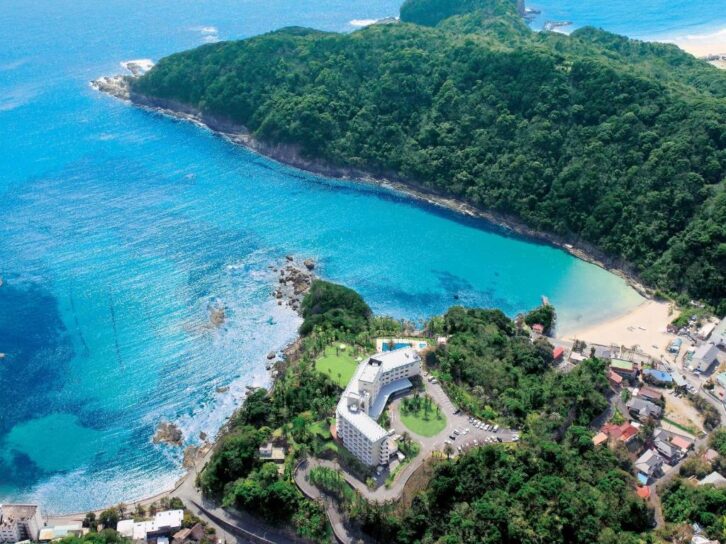
The images are of hotels where you can stay during the tour. We may provide the specific accommodations in the travel proposal; it depends on the travel period and availability. Our standard is accommodation including breakfast. If you do not want to sleep in a futon bed, please indicate this as well.
During the dives, you will stay at two different locations on Okinawa: one accommodation in Onna and one in Naha. Exactly which accommodations these are will be determined based on availability – something that can vary in Japan – but we always make sure that the quality and location are similar.
Both accommodations are close to the sea and feature a swimming pool and their own restaurant. You stay on a bed and breakfast basis. Both locations have western beds, so you can sleep as usual after diving.
The diving school
The diving school & its facilities
Piranha Divers Okinawa
Piranha Divers Okinawa is a small-scale, well-organized diving school in the northern part of Onna. This dive school is known for its personal approach and working with small groups, ensuring individual attention and a relaxed diving experience.
From this location, dives are made to various dive sites around Okinawa: both by boat and from the shore. The team is experienced and speaks several languages, which ensures clear communication and pleasant guidance during the dives. Thanks to the small-scale setup, there is a lot of flexibility and room to adjust dives to your level and preferences.
Marine House SEASIR Naha
In Naha, dive with SEASIR, a PADI 5-star dive resort with a highly experienced team, including several course directors. The dive center has four spacious boats and organizes daily dive trips to the beautiful Kerama Marine National Park.
The dive center is fully equipped with four comfortable classrooms where you can log and prepare your dives in peace. There is also a wide range of rental equipment available in all sizes, from XXS to XXL.
The international team speaks multiple languages, including English, Chinese, Korean, Cantonese and French, ensuring smooth communication and guidance for travelers from around the world.
Travel costs
What is included
This diving vacation to Japan is available from US$ 6.274. Dynamic pricing applies in Japan, so fares and availability can vary greatly even within the same season or month. So prices can vary greatly. It is also important to book this trip at least 10 months in advance to ensure that there is still plenty of availability at the diving schools, hotels and activities.
The diving trip can be expanded as desired. A number of things are included by default in this travel package.
Prices are subject to price changes, increases or changing exchange rates. Flights are always based on the cheapest possible booking class.
Want to know more about this tour of Japan? Get in touch with us!
Included in this diving trip, from US$ 6.274
- Tour of Japan
- 2 nights in Tokyo
- 1 overnight stay in Kawaguchiko
- 1 overnight stay in Matsumoto
- 2 nights in Takayama
- 2 nights in Kanazawa
- 1 overnight stay in Hiroshima
- 1 overnight stay in Fukuoka
- Stay on a bed & breakfast basis
- Transfers by bus/train
- Diving in Okinawa
- 4 nights in Onno
- 2 nights in Naha
- Stay on a bed & breakfast basis
- Dive package with 12 dives
- Lunch on dive days
Excluding
- Flight to Osaka from US$ 1.625 p.p.
- All meals not listed
- Dive and travel insurance
✈︎ The quoted (international) flight prices are indicative prices and based on departures from Europe. However, we can arrange flights from any location worldwide. Booking your own flights is of course also possible.
Optional
- Rental car + international driver's license
- Additional excursions or extensions
- JR Pass
- Tea Ceramony, cooking class etc
- Guided tours (private or shared)
- Diving equipment
Email this diving holiday
Want to save or share the details of this diving trip with someone? You can do so by sending the trip by email.
Where may we send the email to?
Frequently asked questions about this diving holiday
Diving general
The average air temperature in Okinawa is 25℃ in summer and 15℃ in winter. The island has a mild climate, making diving possible year-round. The water temperature varies between 22℃ and 28℃. So you can dive well here in a 5mm, possibly bring a hood and gloves if you get cold very quickly.
Diving in Keramas National Park is possible year-round. Each season offers unique underwater experiences:
- Spring: The drift diving season begins. The water and weather get warmer and there are usually no typhoons. Perfect for calm diving and discovering various species of marine animals.
- Summer: This is the most popular period on both land and underwater. You can count on the greatest range of activities and colorful underwater landscapes.
- Autumn: Ideal for advanced divers. The water is still warm and it is quieter than in summer, allowing you to dive in peace.
- Winter: The water is a little cooler, but it’s a great time for gentle diving. During the trip to the dive sites, you will often see whales!
The average air temperature in Okinawa is 25℃ in summer and 15℃ in winter. The island has a mild climate, making diving possible year-round. The water temperature varies between 22℃ and 28℃. So you can dive well here in a 5mm, possibly bring a hood and gloves if you get cold very quickly.
Diving in Keramas National Park is possible year-round. Each season offers unique underwater experiences:
- Spring: The drift diving season begins. The water and weather get warmer and there are usually no typhoons. Perfect for calm diving and discovering various species of marine animals.
- Summer: This is the most popular period on both land and underwater. You can count on the greatest range of activities and colorful underwater landscapes.
- Autumn: Ideal for advanced divers. The water is still warm and it is quieter than in summer, allowing you to dive in peace.
- Winter: The water is a little cooler, but it’s a great time for gentle diving. During the trip to the dive sites, you will often see whales!
An average diving day looks like this:
- 08:00 – Gather at the diving school. It is also possible for the diving school to pick you up.
- 08:30 – Prepare diving equipment. The crew will bring it to the boat.
- 09:00 – Sailing to Kerama National Park. During navigation, the crew will give a safety briefing. Navigation takes 40 to 60 minutes.
- 10:00 – First and second dives.
- 12:30 – Lunch (this is included)
- 13:00 – For those who want the opportunity to make a 3rd dive. Those who do not want to can rest on the comfortable boat. There is also a changing room and hot showers on board.
- 15:00 – Navigation back to the diving school.
- 16:00 – Back in Naha, rinse dive equipment and log dives
- 16:30 – Drop-off at your hotel
- Piranha Divers: here you will make a mix of shore and boat dives. There is a lot of variation in the dive sites, so there are plenty of sites for every level. Some dive sites, like the wreck, are only accessible to more experienced divers. It is also a good spot for technical divers.
- SEASIR: You will make boat dives here in the Kerama National park. It alternates between deeper dives, drift dives and calm, shallower dives. The dives are of course tailored to your level. You dive here mainly on coral reefs, in caverns and drop-offs.
You can take this trip with an Open Water certification, there are plenty of dive sites suitable for divers with a depth limit of 18 meters. There are also many dives without current. Some dives are accessible from 10 dives, but you always make the dive plan in consultation with the instructor.
- Piranha Divers: This depends on the dive site.
- SEASIR: You will dive both days in Kerama National Park. It is 40 to 60 minutes of boating, depending on the first dive site of the day.
- Piranha Divers: you can do 2 dives and a night dive.
- SEASIR: You can make 3 dives, after lunch it is possible to do another dive. A third dive costs 6,600 JPY, which is converted about US$ 40.
- Piranha Divers: Yes, with a minimum of 2 participants the dive will continue.
- SEASIR: Yes, but it’s not possible to do a night dive every day.
No, there is no house reef at either location.
Diving equipment
Both tanks are available at both locations.
Yes, you can dive with nitrox.
- Piranha Divers Okinawa: a full set (including computer) costs 8,250 yen per day, which includes the 10% sales tax. Converted, that’s US$ 50.
- SEASIR: A full set (excluding computer) costs 5,500 yen per day, which converts to US$ 34.
Related diving trips




Combination trip Japan – Round trip & diving with hammerhead sharks at Mikomoto
In 2 weeks you will discover the best of Japan: from Kyoto’s ancient temples and the landscape around Mount Fuji...
We are EWDR