Checklist & tips: this is how to prepare for your diving vacation
Your diving vacation is booked, the countdown can begin! Before you actually leave, it’s important to get a few things in order. For example, how long has it been since you have dived or looked at your diving equipment? In addition, conditions and rules may also vary from country to country. So proper preparation is not a luxury! But what all should you check so that you are well prepared for your diving vacation? We’re going to explain that to you here!
Table of contents
Check your diving equipment and have it serviced
You can have your equipment serviced at a dive center or dive store near you. Often their website has plenty of information about the services they offer and their costs. Please note that it takes an average of 2 weeks to pick up your equipment. So schedule the service call on time!
- Regulator maintenance:Respirators usually need to be serviced annually by a certified company. This is important for regulator safety and performance. If you do a lot of diving, it makes sense to have it serviced extra. For example, also after 100 dives. Also check the manufacturer’s instructions, as recommendations may vary from brand to brand. For a regulator, a service can cost between €40 and €185, excluding any replacement parts.
Trim vest maintenance (BCD):
If you take good care of your trim vest, it can certainly last 10 years or so. It is also recommended for the trim vest to be serviced once a year. Trim vests can leak over time, so it is definitely important to have this inspected.
Check the following things yourself:
- Mouthpieces of your regulator. Check that there are no cracks in this and that it is still securely fastened with a tiewrap, for example. You can easily replace a mouthpiece yourself.
- Battery of your dive computer. Do you have a dive computer with a battery? Then check if it is still full and order a new one in advance if necessary. Do you have a dive computer with a charger? Then see if the computer still turns on and works properly.
- Dive computer settings. You can also do this when you are on location, but it is good to check how the computer is set: fresh or salt water and most importantly, air or nitrox. You can also adjust the time if you go to a different time zone.
- Fins: do you have closed fins? Then check for cracks in the rubber around your heel. If this is the case, the fin will not stay securely around your foot. Do you have open fins with a strap? Check that these are still there and that there are no cracks in them.
- Wetsuit (and footwear): see if the zippers are still working properly, and perhaps if the wetsuit still fits properly. A wetsuit that is too small is not nice, but neither is a wetsuit that is too big.
- Mask: Do you have a new mask? Then treat it beforehand so you don’t enter the water with a fogged mask.
Anyway, it’s a good idea to check all your equipment and make sure everything is still complete.

Checking local rules
Each country or even each dive site may have its own rules and guidelines that you as a diver must consider. It is important to inform yourself about this well in advance, so that your diving vacation goes smoothly and there are no surprises.
Examples of rules that may vary by country or dive center:
Mandatory use of a dive computer
In some countries or at certain liveaboards, it is mandatory that each diver carry his or her own dive computer. This is to ensure safety and accurately monitor dive time and ascent rate.Mandatory having a DSMB (delayed surface marker buoy)
Especially on liveaboards or when diving in the open sea, it may be mandatory to carry a DSMB with spool and reel. This marker helps mark your position in front of the boat and is important for safety, especially when drift diving or in areas with heavy boat traffic.Specific guidelines for bringing diving equipment
Some countries have strict import rules for diving equipment, for example regarding diving knives. It is wise to check in advance what you can take with you in your carry-on or checked baggage or better leave at home.Additional certifications or medical certificates
Additional certifications may be required for certain dives, such as wreck diving or deep diving. You will also sometimes be asked for a recent medical certificate indicating that you are fit to dive.Mandatory diving with a guide
In many countries and dive areas, it is mandatory to dive under the supervision of a certified guide, especially for certain types of diving such as wreck diving, deep diving or diving in natural parks.
Check weather conditions on site
Inform yourself well in advance what temperature the water is, as well as what the air temperature is. So you can get a good estimate of what it’s like on the boat, for example.
- Choose the right thickness wetsuit. When doing this, look at the water temperature but also realize what type of diving you will be doing. Is your goal to photograph nudibranchs? Then you lie still a lot more, so you might consider a thicker suit.
- In tropical waters, consider closed fins instead of open-heel fins with boots.
- Will you be doing boat dives? You might consider bringing a bath poncho/surf poncho. This is a towel with head and arm holes that keep you nice and warm. Especially in an area with wind, this is nice. A hat to protect your ears is also never wrong.
To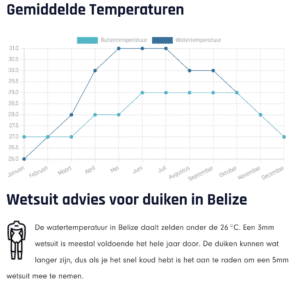 to make it as easy as possible, we have written out for each trip what the air and water temperatures are for each month and what type of wetsuit we recommend. You will always see this on the page at the reis, as shown here. And of course, we always recommend travel only during the best travel period.
Packing and hand luggage
Packing is sometimes an art in itself. To help you with this, we have written a blog with tips on, for example, what to pack and what type of suitcase is most suitable. Here you can read our tips for packing your suitcase.
In addition, it is good to think about hand luggage. Of course, it may happen that your luggage does not arrive at its destination or arrives later. Therefore, when packing, think carefully about what you want in your carry-on luggage.
- Diving mask (especially if you have a prescription mask!)
- Diving computer
- Medication + any certificate for medication
- Set of clothes + underwear
Also check the airline’s rules regarding batteries.
What don’t you take in your carry-on luggage? It may seem obvious, but you wouldn’t be the first to make this mistake. Should you bring a dive knife, put it in your checked baggage. You also put the spool and reel for your SMB in the hold. It’s a rope, of course, and how strict they are on this can vary from country to country.

Logbook and certifications
Nowadays, almost all certifications are online and diving schools can often look up in the system what certification you have as well. By the way, it doesn’t always work; a PADI dive school can’t find you if you’re SSI certified. Therefore, it is good to bring your physical brevet passes with you. Do you have a digital pass? Then take a screenshot on your phone so you can view it even without an Internet connection.
Also, a diving school often wants to know or even see when you made your last dive and approximately how many dives you made. Therefore, also bring your logbook or take a screenshot of your digital logbook.
Arranging refresh / checkdive
Has it been a while since your last dive? Then it is wise to do a refresh or checkdive. It often varies from one diving school to another what they call this dive, but the goal is to refresh the skills and make you confident again to enjoy diving.
You have two options for making this dive:
- Book a refresher at a dive center near you. The advantage of this is that you can then go diving immediately on vacation. Often you do a refresher in a pool.
- Arrange in advance with the diving school on vacation that you want to do a refresher. That way you can be sure it will be scheduled on the first day and taken care of before you start the other dives.
Purchase local sim card or e-sim
Staying online during your trip is convenient, you arrange all sorts of things on your phone and often have your travel documents digitally at hand. Outside of Europe, however, mobile Internet costs can add up quickly. A local SIM card or e-sim can then be a smart and economical solution. This article tells you how that works.
Want to arrange an e-sim? In fact, we always recommend Holafly: it’s affordable, works fast AND you don’t have to do much for it. Kind of easy. And with this link you also get a 5% discount!
Vaccinations
Check in time to see if you need vaccinations for your destination. It’s best to check with the GGD. We are happy to arrange your trip, but we are not doctors and are not allowed to give medical advice in this.
Visa and entry rules
For many countries outside Europe, you need a visa, which you sometimes have to arrange well in advance. In some cases, you can get a visa on arrival or apply for an e-visa online. Also make sure your passport is valid long enough (often at least 6 months after arrival). Use official sources such as the State Department website or IATA Travel Centre for up-to-date information.
Before departure, check among other things:
- Whether you need a visa, and how to apply for it
- The validity period of your passport (at least 6 months is a common requirement)
- Whether an online travel authorization or health certificate is required (such as a traveler declaration)
- Whether to upload or carry vaccination certificates (still required in some countries)
- What the rules are when transferring in a third country (sometimes a visa or declaration is required there too).
Local charges and tourism tax
Some destinations require you to pay an additional fee upon arrival or departure, such as a tourist tax, environmental tax or arrival/departure tax. These fees may be mandatory for all tourists and are sometimes collected only on site – cash or card. Especially when diving in a marine park, it is not uncommon to have to pay extra for this. On a liveaboard in Egypt, the cost per week can be €200, but it varies from place to place.
Make sure you:
- Are aware of any local taxes
- Have enough cash or an appropriate debit card with you (whether your debit card is set to world, the default setting varies by bank)
- Inquire with your tour operator if these costs are already included in your package. We always let you know exactly which costs are already included and which you still have to pay on the spot.
Insurance
When preparing for your diving vacation, proper travel insurance should not be missed. At EWDR, we work with Allianz Global Assistance for Dutch customers. With Allianz, you’ve come to the right place for insuring your vacation or trip. For more than 50 years, Allianz Global Assistance has been the world’s largest travel insurer and assistance provider.
Here is an overview of important insurance policies. Should you want more information, you can find it on this page.
Continuous travel insurance & cancellation insurance: This insurance is interesting if you go on (diving) vacation 2x or more per year. This covers you for both travel and cancellation. You can also purchase this insurance at any time. Good to keep in mind:
- Recreational diving is covered by default in travel insurance. Are you going cave and/or wreck diving? This falls under “Special sports” and so you will need to co-insure this to be covered.
- The Hyperbaric Chamber (Decompression Chamber) is covered under “medical expenses” in travel insurance. It is important that you co-insure these as a diver.
- Repatriation, such as an emergency at sea that requires a helicopter or the like to arrive on site to transport you falls under “S.O.S. expenses” which is also covered under medical expenses.
Cancellation insurance: We actually always recommend this one. This insurance must be taken out within 7 days of booking a trip and you are covered should your vacation unexpectedly be unable to go ahead due to illness, death or other exceptional circumstances.
Diving insurance with DAN: For most diving trips, general travel insurance, such as Allianz’s, is sufficient. But are you going to a remote destination or boarding a liveaboard? If so, a supplemental dive insurance policy from DAN may be wise. After all, you don’t want to pay for a helicopter flight or decompression chamber yourself. DAN provides better coverage in such situations. We can also arrange this insurance for you.
Are you ready to go yet or do you want to read some more? On our inspiration page you will find many more tips and also complete guides on diving destinations. Chances are your destination is among them!
