Diving in Aliwal Shoal: a complete guide
Aliwal Shoal is one of South Africa’s most famous diving destinations and is best known for the opportunity to dive with sharks! In this blog you will read all about the different types of sharks you can encounter, the diving conditions and everything you need to know about this top destination.
Table of contents
Diving in South Africa at Aliwal Shoal
Although many people go to South Africa for a safari in the famous Kruger Park or to climb Table Mountain, it is also a fantastic destination for divers. Aliwal Shoal is a the country’s most famous diving destination and that is mainly because of its impressive shark population.
Before you go here, though, it’s good to have some underwater experience, as conditions in and on the water can be challenging. Currents, wave action and occasionally rough seas make Aliwal Shoal a place where you have to be alert. Moreover, you are guaranteed to encounter sharks there: after all, the reef is known for its shark population with several species.
The reef of Aliwal Shoal is located about 5 km offshore and extends for about 5 kilometers, with depths ranging from 5 to 30 meters. Underwater there is an impressive diversity of coral, rock formations and both small and large marine life. You dive here in the Indian Ocean, which is usually beautifully blue and clear, but can sometimes be brisk. Currents are normal and can be moderate to strong, making the dive challenging, but at the same time attracting many sharks and other large marine life.
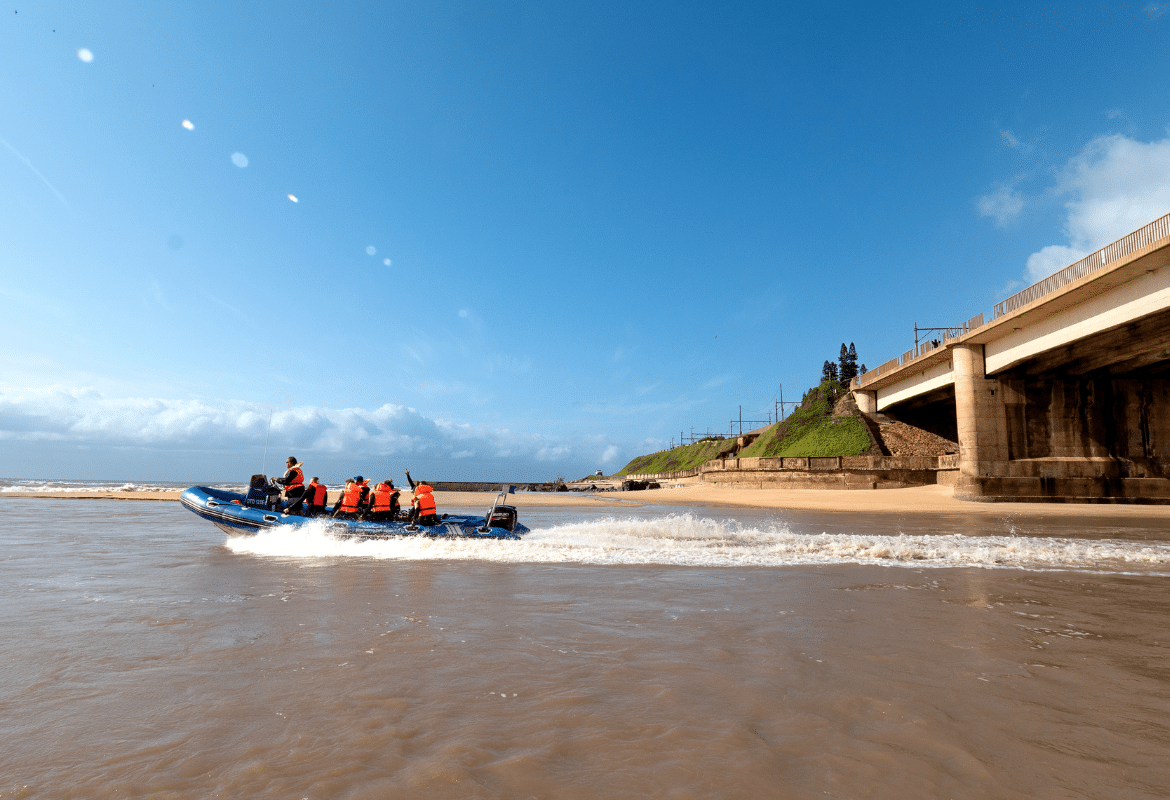
Even on the boat you will notice the power of the ocean: when leaving from the beach, the boat sometimes has to go through the surf, which gives a brief adrenaline rush, and while sailing to the reef, the boat may go through the waves. But thanks to experienced crew and fast RIBs, this goes safely and well organized.

Why are there so many sharks in Aliwal Shoal?
The reason Aliwal Shoal attracts so many sharks is a combination of geographical, ecological and oceanographic factors. We explain it to you in a brief overview:
- Rich feeding area: Aliwal Shoal lies along the coast of KwaZulu-Natal, where the warm Agulhas current passes by. This current constantly brings plankton, small fish and other prey, making it an excellent hunting ground for sharks.
- Reef structure: there are wrecks, pinnacles and rock formations that provide hiding places for fish and small predators. Sharks use these structures to hunt or rest, which attracts them to specific hot spots such as wrecks and pinnacles.
- Breeding grounds: some species (such as the raggie) use Aliwal Shoal as breeding and mating grounds during the winter months. This leads to massive gatherings of the sharks during these periods.
- Currents: currents make it easier for sharks to conserve energy as they swim through the reef.
- Protection: Aliwal Shoal is a well-managed dive site, where sharks are relatively undisturbed by human activities.
The sharks of Aliwal Shoal
At least 6 different species of sharks live in the waters of Aliwal Shoal, ranging from curious blacktips to imposing tiger sharks. Each season offers different encounters, making no dive here the same.
Sand tiger shark (raggie)
Season: may – october
This is probably the most famous shark at Aliwal Shoal. During the winter months, Aliwal Shoal turns into a breeding ground for sand tiger sharks, locally also called “Raggies.” They gather in large numbers, especially between June and September, and divers can admire them up close. Despite their menacing appearance, they are gentle and calm – one of the most iconic encounters you can have at Aliwal Shoal.

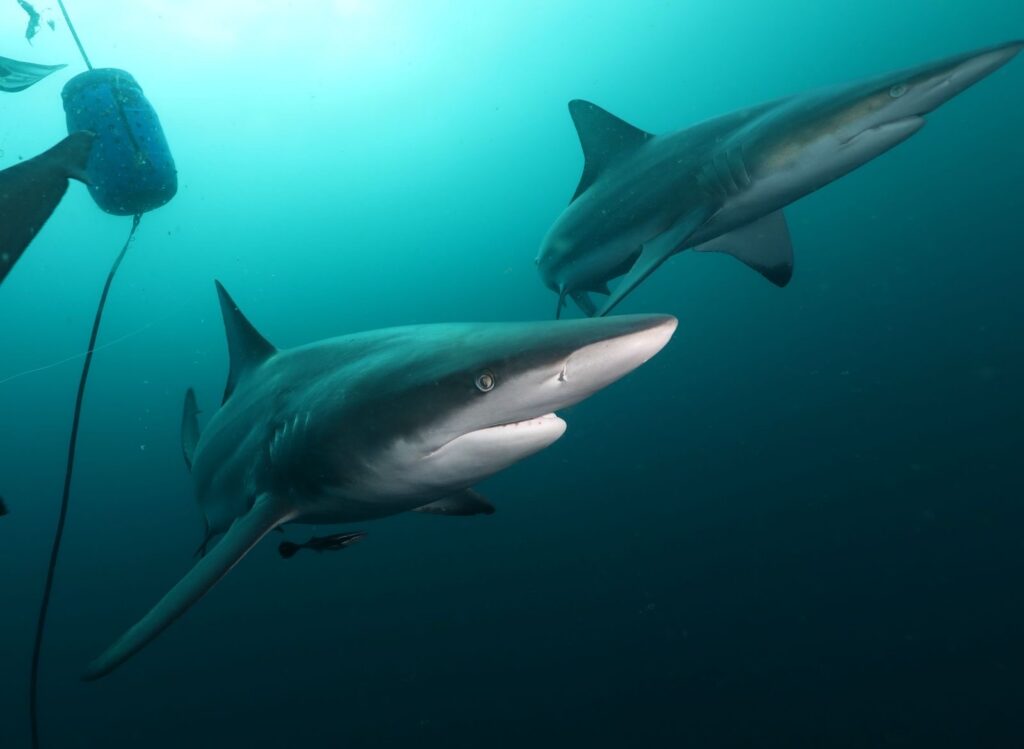
Oceanic blacktip
Season: all year round
This species is present throughout the year and often seen in large numbers. In the summer months (November – May) they are most numerous. During baited dives, they come curious and close to divers – an impressive and adrenaline-raising experience. Their slender, streamlined body and black fin tips make them easy to spot.
Tiger Shark
Season: February – April
The tiger shark is the area’s top predator. They are not often seen, but when they appear, it is an unforgettable experience. Most sightings occur during baited dives in February and March. Tiger sharks are known for their curious behavior – they can get very close, which makes for spectacular photos.

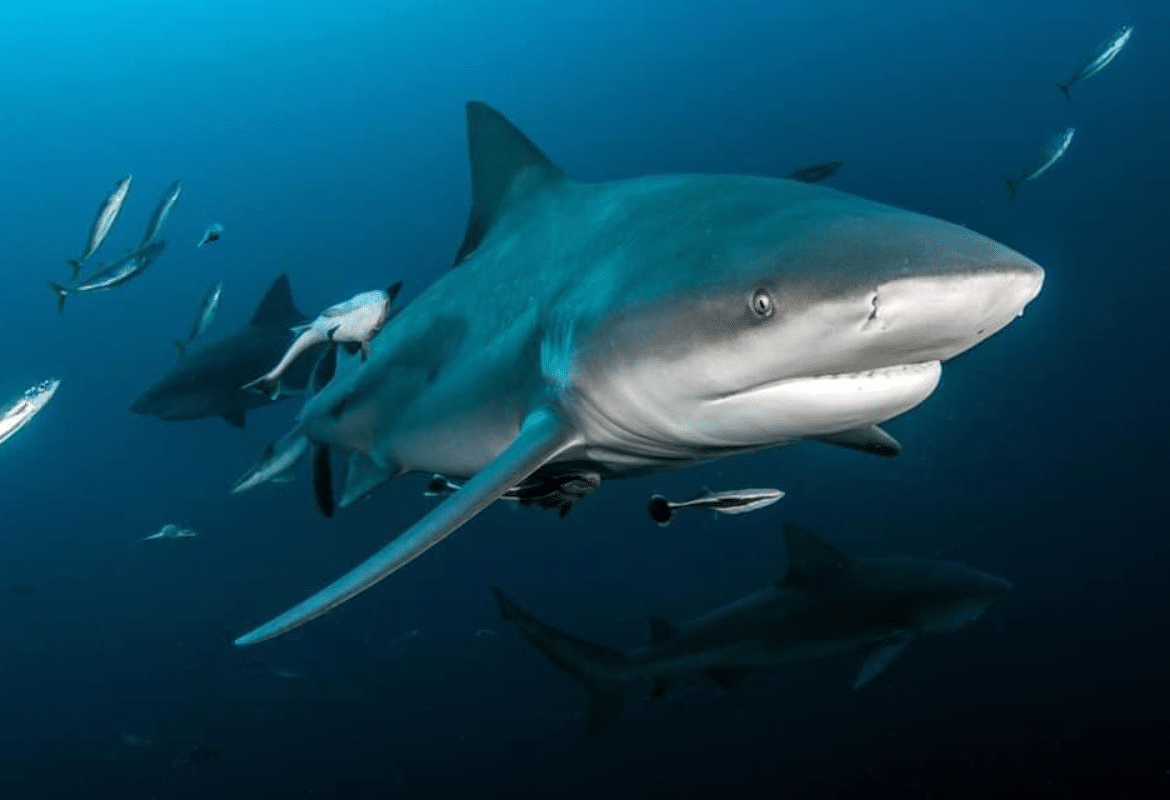
Bull shark (Zambezi shark).
Season: November – May
The bull shark is one of the most powerful sharks of Aliwal Shoal and the nearby Protea Banks. They are known for their muscular build and their ability to survive in both salt and fresh water. During the summer months, they can be lured with bait (baited dives), making for an intense but controlled encounter with this impressive predator.

Hammerhead
Season: year-round at Protea Banks, especially in summer
Although hammerhead sharks occur year-round, they are most often seen in the summer months, when large groups of scalloped hammerheads migrate together. They are shy and difficult to approach up close, but if you are lucky enough to see them, it is a magical sight – dozens of sharks gliding gracefully in formation through the blue water. Hammerhead sharks are sometimes seen individually at Aliwal Shoal, but to spot them in large groups head to Protea Banks, 80 km away.

White tip reef shark
Season: all year round
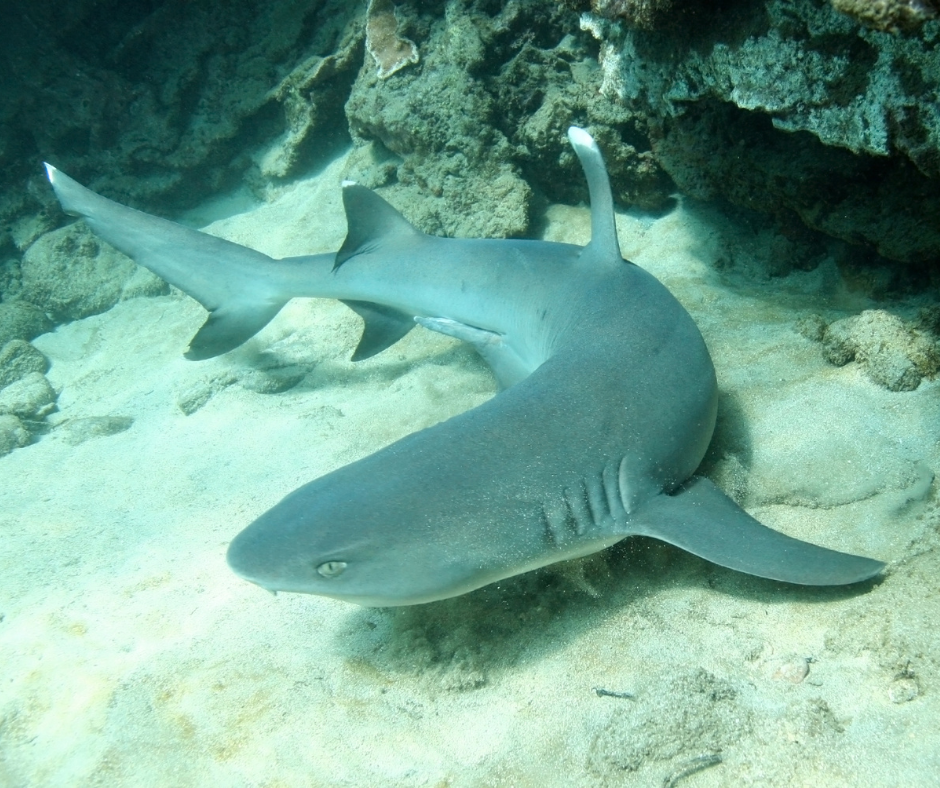
A regular group of whitetip reef sharks lives on Aliwal Shoal, often found around the pinnacle ridge – the shallower sections of the reef. These small, slender sharks often rest in caves or crevices during the day and are a steady and peaceful sight for divers.
Marine life in Aliwal Shoal
In addition to these six species, divers may also occasionally encounter basking sharks and dark gray sharks (Dusky sharks). These species are less commonly seen, but add additional diversity to the already rich shark life around Aliwal Shoal. Herewith also a review to all the other life that Aliwal Shoal is rich in:
In addition to sharks, Aliwal Shoal is also rich in other large and small marine life.
Sharks
- Tiger Sharks
- Raggies
- Bull Sharks
- White tip reef sharks
- Oceanic black tip sharks
- Hammerheads
- Giant guitar sharks
- Dusky sharks
Rays
- Eagle Rays
- Stingrays
- Devil’s rays (mobula)
- Mantas
- Honeycomb whip rays
- Round ribbontail rays
Reef fish & schools
- Anemonefish
- Snape
- Wrassen
- Parrotfish
- Scorpion fish
- Coral Devils
- Jewfish and anthias
- Barracudas
- Emperor Fish
Sea Turtles
- Green sea turtle
- Hawksbill turtle
Other
- Potato grouper
- Goliath grouper
- Walls and
- Nudibranchs
- Dolphins (mostly on the surface)
- Humpback whales (seasonal)
Wrecks
- MV Produce: and Norwegian bulk carrier that sank in 1974. This wreck lies at a depth of about 32 meters and is rich in marine life, including large brindle bass.
- SS Nebo: A wooden freighter that sank in 1884. The wreck lies at a depth of about 27 meters.
Are the sharks being fed at Aliwal Shoal?
In some places in the world, it is common practice to feed sharks during dives. You are then more likely to see sharks, but it is not always ethical. Make a decision for yourself whether you want to participate in this or not. In Aliwal Shoal, the sharks are not fed. Our partner in South Africa is Blue Ocean Diving, where we can guarantee that sharks are not fed. However, there are a number of baited dives. This is always communicated in advance.
What are baited dives?
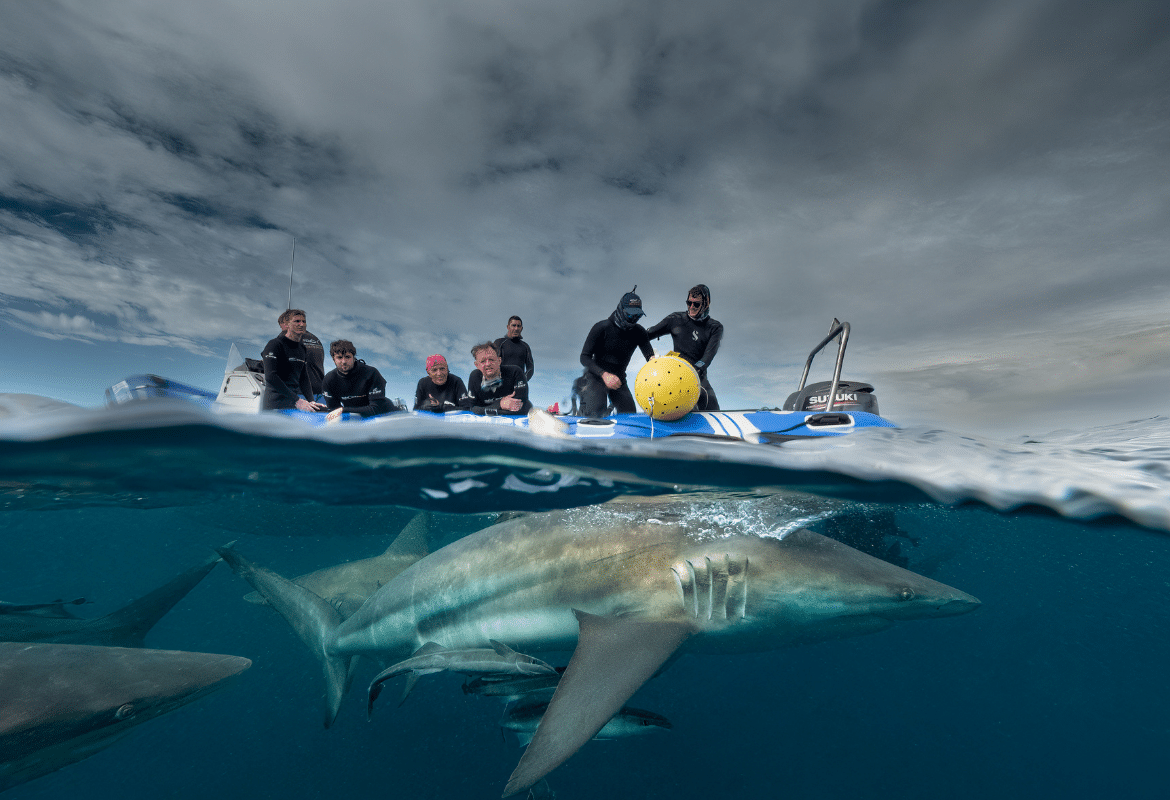
These are dives where a “drum” of bait is used to attract sharks, such as ocean blacktip sharks, tiger sharks and sand tiger sharks, to the divers. So they are not fed, but are attracted by the smell. It often contains fish scraps such as sardines, which the sharks love.
Best travel time for diving at Aliwal Shoal
Aliwal Shoal is a great year-round diving destination thanks to the constant presence of sharks. Oceanic black tip sharks, dolphins and turtles show up throughout the year. In addition, it depends on what you yourself want to see to determine what is the best travel time for you.
- Visibility: Underwater visibility usually varies between 10 and 30 meters. On clear days it is often excellent, especially in the early morning. After rain or during strong currents, it may be temporarily less.
- Water temperature: The water temperature at Aliwal Shoal varies with the seasons: in summer (November – April) it is between 24 and 27°C, while in winter (May – October) it is slightly cooler, around 20-23°C. So diving here is done in at least a 5mm wetsuit, possibly with a hood and extra shorty. In winter, a 7mm might be nicer.
- Currents: Currents are normal at Aliwal Shoal and can be moderate to strong, especially around wrecks and pinnacles. The current makes drift diving possible and attracts many sharks and other large marine life. For novice divers, currents can be challenging; an Advanced Open Water certification is recommended.
- Sea: The sea is usually calm, but can be rough in southerly winds or during winter. Leaving from the beach can also be exciting because of the surf, but experienced crews ensure a safe boat ride.
Sardine run
Season: may, june, july
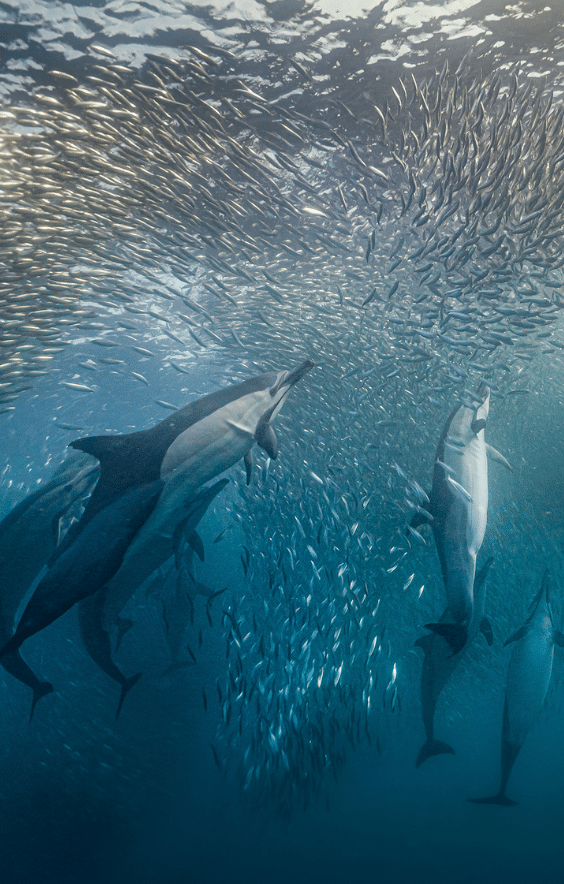
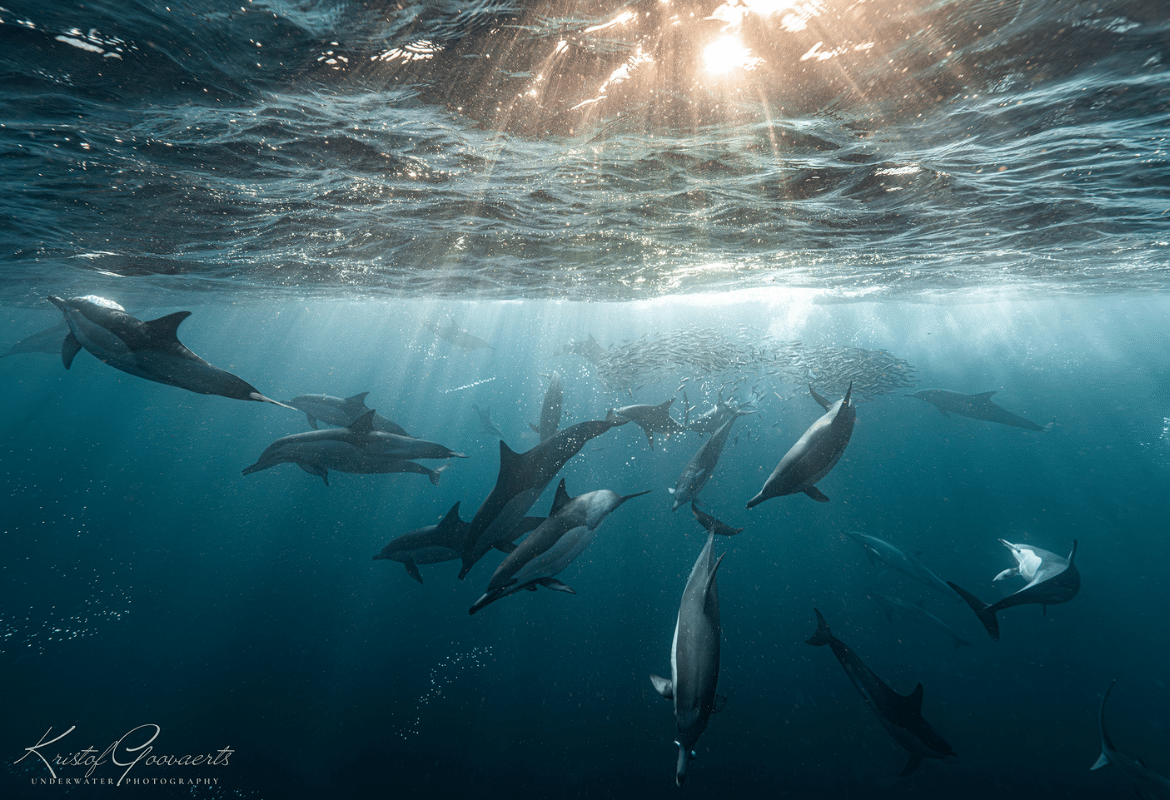
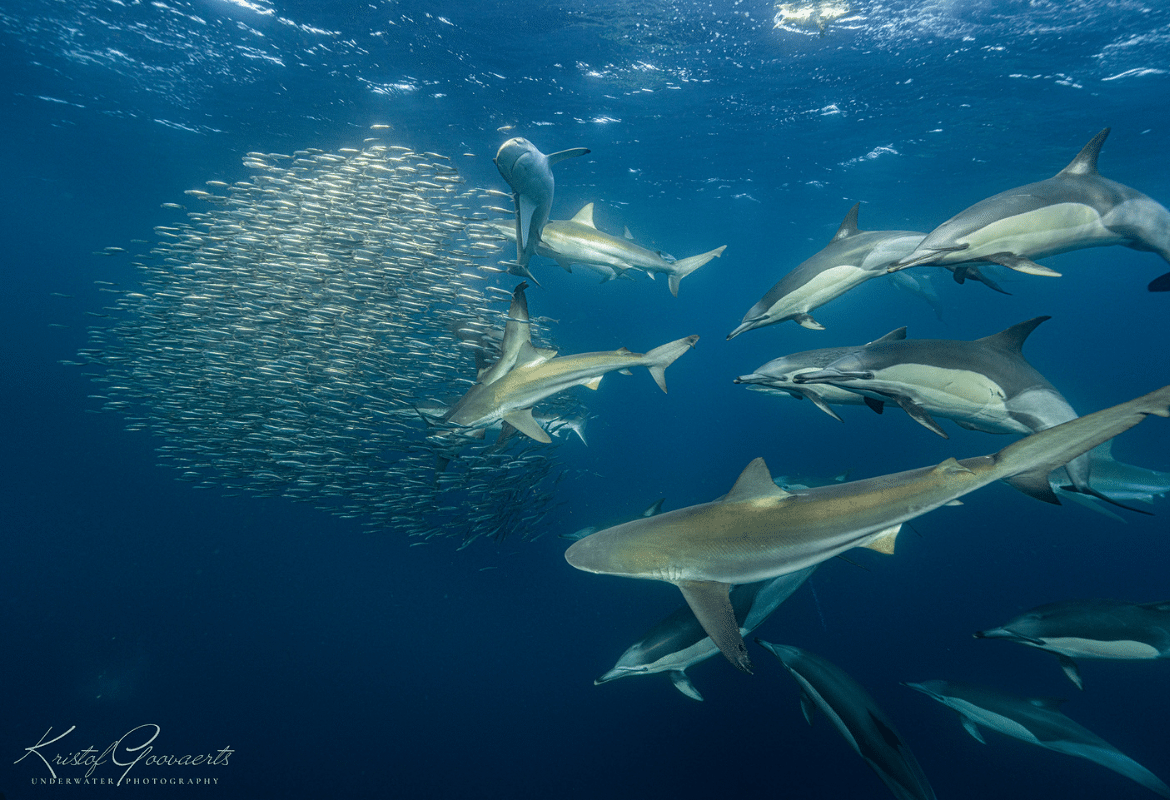
During the sardine run, billions of sardines swim along the shore, creating a spectacular phenomenon that attracts numerous predators, including dolphins, sharks, whales and seabirds. For divers, this is one of the most impressive underwater experiences, as it brings together a huge concentration of life and action in one area.

Humpback migration
Season: June – November
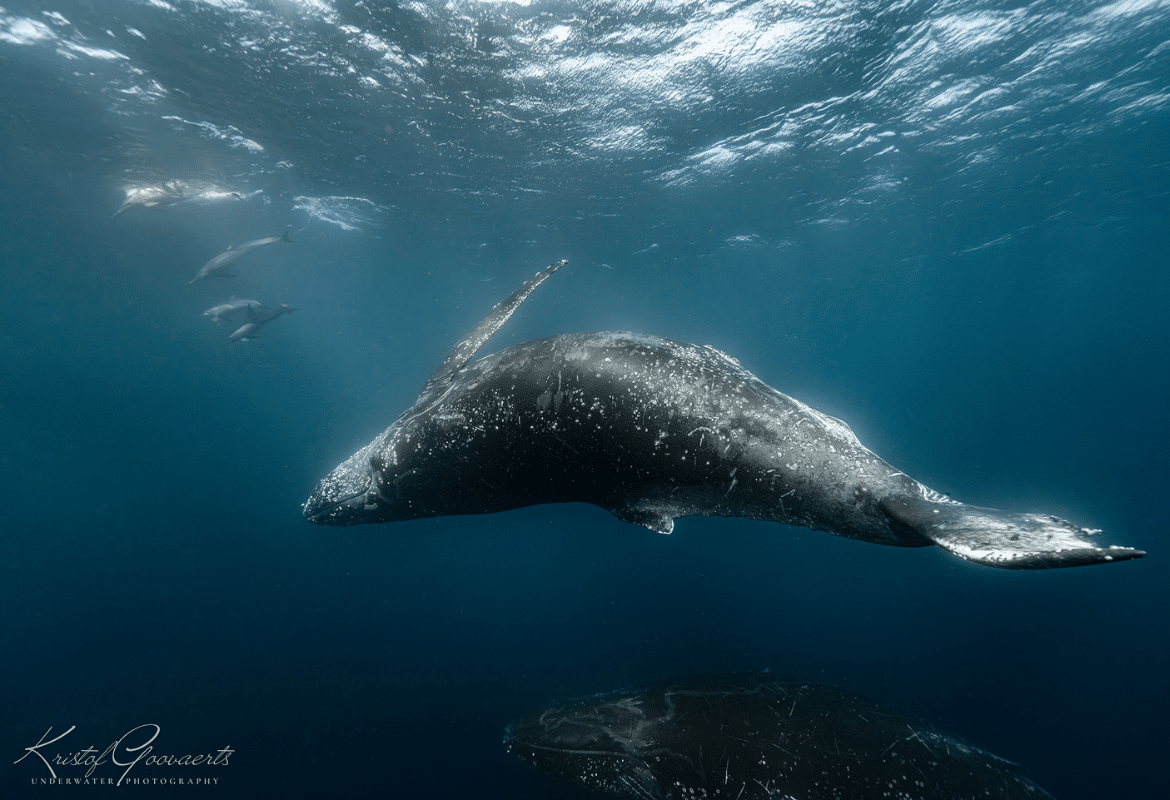
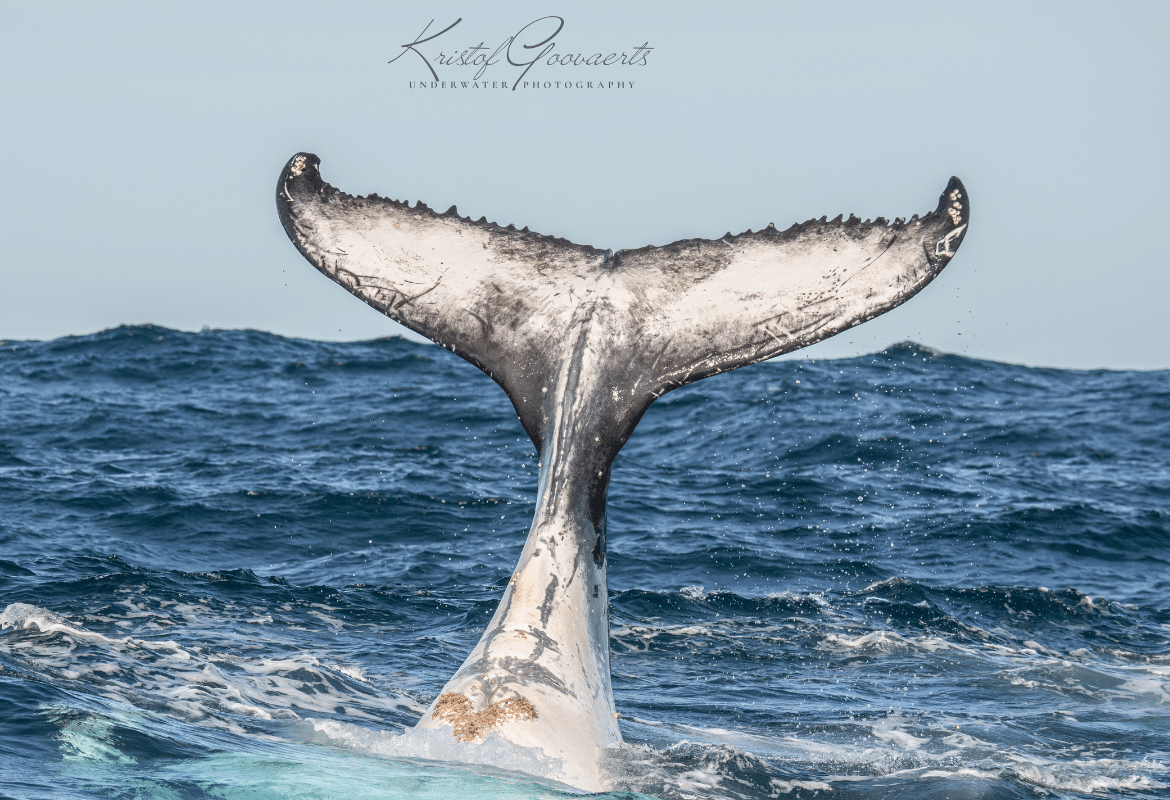
From June to November, humpback whales migrate along the KwaZulu-Natal coast and can sometimes be spotted on boat or diving excursions. Especially during the winter months (June-September), the chances are greatest to see these majestic mammals in their natural habitat.

Hammerheads
Season: October to March
The best time to see hammerhead sharks at nearby Protea Banks is from October to March. During these months, scalloped hammerheads gather in large schools, providing a spectacular experience for divers. Outside this period, they are less numerous and more difficult to spot. You can easily combine Aliwal Shoal and Protea Banks. Protea Banks is an hour’s drive from the dive resort at Aliwal Shoal and is fine for a day trip.

What diving equipment do you need in Aliwal Shoal?
Diving in Aliwal Shoal does not require extremely specialized equipment, but it is important to know what to bring. The water is also a bit colder than you might be used to and keep in mind that it can also be a bit chilly (and windy!) on the boat. Here is a list of the most common equipment for diving on in Aliwal Shoal.
Basic equipment
- Wetsuit: At a minimum, dive with a 5mm wetsuit. You may even consider wearing a shorty or body to have extra warmth on body. A 7mm or semi-drysuit can also be fine, especially in the winter months or if you get cold easily. If you are a dry suit diver, you may prefer this during the winter months.
- Mask & snorkel: A well-fitting proprietary mask is recommended for optimal visibility and comfort. The snorkel is especially useful on the surface. It is not a location where you will be snorkeling as well.
- Fins: Choose good, solid fins where you have thrust in the current. As mentioned earlier, there can be quite a bit of current and although you will usually go with the current, it is good to take this into account. Choose open heel fins with boots and opt for stiff blades.
- Boots: Boots are often 3mm or 5mm and ensure that your feet stay warm during the dive as well.
- Dive computer: Highly recommended for safe diving and to keep a good record of your dive profile, especially if you make several dives a day.
- BCD & regulator: You can often rent fine at local dive centers, but own equipment always gives comfort.
- Hood: A hood often gives you more comfort in the water because you also keep your head warm. Preferably choose a loose hood because it is more comfortable than one that is attached to your wetsuit.
Additional accessories
- Diving gloves: Can possibly be considered if you get cold easily.
- Underwater camera: Capturing your dive should of course only be done if you are comfortable in the water and have good control of your buoyancy. Due to the large presence of sharks, it is advisable to bring a camera with you though!
- SMB: Because of the boat dives, it is recommended to bring a surface marker buoy.
- Dry bag: Since you will be doing exclusively boat dives, it is useful to bring a dry bag for valuables that should not get wet.
- Hat: It can be cold and windy on the boat between dives and after the dive on navigation back. Therefore, it is good to bring a hat and protect your ears from the cold with this.
- Windbreaker: A windbreaker or large towel (with armholes) can also be nice to keep you warm after diving.
Diving in Aliwal Shoal with EWDR
Are you ready to dive with the sharks of Aliwal Shoal? We can totally understand that! We have a number of different trips to South Africa on our website:
- Diving in Aliwal Shoal and in the south of Mozambique
- Unlimited shark diving from Blue Ocean Dive Resort
- A spectacular adventure during the sardine run.
All trips can also be perfectly combined with a safari. You can fly to the Kruger Park, but also closer you can find beautiful parks where you can spot the Big Five. For example, we like to go to the village of St Lucia, where you can see hippos crossing the street at night. It is also a perfect base to visit multiple parks and spot lots of wildlife.
Curious about the possibilities? We are happy to create a customized trip!

Sardine Run – Dive into the chaos of South Africa!
The Sardine Run is a unique spectacle, where you are surrounded by millions of sardines off the coast of Port...