Diving in the Maldives
Many people think of the Maldives as a white beach, huts on the water and azure seas. But the best is underwater. Around the more than 1,000 islands are countless coral reefs bursting with life.What you will encounter on these reefs? Whale sharks, manta rays, nurse sharks, tiger sharks and not least…. vastly different species of tropical fish. Welcome to the Maldives, diving country par excellence!
Table of contents
General information about the Maldives
The Maldives is an archipelago in the Indian Ocean consisting of more than 1,000 coral islands, most of which are uninhabited. The country is known for its white sands, turquoise lagoons and vast coral reefs. The tropical climate provides year-round high temperatures, with a wet season (May – October) and a drier season (November – April).
The Maldives is a popular destination for diving and snorkeling, thanks to its rich underwater world with manta rays, reef fish, turtles and sometimes even whale sharks. The islands offer a mix of luxury resorts and small-scale accommodations, often accessible by boat or seaplane.
The local culture is influenced by Islamic traditions, and the capital Malé is the political and commercial heart of the Maldives, with markets, mosques and local eateries.
Why dive in the Maldives?
That the Maldives is a true diver’s paradise should be obvious. In total, the Maldives consists of as many as 26 atolls. These are ring-shaped islands formed from coral. Roughly speaking, diving in the Maldives is mostly concentrated around Male Atoll and Ari Atoll. Here are the most beautiful dives to make and here you also have the best chance to dive with whale sharks and manta rays.
In the South Malé Atoll, on the outside of the eastern reef is the “Shark Point,” where divers regularly encounter gray reef sharks and whitetip reef sharks.
One of the most beautiful dives of the Ari Atoll in the Maldives is Manta Point. Manta Point is a platform rising from the channel leading to the Ari Atoll. It is a kind of highland stretching on each side of the canal, from east to west. The current ensures that the manta rays here need do no more than simply open their mouths and let the food flow in.
Those who want to dive in the Maldives really only have to make one choice: do I want to dive with a liveaboard or do I want to stay at a dive resort in the Maldives?
Where to dive in the Maldives?
The Maldives consists of more than a thousand islands spread across several atolls, and each atoll has its own charm and diving experience. So where you dive largely determines what you can see underwater. The Maldives is roughly divided into northern, central and southern atolls, with most tourism and resorts found in the central and southern atolls. The northern atolls are quieter and pristine, making for a more intimate diving experience and often undisturbed reefs.
We highlight some of the atolls below. Are you curious about the most beautiful dive sites and dive spots of the Maldives? Then read this blog as well.
The different atolls of the Maldives
South Malé Atoll
The dive sites around the South Male Atoll are suitable for all levels – even the Kuda Giri Wreck is recommended even for beginners. For advanced divers, however, this atoll is particularly interesting for its drift dives, which provide a good dose of underwater action. Six channels bring nutrient-rich water into the atoll, allowing large pelagic animals such as eagle rays and tuna to visit regularly.
Popular dive sites include:
- Guraidhoo Kandu
- Losfushi Corner
- Cocoa Thila
- Kandooma Thila
- Caves of Kandooma
The overhangs and canyons offer shelter from the current and a chance to quietly watch schools of trevally, wrasse and red snapper. For shark lovers – especially reef sharks – Embudhoo Kandu is a must-see in the Central Atolls.
Best time to dive: peak season is from December to May, during the northeast monsoon with calm, dry seas. In November, at the transition between wet and dry, the currents are stronger but the pelagic encounters spectacular.
North Malé Atoll
With more than 50 dive sites, impressive biodiversity and easy access from Malé, the North Male Atoll is one of the most popular destinations for divers and tourists in the Maldives.
There is something for everyone here. For beginners, Nasimo Thila, Banana Reef and Okebe Thila are perfect shallow dives, while Kuda Haa delights photographers with its “fish soup” of fusiliers, angler fish, moray eels and nudibranchs. The dramatic reef wall of Lion’s Head and the shipwreck of the MV Maldives Victory offer deep adventures for the more experienced diver.
In addition to passing sea turtles, hammerhead sharks and whale sharks, manta rays regularly congregate on the healthy reefs. At Manta Point, you can watch these majestic animals brush, feed and swim by in a line one after the other – a real underwater ballet!
Best time to dive: The wet season from May to October is ideal for exploring the North Male Atoll. During the southwest monsoon, you have the greatest chance of impressive sightings of manta rays.
South Malé Atoll
The dive sites around the South Male Atoll are suitable for all levels – even the Kuda Giri Wreck is recommended even for beginners. For advanced divers, however, this atoll is particularly interesting for its drift dives, which provide a good dose of underwater action. Six channels bring nutrient-rich water into the atoll, allowing large pelagic animals such as eagle rays and tuna to visit regularly.
Popular dive sites include:
- Guraidhoo Kandu
- Losfushi Corner
- Cocoa Thila
- Kandooma Thila
- Caves of Kandooma
The overhangs and canyons offer shelter from the current and a chance to quietly watch schools of trevally, wrasse and red snapper. For shark lovers – especially reef sharks – Embudhoo Kandu is a must-see in the Central Atolls.
Best time to dive: peak season is from December to May, during the northeast monsoon with calm, dry seas. In November, at the transition between wet and dry, the currents are stronger but the pelagic encounters spectacular.
North Ari Atoll
North Ari Atoll tends to have calmer reefs and slightly milder currents than the south, making it suitable for both novice and experienced divers. You will find colorful coral reefs and plenty of macro life, but there is also a good chance of encountering manta rays and whale sharks here.
Popular dive sites in North Ari include thilas and channels where schools of fish and reef sharks gather. The area offers a nice variety of drift dives, pinnacles and colorful reefs, ideal for those who enjoy varied marine life.
Best time to dive: as in the south, from February to April for calm weather and optimal visibility, but manta rays and whale sharks can be seen year-round.
South Ari Atoll
South Ari Atoll is one of the Maldives’ most popular diving destinations, especially among liveaboards. The many pointed rocks and channels are unprotected from ocean currents, making the area ideal for drift diving and spotting megafauna, such as manta rays and whale sharks.
Some of the best dive sites are:
- Kudarah Thila
- Maaya Thila
- Broken Rock
- Five Rocks
- Omadhoo South
- Fish Head (Mushimasmingili Thila / Shark Point): a towering point rock decorated with black corals, with a depth of 10-35 meters, home to reef sharks and large schools of snappers.
- Wrecks Fesdu and Halaveli
Best time to dive: February to April, with calm seas and plenty of sunshine. This is also the best period for spotting manta rays and whale sharks.
Baa Atoll
Baa Atoll is a northern atoll and is one of the Maldives’ most popular diving destinations, with a beautiful mix of coral reefs, thilas, caves and passageways. Its vast biodiversity has even earned the atoll UNESCO Biosphere Reserve status. It is suitable for both beginners and experienced divers.
The reefs at Dhonfanu Thila, Dhigali Haa and Dharavandhoo Thila are full of colorful fish and unusual marine life, while Anga Faru is known as a nursery for gray reef sharks. A notable top dive site is the so-called Christmas Tree, a multilayered point rock where white tip reef sharks circle.
Don’t miss Kakanaki Thila either: an explosion of colors and life, where you will regularly encounter manta rays.
The absolute star of Baa Atoll is Hanifaru Bay. This shallow, protected lagoon is accessible only to snorkelers. The plankton-rich waters often attract whale sharks and are home to huge schools of manta rays – sometimes up to 100 at a time!
Best dive period: For dry weather conditions, December to March is ideal, but those who want to see the manta rays should go between May and November.

Raa Atoll
Raa Atoll is also located in the north of the Maldives, slightly above the Baa Atoll. It is a relatively remote and quiet atoll, with many pristine reefs and an abundance of marine life, making it ideal for divers looking for a combination of tranquility and impressive underwater experiences.
Although there are some kandus (flow channels) to get carried away in, most dives take place around the huge concentration of thilas (pinnacles), with visibility often up to 20 meters.
Two of the most impressive dive sites are Fenfushi Giri and Reethi Thila. Once you enter the water, it’s like swimming in a giant aquarium surrounded by colorful reef fish. Occasionally larger pelagic species like manta rays or even a whale shark surface. The ocean floor is also special: carpets of soft corals and rarer hard corals add color and life.
Best diving period: Year-round Raa Atoll is suitable for diving. For the calmest seas, January to May is ideal, during the northeast monsoon. From May to November, the southwest monsoon brings some rougher seas, but this is precisely the best season for manta rays and whale sharks.
Rasdhoo Atoll
The Rasdhoo Atoll is small in size, but big on diving experiences. Despite its compact size, you can encounter endless marine life here, from manta rays to all manner of macro creatures. But what the atoll is really famous for is the hammerhead shark.
At the aptly named Hammerhead Point, hammerhead sharks gather every morning, so divers almost always see this impressive and endangered species. There are also other beautiful dive sites, such as Madivaru Corner, Three Palms, Miyaru Faru and the breathtaking drop-offs and thilas at Rasdhoo Reef.
Best time to dive: from November to April is the best period. This is also the season for manta rays, and one of the most reliable times to dive with these enchanting creatures.
Vaavu Atoll
The Vaavu Atoll is known for its spectacular and challenging drift dives. Strong currents run through the small channels of this impressive 50-kilometer-long reef, causing divers to regularly encounter sharks, rays and large napoleon fish. Miyaru Kandu (“Shark Channel”) and Fotteyo Kandu, one of the best dives in the Maldives, are real highlights for those seeking adventure.
Most dives offer brief respites in caves and overhangs, ideal for photographers to capture soft corals, colorful fish and ocean giants swimming by. Golden Wall in particular is a place where beautiful underwater photos can be taken.
For something truly special, do not miss Alimathaa: here you can swim among hundreds of nurse sharks on a night dive while the sun sets behind the white sand and azure waters. Devana Kandu is also a paradise for underwater photographers thanks to its rich marine life and colorful corals.
Best time to dive: Vaavu Atoll can be explored year-round. From December to March, the northeast monsoon brings calm, dry seas. During the southwest monsoon from May to November, conditions are more variable, but diving still remains beautiful.
Fuvahmulah
At the very south of the Maldives lies Fuvahmulah, an isolated gem unlike any of the other atolls. Unlike most atolls, Fuvahmulah consists of one large island rather than a ring of small islands, and that makes diving here unique.
Fuvahmulah is known worldwide as one of the best places to see large sharks. From tiger sharks to bull sharks and thresher sharks – this is a dream for experienced divers looking for some serious big game action underwater. The chances of seeing tiger sharks here are almost guaranteed year-round.
In addition to sharks, Fuvahmulah offers clear water, deep drop-offs and rich reefs with manta rays, tuna and schools of barracuda. Because of its location in the open ocean, conditions can be tough at times, but the reward is spectacular: diving among some of the largest predatory fish in the world.
Best time to dive: You can dive with tiger sharks here year-round, but the best visibility conditions are between January and April, during the dry northeast monsoon.
Best travel time for diving in the Maldives
The Maldives does not have seasons such as summer and winter, but has a wet and dry season. The ideal time to dive in the Maldives is during the dry season from November to April, when the sea is calm and visibility is optimal. The wet season from May to October can bring some rain and wind, sometimes lowering visibility, but it can actually attract larger fish such as sharks and manta rays.
Visibility
During the dry season, visibility is usually between 20 and 40 meters, making coral reefs and colorful marine life easy to admire. In the wet season, visibility may decrease somewhat to 10-25 meters.
Water temperature
The water temperature is between 27°C and 30°C year-round, comfortable with a 3mm wetsuit.
Current
Currents are generally mild during the dry season, ideal for both novice and experienced divers. During the wet season, the currents can be stronger, allowing for more challenging dives and sometimes attracting large pelagic fish. There are also specific dive sites where there is always a lot of current, but this attracts fantastic big life.
More about the best time to dive in the Maldives
Want to go to the Maldives specifically to dive with whale sharks or want to know which place we recommend in the Maldives by month? We wrote a separate article about this.
Marine life in the Maldives: what to expect during your dive?
There is an awful lot to see while diving in the Maldives, and what you encounter really depends on when and where you dive. In the channels there is often a lot of current, which can attract large pelagic animals. Near the reefs, you’ll find an abundance of colorful fish that live there together. And do you go to Fuvahmulah? Then you can count on seeing a lot of sharks. Below is an overview of common marine life in the Maldives.
Sharks
- Whale Sharks
- Gray reef sharks
- Nurse Sharks
- White-tip and black-tip reef sharks
- Silver tip reef shark
- Hammerhead shark (rare)
- Tiger sharks (Fuvahmulah)
- Bull Sharks (Fuvahmulah)
- Fox Sharks (Fuvahmulah)
Rays
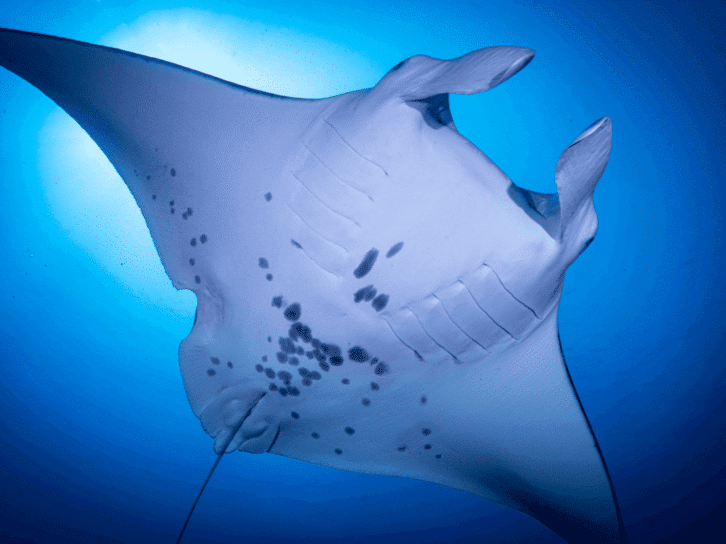
- Mantas
- Eagle Rays
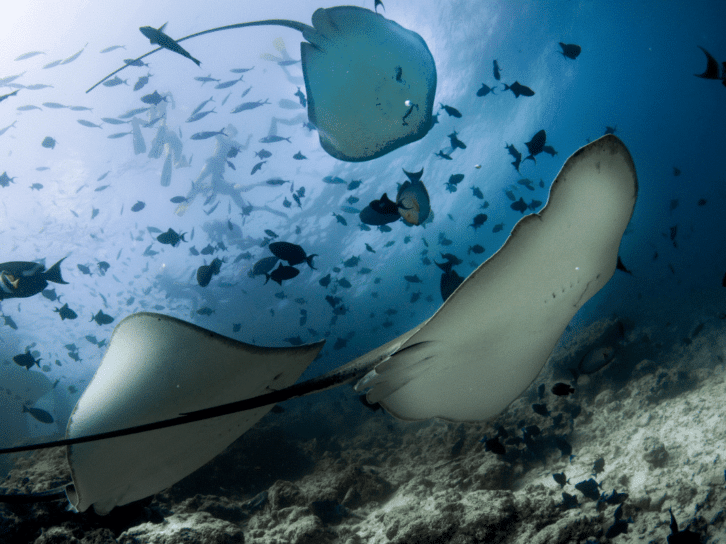
- Stingrays
- Mobulas (Hanifaru Bay)
Sea Turtles
The Maldives is home to 5 of the 7 extant species of sea turtles, with the green sea turtle and hawksbill turtle being the most common.
- Green sea turtle
- Hawksbill turtle (hawksbill turtle)
- Spurious hawksbill turtle
- Olive Ridly sea turtle
- Leatherback Turtle
Coral & reef dwellers
- Hard and soft coral
- Lionfish (native)
- Doctor Fish
- Parrotfish
- Trumpfish
- Scorpion fish
- Trumpfish
Macro and critters
- Seahorses
- Lobsters and shrimp
- Nudibranch
- Tubeworms
Other
- Dolphins
- Tuna
- Barracuda
- Octopus
- Sepia
- Squids
- Walls and
- Sea Snakes
Where in the Maldives do you see manta rays?
- Ari Atoll
- Addu Atoll
- North Malé Atoll
- Haa Daalu Atoll
- Haa Alufu Atoll
- Hanfiaru Bay
- Baa Atoll
Where in the Maldives do you see whale sharks?
- Ari Atoll
- Gaafu Atoll
- Thaa Atoll
Where in the Maldives do you see reef sharks?
- Gaafu Atoll
- Vaavu Atoll
- Lhaviyani Atoll
- Meemu Atoll
- Laamu Atoll
- North and South Malé Atoll
Where in the Maldives do you see hammerhead sharks?
- Rashu Atoll
- Fotteyo Kandu
- Fuvahmulah
Where in the Maldives do you see tiger sharks?
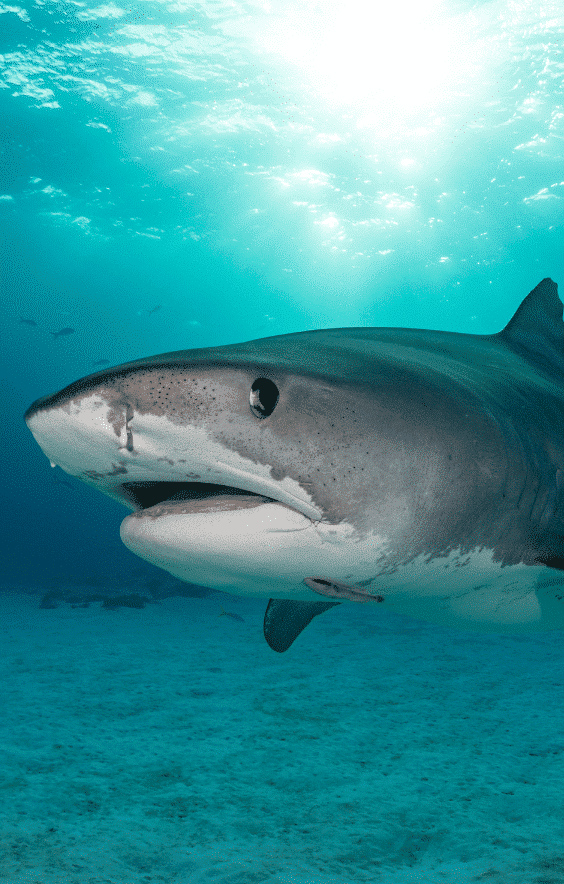
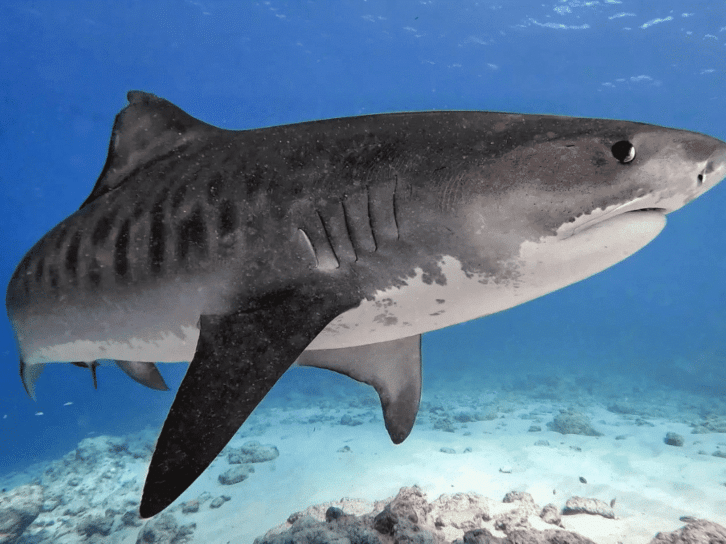
Tiger sharks are found almost exclusively at Fuvahmulah. What is special about this island is that the tiger sharks occur almost year-round.
You see a lot of sharks here anyway, which is why the island is named shark island.
Where to stay in the Maldives?
Where you want to stay in the Maldives depends on a number of factors. First, ask yourself the following questions:
- Want to stay on a resort or liveaboard?
- During which period do you want to go to the Maldives?
- Do you have specific desires what you want to see, such as whale sharks, manta rays or tiger sharks?
- What is your budget?
Based on this, you can already determine what is a good option for you. With a liveaboard, for example, it is easier to visit several atolls and thus dive in different places. If you have more time, you can also combine several islands. Just keep in mind that the islands are far apart and you will have to travel by speedboat or small plane.
Liveaboard Maldives
A liveaboard is the ultimate way to discover the Maldives: you sail from atoll to atoll – each day a different dive site, a different reef, a different experience. This way you also get to places that are inaccessible from land.
A liveaboard is all about diving. You wake up overlooking turquoise water, have a coffee on deck and then jump straight into the water for your first dive of the day. Often you will make 3 to 5 dives a day, including a night dive. In between, you can relax on the sun deck, do some reading or just enjoy the quietness of the sea.
The atmosphere on board is relaxed and social – you travel with a small group of divers, often from all over the world and share the same passion for the underwater world. Food is freshly prepared, the crew helps with your dive gear and everything is arranged to perfection.
Routes in the Maldives
There are several liveaboard routes, each with its own highlights:
- Central Atolls (Ari, Rasdhoo, Male)
The most popular itinerary, ideal for those diving in the Maldives for the first time. You’ll dive at world-famous reefs like Maaya Thila and Fish Head, and have a good chance of seeing whale sharks and manta rays. - Southern Atolls (Vaavu, Meemu, Thaa, Laamu, Fuvahmulah)
For experienced divers who like adventure. Here you will find challenging drift dives, channels full of sharks and large pelagic species. Fuvahmulah is the highlight – known for tiger sharks, thresher sharks and sometimes even large hammerhead sharks. - Northern Atolls (Baa, Raa, Lhaviyani)
Quieter and less touristy. Perfect for divers who want to avoid the crowds. In Baa Atoll, between May and November, you can snorkel with manta rays in Hanifaru Bay – one of the Maldives’ most spectacular natural phenomena.
Some boats offer combination itineraries, such as Central + South or North + Central, where you see multiple faces of the Maldives in one trip.
Why choose a liveaboard?
A liveaboard is more than just a diving vacation. It’s waking up at sea, diving in places hardly anyone goes, and being completely immersed in the rhythm of the water. No day trips, no time pressure, no transfer stress – just you, the ocean and the endless reefs of the Maldives.
Dive Resort Maldives
The Maldives consists of more than a thousand islands scattered among dozens of atolls. Most of these are uninhabited, but a large portion are set up as resorts. Most resorts have their own island – often small, with white beaches, clear blue waters and a relaxed pace that is just right for island life.
You don’t necessarily have to go for an exclusive, pricey villa with a private pool. There are also plenty of resorts that cater to divers: more simply furnished, but with a good dive center, short distances to dive sites and a nice atmosphere. Other islands, on the other hand, are larger and livelier, with multiple restaurants and more facilities – ideal if you’re traveling with non-divers or just looking for some variety.
Whatever you choose, almost every resort in the Maldives is close to beautiful reefs. Some even have house reefs accessible directly from the beach – perfect for an afternoon dive or night dive without a boat. And for those who want to get the most out of their diving vacation, combinations are possible: a few days diving from a resort, followed by a liveaboard to explore the remote atolls.
Also want to experience the Maldives?
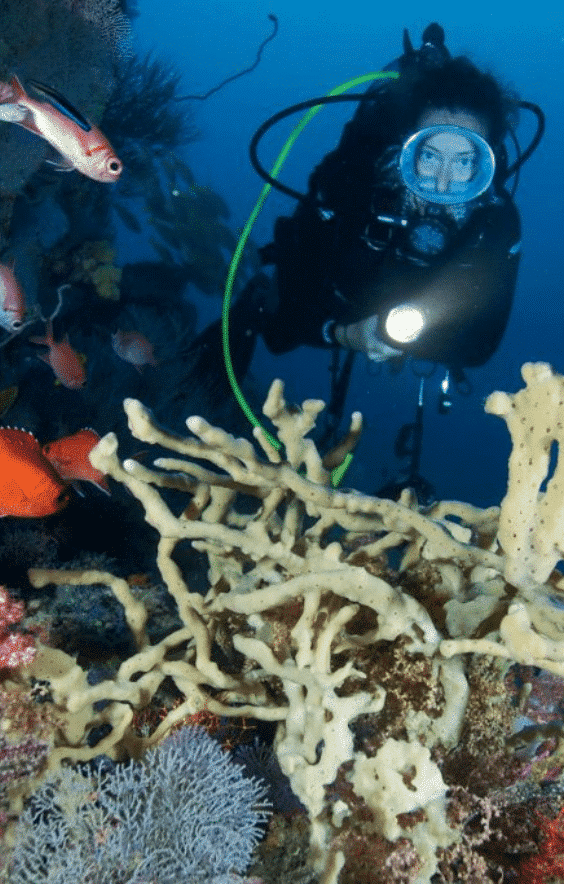
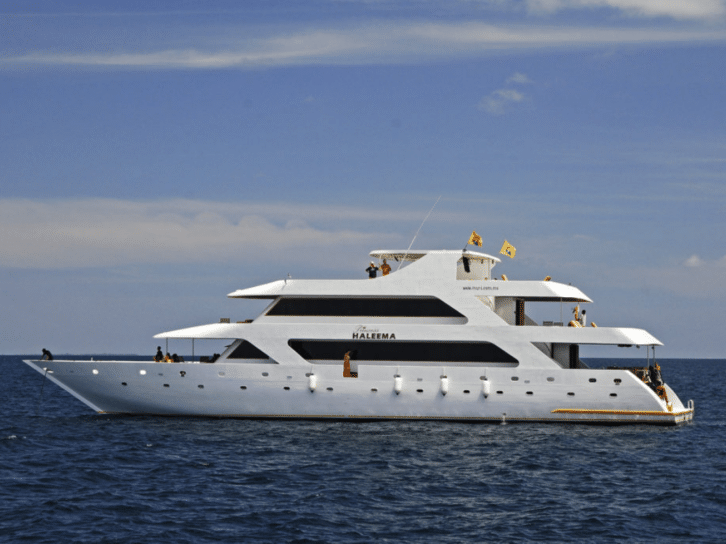


Liveaboard Princess Haleema – Classic Maldives
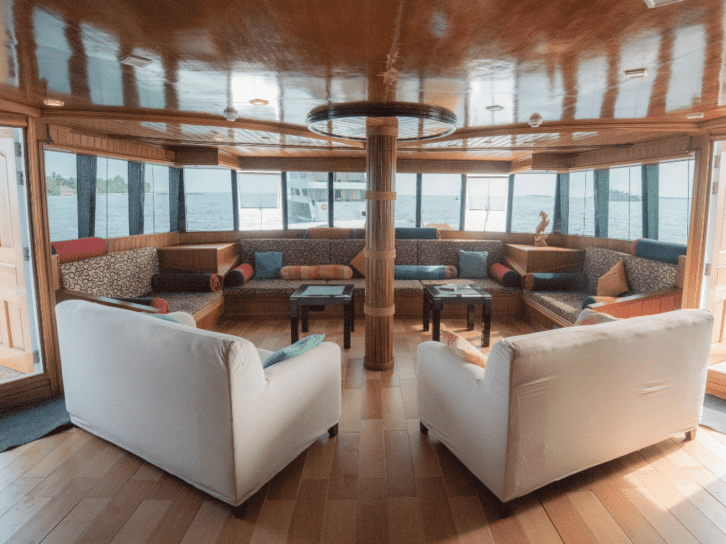
Make the popular ‘Central Maldives’ route in the Maldives and dive with whale sharks, nurse sharks, manta rays and turtles.
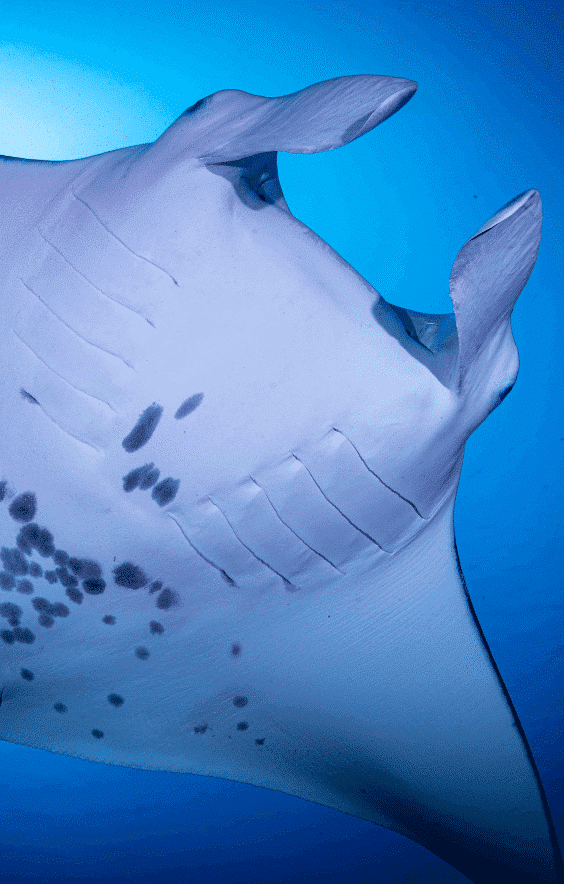
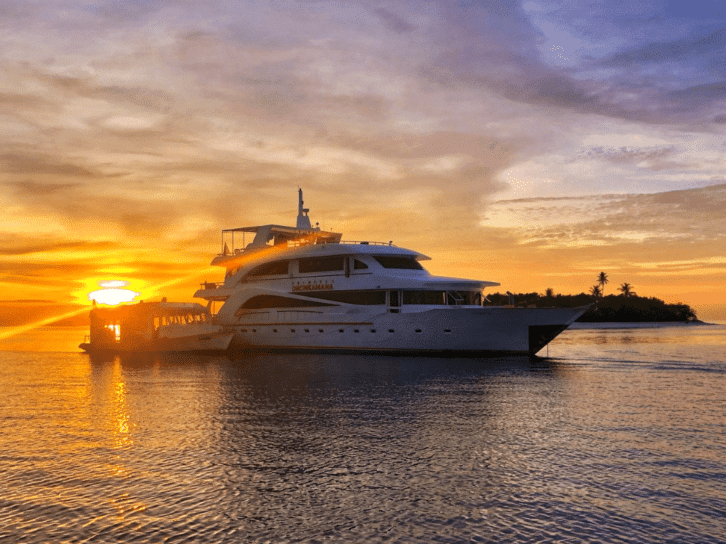
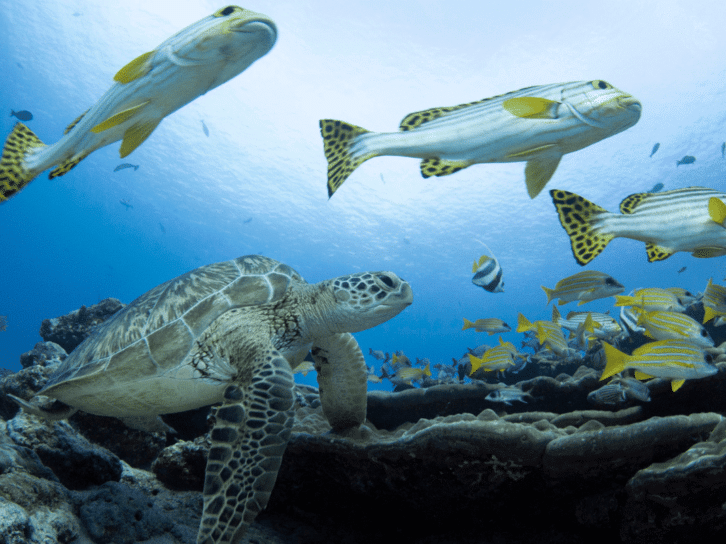
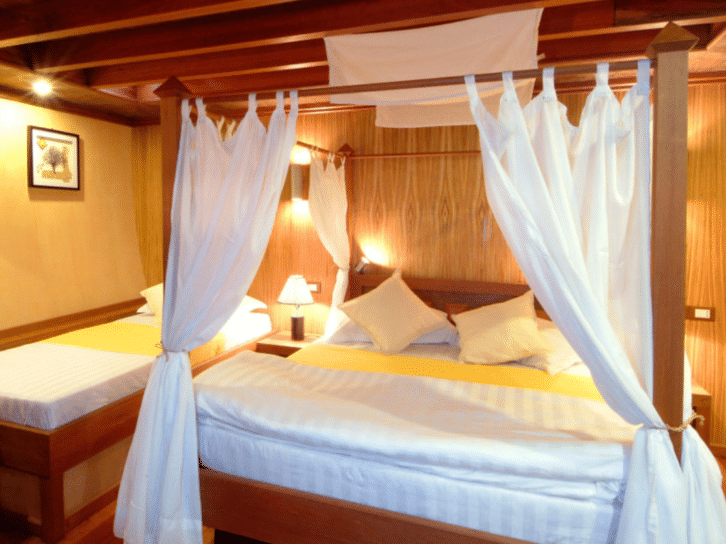
Dhonkamana’s Palace – Inexpensive liveaboard in the Maldives
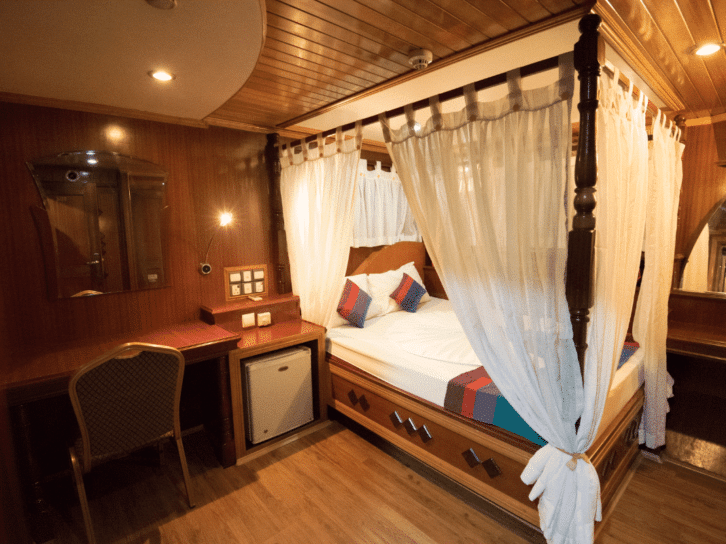
Discover the Maldives inexpensively by liveaboard: dive with whale sharks, meet manta rays and sleep in traditional four-poster beds.
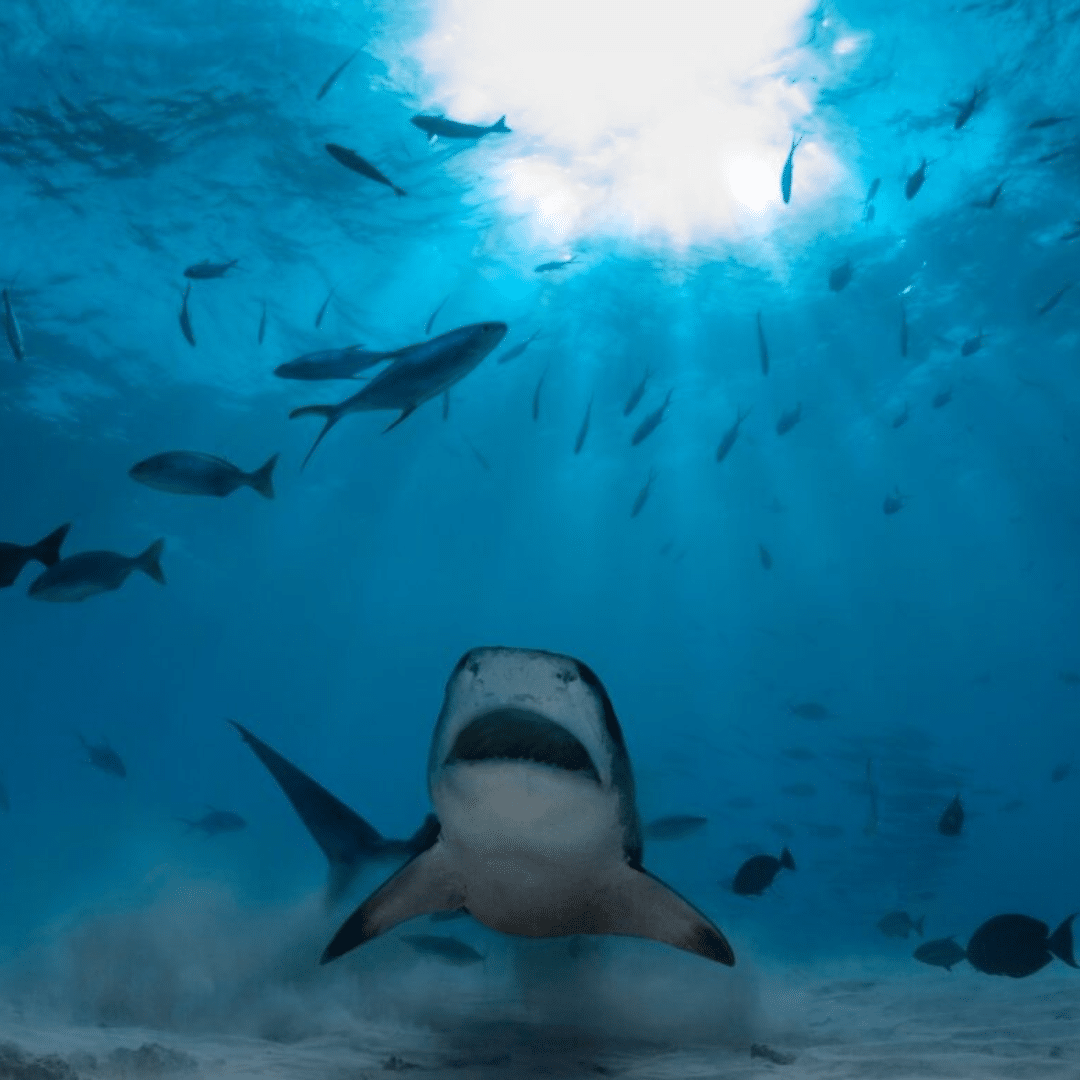

Diving with tiger sharks in Fuvahmulah
Dive with tiger sharks at Fuvahmulah in the Maldives.