Triton Bay Divers • Remote Indonesia
Triton Bay is one of Indonesia’s most remote and unspoiled diving destinations. Here, you can dive in one of the world’s richest marine ecosystems, far away from the crowds.
Travel period
Features
Starting from
Triton Bay Divers: a remote corner of Indonesia
This trip takes you to one of the most extraordinary places in West Papua: Triton Bay. This remote area is known for its unspoiled nature, impressive limestone cliffs, and an underwater world that ranks among the most biodiverse in the world. Although some liveaboards stop at Triton Bay during their itinerary through Indonesia, there’s another way to explore this area: from Triton Bay Divers, the first and only resort in the bay.
The trip to Triton Bay is long, but the reward is great. With only eight accommodations and a location far off the beaten path, a stay here feels like an adventure. The pace is slow, nature takes center stage, and you’ll hardly ever run into other divers.
An enormous wealth of marine life awaits underwater. The reefs are covered with colorful soft corals and attract large schools of fish, reef sharks, wobbegongs, pygmy seahorses, and countless macro species. One of the biggest attractions is the whale sharks, which regularly appear near the traditional fishing platforms of the local fishermen. For many divers, an encounter with these friendly giants is one of the absolute highlights of a stay in Triton Bay.
For divers looking for a destination off the beaten path, where nature, tranquility, and biodiversity come together, Triton Bay is a place they’ll remember for a long time to come.
Best time to go on a diving trip to Triton Bay:
The diving season generally runs from October through May, when conditions are calm and underwater visibility can be optimal. The resort is closed annually from June through September due to strong winds and rougher sea conditions during this period.

Average temperatures
Wetsuit Recommendations for Triton Bay
 Given the pleasant water temperatures, a 3mm wetsuit is perfectly suitable for diving here. Shorties are also commonly worn here.
What will you experience on this trip?
View itinerary here

Days 1–3 | The Journey to Triton Bay
The trip to Triton Bay takes you to one of Indonesia’s most remote diving destinations, in the southwest of West Papua. On average, it takes two to three travel days to get there. The route goes via Jakarta to West Papua, with a layover en route to Sorong or Manokwari and a connecting flight to Kaimana, a small coastal town about 30 nautical miles from Triton Bay itself.
It’s not the kind of destination you can just “fly to” on a whim. The distance itself is part of the experience: step by step, you travel farther away from civilization, toward an area that still feels truly unspoiled. Triton Bay is part of the Bird’s Head Seascape, along with Raja Ampat and Cenderawasih Bay, and lies at the heart of the Coral Triangle, the region with the greatest marine biodiversity in the world.
Upon arrival in Kaimana, you’ll be met by the Triton Bay Divers team. From the airport, it’s a short drive to the harbor, where the boat will be waiting to take you on the final leg of the journey to the resort. The crossing takes about an hour and a half and takes you past an impressive coastline of limestone cliffs, rainforest, and secluded bays. Along the way, there are frequent opportunities to spot dolphins and, with a little luck, Bryde’s whales that inhabit these waters. Depending on conditions, the boat may also stop along the way to view ancient rock carvings near Namatota Island, a quiet reminder of the long history of this remote region.
And then, after that final crossing, you arrive at Triton Bay. A place with just a handful of accommodations, where you can immediately feel the tranquility of the surroundings. Here, it’s all about nature—both above and below the water—and the feeling that you’re in a place where few others ever go.
Days 4–12 | Diving in Triton Bay
With 27 dives spread over 9 days of diving, you’ll have ample opportunity to explore one of the most biodiverse diving areas in the world. Triton Bay is part of the Bird’s Head Seascape, along with Raja Ampat and Cenderawasih Bay, but is still visited by relatively few divers. That’s exactly what makes a stay here so special.
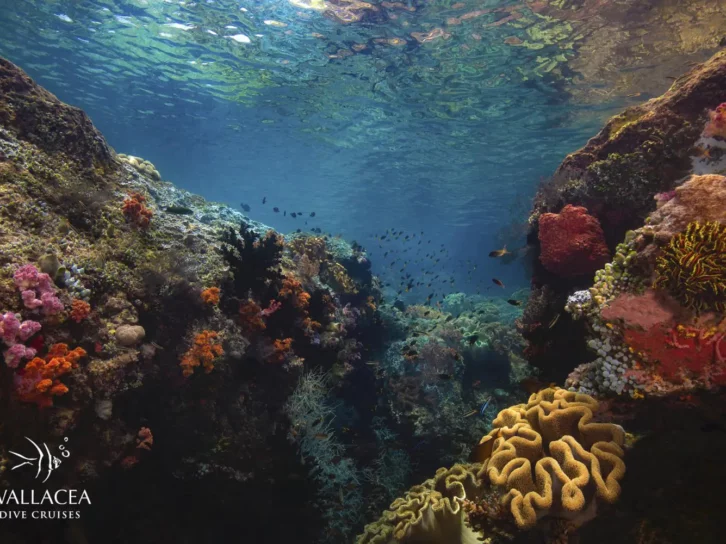
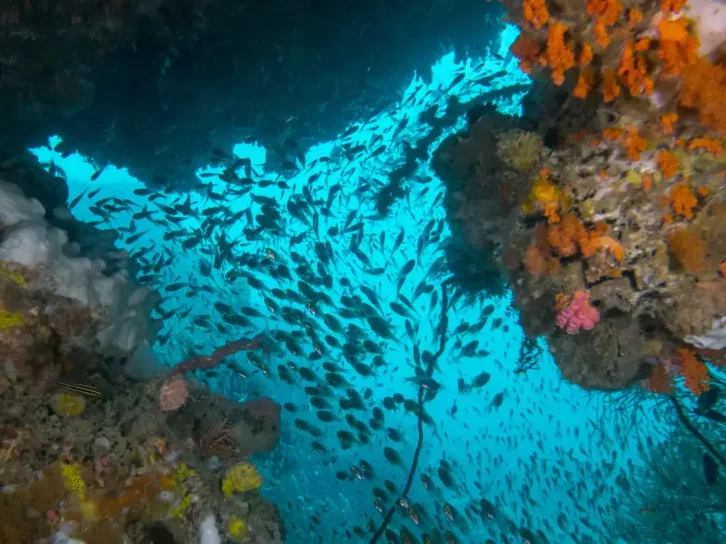
Underwater, you’re surrounded by an incredible abundance of life. The reefs are covered with colorful soft corals, large gorgonians, and vast fields of hard coral that are home to thousands of reef fish. Schools of fusiliers, snappers, and sweetlips constantly swim across the reef, while hunting trevallies and barracudas linger at the edges of the current. At many dive sites, the sheer number of fish is simply impressive.
Macro photography enthusiasts will also find plenty to enjoy here. Among the corals live pygmy seahorses, various species of shrimp, colorful nudibranchs, ghost pipefish, and sometimes well-camouflaged frogfish. There’s something new to discover on almost every dive.
What also sets Triton Bay apart from many other destinations in Indonesia is the chance to have extraordinary encounters with larger animals. Wobbegongs rest beneath overhanging rocks, eagle rays glide by in the blue, and with a bit of luck, you might also spot mobulas, manta rays, or various species of sharks. An absolute highlight, of course, is the whale shark. The waters of Triton Bay are known for the whale sharks that regularly appear around the traditional fishing platforms. For many divers, an encounter with these gentle giants ranks among the most memorable experiences of their trip. One dive with whale sharks is included as standard; of course, there’s no guarantee you’ll see them since they aren’t fed. But the chances of seeing them here are very high.
Possible dive sites where you’ll be diving this week are:
- Little Komodo: One of Triton Bay’s most famous dive sites, featuring impressive rock formations completely covered in soft corals. Expect large schools of fish, wobbegongs, and an abundance of reef life.
- Bo’s Rainbow: A colorful dive site where soft corals, large sponge formations, and schools of reef fish define the landscape. An excellent spot for both wide-angle and macro photography.
- Pintu Arus: A current-sensitive dive site where nutrient-rich water supports impressive biodiversity. Large schools of fish and hunting predatory fish are regularly spotted here.
- Flasher Beach: Known for the various species of flasher wrasses that live here. Especially toward the end of the afternoon, the males display their spectacular courtship colors.
- Namatota Wall: An impressive wall dive along steep limestone formations. Large fans, black corals, and schools of reef fish dominate the underwater landscape.
- Bagans (whale shark diving): The traditional fishing platforms in Triton Bay regularly attract whale sharks. When conditions are right, this offers a unique opportunity to observe these gentle giants up close.
Day 13 | Exploring the Island
After nine days of diving, it’s time to take it a little easier. This last full day in Triton Bay has been intentionally planned without any dives, so you’ll have plenty of surface interval time before your flight home.
That doesn’t mean, however, that there’s nothing to do. Today, in particular, you have the time to enjoy the surroundings in peace and quiet. Take a walk along the beach, relax on the porch of your bungalow, or enjoy the view of the bay as the fishing boats slowly sail by. This is also a great time to sort through your photos, update your logbook, and reflect on the many special encounters you’ve had underwater.
Those who prefer to stay active can explore the area by kayak or take a trip along the impressive limestone coast of Triton Bay. Depending on conditions, a visit to the ancient rock art on Namatota Island or a trip through the mangroves are also among the possibilities.
As the sun slowly disappears behind the green hills, you’ll enjoy one last evening in one of Indonesia’s most remote and unique diving destinations. It’s a wonderful moment to let all the experiences of the past few days sink in.
Days 13 & 14 | The Return Trip
After breakfast, you’ll say goodbye to Triton Bay and begin your return journey. You’ll sail back to Kaimana by boat, giving you one last chance to enjoy the impressive scenery of limestone cliffs, small islands, and tropical coastlines that make this region so special.
From Kaimana, you’ll fly to Jakarta via Sorong or Manokwari. Depending on the flight schedule, you may need to spend the night or have a longer layover in Jakarta before taking your international flight to the Netherlands. For many travelers, this is a pleasant time to reflect on all the experiences of the trip.
Although the return trip takes some time, it also gives you the chance to reflect on everything you’ve experienced—from colorful coral gardens and enormous schools of fish to encounters with whale sharks and your stay at one of Indonesia’s most remote dive resorts.
On day 15, you’ll arrive back home with a camera full of photos, a logbook full of memorable dives, and undoubtedly many wonderful memories of Triton Bay.
Highlights of this trip
What can you expect from this trip to Triton Bay?

Encounters with whale sharks
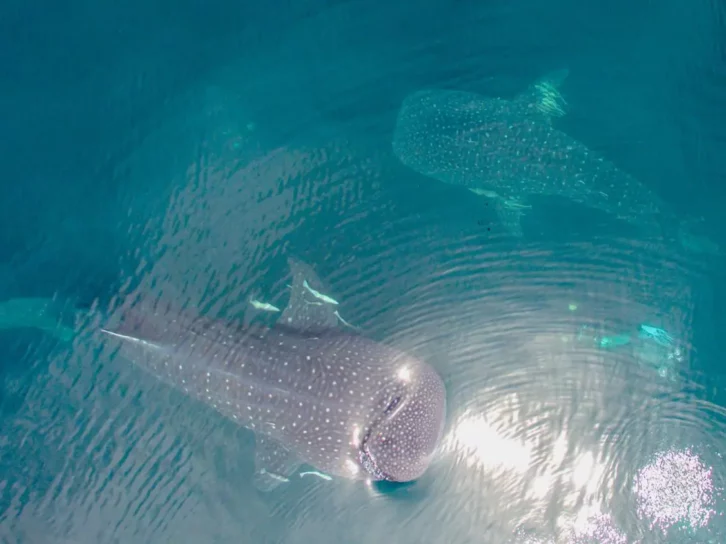
Triton Bay is known for the whale sharks that regularly appear near the traditional fishing platforms used by local fishermen. These friendly giants often linger around the bagans for extended periods, allowing you to observe them at your leisure. The moment a whale shark slowly emerges from the blue and swims silently past you leaves an unforgettable impression on virtually every diver. It is precisely the combination of reliability and the natural environment that makes these encounters so special.
A remote destination
Triton Bay is one of Indonesia’s most remote diving destinations. The journey there takes time, but you’ll be rewarded with peace, space, and a sense of discovery. The landscape is characterized by steep limestone cliffs, dense rainforest, and secluded bays where few other visitors venture. With only one resort in the region, you’ll experience a side of Indonesia that still feels surprisingly unspoiled.
Diving in the Coral Triangle
Triton Bay is located in a region with the world’s greatest marine biodiversity. Underwater, you’ll find colorful soft corals, enormous schools of reef fish, wobbegongs, pygmy seahorses, and countless other species. The variety is immense, and no two dives are ever the same. It is precisely this combination of abundant marine life, healthy reefs, and unique species that makes Triton Bay a destination that continues to surprise even experienced divers.
The accommodation
The stay and surroundings
Triton Bay Divers
Triton Bay Divers is the only dive resort in Triton Bay and is located in the heart of one of the most remote areas of West Papua. The resort is situated directly on a tranquil bay, surrounded by dense rainforest, limestone cliffs, and crystal-clear tropical waters. With just eight bungalows, a stay here feels intimate and personalized. There is no traffic, no crowds, and hardly any other accommodations in the area. Nature takes center stage here.
Between dives, the resort is a great place to relax. From the open-air dining area, you can look out over the sea as the waves gently break on the beach. Three meals are served here daily, along with a local snack in the afternoon. Coffee, tea, and drinking water are available all day, and soft drinks and beer are available at the bar.
It is precisely this combination of comfort and simplicity that makes Triton Bay Divers so special. You’ll be staying in the heart of a region known for its exceptional biodiversity, while at the same time enjoying the tranquility and hospitality of a small-scale resort. It feels as if you’ve completely escaped the rest of the world, without sacrificing any of the amenities you need for a relaxing diving vacation.
The resort features eight detached bungalows, each accommodating two people. Six of them are located directly on the beach with ocean views, while the two more spacious garden bungalows are situated slightly further inland among the tropical vegetation and offer partial ocean views. All accommodations are built with local materials that blend beautifully into the natural surroundings, giving the resort an authentic feel that suits its secluded location.
The rooms are comfortably furnished and feature a private bathroom, hot water, and a spacious terrace where you can relax after a day of swimming. A large ceiling fan keeps the rooms cool, and thanks to the bungalows’ design, the sea breeze can flow freely through them. Since the 2025 season, the resort has also had electricity available 24 hours a day.
The diving school
The diving school and facilities
Triton Bay Divers
The dive center is located at the quiet end of the beach, a short walk from the bungalows and the dining area. This is where every day of diving begins, and where you’ll find everything you need for a comfortable stay. Each guest has their own storage space where they can leave their diving gear for the entire trip. This means you don’t have to move your gear around every day, and getting ready for your dives is quick and efficient.
There is a separate camera room for underwater photographers. Here, cameras and lights can be safely stored, charged, and prepared for the next dive. Thanks to the spacious workstations and ample power outlets, this is a pleasant place to review photos and maintain equipment.
The resort’s intimate atmosphere is also reflected in the dive center. With a limited number of guests and personalized service, everything runs smoothly and is easy to manage. This allows you to focus entirely on what you came here for: exploring the spectacular underwater world of Triton Bay.
Travel costs
What is included
This travel package is US$ 5.518 per person based on two people in one room. The trip can be extended as desired. A number of things are included by default in this travel package.
Prices are subject to price changes, increases or changing exchange rates. Flights are always based on the cheapest possible booking class.
Want to know more about the possibilities? Get in touch with us!
Included in this trip, from US$ 5.518 p.p.
- 11 nights in a Seaview Deluxe Room
- Accommodation on full board basis
- Coffee, tea, drinking water, and snacks
- Diving Package with 27 Dives
- Round-trip transfers to Kaimana Airport
- Beach Towels & Towels on the Boat
- VZR & Administration fee
Excluding
- Flight to Sorong from US$ 1.342 p.p.
- Marine Park Fee of 1,000,000 IDR = approx. US$ 67
- Fuel surcharge (US$ 224)
- Alcoholic beverages and soft drinks
✈︎ The quoted (international) flight prices are indicative prices and based on departures from Europe. However, we can arrange flights from any location worldwide. Booking your own flights is of course also possible.
Optional
- Diving equipment (US$ 34 s per day)
- Night dive (US$ 6 per dive)
Send this trip by email
Want to save or share the details of this trip with someone? You can do so by sending the trip by email.
Where may we send the email to?
Frequently asked questions about this dive trip
Diving general
You’ll be doing boat dives here. The dives are tailored to your experience and preferences. There are dive sites suitable for every skill level. Most dives are long and shallow. The maximum dive time is 60 minutes—provided you have enough air, of course.
There may be dives with strong currents.
Most dive sites can be reached between 5 and 30 minutes by boat.
You can do up to 3 dives per day. Would you like to do fewer dives? If so, you can also choose a dive package with 2 dives per day.
Yes, you can book this on the spot.
Yes, there’s a fantastic house reef where, among other things, you can go on night dives. There’s plenty of macro life to be found on the house reef, and the walking shark is also regularly spotted here.
Yes, you can take various SSI and PADI courses.
The diving school is located at the resort.
Yes, your dive package includes one dive with whale sharks as standard. This means you’ll go to the area where they’re frequently spotted. There’s absolutely no guarantee that you’ll actually see them, because the whale sharks aren’t fed there.
Diving equipment
The tanks are DIN-compliant, but INT adapters are also available.
No, there are only 12L aluminum tanks.
No, there is no nitrox available.
You can rent diving gear here, but it’s good to know that they only have a limited number of full sets available. If you’d like to rent equipment, please let them know right away when you book.
A full set costs US$ 39 per day.
Triton Bay Divers recommend bringing fins that give you enough power in the current and bringing an SMB.
The accommodation
For all non-diving guests, there are plenty of opportunities for snorkeling. You can discover the beauty of Triton Bay right from the resort’s shore. However, the resort’s focus is on diving, and not all spots are suitable for snorkeling. It’s also possible to snorkel with whale sharks. This costs US$ 112.
Yes, there is a restaurant at the resort. All meals are included in the stay.
Yes.
No, we made a conscious decision not to install air conditioning. This was done to minimize the impact on the environment. The rooms are equipped with fans. In addition, the bungalows are designed with an open layout, allowing a natural sea breeze to flow through.
Yes, electricity is available 24/7.
We use Starlink, which provides coverage throughout the resort. However, signal strength does depend on the weather and isn’t always consistent. Currently, there is no connection on your phone, but that will change in the future.
Related diving trips

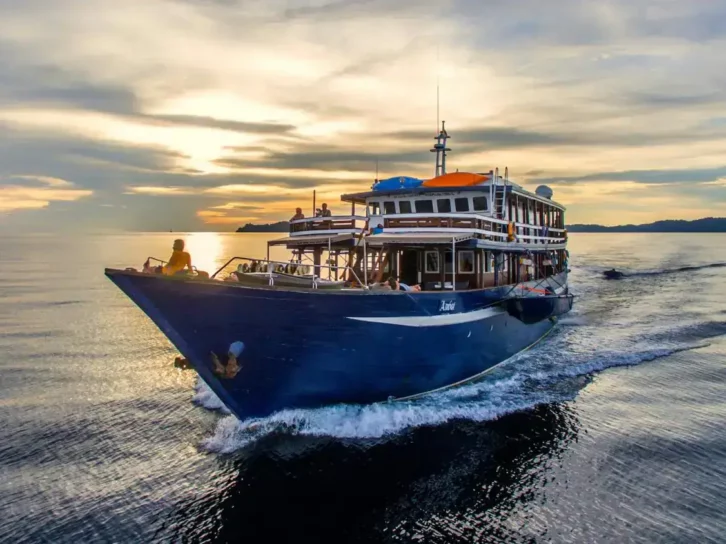
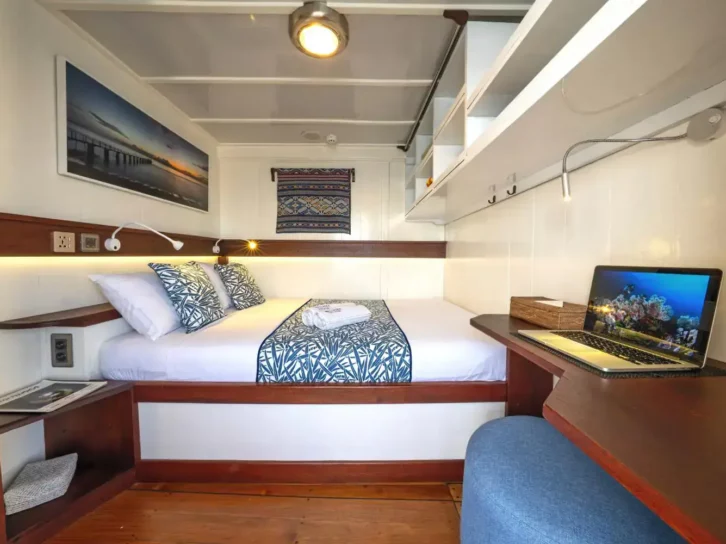
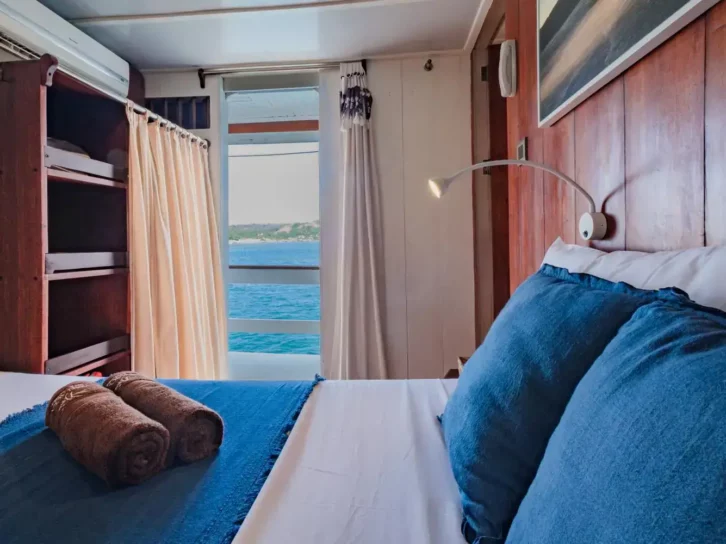
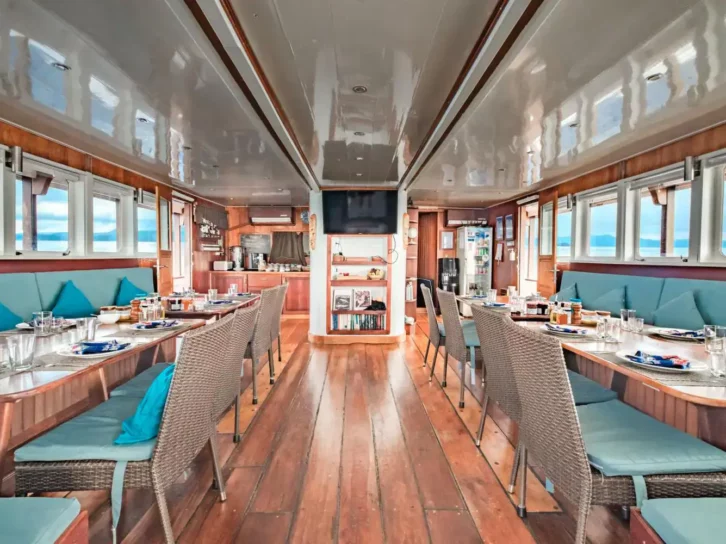



Ambai Liveaboard • Raja Ampat & Triton Bay
On this exclusive liveaboard, discover two of Indonesia’s most spectacular dive sites: Raja Ampat and Triton Bay. From manta rays...
We are EWDR