Sumatra Combo Trip • North Sumatra & Diving in Pulau Weh
Discover unspoiled North Sumatra and round out your trip with a relaxing diving vacation on Pulau Weh. A journey filled with nature, wildlife, culture, and spectacular diving.
Travel period
Features
Starting from
Diving around Pulau Weh & a tour of North Sumatra
Discover one of Indonesia’s most diverse regions on this unique journey through North Sumatra. You’ll trek through dense rainforests, visit impressive volcanic landscapes, and experience the ancient culture of the Batak people. Along the way, you’ll stay at unique locations and experience nature up close. From spotting wild orangutans in Gunung Leuser National Park to the tranquility of the immense Lake Toba, each destination reveals a different side of Sumatra.
The tour takes you through Bukit Lawang, Tangkahan, Berastagi, and Samosir Island. You’ll hike through one of the world’s oldest rainforests, visit traditional villages, climb an active volcano at sunrise, and relax on the shores of Southeast Asia’s largest volcanic lake. Thanks to the mix of nature, culture, and active excursions, you’ll get a complete picture of authentic North Sumatra.
After the tour, you’ll continue on to Pulau Weh, a tropical island off the northwest coast of Sumatra and one of Indonesia’s best-kept diving secrets. The coming days will be all about relaxing and diving among colorful coral reefs, steep walls, and volcanic rock formations. With the chance to encounter reef sharks, sea turtles, barracudas, and a surprisingly rich variety of macro life, every dive is different. The intimate atmosphere of Lumba Lumba Dive Resort and the short boat rides to the dive sites make this the ideal conclusion to a journey filled with impressive nature and unforgettable encounters.
Best time to go on a diving trip to Pulau Weh & North Sumatra:
The best time to take this trip is from February through October. During this period, conditions are generally most favorable for both the tour through North Sumatra and diving at Pulau Weh. You can expect warm temperatures, relatively dry conditions, and often good underwater visibility. Although tropical rain showers are possible year-round, they are usually short-lived, and Sumatra remains a beautiful, lush destination throughout the year.

Average temperatures
Wetsuit Recommendations for Pulau Weh in Sumatra
 The water temperature stays around 30°C all year round, so a 3mm wetsuit is perfectly fine for diving here.
What will you experience on this trip?
View itinerary here

Days 1 & 2 | The Trip to Sumatra
Today marks the start of your journey to North Sumatra. From the Netherlands or Belgium, you’ll fly to Medan, the island’s largest city and the starting point of your tour. There are no direct flights, so you’ll have one layover along the way. Popular routes go through Kuala Lumpur, Singapore, Jakarta, or an airport in the Middle East. Depending on the airline you choose, the total travel time averages between 16 and 20 hours.
Due to the time difference and the long journey, you’ll usually arrive in Medan the next day. Upon arrival, you’ll be greeted at the airport by a local representative and transferred to your hotel. For the rest of the day, you’ll have time to recover from the flight and acclimate to Sumatra’s tropical climate. Tomorrow, your journey of discovery through North Sumatra begins, taking you past impressive natural landscapes, traditional villages, and unique wildlife.
Days 3 & 4 | Gunung Leuser National Park & Searching for Orangutans
After breakfast, you’ll depart from Medan for Bukit Lawang, a charming village on the edge of Gunung Leuser National Park. The drive takes about four to five hours and passes through vast palm plantations, small villages, and the lush landscape of North Sumatra. Upon arrival, you’ll check in at your accommodation, beautifully situated along the river and surrounded by tropical rainforest. For the rest of the afternoon, you’ll have time to explore the village, take a walk along the river, or relax while enjoying the sounds of the jungle.
The next morning, one of the absolute highlights of the trip is on the agenda. Together with an experienced local guide, you’ll venture deep into Gunung Leuser National Park, a UNESCO World Heritage Site and one of the last places in the world where the critically endangered Sumatran orangutan still lives entirely in the wild. During the hike, you’ll keep an eye out for these impressive great apes as they move high through the canopy. You’ll definitely need a bit of luck to spot them, as they’re endangered and therefore not very common. Along the way, you may also encounter Thomas’s langurs, gibbons, macaques, colorful hornbills, and countless other tropical rainforest animals. The trek takes you along narrow jungle trails, past babbling streams, and through dense rainforest. A unique experience that lets you experience Sumatra’s nature up close.
Days 5 & 6 | The Tangkahan Rainforest
After breakfast, you’ll continue on to Tangkahan, a hidden gem on the edge of Gunung Leuser National Park. This remote area is also known as the “Hidden Paradise of Sumatra” and is much less visited than Bukit Lawang. The route takes you through the lush interior of North Sumatra, and upon arrival, you’ll check in at your accommodation, idyllically situated along a clear-flowing river. You can spend the rest of the afternoon relaxing, taking a refreshing dip in the river, or enjoying the tranquility and unspoiled nature that make Tangkahan so special.
The next morning, you’ll explore the vast rainforests of Tangkahan with a local guide. During a hike through the jungle, you’ll cross rivers and discover one of Sumatra’s most pristine natural areas. Along the way, you’ll visit the Conservation Response Unit, where rescued Sumatran elephants are cared for. These elephants play a vital role in protecting the national park and assist rangers during anti-poaching patrols. Thanks to Tangkahan’s small-scale nature, you’ll experience the jungle here in a peaceful and authentic way, far away from the crowds. The combination of dense rainforests, crystal-clear rivers, and extraordinary wildlife makes this one of the most beautiful nature reserves in North Sumatra.
Days 7 & 8 | Highlands & Sibayak Volcano
Today you’ll leave the rainforest behind and travel to Berastagi, a charming mountain town in the highlands of North Sumatra. The drive takes you past green valleys, traditional Karo villages, and impressive mountain landscapes. Berastagi is located at an altitude of about 1,300 meters, and thanks to its cooler climate, it has a completely different character than the tropical lowlands. Upon arrival, you’ll check in at your hotel and have time to visit the lively market. Here you’ll find a colorful mix of fresh fruit, vegetables, herbs, and local specialties for which the region is famous.
The next morning, you’ll set out before sunrise for a hike to the summit of the active volcano Mount Sibayak. Accompanied by a local guide, you’ll climb to the crater in about two hours, where steam rises from the volcanic vents. From the summit, you’ll be rewarded with an impressive view of the surrounding highlands and, on a clear day, the neighboring volcanoes. After the descent, it’s time to relax in the natural hot springs at the foot of the volcano. The warm mineral water provides a wonderful way to end this active morning before you return to Berastagi.
Days 9–11 | Lake Toba & Samosir Island
After breakfast, you’ll head to Lake Toba, the largest volcanic lake in Southeast Asia and one of the largest caldera lakes in the world. Along the way, you’ll stop at the impressive Sipiso Piso Waterfall. With a free fall of over 120 meters, the water plunges down from the rim of the ancient volcanic crater, offering a stunning view of the lake and the surrounding mountains. After lunch, you’ll continue your journey to the shore of Lake Toba, where you’ll check into your hotel and enjoy the impressive view of the vast lake for the first time. You’ll stay here for one night, followed by two nights on Samosir Island.
The next morning, you’ll take a ferry to Samosir Island, the island located in the middle of Lake Toba that was formed after one of the largest volcanic eruptions in history. During your exploration, you’ll discover the rich culture of the Batak people. You’ll visit traditional villages with distinctive houses, centuries-old stone meeting places, and royal tombs, while learning more about the unique history and traditions of this region.
After all the experiences of the past few days, Day 11 gives you plenty of time to explore Samosir Island at your own pace. Take a walk or bike ride past rice fields and small villages, take a refreshing dip in the clear waters of Lake Toba, or enjoy a drink on a lakeside terrace. Thanks to the peaceful atmosphere and the beautiful surroundings, this is the ideal place to completely unwind before continuing your journey. There’s no set itinerary for this day, so you can plan it however you like.
Days 12–13 | Medan & the trip to Pulau Weh
After breakfast, you’ll take the ferry back to the mainland and continue on to Medan. The total journey takes about six to seven hours and takes you through the impressive landscape of North Sumatra. Upon arrival in Medan, you’ll check in at your hotel, where you’ll have one last evening to relax or explore the city on your own.
The next morning, you’ll head to the Medan airport for your domestic flight to Banda Aceh, Sumatra’s northernmost city. From the airport, a taxi will take you to the port of Ulee Lheue in about 30 minutes. Here, you’ll board the high-speed ferry to Pulau Weh, a tropical island off the northwest coast of Sumatra known for its crystal-clear waters, healthy coral reefs, and excellent dive sites. The crossing takes about 45 minutes. Upon arrival on Pulau Weh, a transfer will be waiting to take you on the short ride to Lumba Lumba Dive Resort on tranquil Gapang Beach. This is where the second part of your journey begins, with plenty of time over the next few days to explore the underwater world of Pulau Weh.
Days 14–18 | Diving around Pulau Weh
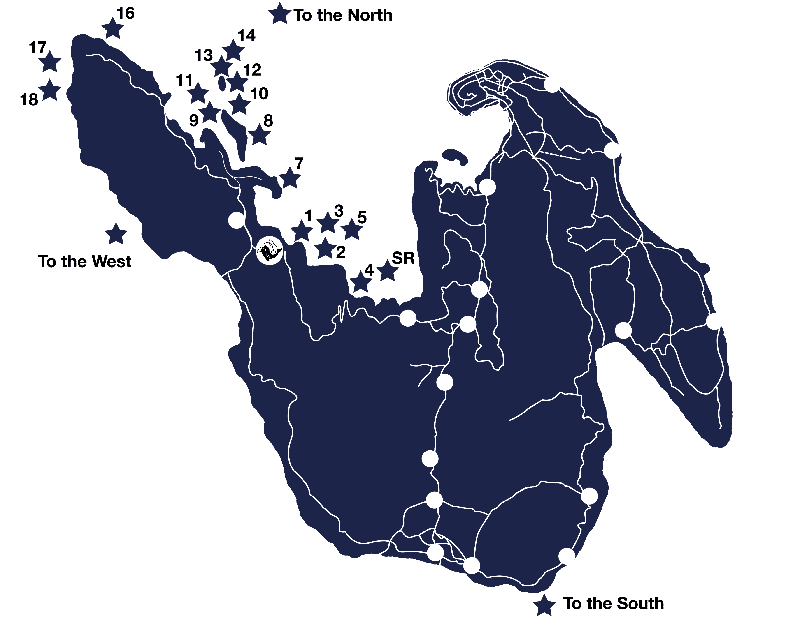
The next five days will be entirely devoted to diving around Pulau Weh. Every morning, you’ll go on two boat dives to the island’s most beautiful dive sites. Thanks to the short boat rides—just 10 to 30 minutes—you’ll reach the dive sites quickly and return to the resort between dives to relax and enjoy your surface interval.
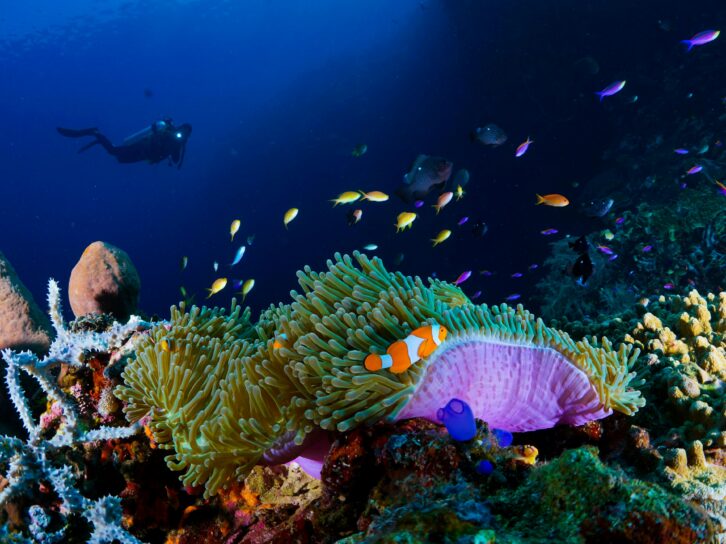
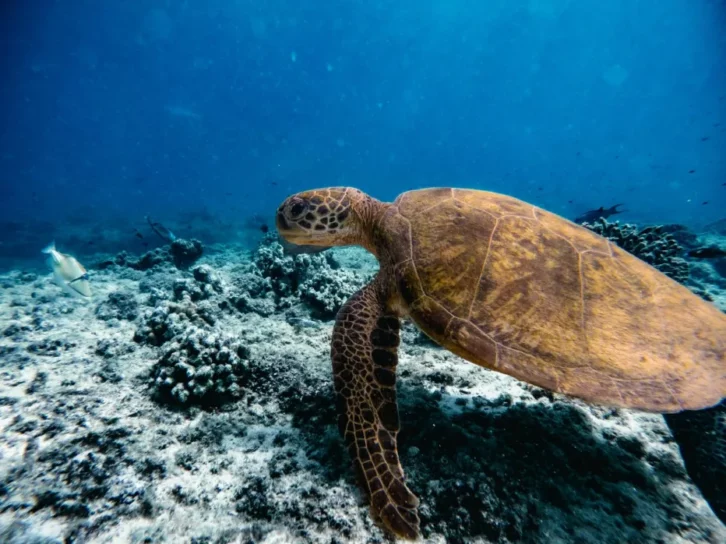
Pulau Weh is located where the Andaman Sea and the Indian Ocean meet. The nutrient-rich currents support tremendous biodiversity and a surprising variety of landscapes, including colorful coral reefs, steep walls, volcanic rock formations, and sandy bottoms teeming with macro life. During your dives, you may encounter large schools of fusiliers, snappers, and barracudas, while tuna, hunting trevallies, eagle rays, and various species of moray eels are also regularly spotted. With a little luck, you might spot whitetip reef sharks, blacktip reef sharks, or even a gray reef shark. Sea turtles are also permanent residents of the reefs. For macro photography enthusiasts, there’s just as much to discover, with nudibranchs, ghost pipefish, pygmy seahorses, frogfish, octopuses, and colorful shrimp.
One of the most unique dive sites is Hot Springs, where warm volcanic gases escape from the seafloor in small bubbles. In addition, impressive pinnacles such as Batee Tokong and Shark Plateau are among Pulau Weh’s best-known dive sites, featuring healthy soft corals, enormous fan sponges, and excellent chances of encountering large pelagic life. Thanks to the combination of spectacular landscapes, crystal-clear water, and an exceptionally diverse underwater world, Pulau Weh is one of Indonesia’s best-kept diving secrets.
Days 19 & 20 | The Return Trip
After one last breakfast, you’ll say goodbye to Pulau Weh. A shuttle will take you to the harbor, where the high-speed ferry will bring you back to Banda Aceh in about 45 minutes. From the harbor, it’s a short drive to the airport, where you’ll board your domestic flight to Medan. There, you’ll transfer to your international flight back to the Netherlands or Belgium.
After an impressive tour of North Sumatra and five days of diving around Pulau Weh, you can look back on a journey full of variety. You explored the ancient rainforest of Gunung Leuser National Park, encountered wild orangutans, hiked across an active volcano, discovered the culture of the Batak people at the immense Lake Toba, and wrapped up your trip at one of Indonesia’s most beautiful diving destinations. The colorful coral reefs, thriving underwater world, and relaxed atmosphere of Pulau Weh provide the perfect conclusion to a journey in which nature, culture, and adventure constantly alternate.
Depending on the flights you choose, you’ll usually arrive back home the next day.
Highlights of this trip
What can you expect from this trip to Sumatra?

Diving at Pulau Weh
Pulau Weh is one of Indonesia’s best-kept diving secrets. The nutrient-rich currents support an impressive level of biodiversity, making virtually every dive unique. You’ll discover colorful coral reefs, steep walls, and volcanic rock formations, with the chance to spot reef sharks, sea turtles, barracudas, schools of reef fish, and unique macro species such as frogfish and pygmy seahorses. The short travel times also give you plenty of time to relax at the resort between dives.
In Search of the Orangutan
Gunung Leuser National Park is one of the last places in the world where Sumatran orangutans still live entirely in the wild. During a guided trek, you’ll hike through dense tropical rainforest in search of these impressive great apes. Along the way, you may also encounter gibbons, Thomas langurs, macaques, and colorful hornbills. For many travelers, seeing orangutans in their natural habitat is an experience they’ll remember for a long time to come.
Lake Toba, a volcanic lake
Lake Toba is the largest volcanic lake in Southeast Asia and was formed following one of the most powerful volcanic eruptions in history. You’ll visit Samosir Island, where the Batak people have lived for centuries and keep their traditions alive. Traditional houses, historic royal tombs, and an impressive mountain landscape offer a unique introduction to a region that feels very different from the rest of Indonesia.
The accommodation
The stay and surroundings
Lumba Lumba Dive Center & Resort
Lumba Lumba Dive Resort is located right on the tranquil Gapang Beach on Pulau Weh and is fully equipped for divers seeking comfort, personalized service, and a relaxed atmosphere. This small-scale resort is surrounded by a tropical garden with palm trees and colorful flowers, while the beach and the sea are just a few steps from your accommodations. From the terrace or the dive center, you can look out over the bay, where the dive boats depart every morning for the island’s most beautiful dive sites.
The resort features its own PADI 5-Star Dive Resort, so everything is organized in one location. Between dives, you can relax on the beach, enjoy the tropical garden, or grab a table at the restaurant, where fresh local and international dishes are served daily.
During this trip, you’ll stay in a spacious Living Room Cottage, right on Gapang Beach and nestled among the tropical gardens of Lumba Lumba Dive Resort. The charming duplex cottages are just a few steps from the dive school and the beach, so you can be back at your accommodation in no time after every dive. Thanks to the peaceful location and the spacious veranda with a comfortable sofa and hammock, this is the ideal spot to relax between dives.
The cottages are specially designed with divers in mind and, at approximately 42 m², offer plenty of space and comfort. Each cottage features a king-size bed or two twin beds, a sitting area, a desk, a private bathroom with a hot-water shower and a Western-style toilet, a refrigerator, and a electric kettle. Most cottages overlook the sea, while others offer a beautiful view of the tropical garden. The warm wooden interior and natural materials perfectly complement the relaxed atmosphere of Pulau Weh and ensure that you feel right at home.
Travel costs
What is included
This travel package is US$ 2.970 per person based on two people in one room. The trip can be extended as desired. A number of things are included by default in this travel package.
Prices are subject to price changes, increases or changing exchange rates. Flights are always based on the cheapest possible booking class.
Want to learn more about this trip to Sumatra? Contact us!
Included in this trip, from US$ 2.970 p.p.
- Lumba Lumba Resort, Pulau Weh
- 6 nights in a Living Room
- Stay on a bed & breakfast basis
- Tea and drinking water
- Dive package with 10 dives
- North Sumatra Tour
- 2 nights in Medan
- 2 nights in Bukit Lawang
- 2 nights in Tangkahan
- 2 nights in Berastagi
- 3 nights in Lake Toba / Samosir
- Stay on a bed & breakfast basis
- Lunch on Days 4 & 9
- Orangutan Trekking in Gunung Leuser Park
- Tangkahan Rainforest Experience
- Sunrise Hike on Mount Sibayak
- Sibayak Hot Springs
- Sipiso Piso Waterfall
- Samosir Island Tour
- All admission fees for the listed excursions
- Return Ferry from Lake Toba to Samosir Island
- General
- Return transfers
- VZR & Administration fee
Excluding
- Flight to Sumatra starting at US$ 1.345 per person
- Domestic flight starting at US$ 112 per person
- Airport transfer on Day 13
- Visas for Indonesia, approx. US$ 34
- Dive and travel insurance
✈︎ The quoted (international) flight prices are indicative prices and based on departures from Europe. However, we can arrange flights from any location worldwide. Booking your own flights is of course also possible.
Optional
- Diving equipment rental (US$ 493 s for 5 days)
- Nitrox (US$ 8 per tank)
- 15L tank (US$ 2 s per tank)
- Unguided night dive on the house reef (US$ 16)
- Guided night dive on the house reef (US$ 24)
- Night dive by boat (US$ 10 s extra)
The prices listed have been converted from the Indonesian rupiah and may therefore differ slightly from the final amount.
Send this trip by email
Want to save or share the details of this trip with someone? You can do so by sending the trip by email.
Where may we send the email to?
Frequently asked questions about this diving holiday
Diving general
This trip is suitable for both beginner divers and more experienced divers. There are plenty of dive sites for every skill level.
You’ll go on multilevel dives with a maximum dive time of 60 minutes. You’ll return to the dive center between each dive and spend your surface interval on the beach. You’ll dive in small groups with a maximum of 4 divers per guide.
Diving takes place year-round in the waters around Pulau Weh. The water temperature there is 28–29 °C almost all year round. Visibility is around 20 meters year-round, but often reaches 30 meters. The deeper you go, the better the visibility. With certain currents carrying slightly cooler water, visibility can sometimes even reach 40 meters!
Most dive sites are located in Pulau Weh’s National Marine Park and are nearby: between 10 and 30 minutes by speedboat. Other dive sites are even closer: a 2- or 5-minute ride.
Typically, you’ll do two dives a day here. You can request a third dive. It’s good to know that a local fishing tradition is observed, and diving is not permitted between 6:00 p.m. on Thursday and 2:00 p.m. on Friday. This means you can do your dives on Friday afternoon.
Yes, it is possible to go on a night dive. You can also go diving between sunrise and sunset. You can dive on the house reef, either with or without a guide, or opt for a night dive from the boat. A minimum of 4 participants is required for the boat trip to take place.
Yes. You can go night diving here, as well as diving during the day. You’re allowed to dive here without a guide, but of course you must have a buddy.
Absolutely, Lumba Lumba has a PADI dive center. You can take various courses and specialties there.
The diving school is located at the resort.
The Raja Ampat Marine Park is one of the most valuable marine areas in the world, and we want to keep it that way. The money from admission tickets is used to cover the operational costs of Raja Ampat’s five marine protected areas, such as patrols, administration, and programs for nature conservation and local community development.
Diving equipment
DIN and INT tanks are available.
The standard tank size is 80 cu ft, which is approximately 11 liters. 100 cu ft tanks are also available, which is equivalent to 13 L. This is the largest tank size available. The cost for this is 50,000 RP per tank, which is equivalent to approximately US$ 2.
Yes, bringing your own equipment is no problem at all. Tanks come in various sizes (40, 50, 83, 80, and 100 cu ft), so you have plenty of options to choose the setup that works best for you. The cost for an additional tank is 100,000 RP per tank, which is approximately US$ 6.
Yes, nitrox is available. It costs 150,000 RP per tank, which is about US$ 8.
That’s possible. The dive school has Apeks regulators with Suunto gauges and depth gauges, Aqualung and Mares BCDs, open-heel and closed-heel fins, shorties, wetsuits, diving masks, prescription diving masks, and dive computers from Mares and Suunto.
A full set costs about US$ 4 per dive; for 10 dives, that comes to US$ 448. Renting a dive computer costs US$ 9 per day; for 5 days of diving, this will cost you US$ 45.
The accommodation
Yes. Although Lumba Lumba Dive Resort does not have its own restaurant, the popular Barracuda Restaurant is located on the resort grounds. Breakfast, lunch, and dinner are served here daily, featuring a varied menu of local Indonesian and international dishes.
In addition, there are several small, family-run restaurants along Gapang Beach where you can stop for a meal or a drink. For a quick lunch, there are also local eateries serving authentic Indonesian dishes. Craving something sweet after diving? Mama Donut is a popular spot for fresh sweet and savory treats.
Yes.
Yes, although the accommodations are also available for rent without air conditioning. In that case, there is only a fan. Use of the air conditioning is included as standard in the travel package.
Yes, there’s Wi-Fi.
Related diving trips






Sumatra Combo Trip • West Sumatra & Diving in the Mentawai Islands
Dive among the pristine reefs of the Mentawai Islands, followed by a tour of West Sumatra’s most beautiful natural and...
We are EWDR