MV Oceania Liveaboard • Diving in the Bismarck Sea
Travel period
Features
Starting from
Diving in the Bismarck Sea with the MV Oceania
Papua New Guinea is one of the most remote and unspoiled diving destinations in the world. The country lies north of Australia and consists of a rugged, mountainous mainland and hundreds of tropical islands, many of which are rarely visited. It is precisely this remote location that has ensured that nature here has been exceptionally well preserved. Both above and below the water, you’ll experience a world that remains largely untouched.
The waters of the Bismarck Sea are among the most biodiverse marine areas in the world. You’ll dive past colorful coral reefs, steep reef walls, and impressive underwater mountains teeming with marine life. Schools of barracuda, reef sharks, sea turtles, macro life, and colorful reef fish take turns making an appearance, while manta rays and whale sharks also make occasional appearances. Many of these dive sites are accessible only by liveaboard, allowing you to explore places where only a handful of divers go underwater each year.
Aboard the comfortable MV Oceania, you’ll discover the most beautiful dive sites in Papua New Guinea. During the popular Bismarck Sea itinerary, you’ll visit Kimbe Bay, Father’s Reef, and the Witu Islands, among other destinations. Between dives, you’ll enjoy the relaxed atmosphere on board, spacious cabins, excellent meals, and an experienced crew that ensures you can enjoy one of the most extraordinary diving trips in the world without a care in the world.
Best time to go on a diving vacation to Papua New Guinea:
Papua New Guinea is a great diving destination all year round. The best time to visit is from mid-September through late November, and from April through June. In October and November, there is usually little rain, with light breezes and plenty of sunshine, making for ideal conditions for diving adventures.
In addition to the popular Bismarck Sea route, the MV Oceania also offers other liveaboard itineraries, including voyages to locations such as Rabaul, Kavieng and Milne Bay. Also, some itineraries are 9 or even 10 nights.
Milne Bay is a highly sought-after route and is offered only a few times a year, usually in the spring. Due to the popularity of this route, it is advisable to make reservations well in advance, sometimes even years in advance.

Average Temperatures
Wetsuit Recommendations for Papua New Guinea
 Throughout the year, the water in Papua New Guinea is very pleasant. We therefore recommend a 3mm wetsuit or skin.
What will you experience on this trip?
View itinerary here

Days 1 & 2 | The Trip to Papua New Guinea
There are generally no direct flights from Europe to Papua New Guinea, so the trip begins with a flight to one of the major Asian hubs, such as Singapore, Hong Kong, Manila, or Kuala Lumpur. Depending on the airline, a layover in Australia—such as in Sydney or Brisbane—may also be part of the itinerary.
From this stopover, you’ll fly on to Port Moresby, the capital of Papua New Guinea. This flight takes an average of 4 to 8 hours, depending on your departure point in Asia or Australia.
Upon arrival in Port Moresby, you’ll transfer to a domestic flight to Hoskins Airport on the island of New Britain, where the diving adventure really begins. Depending on your arrival time in Port Moresby, you’ll spend one night in a hotel near the ferry terminal—a comfortable stopover before continuing your journey to the islands.
Day 3 | Arrival in Hoskins and start of the liveaboard
Today you’ll arrive at Hoskins Airport, the gateway to West New Britain Province and the Kimbe region—Papua New Guinea’s largest palm oil-producing area and the base for exploring the breathtaking Kimbe Bay. The domestic flight from Port Moresby takes just under an hour.
You’ll be met at the airport and taken by shuttle to the harbor. Around 4:00 p.m., you’ll board the MV Oceania. After getting to know the group and being greeted by the captain, you can settle into your cabin. Around 6:00 p.m., the Oceania sets sail for the first dive sites of the trip, where the adventure truly begins the next day.
Days 4–6 | Diving around Kimbe Bay
Over the next 8 days, you’ll try to make 4 dives each day. You’ll start by diving in the Kimbe Bay area.
Kimbe Bay is known as the epicenter of the “Coral Triangle” because it is home to more than 60 percent of all coral species in the Indo-Pacific. Divers are drawn to the abundance of reefs—more than 190 in total—which offer a variety of habitats, including coral gardens, underwater pinnacles, and mangrove areas. The marine life is extremely diverse, featuring countless reef fish, pelagic species, sea turtles, and even the occasional whale shark and sperm whale. In addition to its fascinating underwater world, Kimbe Bay is also a hub for marine conservation efforts, with active research and conservation projects aimed at protecting these vulnerable ecosystems.
Days 7 & 8 | Diving around the Witu Islands
After Kimbe Bay, it is time to sail on to the Witu Islands. The Witu Islands are known for their beautiful coral gardens and underwater pinnacles. The biodiversity is impressive, with colorful reef fish, sharks, squids, crabs and even rare seahorses. Underwater visibility is often excellent, with distances of up to 30 meters. The Witu Islands are also a nesting ground for sea turtles and birds, making them a particularly important nature reserve. Due to their remote location and protected status, marine life in the Witu Islands is lush and pristine.
Days 9 & 10 | Diving around Father's Reef
Father’s Reef is a world-class dive site, beloved for its abundance of marine life. The reef is a series of undersea mountains that extend far into the Bismarck Sea. These unique geological formations create an array of deep drop-offs, picturesque underwater pinnacles, and coral-covered slopes.
The marine life at Father’s Reefs is as impressive as the scenery. Divers can expect an abundance of marine life, ranging from colorful reef fish and magnificent corals to majestic manta rays and playful dolphins. During certain seasons, even whale sharks and hammerhead sharks can be spotted.
Despite its popularity, Father’s Reefs remains a relatively unspoiled and pristine dive site, thanks to its remote location and commitment to conservation.
Day 11 | The Last Day of Diving
Today is our last day among the shimmering waves of Papua New Guinea. We’ll start the morning with two dives, each offering one last chance to explore the enchanting underwater world of this region. After the dives, we’ll enjoy a delicious lunch on board, and the ship will set course for the harbor of the Walindi Plantation Resort. Tonight, you’ll spend the night on the boat. Dinner will most likely be a buffet at Walindi, which is about a 50-meter walk from the boat.
Days 12 & 13 | The Journey Home
After breakfast, you’ll say goodbye to the MV Oceania. Of course, you can start your journey home right away, but since you’re already in one of the most extraordinary countries in the world, it’s definitely worth staying a little longer. Papua New Guinea is home to more than 800 indigenous languages, vast tropical rainforests, and impressive cultural diversity.
For example, you can spend a few more days relaxing and diving at Walindi Plantation Resort, where the liveaboard departs from and returns to. Would you rather discover a new diving area? Then a stay at Tufi Resort—known for its spectacular fjords and colorful reefs—is an excellent choice.
Would you like to see more of the country? A week-long tour of Papua New Guinea, for example, is also an option. From traditional villages and breathtaking natural scenery to unique wildlife and cultural encounters: we’d be happy to put together an extension that perfectly complements your liveaboard trip.
Highlights of this trip
What can you expect from Papua New Guinea?
Diving into a Hidden World
Papua New Guinea is one of the most unspoiled diving destinations in the world. Due to its remote location, the reefs are exceptionally healthy, and you rarely encounter other divers. The clear waters are home to an enormous diversity of corals, reef fish, sharks, and sea turtles. Every dive feels like an expedition through an underwater world that, in many places, has remained virtually unchanged. It is precisely this combination of tranquility, nature, and biodiversity that makes this destination so special.
Kimbe Bay, Teeming with Life
Kimbe Bay is known for its impressive biodiversity and healthy coral reefs. You’ll dive along colorful reef walls, underwater mountains, and vast coral gardens teeming with schools of barracuda, reef sharks, sea turtles, and countless tropical fish. Thanks to the wide variety of dive sites, no two dives are ever the same. Larger species such as whale sharks and sperm whales are also occasionally spotted here, meaning every descent can lead to a surprising encounter.
In Search of Large Marine Life
Father’s Reef consists of a series of underwater mountains where nutrient-rich waters attract a wealth of marine life. Large schools of fish, reef sharks, and—quite often—manta rays swim past steep walls and colorful corals. With a little luck, you might even spot dolphins, whale sharks, or hammerhead sharks. Due to its remote location, the reef has remained exceptionally well-preserved and is teeming with life. This makes for spectacular dives where there’s something new to discover behind every rock.
The accommodation
The stay and surroundings
MV Oceania
The MV Oceania is a 27-meter catamaran sailing in the waters of Papua New Guinea. The boat has just undergone an extensive refit and is modern and comfortable, designed with the modern diver in mind.
Meals on board are prepared with as much local, fresh produce as possible. A continental breakfast is available for the first dive of the day (before 6:30 a.m.) and hot breakfast items such as eggs, pancakes, bacon, etc. can be ordered after the first dive. Lunch is usually a buffet and includes a variety of salads, stir-fries, fried savory dishes, chicken wings, hot fries, etc. Dinner is what we would describe as ‘ fantastic homestyle cooking’, using locally produced meat and freshly caught fish whenever possible.
Complimentary tea and coffee and fresh fuit is available throughout the day. Refrigerators are stocked with an array of soft drinks, juices and SP beers. There is red and white wine on board and the brand is determined by what is on sale at the time. They strive to buy the best wines they can, but since PNG is a third-world country, we occasionally have limited choices.
There are a total of 8 cabins, 5 of which are equipped with two single beds and 3 with a large double bed. The cabins have individual air conditioning. You can also relax outside on the spacious sundeck for a relaxing surface interval after diving.
On the top floor of the Oceania you will find a large open space used for relaxing between dives, sometimes snacks and sundowners.
Travel costs
What is included
This travel package is from US$ 5.883 p.p. per capita Based on two people in one cabin. The trip can be extended as desired. A number of things are included by default in this travel package.
Prices are subject to price changes, increases or changing exchange rates. Flights are always based on the cheapest possible booking class.
Want to know more about the possibilities? Get in touch with us!
Included in this trip, from US$ 5.883 p.p.
- 9 nights in a Twin Bed Cabin
- Accommodation on full board basis
- 8 days of diving (approx. 30 dives)
- Coffee, tea, water, snacks, and wine with dinner
- Return transfers Hoskins Airport
- VZR & Administration fee
Excluding
- Flight to Hoskins, via Port Moresby, from US$ 2.017 p.p.
- Tourist Visas (100 USD)
- Conservation fee (20 USD)
- Environmental and Safety Fee (9 USD per night)
- Alcoholic Beverages & Soft Drinks
✈︎ The quoted (international) flight prices are indicative prices and based on departures from Europe. However, we can arrange flights from any location worldwide. Booking your own flights is of course also possible.
Optional
- Additional overnight Port Moresby approx. US$ 134 p.p.
- Nitrox (US$ 212)
- Diving equipment, including a computer (US$ 84 s per day)
Send this trip by email
Want to save or share the details of this trip with someone? You can do so by sending the trip by email.
Where may we send the email to?
Frequently asked questions about this diving holiday
Liveaboard MV Oceania
Yes definitely, and there are 2 large water tanks on board allowing you to shower after each dive.
Yes, there is individual air conditioning.
Yes, chances are good. If you really don’t want this, you can get a cabin alone for an additional fee. Price upon request. Usually the supplement is about 75% of the price of the cabin/hotel room.
Diving equipment
Yes you can, costs are $210.00 p.p. for trips of 7/8 nights and $270.00 for trips of 9/10 nights.
By arrangement.
Related diving trips

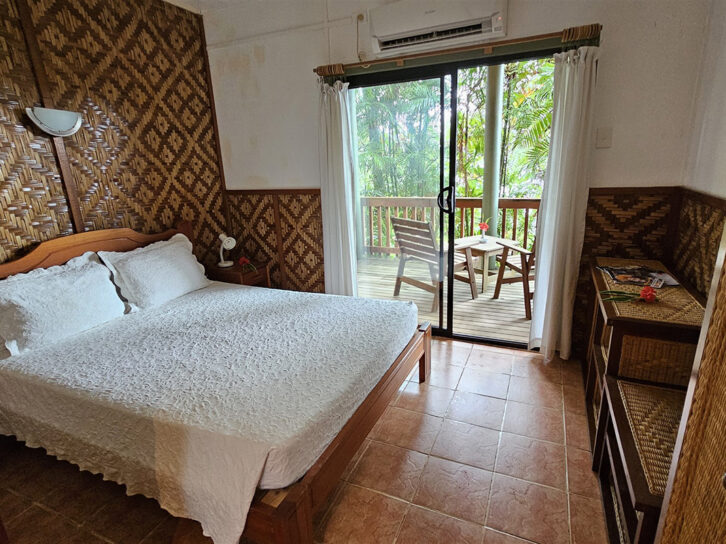
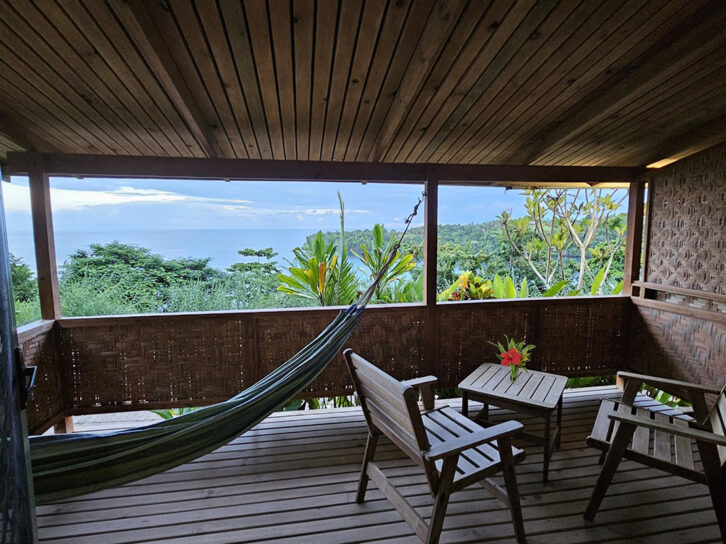
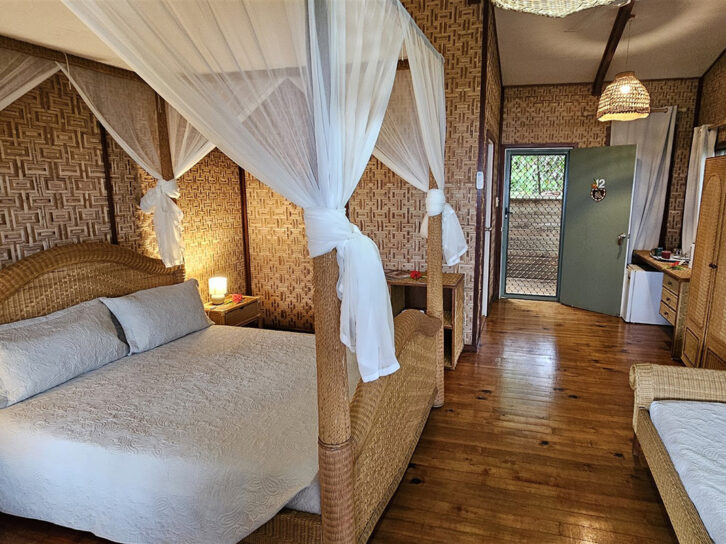


Diving Trip to Papua New Guinea • Tufi Resort
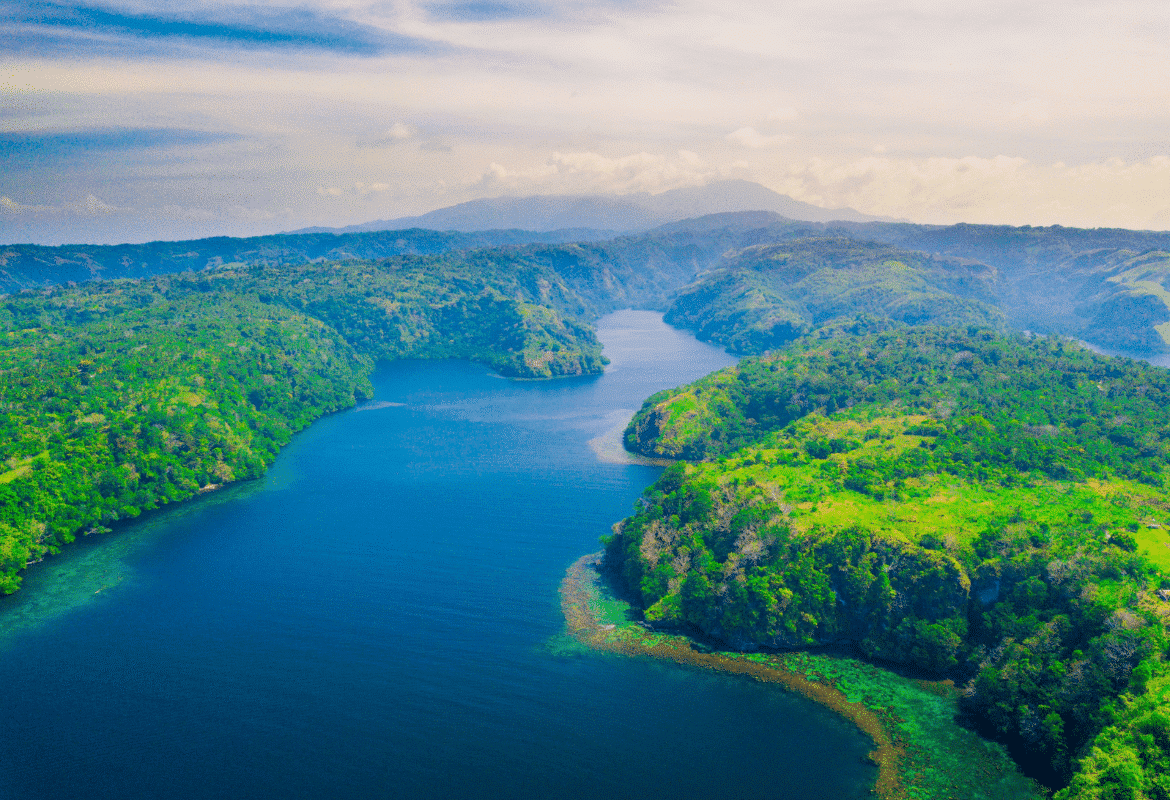
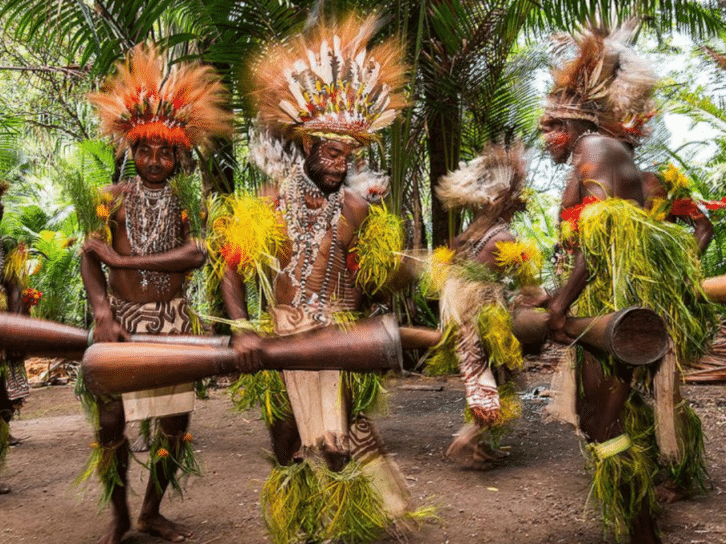
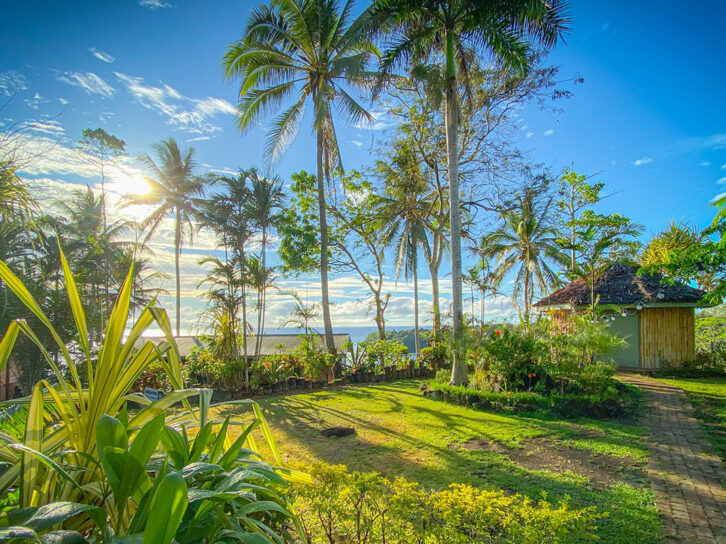
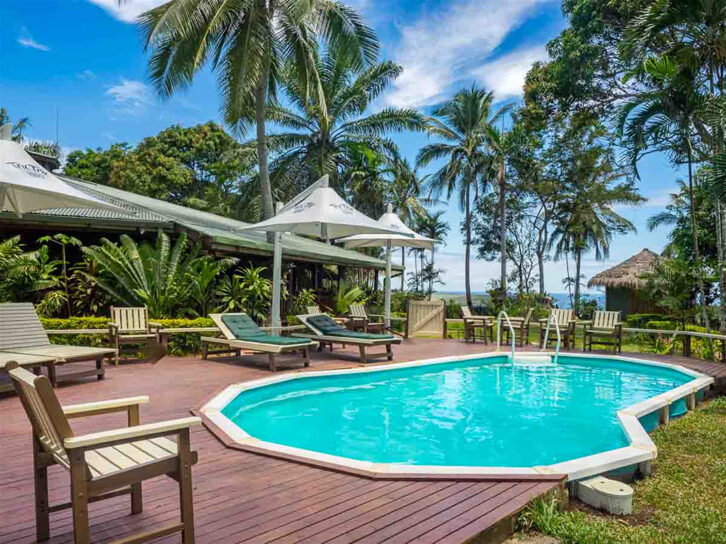
Explore the enchanting underwater world, breathtaking fjords, and indigenous traditions during this unforgettable diving vacation in Tufi, Papua New Guinea.
We are EWDR