Diving trip French Polynesia – Island hopping in paradise
A unique journey through French Polynesia along the most beautiful dive sites and most extraordinary islands. From manta rays and sharks to singing humpback whales, each destination offers an unforgettable nature experience.
Travel period
Features
Starting from
French Polynesia: diving, whales and paradise islands
French Polynesia captures the imagination of virtually every diver and nature lover. During this unique trip you will not only discover some of the most beautiful islands in the Pacific Ocean, but you will also get to know an underwater world that is among the absolute best in the world.
You will travel through a carefully curated selection of islands and atolls, each with its own character. On Bora Bora you will dive among manta rays and colorful reefs, while Rangiroa is known for its spectacular drift dives, dolphins and large schools of fish. In Fakarava, one of the most impressive shark dives in the world awaits, in the middle of a UNESCO biosphere reserve. To conclude, you will visit the authentic island of Rurutu, where you will have the chance to observe humpback whales up close and even swim with these impressive animals.
In between dives, you will enjoy white sandy beaches, crystal clear lagoons, welcoming island communities and small-scale accommodations that perfectly suit the relaxed Polynesian lifestyle. Thanks to domestic flights, you will discover different island groups and experience how versatile French Polynesia really is.
This trip has been specially curated for travelers seeking exceptional diving experiences, extraordinary encounters with great marine life and the beauty of some of the world’s most remote islands. A trip full of highlights, both above and below the water.
Best travel time for a diving vacation to French Polynesia
French Polynesia has a tropical climate, with the dry season from May to October generally being the best period for a diving vacation. During these months the weather is more stable, there is less rain and diving conditions are often the best, with good visibility and pleasant temperatures.
A particular highlight of the trip is Rurutu, where humpback whales are present between August and October. During this period, they come to the warm waters to mate and raise their young, allowing unique encounters under and above the water.
Availability of hotels in French Polynesia
French Polynesia is a special destination that you should book well in advance. Keep in mind 1.5 to 2 years in advance. It is more the rule than the exception that the hotels and resorts are fully booked well in advance.

Average temperatures
Wetsuit advice for diving in French Polynesia

Water temperatures fluctuate little throughout the year, which makes French Polynesia such a fine diving destination. There is also virtually no thermocline, so the temperature remains very constant during dives. In the summer months a 3mm or shorty is sufficient, in the winter you can bring a 5mm.
What will you experience on this diving vacation?
View itinerary here

Day 1 to 3 | Trip to French Polynesia
The trip to French Polynesia takes some hours. The finest route is via Paris, from there there is a direct flight to Tahiti. Located in the heart of the South Pacific, Tahiti is the largest island in French Polynesia. It’s a 22-hour flight, with the plane making a technical stop in Los Angeles.
On Tahiti, a transfer will be waiting for you to take you to the hotel. You will stay one night in a hotel near the airport, as you will fly on to Bora Bora the next day . Tahiti is a kind of base that connects the islands. You will return here more often to visit the different islands.
On Day 3 you will fly to Bora Bora, a flight of about an hour. After arriving at the airport, a transfer will be waiting to take you to Hotel Matira. You will stay here for 3 nights in a beach bungalow. The location of the hotel is beautiful: it is located directly on Matria Point, one of the mythical beaches of the island. From the hotel you have views over the lagoon, where you can see in the water the reflection of the top of the volcano.
You will arrive during the day, so you will have plenty of time to unpack your suitcase and already explore the area.
Day 4 & 5 | Diving around Bora Bora
Today it is finally time to get into the water and get acquainted with the spectacular underwater world of French Polynesia. During both diving days you will make two boat dives in the morning, accompanied by experienced local guides.
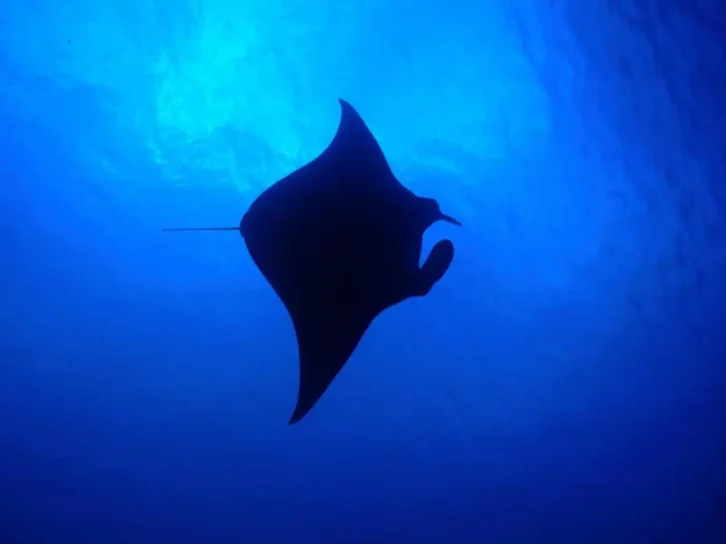
Normally the program consists of one dive in the lagoon and one dive on the reef or in the ocean. The lagoons are known for their crystal clear waters and offer a great chance of spotting manta rays. You can also encounter eagle rays, turtles and colorful coral gardens here, among other things.
During ocean and reef dives, you’ll be introduced to the larger life for which French Polynesia is so famous. Think blacktip reef sharks, lemon sharks, Napoleon fish and schools of tropical fish that migrate along the reef walls.
You’ll dive in small groups, allowing for plenty of personal attention and optimal enjoyment of the dives. The dives last on average 45 to 60 minutes and have a maximum depth of 29 meters.
All necessary diving equipment is included, as well as nitrox for certified divers. Towels, drinking water, tea and a small snack are available on board. Transfers to and from the dive center are also included.
Day 6 | Transit to Rangiroa
Today you bid farewell to Bora Bora and travel on to Rangiroa atoll, one of French Polynesia’s most impressive diving destinations. You will travel by domestic flight via Tahiti to Rangiroa. Of course, your last dive of the previous day is taken into account when planning the flight, so that you have spent enough time on the surface and can fly safely.
Rangiroa is the second largest atoll in the world and is known for its crystal clear waters, strong currents and impressive encounters with sharks, dolphins and large schools of fish. The next few days are therefore entirely devoted to one of the most beautiful diving areas in the Pacific.
After arriving at Rangiroa airport, a transfer will be waiting for you to take you to your accommodation. For the next five nights you will stay at the small-scale Les Relais de Joséphine, a cozy family guesthouse on the famous Tiputa Pass.
With only seven bungalows, this is a quiet and personal accommodation, ideal for divers who want to enjoy the relaxed atmosphere of the atoll. From the guesthouse you overlook Tiputa Pass, one of Rangiroa’s most famous passages. With a little luck, you may even see dolphins from the terrace while enjoying your breakfast or a drink at the end of the day.
Les Relais de Joséphine is a short distance from several diving centers, making it an excellent base from which to discover Rangiroa’s underwater world. Outside diving, there are plenty of opportunities to explore the atoll, for example on a snorkeling trip, an excursion on the lagoon or a bike ride along the islands. Bicycles are available free of charge, allowing you to explore the island in complete freedom.
Day 7 to 9 | Diving around Rangiroa
The next three days are all about the world-famous Rangiroa. You will make a total of six dives, with two boat dives each day. You will dive in small groups and with experienced guides, allowing you to fully enjoy the spectacular dives in the atoll’s famous passes. All diving equipment is included.
Rangiroa is known for its two iconic passes between the ocean and the lagoon: Tiputa Pass and Avatoru Pass. The currents in these passes attract a huge amount of life, making every dive different and surprises are always possible.
What makes Rangiroa so special for many divers are the encounters with large animals. In Tiputa Pass, you have an excellent chance of seeing groups of gray reef sharks, sometimes in impressive numbers. In addition, dolphins, manta rays, eagle rays, barracudas, tuna, Napoleon fish and different types of sharks are regularly spotted. Depending on the season, even large hammerhead sharks may appear.
One of the absolute highlights of Rangiroa are the curious bottlenose dolphins that live in Tiputa Pass. These dolphins are known to frequently seek interaction with divers and sometimes come surprisingly close. For many divers, an encounter with these dolphins is among the best experiences of their entire diving career.
Avatoru Pass also has its own character. Here you will find colorful reef walls, caves where white tip reef sharks rest and regularly foraging manta rays that let themselves be fed in the current. The combination of strong currents, excellent visibility and enormous biodiversity makes every dive an adventure.
Whether swimming past schools of barracuda, watching sharks patrol the blue depths or side by side with a curious dolphin, the dives in Rangiroa are undoubtedly among the most impressive in French Polynesia and for many divers are the highlight of their trip.
Day 10 | Exploring the island of Rangiroa
aday you have a free day to enjoy Rangiroa at your own pace. Although the atoll is best known for its spectacular diving, there is plenty to do above water as well.
Explore the island by bicycle and discover the relaxed Polynesian atmosphere of the small villages along the lagoon. The hotel’s bicycles are available free of charge, making it easy to explore the area. Along the way, enjoy white sandy beaches, coconut palms and beautiful views of the clear blue waters.
Another must is an excursion to the famous Blue Lagoon, a natural lagoon within Rangiroa Lagoon. This paradisiacal area is known for its turquoise waters, small sand banks and rich bird life. A visit to Île aux Récifs is also a possibility, where unusual limestone formations and natural pools provide a totally different landscape than elsewhere on the atoll.
Prefer something a little quieter? Find a waterfront spot near your accommodation and enjoy the view of Tiputa Pass. With a little luck you will see dolphins playing in the current while fishing and diving boats sail to and fro. A perfect day to review all the impressions of the past dives.
Day 11 | Onward to the island of Fakarava
Today you say goodbye to Rangiroa and travel on to the next paradise atoll of this trip: Fakarava. You will fly via Tahiti to this remote island, known for pristine nature, tranquil atmosphere and spectacular underwater world.
Part of a UNESCO Biosphere Reserve, Fakarava is considered by many divers to be one of the most beautiful atolls in French Polynesia. The island has a totally different atmosphere than Bora Bora or Tahiti. No big resorts or busy boulevards here, but a relaxed Polynesian lifestyle, snow-white beaches and a lagoon that looks like a postcard.
After arriving at the airport, a transfer will be waiting for you to take you to Havaiki Lodge. For the next five nights you will stay here in a comfortable beach bungalow, right on the lagoon. From your accommodation you overlook the crystal clear water and enjoy spectacular sunrises and sunsets.
Fakarava is particularly famous for the impressive passes that connect the ocean to the lagoon. These attract huge amounts of marine life and have given the atoll a legendary reputation among divers from all over the world. Above water, the island is at least as special. Explore the quiet villages, stroll along the expansive beaches or simply enjoy the tranquility and views of the turquoise lagoon.
For the next few days you will stay on one of the most remote and authentic islands of French Polynesia, where nature and marine life are still fully in the lead.
Day 12 to 14 | Diving around Fakarava
For the next three days you will dive around Fakarava. From Fakarava North you will make two boat dives daily in one of the most impressive diving areas in the Pacific.
A UNESCO Biosphere Reserve, Fakarava is known worldwide for its huge concentration of marine life. The atoll boasts two famous passes: the Garuae Pass in the north and the Tumakohua Pass (South Pass) in the south. Both are among the absolute highlights of French Polynesia.
In northern Garuae Pass, the widest pass in French Polynesia, you are surrounded by huge schools of fish, colorful reefs and large numbers of sharks. Grey reef sharks, white tip reef sharks, black tip reef sharks, napoleon fish, turtles, barracudas and manta rays are regularly spotted here. One of the most famous dive sites is the “Ali Baba Canyon,” where thousands of fish converge in an impressive display.
Depending on conditions and the diving program, you may also make an excursion to the famous South Pass. This pass enjoys worldwide fame for its legendary “Wall of Sharks.” Here live hundreds of gray reef sharks, often visible at the same time, one of the largest natural concentrations of sharks in the world. For many divers, this is the reason to travel to Fakarava.
Besides the sharks, the crystal clear conditions, impressive coral formations and huge schools of snappers, groupers and other reef fish ensure that every dive is different. The combination of strong currents, excellent visibility and exceptional biodiversity makes Fakarava a destination on virtually every diver’s bucket list.
Day 15 | Explore Fakarava above water
After three days of impressive diving, today it is time to explore Fakarava above water as well. This quiet atoll has a totally different atmosphere than many other islands in French Polynesia. Life here goes at a relaxed pace and nature plays the leading role everywhere.
Start the day with a walk along the white sandy beach or enjoy the view of the lagoon from your bungalow. The clear blue waters and swaying palm trees make you immediately understand why Fakarava is often described as one of the most beautiful atolls in the Tuamotu Archipelago.
A fun way to explore the island is by bicycle. Along the only road on the island you will cycle through small villages, past local houses and between vast coconut plantations. On the way you will regularly come across deserted beaches where you can stop for a swim or simply enjoy the peace and quiet.
Snorkelers will also find plenty to enjoy at Fakarava. The lagoon offers crystal clear water and a colorful underwater world that is impressive even from the surface. With some luck you will spot reef fish, rays and maybe even a small shark gliding through the shallows.
Those who want to see more of the area can join an excursion across the lagoon. Here you will visit remote motus (small islands) where you will enjoy pristine beaches, turquoise water and an impressive silence found only in few places in the world.
Day 16 | Transit to Tahiti
Today you will fly to Tahiti, where you will stay one night before traveling on to Rurutu. This overnight stay is primarily intended as a comfortable stopover between the Tuamotu Archipelago and the Austral Islands.
Your accommodation is close to the airport, allowing you to relax immediately after arrival. If you still have some time left, you can visit the center of Papeete, the capital of French Polynesia. Here you will find cozy terraces, local stores and the famous market where residents sell fresh produce and handicrafts daily.
A stroll along the promenade or marina is also a fun way to soak up the atmosphere of Tahiti. Prefer to take it easy? Then you can relax at the hotel and prepare for the next part of the trip.
Tomorrow you will fly on to Rurutu, one of the most authentic and green islands of French Polynesia, where a very different side of the archipelago awaits you.
Day 17 & 18 | The island of Rurutu
From Tahiti, fly to Rurutu, one of the islands in the Austral archipelago. This green, volcanic island has a rugged coastline, impressive caves and authentic Polynesian atmosphere.
Upon arrival, you will be transferred to Vaitumu Village, where you will spend the next four nights in a comfortable Garden Bungalow. This small-scale accommodation is located in the midst of tropical surroundings and is an ideal base from which to explore the island.
The next day you will have plenty of time to get acquainted with Rurutu, one of the most authentic islands in French Polynesia. While many islands are known for their lagoons and beaches, Rurutu stands out for its green hills, limestone cliffs and impressive coastal landscapes.
The island lends itself perfectly to exploration by car, scooter or bicycle. On the way you will pass small villages where traditional Polynesian life is still clearly visible. The friendly people, colorful churches and quiet roads give the island a relaxed and authentic character.
One of the highlights of Rurutu are the natural caves and limestone formations scattered throughout the island. Some of the caves are easily accessible and offer a special insight into the geological history of the island. The rugged coastline with impressive viewpoints is also well worth a visit.
For hiking enthusiasts, there are several trails that lead through the green interior. From several vantage points you will have beautiful panoramas of the ocean and the island’s volcanic landscape.
Between July and October, Rurutu is also known worldwide as one of the best places to see humpback whales. During this period, the whales come to the warm waters around the island to mate and raise their young. Even from the shore, whales are regularly spotted jumping out of the water or slapping their tails on the water.
Day 19 & 20 | Swimming with humpback whales
The next two days are devoted to one of the most extraordinary nature experiences French Polynesia has to offer: swimming with humpback whales. On two mornings from Rurutu, you will join an approximately three-hour whale-watching expedition in search of these impressive ocean giants.
Between August and October, humpback whales migrate from Antarctica to the warm waters around Rurutu. Here they give birth to their calves, feed their young and look for a mate. The reefs around the island turn into a nursery for whales during this time, so the chances of special encounters are high.
During the excursion, you will go by boat in search of whales that are around the island. Regularly mothers with calves are seen, while males try to impress with spectacular jumps, flukes and other impressive behaviors. Just observing these animals from the boat is an unforgettable experience.
When conditions permit, you will have the opportunity to enter the water and admire the whales up close. Here, respect for the animals is always paramount. The whales decide for themselves if they want to get closer and all activities take place according to strict guidelines that protect their well-being.
One of the most impressive aspects of this experience is the sound. Once you are in the water, you often hear the mysterious songs of the humpback whales spreading for miles through the ocean. The deep tones and complex melodies are really quite special to experience.
With any luck, you will see a curious calf coming closer or hear the song of a male while floating on the surface. It is precisely this combination of the huge animals, the silence of the ocean and the impressive sounds underwater that makes Rurutu one of the most special places in the world to encounter humpback whales.
You will have the rest of the day to explore Rurutu on your own.
Day 21 | Return to Tahiti
Today you say goodbye to Rurutu and fly back to Tahiti. Here you will stay one more night before continuing your journey.
After the peace and nature of the Austral Islands, Tahiti is a nice place to look around. For example, visit the center of Papeete, where you can stroll along the promenade, buy souvenirs at the local market or settle down on a waterfront terrace.
If you feel like seeing something more of the island, you can visit the Jardins de Paofai, a beautifully landscaped park by the sea, or enjoy dinner at the roulottes: Tahiti’s famous food trucks serving both local and international dishes.
Prefer to relax? Then you can use this last evening to enjoy all the special experiences of the past few weeks.
Day 22 & 23 | Trip back home
Today your adventure through French Polynesia comes to an end. After a final breakfast, you will depart for Tahiti Airport, where you will check in for your return trip home.
During the flight, you’ll have plenty of time to reflect back on the many highlights of the past few weeks. From the manta rays of Bora Bora and the spectacular drift dives in Rangiroa and Fakarava to the unforgettable encounters with humpback whales at Rurutu. Above water, too, French Polynesia has shown its best side, with paradisiacal lagoons, remote atolls and a welcoming Polynesian culture.
Because of the time difference and long travel time, you will also be on the road for part of day 22. You will come home with a camera full of pictures, a head full of memories and experiences that will resonate for a long time. A trip never to forget.
Highlights of this trip
What can you expect from the underwater world in French Polynesia?
Diving around Rangiroa
Rangiroa offers some of French Polynesia’s most iconic dives. In the famous Tiputa Pass, strong currents create spectacular drift dives past schools of barracuda, reef sharks, rays and Napoleon fish. What makes Rangiroa extra special are the wild dolphins that are regularly present in the pass and sometimes interact with divers out of curiosity. The combination of great marine life, clear waters and breathtaking dive sites makes every dive here unique.
Diving at Fakarava
Fakarava is known as one of the best diving destinations in the world. The atoll is part of a UNESCO biosphere reserve and is home to an unprecedented amount of marine life. During the dives you will be surrounded by large schools of fish, colorful reefs and impressive numbers of reef sharks. Especially the famous South Pass, where hundreds of gray reef sharks converge, provides spectacular underwater moments that amaze even experienced divers.
Swimming with whales at Rurutu
An encounter with humpback whales is among the most impressive wildlife experiences in the world. In the warm waters around Rurutu, you get the chance to observe these giant animals up close and, when conditions are right, even swim with them. The moment you hear a whale’s song underwater or see a curious calf glide by is an experience that is hard to describe and will remain in your memory for years to come.
The accommodations
The locations and facilities
During this trip, you will stay on several islands in small-scale accommodations that all contribute to the charm of French Polynesia. Do not expect large hotel chains or sprawling resorts here, but instead atmospheric guesthouses, lodges and family hotels where personal attention and hospitality are key.
Many accommodations have been run by the same family for generations. This gives you an authentic insight into Polynesian life and you often stay in unique locations right on the lagoon, the beach or near a famous dive site. It is precisely this small scale that makes traveling through French Polynesia so special.
However, the number of accommodations on most islands is limited. On some atolls, only a few hotels or guesthouses are available and often have a small number of rooms or bungalows. Therefore, all accommodations during this trip are always subject to availability.
If you want to be assured of the finest accommodations and the best locations, it is wise to book well in advance. We recommend booking one and a half to two years in advance.
French Polynesia consists of more than a hundred islands spread over a vast area in the Pacific Ocean. The distance between the various island groups is often too great to cover by boat, making air travel the most efficient and comfortable way to travel.
During this trip, you will use multiple domestic flights that will allow you to travel easily from island to island. This allows you to get to know the great diversity of French Polynesia in one trip.
A special island pass from the local airline is used for this route. With this so-called Tahiti Air Pass, you can inexpensively combine several islands within one trip. This makes it possible to visit not only the most famous destinations, but also less visited islands known for their authenticity and special nature.
Although you fly regularly, the flights are often short and are an experience in themselves. During the trip, you will regularly enjoy spectacular views of turquoise lagoons, coral reefs and remote atolls that may be even more impressive from the air than from the ground.
Travel costs
What is included
This diving vacation to French Polynesia is available from NZD 15.728 per person, based on two people in one room. The trip can be extended as desired and some components are included as standard in this travel package.
Because French Polynesia consists of small-scale islands and limited accommodations, supply is limited and entirely dependent on availability. Many hotels and guesthouses have only a small number of rooms and therefore fill up quickly. Early booking is therefore essential and gives the greatest chance of getting the best accommodations and itineraries.
It is possible to customize the trip duration and structure. Various itineraries are available, including variations in island order and length of stay.
Prices are subject to change, availability and varying flight and fuel costs. Flights are always based on the most favorable booking class available at the time of booking.
Want to know more about this diving vacation to French Polynesia? Feel free to contact us.
Included in this trip, from NZD 15.728 p.p.
- Tahiti
- 3 nights in a Standard Room
- Accommodation based on lodging
- Return transfers to airport
- Bora Bora
- 3 nights in a Beach Bungalow
- Stay on a bed & breakfast basis
- Dive package with 4 dives
- Full set of diving equipment
- Use with nitrox for certified divers
- Return transfer to airport
- Rangiroa
- 5 nights in a Bungalow
- Half board accommodation
- Dive package with 6 dives
- Full set of diving equipment
- Return transfer to airport
- Fakarava
- 5 nights in a Beach Bungalow
- Half board accommodation
- Dive package with 6 dives
- Full set of diving equipment
- Use with nitrox for certified divers
- Return transfer to airport
- Rurutu
- 4 nights in a Garden Bungalow
- Half board accommodation
- 2 half-day Whale Watching expedition
- Return transfer to airport
- General
- Air Tahiti AirPass (local flights)
- Return transfers
- VZR & Administration fee
Excluding
- Flight to Tahiti from NZD 3.736 p.p.
- Dive and travel insurance
✈︎ The quoted (international) flight prices are indicative prices and based on departures from Europe. However, we can arrange flights from any location worldwide. Booking your own flights is of course also possible.
Optional
- 15L tank
Send this trip by email
Want to save or share the details of this trip with someone? You can do so by sending the trip by email.
Where may we send the email to?
Frequently asked questions about this liveaboard
Diving general
You can take this trip with an Open Water certification, but you will get more enjoyment and satisfaction out of the dives if you are at least Advanced Open Water certified. There are a number of dive sites deeper than 18 meters that are well worth your time. There are also a lot of currents at certain dive sites. This attracts a lot of life and larger animals, but it is good to have some experience with this.
All dives are made by boat.
The itinerary includes 2 dives per day as standard.
- In Bora Bora, you can possibly make a third dive in the afternoon.
- In Rangiroa, you may be able to make two additional dives in the afternoon.
- In Fakarava you can make 2 dives maximum per day.
It really depends on each island. Most dive sites are fairly close.
In Fakarava, the diving school is located in the north. To go to the south, you are over 1.5 hours away. This is the longest distance.
No, no night dives can be made.
Yes, it is possible to take diving courses at any diving school. Feel free to ask us about the possibilities.
Diving equipment
Standard diving is done with DIN, but they can supply adapters for INT controllers
Dives in Bora Bora and Fakarava include nitrox free of charge for certified divers.
In Rangiroa, the use of nitrox costs 18 € per dive.
The use of diving equipment is included as standard.
Related diving trips






Liveaboard Aqua Tiki II – Discover the Fakarava and Taumotu atolls in French Polynesia
During this unique liveaboard you will discover the world-famous dive sites of the Tuamotu archipelago, including Fakarava and Toau. In...
We are EWDR