Ambai Liveaboard • Raja Ampat & Triton Bay

Luxury liveaboard through Raja Ampat and Triton Bay. World-class diving, pristine wilderness, and maximum comfort on board.

Travel period
November, December
Features
Boatdiving
Starting from
15 days from AUD 10.098 p.p.

Dive in the last paradise on Earth aboard the luxury liveaboard Ambai

Some diving trips are special; others are among the very best. This luxury liveaboard aboard the Ambai combines two of Indonesia’s most spectacular diving destinations: the world-famous Raja Ampat and the remote Triton Bay. During this 13-day trip, you’ll sail through one of the most biodiverse marine areas in the world, where colorful coral reefs, enormous schools of fish, manta rays, and even whale sharks are part of the daily scenery.

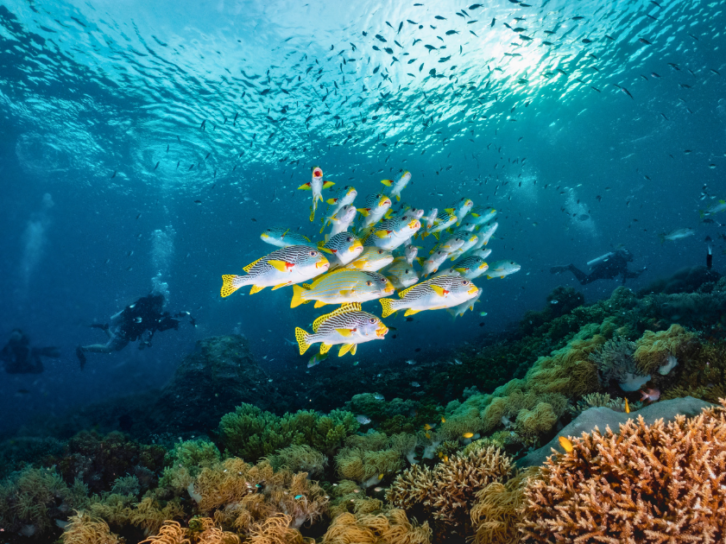
Underwater, you’ll discover an unprecedented variety of dive sites. In Misool, you’ll dive along steep walls, ledges, and pinnacles completely covered in soft corals and large gorgonians. Schools of fusiliers, barracudas, sweetlips, and snappers fill the water here, while manta rays regularly glide above the reefs. At the same time, the area offers an impressive array of macro life, from colorful nudibranchs to various species of pygmy seahorses. Further along the journey lie the remote dive sites of Sabuda and Momon, where schools of mackerel, napoleon fish, reef sharks, and sometimes even whale sharks are spotted.

The highlight of the trip might just be Triton Bay. This relatively unknown area is known for its vast fields of soft corals, black coral forests, and unique underwater landscapes. Here you’ll find a combination of large marine life and fascinating macro species, while the famous bagans regularly attract whale sharks.

Meanwhile, aboard the Ambai, you’ll enjoy all the comforts you’d expect from a luxury liveaboard. With spacious cabins, excellent service, an experienced crew, and facilities specially designed for divers and underwater photographers, this trip offers the perfect combination of adventure, nature, and comfort. A unique expedition through two of Indonesia’s most beautiful dive destinations.

Best travel time for a diving vacation to Raja Ampat

This itinerary is offered exclusively in November and December. During this period, conditions are ideal for combining Raja Ampat and Triton Bay, with warm water, good visibility, and abundant marine life. The chances of encountering manta rays and whale sharks are also excellent during these months.

Availability of this liveaboard

This special itinerary is offered only twice a year, and the number of spots on board is limited. As a result, the boat is often fully booked well in advance. We therefore recommend booking this liveaboard at least one year in advance. The sooner you book, the better your chances of securing a spot and your preferred cabin category.

Average temperatures

Wetsuit Recommendations for Diving in Raja Ampat & Triton Bay

The water has a pleasant temperature, so a 3mm wetsuit may be sufficient. You will make up to 4 dives a day, so if you get cold easily, a 5mm may be nicer.

What will you experience on this diving vacation?

View itinerary here

Days 1–3 | The Trip to Raja Ampat

Your adventure begins with the trip to Indonesia. For this liveaboard, you’ll fly to Sorong, the gateway to Raja Ampat. Depending on the airline you choose, you’ll typically travel via Jakarta, Singapore, or another Asian hub, followed by a domestic flight to Sorong. The total travel time is usually 2 to 3 days.

To allow for any delays along the way, we recommend arriving in Sorong at least one day before the liveaboard departs. If you’d like, we’d be happy to help arrange a hotel stay prior to the cruise.

Upon arrival at Sorong Airport, you’ll be welcomed by the crew or a representative of the liveaboard. If you’re traveling to Sorong in advance, you can also be picked up at your hotel. After a short transfer of about 20 minutes to the harbor, you’ll board the Ambai. A welcome drink will be waiting for you there, and you’ll meet the crew and your fellow travelers. After cabins have been assigned and the safety briefing has taken place, the ship sets sail for Raja Ampat in the afternoon. As the first small islands appear on the horizon, you can take your time getting acquainted with the ship and prepare for the impressive dives scheduled for the coming days.

The first few days of diving will take place around Misool, one of the most famous areas in Raja Ampat. This area is known for its impressive biodiversity, colorful reefs, and spectacular underwater landscapes. Underwater, steep walls, rock formations, ledges, and pinnacles alternate with one another. The reefs are covered with soft corals, large gorgonians, and a vast variety of reef fish.

Misool offers excellent opportunities for both wide-angle and macro photography. Large schools of fusiliers, barracudas, snappers, and sweetlips regularly attract predatory fish, while manta rays are often spotted here. At the same time, enthusiasts of small marine life will find four species of pygmy seahorses, colorful nudibranchs, crabs, and other unique reef inhabitants. Between dives, there’s an opportunity to visit some of Misool’s iconic lagoons and viewpoints.

After a night crossing, the Ambai arrives at the remote archipelagos of Sabuda and Momon. This region combines impressive above-water landscapes with diverse underwater dive sites. Large schools of surgeonfish, trevally, and barracuda swim around Sabuda, and manta rays are also regularly spotted here.

At Momon, the landscape changes completely. Steep, rainforest-covered hills plunge directly into the sea, forming one of West Papua’s most spectacular coastlines. During an excursion, you’ll visit a large waterfall that flows directly from the rainforest into the sea. The dive sites consist of undersea mountains and reefs where schools of mackerel, napoleon fish, reef sharks, and sometimes even whale sharks are spotted. In the evening, thousands of bats leave their island colony, creating a remarkable natural spectacle.

The final leg of the journey takes place in Triton Bay, one of Indonesia’s most pristine and least-visited diving areas. The bay is known worldwide for its vast fields of soft corals, which sometimes grow just below the water’s surface. The colorful reefs form a striking contrast to the dark coral forests and sandy bottoms found at greater depths.

During your dives, you may encounter schools of snappers, sweetlips, and reef sharks, while anglerfish, nudibranchs, and other unique macro species are frequently found on the seafloor. Manta rays and devil rays also make regular appearances here. One of the highlights of Triton Bay is diving near the traditional fishing platforms, known as bagans. These attract large numbers of baitfish and, consequently, whale sharks. In addition, Triton Bay offers opportunities for rubber boat excursions through narrow lagoons, viewing ancient rock art, and kayaking among rainforest-covered islets.

After nearly two weeks of sailing and diving, this special journey through Raja Ampat and Triton Bay comes to an end today. After breakfast, there will still be time to say goodbye to the crew and your fellow travelers. As is tradition, a few group photos are often taken before it’s time to disembark.

You will then be taken to Kaimana Airport for your return trip. From Kaimana, you will typically take a domestic flight to a larger Indonesian airport, where you will connect to your international flight home.

Please note that the last dive takes place on the second-to-last day of the trip. This ensures there is sufficient time between the last dive and your flight, in accordance with generally recommended safety guidelines for divers. With a camera full of photos and memories of manta rays, whale sharks, colorful coral gardens, and spectacular landscapes, one of Indonesia’s most extraordinary liveaboard itineraries comes to an end.

Highlights of this trip

What can you expect from this liveaboard in Raja Ampat & Triton Bay?

The Last Paradise on Earth

Raja Ampat is often called the last paradise on Earth because of its unparalleled natural beauty, both above and below the water. The archipelago consists of thousands of jungle-covered islets, hidden lagoons, and deserted beaches. Beneath the surface lies the world’s greatest marine biodiversity, featuring colorful coral reefs, enormous schools of fish, manta rays, whale sharks, and countless rare species. Its remote location and limited development ensure that large parts of Raja Ampat remain exceptionally unspoiled.

Diving in Misool

Raja Ampat is known as the most species-rich marine area in the world, and especially the southern part, Misool, is among the absolute best. Here you will find vast coral gardens, steep walls, lagoons and seamounts full of life. Protection of the area has resulted in exceptionally healthy reefs and great fish stocks. Diving in Misool means overwhelming biodiversity, crystal clear waters and the feeling that you are exploring one of the last untouched places on earth.

Diving in Triton Bay

Triton Bay is so special because three unique elements come together here: extreme biodiversity, pristine reefs and minimal crowding. The combination of nutrient-rich currents and sheltered bays creates exceptionally healthy corals and a huge variety of marine life, from pygmy seahorses to mantas and walking sharks. Because the area is remote, you often dive here completely alone. This gives each dive a pure, intense and almost expedition-like character that you rarely experience anywhere else in the world.

Ambai

The liveaboard and onboard facilities

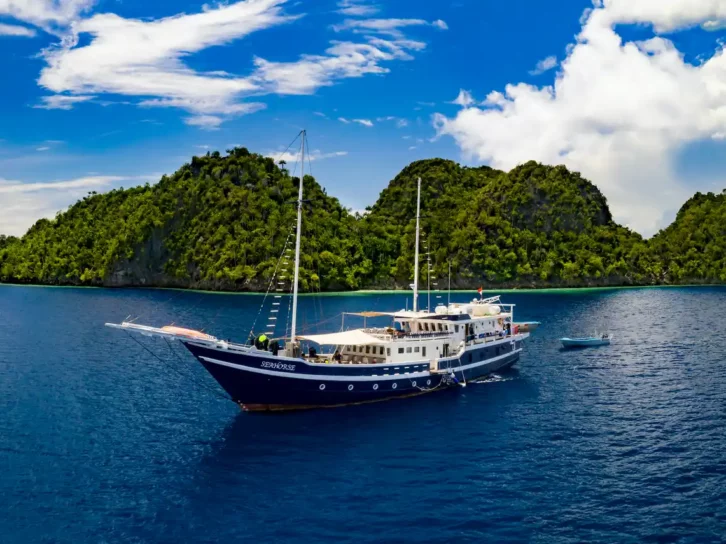
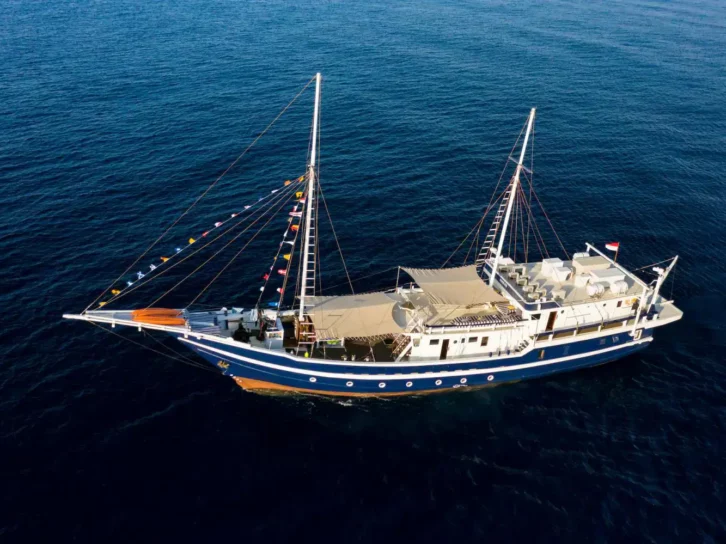
The Ambai is a 32-meter-long wooden liveaboard designed specifically for divers. It is part of the Wallace Dive Cruise, a fleet consisting of two boats. The Seahorse is also part of this fleet.

The Ambai has been sailing through Indonesian waters since 2012 and can accommodate up to 16 guests. The boat is built from ironwood and other tropical hardwoods, with great attention paid to comfort and practical amenities for diving trips. The spacious dive deck offers plenty of room to prepare your gear, and from the aft platform, you can easily transfer to one of the three tenders. This ensures that dives run efficiently, even when all guests enter the water at the same time.

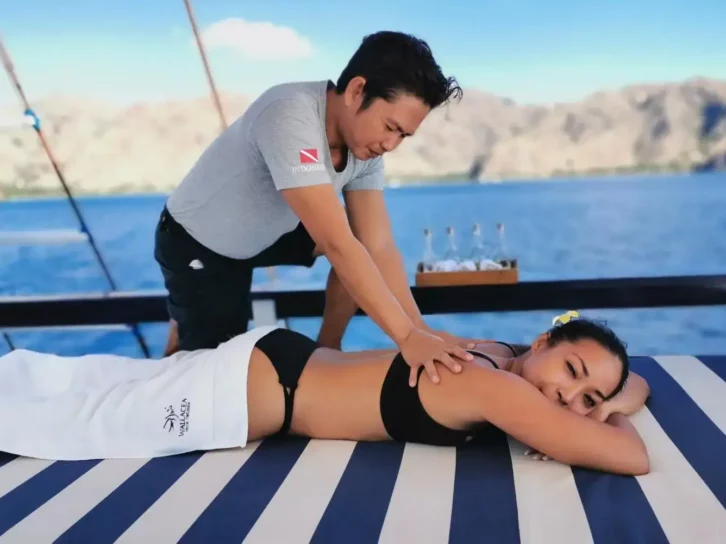
Photographers have access to a separate camera room where equipment can be safely maintained and prepared. The main deck features a pleasant dining area. Thanks to a large screen in this area, underwater photos and video footage can be viewed together at the end of the day. The Ambai also features an indoor lounge, several shaded seating areas, and a sun deck for relaxing between dives. With a crew of 18, the focus on service onboard is exceptional.

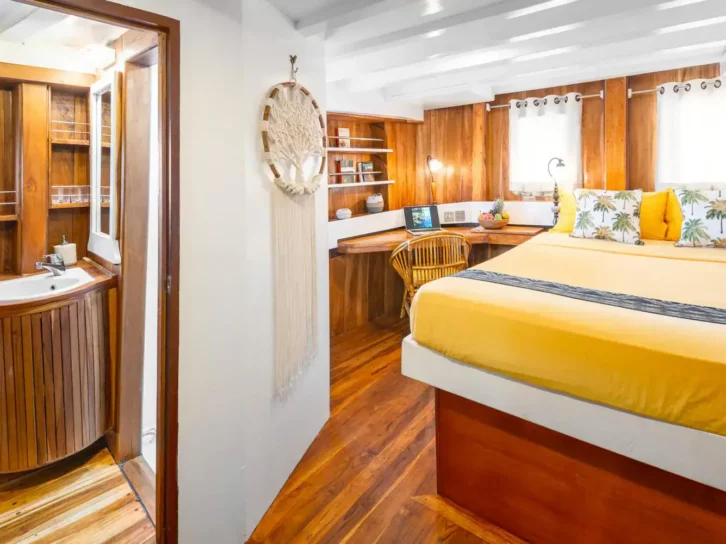
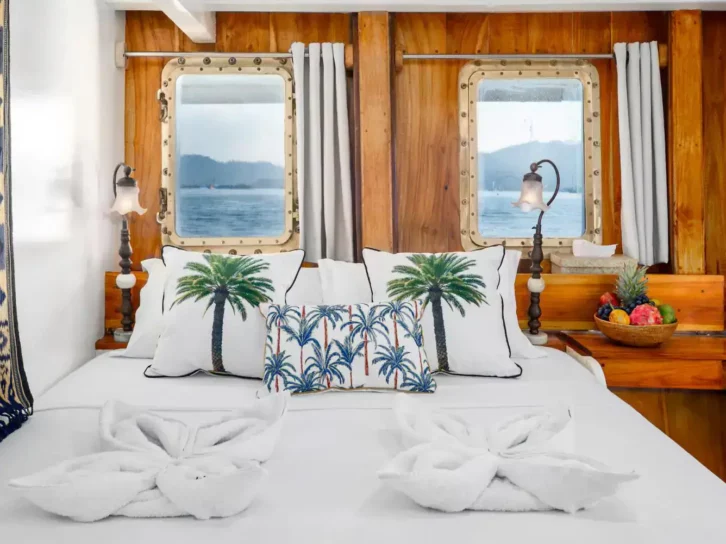
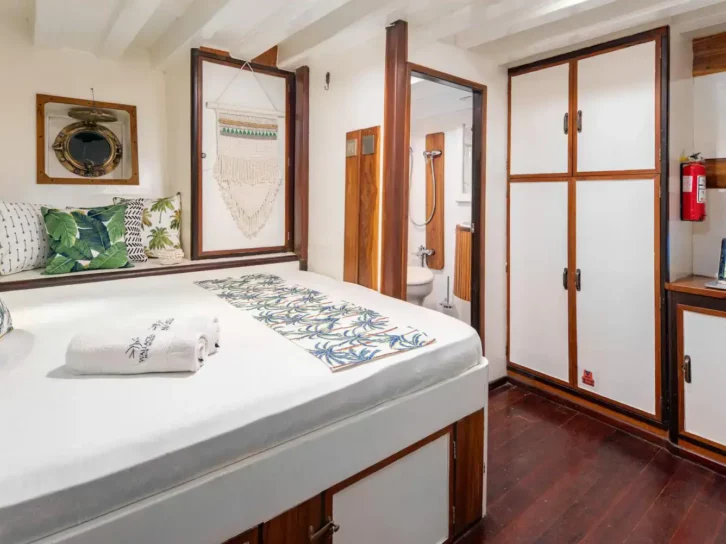
The Ambai features eight comfortable cabins, spread across the ship’s various decks. All cabins are equipped with individually controlled air conditioning, a private bathroom, and a hot-water shower. This ensures that guests enjoy ample privacy and comfort throughout their journey. The cabins are spacious and practically furnished, with ample storage space for personal belongings and diving gear.

The cabins are suitable for both individual travelers and divers traveling together. Thanks to their distribution throughout the ship, guests can choose the cabin that best suits their preferences. Large windows or portholes in various cabin types provide natural daylight and a pleasant atmosphere. The combination of wood finishes and modern amenities gives the accommodations a warm feel without compromising on comfort.

Upon arrival, towels and toiletries such as soap, shampoo, and toothpaste will be provided. Daily cleaning ensures that the cabins remain tidy throughout the entire trip.

Travel costs

What is included

This diving vacation aboard the Ambai liveaboard is available starting at AUD 10.098 per person, based on two people sharing a cabin. The diving trip can be extended as desired. A number of items are included as standard in this travel package.

Prices are subject to price changes, increases or changing exchange rates. Flights are always based on the cheapest possible booking class.

Want to know more about this liveaboard trip to Indonesia? Get in touch with us!

Included in this diving trip, from AUD 10.098 p.p.
Excluding

✈︎ The quoted (international) flight prices are indicative prices and based on departures from Europe. However, we can arrange flights from any location worldwide. Booking your own flights is of course also possible.

Optional

Email this diving holiday

Want to save or share the details of this diving trip with someone? You can do so by sending the trip by email.

Where may we send the email to?

Frequently asked questions about this liveaboard

The liveaboard

For this specific route, there are only a few departure dates each year. It also fills up quickly. It’s not uncommon to book two years in advance.

Plan to book one and a half to two years in advance. The earlier you book, the more choices you’ll have regarding your cabin and boarding location.

The Ambai sails various routes in Indonesia. These different routes depart from various islands in Indonesia and vary in duration. In addition, the cruise line also has another great liveaboard, the Seahorse. This boat sails in the same regions.

  • Raja Ampat (various routes)
  • Komodo National Park
  • Sulawesi
  • Halmahera
  • Banda Sea

In Triton Bay, at sunrise, you’ll take a dinghy tour through a maze of shallow lagoons among rainforest-covered quartz islets. Thousands of birds call this remote area home. For many travelers, the moment the engine is turned off and only the birdsong echoes through the lagoons is one of the most special experiences of the trip.

Between Namarote Island and the mainland lies an impressive rock face featuring ancient rock paintings. It is believed that this was once a cave that has been exposed over time. From the boat, you’ll have the opportunity to view these historic paintings up close.

In Momon, on the coast of Papua, you’ll take a short walk through the rainforest. With a little luck, you might spot one of the rare tree kangaroos here. In Misool, you’ll visit the ranger station and snorkel at a natural shark nursery. Young blacktip reef sharks swim around in the crystal-clear, shallow water. The itinerary also includes a short walk to the famous Love Lagoon viewpoint, a lagoon that looks like a heart when viewed from above.

When the sailing schedule permits, guests can also be taken ashore at any time during the trip. In addition, the four kayaks on board are available for guests to explore the surrounding area on their own while the ship is at anchor. All activities are subject to weather conditions, the daily itinerary, and the final route of the trip.

Yes, Starlink is available on the boat. 5G Starlink internet is included with your trip. You can purchase additional GB on board if you’d like.

Diving general

For this trip, you must have at least an Advanced Open Water certification with a minimum of 30 logged dives.

During this trip you will make different types of dives: reef dives, drift dives and deep dives. You will always receive a clear briefing beforehand. On this route, the currents at most dive sites are generally moderate. In addition, there are often sheltered locations available where you can dive safely when conditions require it. Thanks to the crew’s many years of experience in Raja Ampat and Triton Bay, dive sites are carefully selected based on current conditions, ensuring that every dive is as comfortable and safe as possible.

Before every dive, the guides check the current, visibility, and other relevant conditions at the site. During the pre-dive briefing, you’ll receive an up-to-date explanation of the conditions at the dive site, including expected currents, the dive profile, and any points to watch out for. This ensures you’re always well-prepared before entering the water, and dive plans can be adjusted to suit the conditions at that moment.

The dive sites are nearby. The dinghy will take you to the dive site.

Yes, it is possible to go on night dives. People often go on 6 night dives.

No, this is not possible.

Diving equipment

Both tanks are available.

No, there are 100 cu ft tanks. These are larger tanks, but converted to liters, that’s 13 liters. These are the largest tanks on the boat. Using a larger tank costs  75 per trip.

If you bring your own materials and discuss it in advance, this is possible.

Yes, the use of nitrox is included.

Yes, that’s possible. Renting a full set costs  40 per day. You have 10 dive days, so you’ll pay a total of  400. A dive computer and flashlight are also included in this price. Would you like to rent an SMB? This costs  5 per day.

Related diving trips

We are EWDR