Diving in Bali: a complete guide
Bali is one of the world’s most popular diving destinations, and for good reason. The island offers a diverse underwater world, from colorful reefs to impressive wrecks and even great marine life. Whether you’re a novice diver or have already spent a lot of time underwater, Bali has something for everyone. In this guide you will find everything you need to know for your (first) Bali diving experience. From the best dive sites and the right seasons to practical tips and what to expect per season, everything is covered to make sure your diving trip is a success.
Table of contents
General information about Bali
Bali is an Indonesian island in the Indian Ocean, located between Java and Lombok. The island is known worldwide for its beautiful nature, culture and excellent diving opportunities. While Bali is certainly not the only island in Indonesia with great dive sites (think places like Komodo, Raja Ampat and Lombok) Bali has the advantage of being easily accessible from many major cities in Asia and even Europe. This makes Bali the most popular choice for travelers who want to enjoy Indonesia’s underwater world without having to travel for hours to remote islands.
Bali offers a wide variety of dive sites for both beginners and experienced divers, and the development of its tourism infrastructure makes it an accessible destination for everyone. This is exactly the reason why Bali, despite having other wonderful dive sites in Indonesia, is the most famous island for divers worldwide.


Why dive in Bali?
Bali is one of the best diving destinations in the world, and for good reason. The island offers an impressive variety of marine life, from colorful coral reefs to fascinating sea creatures you won’t find anywhere else.
The island is located in the Coral Triangle, an area known as the world’s biodiversity hub. Bali’s underwater world is home to thousands of species of marine life, from colorful reef fish, nudibranchs and dwarfseahorses to larger creatures such as manta rays, turtles and even the majestic mola mola (moonfish). Divers may encounter huge schools of fish as they move among the coral and underwater formations.
In addition, Bali is home to some iconic dive sites, such as the famous USAT Liberty wreck in Tulamben, which attracts divers not only because of its historical value, but also because of the marine life the wreck has attracted. You can find moray eels, barracudas and an abundance of macro life here. And then there are the drift dives at Nusa Penida, where you can encounter manta rays and even mola mola while diving. The water is clear and the diving conditions offer a pristine environment where, with a little luck, you can spot the rarest sea creatures.
Best travel time for diving in Bali
Bali is a great diving destination year-round, but weather and conditions can vary depending on the season. If you want the best visibility and warmest water, it is important to know when it is best to go. In a nutshell, the best period is from April to November.
View
Bali’ sdiving season depends largely on weather conditions and sea currents. The best time to dive is from April to November. During these months it is dry season in Bali, which allows for clearer water and good underwater visibility. Visibility can vary between 10 and 30 meters, depending on the location and weather. Dive sites such as Tulamben and Amed usually have the best visibility during this period.
Water temperature
Water temperatures are pleasant year-round, ranging between 26°C and 29°C. Water temperature is an important factor to keep in mind for your scuba gear; although you can usually dive comfortably with a 3 mm wetsuit, it can feel colder in some areas (such as around Nusa Penida). Also important to keep in mind what type of diving you will be doing: for depth dives and long dives you may want a thicker wetsuit, And also if you like muck diving it is recommended to bring a 5mm. You obviously move a bit less during a muck dive.
In the rainy months (December to March) it is a little more unpredictable. There is more chance of currents and limited visibility due to rain and storms. But this does not mean that diving is impossible during this period, but it is best not to plan your trip to Bali during this period.
Current
Bali is known for its diving with strong currents, especially at places like Nusa Penida and Menjangan Island. Although current can be challenging, it also provides opportunities to see large marine life, such as manta rays and mola mola. Divers who want to avoid the current may choose locations such as Tulamben or Amed, where the water is usually calmer.
| Period | Diving conditions | Wetsuit Advice | Details |
|---|---|---|---|
| April – November | Best visibility (10-30 m), calm sea, warm water | 3 mm (shorty or full) | Dry season, top months for diving |
| July – October | Greatest chance of mola mola at Nusa Penida | 3-5 mm full | Cooler water (22-26°C) due to upwelling |
| December – March | Less visibility, chance of rain, more current | 3 mm full or shorty | Wet season, still diveable, especially north and east |
When do you see mantas or mola mola?
In Bali, manta rays and mola mola are two of the most sought-after underwater inhabitants for divers. The chance to see these impressive creatures depends on the season and the right conditions.
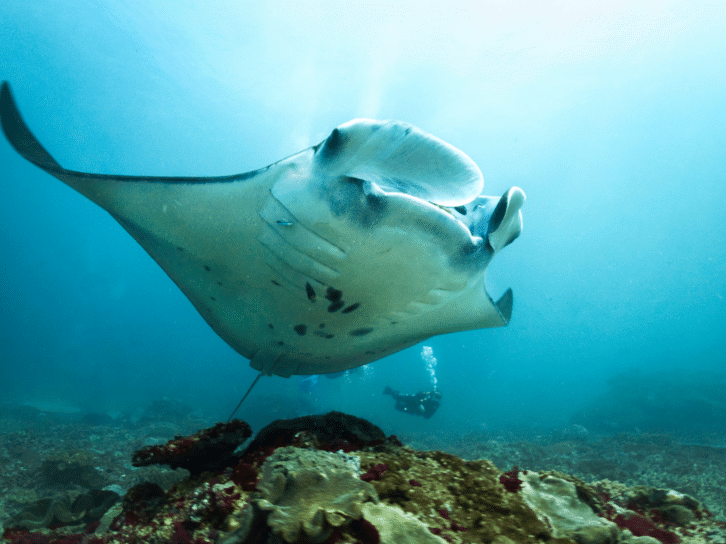
Manta rays can be seen year-round, but they occur in greater numbers during the dry months from April to November. The best places to spot them are at Manta Point on Nusa Penida, where you can often see large groups of manta rays circling in the clear water. This location has strong currents, so it is best for advanced divers who are comfortable with currents. Manta rays can be found at depths between 10 and 30 meters.
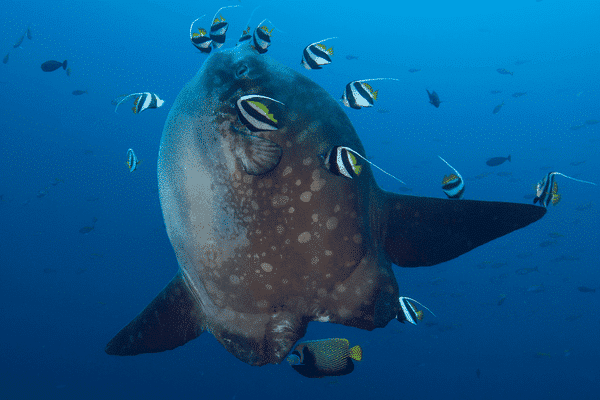
The mola mola, or moonfish, is one of the most iconic and sought-after fish species for divers. These impressive fish can grow up to 3 meters wide, and their appearance is a magical experience. The best chance to see a mola mola is from July to October, when the water temperature is cooler and the fish come to the surface for a cleaning of parasites. Crystal Bay on Nusa Penida is the most famous location to see mola mola. Diving at these sites usually goes to 40 meters deep, and the currents can be strong, so this is ideal for advanced divers who can handle currents well.
Best dive sites in Bali
Bali has tons of dive sites and they are incredibly diverse. You can dive on calm reefs, historic wrecks or go for a drift dive with big stuff. The variety of dive sites makes it an ideal destination for both novice and experienced divers. Here we list the best dive sites in Bali, each with its own unique characteristics. From the famous USAT Liberty wreck to the spectacular Manta Point at Nusa Penida!
Tulamben & the USAT Liberty wreck
Depth: 5-30 meters
Season: Throughout the year
Marine life: Turtles, moray eels, colorful reef fish, clown fish
Level: For both beginners and advanced divers
Tulamben is one of Bali’s most popular dive sites, famous for the USAT Liberty wreck located close to shore. A special detail about this dive site is that it is a shore dive: the wreck is accessible from the beach. USAT Liberty was hit by a torpedo in World War II and sank in January 1942. Now it lies at a depth of about 5 to 30 meters, this makes it accessible to divers of different levels. The wreck is covered with beautiful coral and you can see lots of fish and other marine life, including turtles and moray eels. It is actually a must-do when in Bali, the USAT Liberty is in every top 10 list about wrecks for a reason!
Amed: peaceful dives and colorful reef life
Depth: 5-30 meters
Season: Throughout the year
Marine life: Dwarf seahorses, nudibranchs, reef fish, turtles
Level: Suitable for beginning and advanced divers
Located on the east coast of Bali, Amed is perfect for divers who love to dive to calm dives and beautiful coral reefs. The area is known for its calm waters, making it an excellent choice for novice divers or divers who like to take time to explore macro life, such as pygmyseahorses and nudibranchs. The dive sites here range from 5 to 30 meters deep, which is perfect for both Open Water divers and Advanced divers. Amed is also one of the best places for night diving!
Nusa Penida: manta rays and mola mola
Depth: 10-40 meters
Season: July to October for mola mola, all year for manta rays
Marine life: Manta rays, mola mola, schools of fish, turtles
Level: Due to the current especially suitable for advanced divers
Nusa Penida is famous for its huge manta rays and the possibility of seeing the impressive mola mola (moonfish). This location is mainly for advanced divers because of the strong currents you may encounter. Manta Point and Crystal Bay are Nusa Penida’s most famous dive sites, and although you are not guaranteed to see a mola mola, during the right months (between July and October) it is one of the best places to spot this giant fish. The dives in these areas go to about 40 meters deep and the water is often cooler. Besides the big fish, you will also find healthy coral and rich marine life.
Menjangan Island: coral walls and deep dives
Depth: 10-40 meters
Season: Throughout the year
Marine life: Schools of fish, turtles, reef fish
Level: Because of the depth, especially nice for advanced divers, but beginners also dive here
Menjangan Island, located in the West Bali National Park, is one of Bali’s less visited dive sites. The island has steep coral walls, clear water and relatively little current, making it perfect for relaxed diving and photography. The dives are a bit deeper, to about 40 meters, and offer stunning views of the coral reefs and schools of fish. The marine life here is diverse, with healthy reefs, schools of fish and even the possibility of spotting turtles.
Padang Bai: blue lagoon and muck diving
Depth: 5-25 meters
Season: Throughout the year
Marine life: Octopus, frogfish, nudibranchs, reef fish, macro
Level: Suitable for beginning and advanced divers
Padang Bai on Bali’s east coast offers a variety of dive sites, from the popular Blue Lagoon to the best spots for muck diving, such as Tanjung Sari and Gili Biaha. Blue Lagoon is ideal for both novice and experienced divers, with clear water and abundant marine life. It lies at a depth of about 5 to 25 meters, making it perfect for quiet, relaxing dives. In muck diving, divers can look for smaller marine life, such as octopus, frogfish and nudibranchs. This makes Padang Bai a great destination for photographers and divers looking for the smallest creatures underwater.
Marine life in Bali: what to expect during your dive?
Bali is a diver’s paradise, not only for its beautiful coral reefs, but also for its rich and varied marine life. From colorful tropical fish to majestic manta rays and mysterious macro, Bali has it all. Here is an overview of what you may encounter while diving:
Tropical fish
Around Bali you will find a wide variety of tropical fish, with species typical of this region.
- Clownfish & anemone fish: The famous “Nemo” can be found everywhere in the anemones.
- Emperor and Semicircle angelfishes: Elegant fish that often gather in groups.
- Pyramid butterflyfish: These colorful butterflyfish are regularly seen swimming around coral reefs.
- Frogfish: One of the most fascinating species of fish, often difficult to spot due to their camouflage characteristics.
- Crocodilefish: Unmistakable due to their flat bodies and camouflaging scales.
- Humphead parrotfish: A large, impressive fish that is a real eye-catcher with its brightly colored appearance.
Large marine mammals
The waters around Bali are also home to some of the most iconic large marine animals:
- Manta rays: Especially around Nusa Penida you can see these impressive rays.
- Mola mola: These giant fish are often spotted during the season between July and October.
- Sharks: From white tip and black tip sharks to the mysterious wobbegong and nurse sharks, there is always a chance to spot these predators.
- Turtles: Green and Hawksbill sea turtles are often found at various dive sites around Bali.
Macro
Bali is a top destination for muck diving, where divers search for the tiniest of underwater inhabitants.
- Ribbon eel: These colorful and elongated eels can often be spotted in sandy bottoms.
- Blue ring octopus: One of the most amazing and venomous animals in the ocean – be careful and respectful if you spot one.
- Bobtail squid: Small cuttlefish often hidden among rocks and sand.
- Ornate ghost pipefish: A particularly hard-to-find fish that camouflages well among the coral and seagrass.
- Pygmy seahorse: One of the smallest seahorses in the world, usually hidden among coral structures.
- Mantis shrimp: Known for their powerful claws and ability to move very quickly, these creatures are an impressive sight.
Nudibranchs
Bali is also famous for its nudibranchs:
- Chromodoris nudibranch: One of the best known species, with bright colors and striking patterns.
- Flabellina Exoptata nudibranch: With vibrant blue hues.
- Nembrotha Kubaryana: A striking green nudibranch with some black and yellow.
- Doto greenamyeri (also called the “Donut” nudibranch): has a unique round shape reminiscent of a donut.
Is diving in Bali cheap?
Yes, compared to many other dive destinations, diving in Bali isrelatively inexpensive. For a guided fun dive, you pay an average of €35 to €50 per dive. It is depending on the location, number of dives and whether equipment rental is included. Dives at places like Tulamben, Amed or Padang Bai are often even slightly cheaper than trips to Nusa Penida.
Would you like to learn to dive? Then you can choose from both PADI and SSI Open Water courses in Bali. Both certifications are internationally recognized and suitable for beginners. The course usually lasts 3 to 4 days and costs between €350 and €450, including theory, pool training, open water diving and equipment rental.
What makes Bali extra attractive is the service. At many dive schools, boat transfers, lunch and washing your diving equipment are included. At some dive schools they even put it together for you already. So you definitely get value for money.
When booking through us, we make sure you choose a reliable and affordable diving school that suits your level and needs. This way you can be sure that you are not only diving economically, but also safely.
Learning to dive in Bali
Want to learn to dive yourself or have you finally managed to convince your friend to go scuba diving too? Way to go! Bali is a perfect choice to get your Open Water certification. The conditions are ideal for beginners: warm water, little current, great visibility and a colorful underwater world full of life.
Moreover, Bali is one of the cheapest places in the world to learn to dive, without compromising on quality. Thanks to the many international diving schools, chances are you can take the course simply in your own language.
The Open Water course usually lasts 3-4 days and consists of theory (often online), pool training and four dives in open water. You will learn all the basic skills you need to dive to 18 meters deep worldwide.
The course is available through both PADI and SSI, two of the largest and most recognized diving organizations in the world. Both offer similar training and certification valid worldwide. The choice often depends on the diving school, and we will help you with that.
We cooperate in Bali with reliable and experienced diving schools such as:
- Orca Dive Club (North Bali): quiet location, perfect for beginners
- Villa Bali Dive Resort (Tulamben): right on the beach
- Karang Divers (Amed): personal, flexible and excellent for small group courses
With these partners, we are sure you are in the right place: good equipment, safe instruction, and often Dutch-speaking guidance.
Do you want to learn to dive in Bali? Then we’ll make sure you get to a dive school that suits your level, pace and preferred language so that your first dive experience is both relaxing and unforgettable.
What diving equipment do you need in Bali?
Diving in Bali does not require extremely specialized equipment, but it is important to know what you need – and what you may want to bring yourself. Whether you want to explore wrecks, look for manta rays or focus your lens on the smallest sea creatures, the right gear will help you get the most out of your dives.
Basic equipment
- Wetsuit: In the dry season, a 3 mm shorty or full wetsuit is usually sufficient. During the mola mola season (July-October) the temperature drops to 22-26°C and a 5 mm full wetsuit is recommended.
- Mask & snorkel: Comfort and fit are personal. Having your own mask is a good investment. You can also now easily go into the water for snorkeling!
- Open fins & dive shoes: If you are going to do shore dives in Tulamben and Amed, for example, it is nice to bring open heel fins with shoes. Then you never walk on your bare feet.
- Dive computer: Highly recommended for safety and control over your dive profile. If you do a lot of dives, it’s nice to have your own computer so you always have the right data and history.
- BCD & regulator: You can also rent well at Bali’s dive schools.
Underwater camera and accessories
For lovers of underwater photography, Bali is a true paradise. Especially the muck sites in Amed, Seraya and Secret Bay are full of macro life: from harlequin ghost snails to tiny seahorses. For that, the right camera gear is essential.
What many photographers bring:
- Compact camera with underwater housing: choose a suitable camera to suit your purpose
- (Macro) lens: for muck diving
- Focus light: helps focus on small, moving subjects
- Strobes or flashes: indispensable for color and sharpness, especially in dark corners
Many dive centers also offer camera storage, rinse stations and support for photographers.
Diving in Bali with EWDR
Did you know that our travel experts Michel and Pascale have lived on Bali? They know the island inside out and know exactly which dive sites suit your needs. Whether you are looking for colorful reefs, muck diving or big marine life like manta rays and mola mola, they will help you choose the right spots.
At EWDR, we put together customized trips. Think of a round trip on Bali where you dive in several places and stay overnight in different locations. Or a combination with the surrounding islands such as Nusa Penida, Lombok or Komodo. Also if you are looking for a liveaboard to discover the more remote diving areas of Indonesia, we can arrange that. Everything is possible and always tailored to your level, experience and interests.




14-day diving trip Bali – Nusa Penida & Tulamben
A varied Bali diving trip with 2 dive sites, including the spectacular Nusa Penida and the iconic Tulamben. Meet manta...
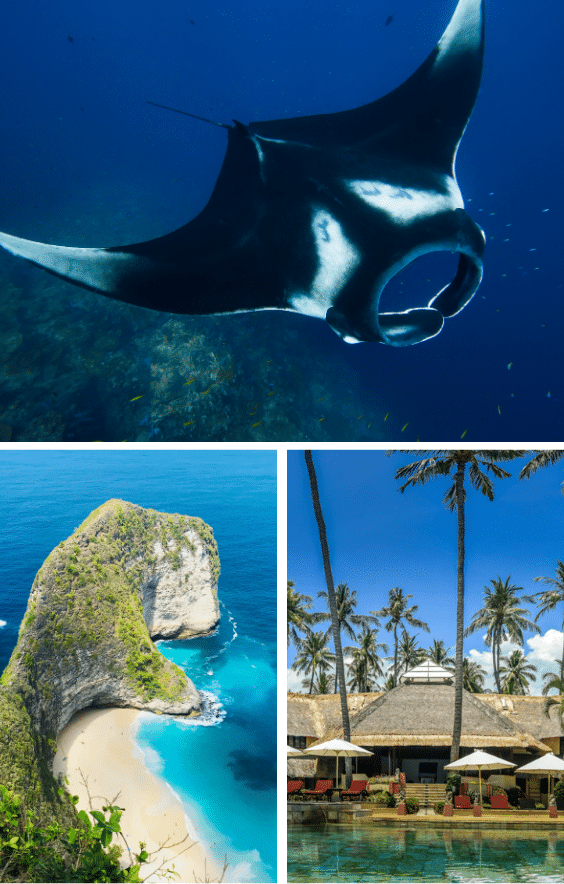




Best of Bali – 3 week round trip
Discover the best of Bali both above and below the water. During this varied 3-week round trip you will dive...
Practical information for your diving trip to Bali
Before you pack your dive gear and take the plane to Bali, it’s helpful to have some practical things in order. How long will the trip take, what is the local currency and what can you expect in terms of food and facilities? Below you will find everything you need to know to be well prepared, along with some great ideas for things to do outside of diving.
- Travel time: most flights to Bali take about 16 to 20 hours, usually with a transfer in cities such as Singapore, Doha or Kuala Lumpur.
- Time zone: Bali falls in the UTC+8 time zone, which means it is 6 or 7 hours later than in the Netherlands (depending on our daylight saving time).
- Currency: you pay with the Indonesian rupiah (IDR). Pinning is possible in many places, but it is convenient to carry cash for local stores or tips as well.
- Food and drink: Balinese food is delicious, affordable and surprisingly varied. Vegetarians and vegans are also welcome everywhere. Do not drink tap water; bottled water is available everywhere.
- Health: ask at the GGD what vaccinations are recommended. In tourist areas, medical facilities are usually well regulated.
- Sightseeing tips: do you have time between diving to see something of the island? These are popular excursions:
- Temples like Tanah Lot and Uluwatu at sunset
- The rice terraces and markets of Ubud
- Waterfalls such as Tegenungan or Sekumpul
- A sunrise hike to Mount Batur
- The islands of Nusa Lembongan and Ceningan for a relaxing getaway