Diving in Dominica: a complete guide
Dominica is one of the most pristine diving destinations in the Caribbean. That’s for good reason. In this guide you will find everything you need to know for your (first) dive experience in Dominica. From dive sites and seasons to practical tips and what to expect per period.
Table of contents
General information about Dominica
Dominica is located in the heart of the Lesser Antilles, between Guadeloupe and Martinique. Known as the Nature Island of the Caribbean, this volcanic island is distinctly different from other Caribbean destinations.
Don’t expect vast white beaches and luxury resorts here, but rugged nature, dense rainforests and impressive mountain scenery. The island is relatively small, but extremely green and pristine. Dominica’s volcanic origins can be seen everywhere: from hot springs and black sand beaches to spectacular underwater landscapes with lava formations and sheer walls.
Dominica has an area of only 750 km² and less than 70,000 inhabitants. By comparison, Bonaire has an area of 294 km² and Curacao 444 km².
Practical info:
- Capital: Roseau
- Language: English
- Currency: eastern Caribbean dollar
- Travel time from Europe: about 10-14 hours (with transfer)



Why dive in Dominica?
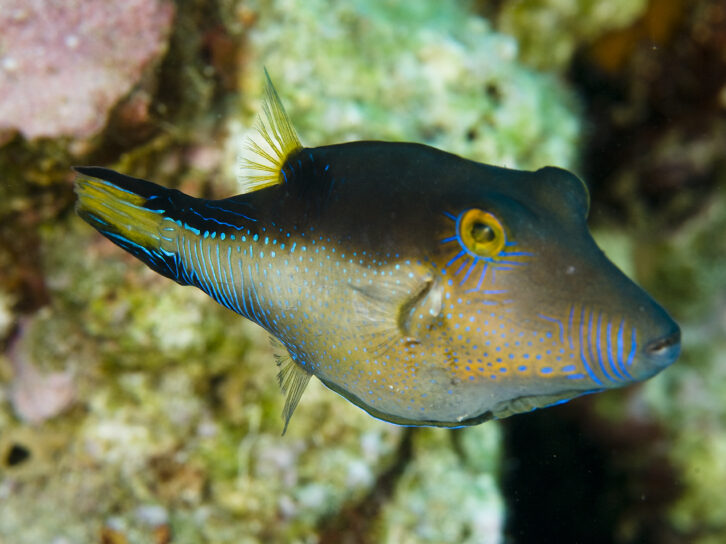
Dominica is not a standard diving destination in the Caribbean, and you’ll notice that as soon as you enter the water. Where many Caribbean islands revolve around coral reefs and clear blue water, Dominica offers something completely different: a raw, volcanic underwater world that is constantly changing. Here you dive past sheer walls, lava fields and underwater formations directly formed by volcanic activity. At some dive sites, you can even literally see the earth “alive. Tiny bubbles escape from the sea floor due to geothermal activity, you could compare it to a glass of champagne where the bubbles also rise.
Due to volcanic activity, the underwater landscape looks like this:
- Dramatic drop-offs disappearing into the deep blue
- Pinnacles rising from the sea floor
- Underwater hot springs
- Lava formations and black sand soils
Another plus of Dominica is that it is still relatively undiscovered, especially by divers. Mass tourism is not present here and you notice that underwater, but also above water.
In addition, Dominica is known worldwide as one of the best places to spot sperm whales. These impressive animals live here year-round in the deep waters surrounding the island. You’ll read more about that later.
Other animals you may encounter include dolphins, turtles, reef sharks and lots of macro life. Dives are suitable for both beginner and advanced divers.
Best travel time for Dominica
The best time to dive in Dominica is from December through April, during the dry season. During these months, weather conditions are generally stable, with less rain, calmer seas and excellent diving conditions, especially on the west coast of the island.
Visibility: Underwater visibility during this period is generally good to very good, often between 20 and 30 meters. During the rainy season (May to November) visibility can vary slightly due to rainfall and runoff from the island, but most dive sites remain good diveable, especially around the more sheltered locations such as the west coast. Dominica’s volcanic nature also makes for unique diving conditions not found on many other Caribbean islands, such as clear water combined with a darker, volcanic landscape.
Water temperature: The water is pleasantly warm all year round, averaging between 26 and 29°C. Because of this, a thin wetsuit (3 mm) is sufficient in most cases. Due to the tropical location, the water feels comfortable, allowing for long and relaxing dives.
Currents: Currents in Dominica are generally mild to moderate, but can vary from site to site. Especially at sites with drop-offs and pinnacles, there can be light currents, which actually make for lively diving and attract larger marine life. Many dive sites are easily accessible and suitable for both beginning and advanced divers. On the west coast, conditions are usually the most stable, making this the most popular region for diving.
| Period | Diving conditions | Wetsuit Advice | Details |
|---|---|---|---|
| December – April | Good to very good visibility (20-30 m), generally calm sea, little current | 3 mm shorty or full | Dry season and best travel time, stable conditions, ideal combination of visibility and comfort, high probability of whales (especially sperm whales and humpback whales) |
| May – June | Good visibility (20-30 m), slightly warmer water, sea mostly calm | 3 mm shorty | Transitional period, quieter in terms of tourism, good diving conditions and often still stable weather |
| July – September | Visibility good (15-25 m), sea can be more changeable, chance of rain and wind increases | 3 mm full | Greener island due to rain, warm water, chance of dolphins, beginning of hurricane season but often still good diveability |
| October – November | Visibility variable (15-25 m), sea sometimes rougher, more chance of rain and wind | 3 mm full | Low season, quiet underwater, chance of less good conditions due to weather, but still fine diving on the west coast |
Where to dive in Dominica?
In Dominica, diving is mainly done on the west and southwest coasts of the island. Here you will make the most beautiful dives. From the dive base Fort Young Hotel & Dive Resort, the dive sites are only 10 to 20 minutes by boat. These are some of the most famous dive sites:
Lace diving at Fort Young Hotel & Dive Resort
Here you dive from the water’s edge over a coral reef that slopes slowly. The reef structures are full of life, including seahorses, stingrays, snakeeel, crabs and several species of reef fish.
Champagne Reef
Dominica’s most famous dive site. Here you can literally see bubbles rising from the sea floor, as if you were diving into a glass of champagne. Hence the name! Expect underwater volcanic activity, reef fish, seahorses and octopuses. This dive site is suitable for all skill levels.
Scott's Head Pinnacles
One of Dominica’s top dives and often mentioned in dive destination lists worldwide. At Scott’s Head Pinnacle, you swim along the edge of an ancient volcanic crater wall, where huge gorgonians, barrel and tube sponges grow. The area often attracts pelagic fish such as barracudas, turtles and large schools of fish. This dive is especially suitable for intermediate to advanced divers.
Dangleben's Pinnacles
Dangleben’s Pinnacles consists of a cluster of five pinnacles rising from the depths, covered with soft corals and sponges. The variety of structures provides plenty of life: jacks, tuna, turtles, barracuda and colorful reef fish are regular guests here.
L'Abym (The Abyss)
L’Abym, aka The Abyss, is a spectacular wall dive that runs deep into the ocean. This steep drop-off offers room to wander around vertical walls with seahorses, soldierfish, scorpionfish, jawfish and the occasional manta rays or turtles. It is one of Dominica’s most impressive dives for experienced divers.
Rodney's Rock
Rodney’s Rock is a shallow, varied dive site with sand fields, grassy areas and rock formations. Because of this mix, you’ll find a huge diversity of small marine life here: seahorses, frogfish, lobsters, snakeeel, sea cucumbers, stingrays and numerous reef fish. Perfect for macro lovers and photographers.
Nose Reef
This reef formation has three “nose-shaped” ledges that extend into the blue. With a depth around 24 meters, this is a favorite dive for its biodiversity: colorful sponges, corals, turtles and pelagic fish swim around here while the current brings life and food.
Pole to Pole
Pole to Pole is a unique dive under the jetty of the Cabrits Cruise Ship pier. The poles are full of life, from seahorses and shrimp to crabs and sponges. Its shallowness (about 15 meters) makes it ideal as a second dive of the day or night dive site
Marine life in Dominica: what to expect during your dive?
It is bursting with life underwater and you can expect a good mix of macro life and large pelagic species. Below is an overview of some species, but it is not a complete list: there is much more to discover.
Large & marine mammals
- Sperm whale (whale)
- Humpback whales (migrating)
- Indian pilot whales
- Long-beaked dolphins
- Tumblers
- Atlantic spotted dolphin
Reef fish & schools
- Parrotfish
- Imperial Fish
- Barracudas
- Snappers
- Trumpetfish
- Trunkfish / boxfish
Marco & muck
- Frogfish
- Seahorses
- Different kinds of shrimp
- Octopus
- Crabs and hermit crabs
- Nudibranch
The sperm whales of Dominica
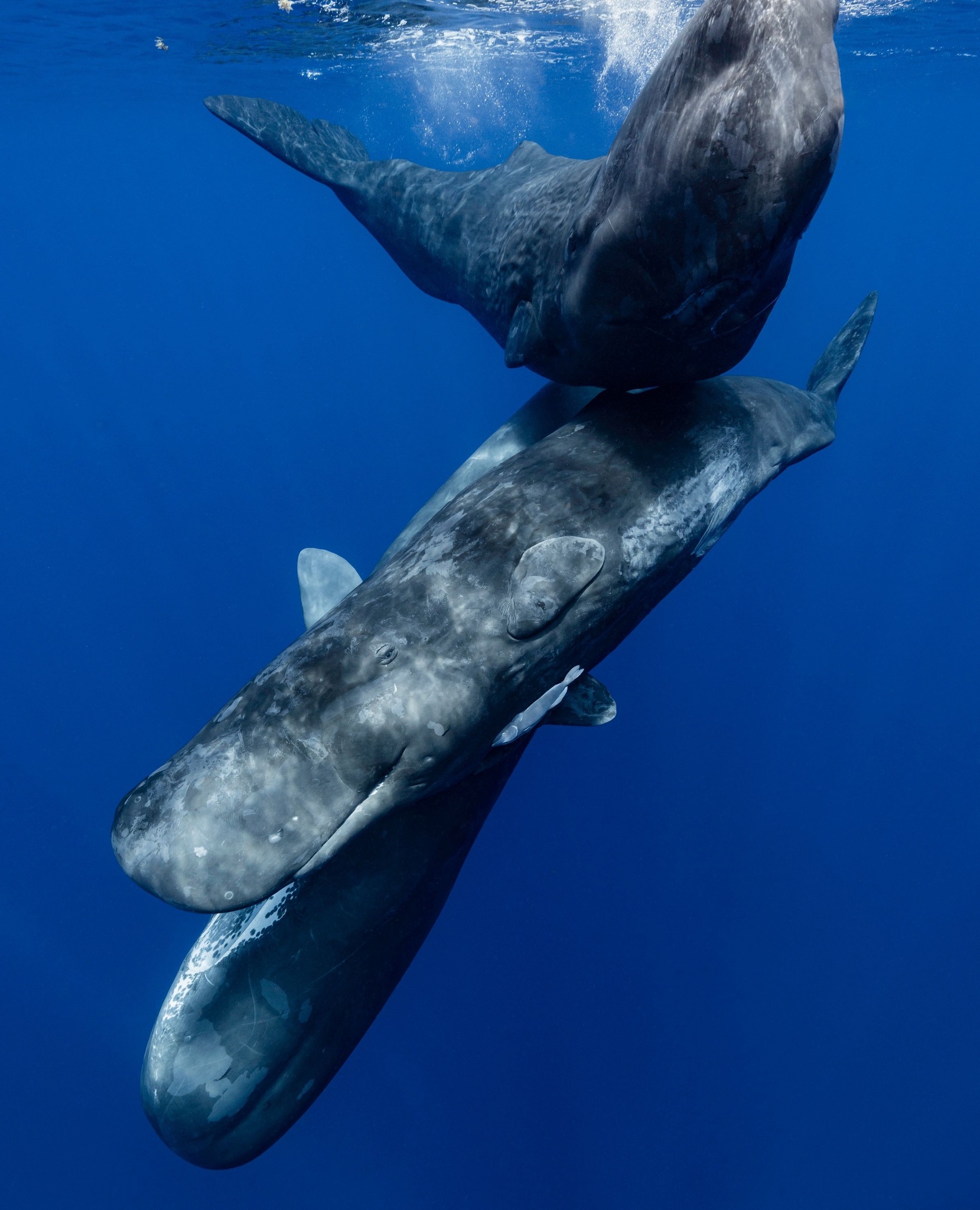
Dominica is one of the few places in the world where you can encounter sperm whales year-round. This makes the island unique within the Caribbean and an absolute dream location for lovers of great marine life.
These impressive animals reside in the deep waters surrounding Dominica, where they live, hunt and breed. The females stay in the same location virtually year-round, while the males migrate and come to Dominica to reproduce.
Dominica is one of the few countries where it is allowed to swim or snorkel with sperm whales responsibly, under strict rules and guidance. Read more about Dominica’s sperm whales in this blog.
By the way, did you know that it is also possible to see sperm whales in Alor, an island of Indonesia? You can read all about it in this blog.
For whom is Dominica a good destination?
Basically, Dominica is suitable for any skill level, as there are plenty of dives without currents and there are many dives with an easy profile. Dominica is ideal for divers who want something different from the standard Caribbean destination, love nature and adventure, want to spot whales and appreciate peace and quiet and small scale. In addition, it is also a great destination if, in addition to diving, you like to get out into nature, enjoy hiking or are a bird lover. It is the destination to make a combination trip of diving and hiking, as far as we are concerned.
There is also plenty of macro and muck to be found, making it a suitable destination for underwater photographers.
Don’t dive? Even then, it’s a good destination. There is a lot to do on land, and you can also do good snorkeling. You can even join the special expeditions to see the sperm whales. These are expeditions from the boat and where you snorkel.
What diving equipment do you need in Dominica?
For diving in Dominica, you do not need any specific equipment, as underwater conditions are relatively calm. However, it is important to know what you need. Here is a list of the most common diving equipment for Dominica.
Basic equipment
- Wetsuit: The water averages between 27-29°C, so a 3mm shorty or 3mm full suit will do. Unless you are a cold weather fan, then you can bring a 5mm.
- Mask & snorkel: A well-fitting proprietary mask is recommended for optimal vision and comfort. The snorkel is especially useful when waiting for the boat.
- Fins: In Dominica it is also possible to make shore dives. So in that case it is nice to have open heel fins with booties. By the way, it is always nice if you have to walk across the jetty to the boat for protection of your feet.
- Dive computer: Highly recommended for safe diving and to keep a good record of your dive profile, especially if you make several dives a day.
- BCD & regulator: You can often rent fine at local dive centers, but own equipment always gives comfort.
Additional accessories
- Underwater camera: The visibility in Dominica is fantastic and you are guaranteed to see unusual animals. Given the dives with currents, you will be able to capture the best footage with a GoPro or other action camera. Keep in mind that with these types of cameras it is more difficult to capture small life well, these cameras have trouble focusing.
- Diving lamp: Not necessary, but can be nice when looking for small life. Keep in mind, of course, that you are not shining animals right in the eyes.
- Weights: You don’t need to bring this, of course, but it’s good to know. Because of the warm water, you often need less lead than in colder waters.
- Diving gloves and boots: Not necessary due to the soft coral and warm water, but boots can be nice for comfort.
- Dry bag: Since they are also boat dives, it is convenient to bring a dry bag for valuables. A dry bag is specially designed to keep belongings dry during boat trips. They are often made of sturdy, waterproof material with a roll-up closure at the top to keep water out.
Nature of Dominica
Dominica is not called the Nature Island of the Caribbean called. One of the most pristine destinations in the region, the island is known for its rugged, green and largely untouched landscape. While many Caribbean islands focus on tourism and beaches, here it is all about nature in its purest form.
As soon as you enter the island, you immediately notice how green it is. Dominica consists largely of tropical rainforest that stretches over mountains, valleys and hills. This jungle is dense and vibrant, with huge trees, winding lianas and a constant presence of life. The landscape is constantly changing, especially as you cross the island and get ever-changing perspectives of nature.
The mountains play an important role in Dominica’s character. With several peaks above 1,000 meters and steep slopes, the island has impressive relief. This provides not only spectacular views, but also a sense of adventure when traveling or hiking through the interior.
Another striking aspect of nature is the presence of water. Dominica has an exceptional amount of rivers and waterfalls, which wind their way through the landscape and provide a constant supply of fresh water. Some waterfalls are small and hidden, while others plunge powerfully and impressively down into natural pools. These spots are often a resting point in the middle of the jungle, where you can swim and escape the heat for a while.
The island’s volcanic origins can be seen and felt in many places. Hot springs, bubbling mud pools and sulfurous areas show that Dominica is still geologically active. One of the most extraordinary examples of this is the famous Boiling Lake, a boiling lake fed by underground volcanic activity. The hike to it is an adventure in itself, crossing dense rainforest and rugged terrain.
Dominica’s coastline also suits the rugged nature of the island. In addition to white beaches, you will also find black sand beaches, rocky cliffs and small, secluded coves. This pristine coast contributes to the authentic look of the island and fits perfectly with the volcanic nature present both above and below the water.
What makes Dominica extra special is how nature above water flows directly into the underwater world. The same volcanic forces that shaped the landscape are responsible for the unique diving experiences around the island. This creates a natural connection between land and sea, where you experience the same rugged, dynamic environment both above and below water.
Diving in Dominica with EWDR
We currently have 2 trips to Dominica on the website. The first trip is during the sperm whale high season, when the males migrate to Dominica to reproduce. It is possible to snorkel with these giants during this period. The trip lasts 12 days, starting with 3 days of diving. Then you will go snorkeling with the sperm whales for 5 days, a unique experience. During the snorkeling days you can also make unlimited shore dives.
The other trip is entirely focused on diving around Dominica and exploring the island above water. Nature is beautiful and it is a shame not to explore here. This trip also lasts about 2 weeks. By the way, did you know that all our trips are customized? You can put the trip together exactly the way you want.


Dive Trip Dominica – Reef & Rainforest
Dominica is known for its impressive dive sites and lush rainforest. During this trip you will experience underwater life as...


Diving trip Dominica – Swimming with sperm whales
This trip focuses on snorkeling with sperm whales, a rare and impressive experience. In addition, you will discover the volcanic...